
 Lavinia Ellington-Wentworth
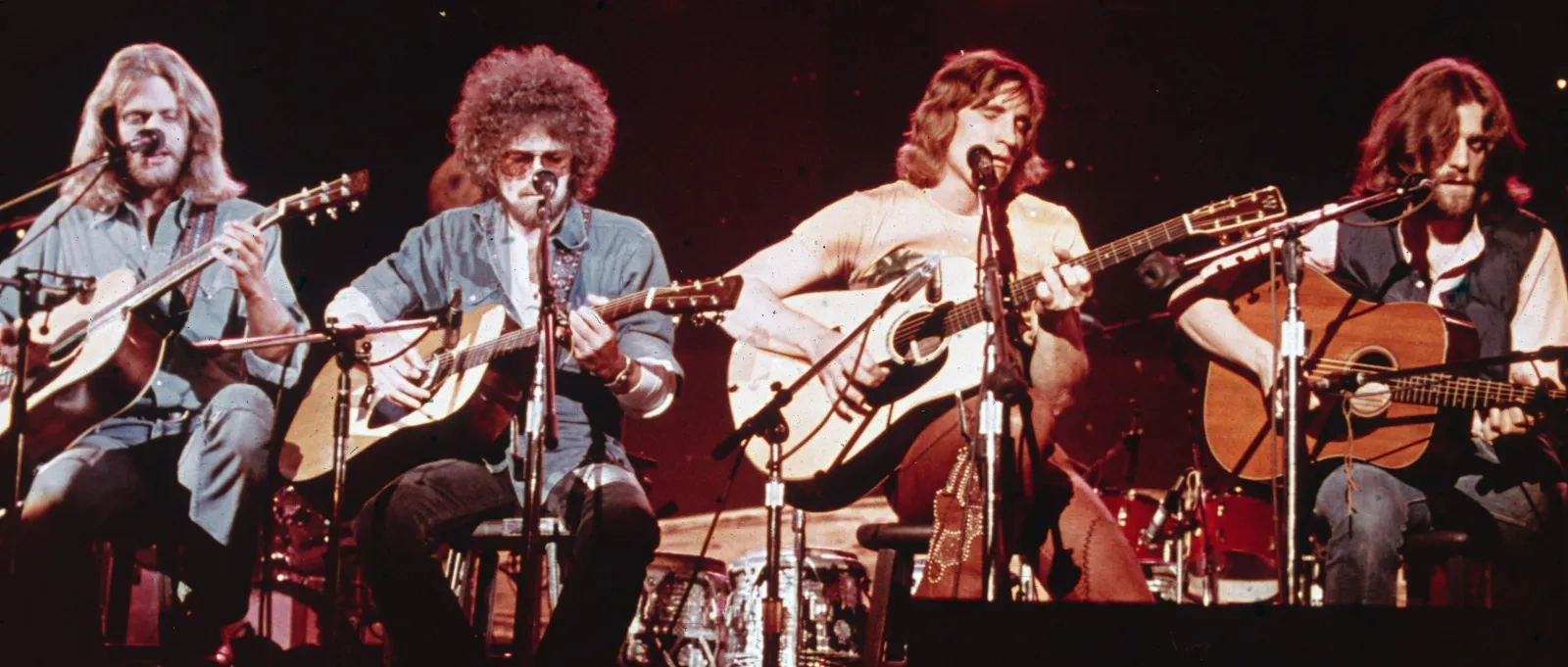
From the sun-drenched highways of California to the haunting corridors of Hotel California, the story of a band whose music came to define an era — and whose songs remain among the most evocative ever recorded.
There is a particular quality to the Californian light towards the end of the afternoon. The sun descends towards the Pacific, the hills turn a delicate shade of gold, and the long avenues of Los Angeles seem to stretch towards a horizon filled with infinite possibilities. It is a landscape that has inspired generations of dreamers, adventurers, artists and those seeking to reinvent themselves beneath the benevolent skies of the American West.
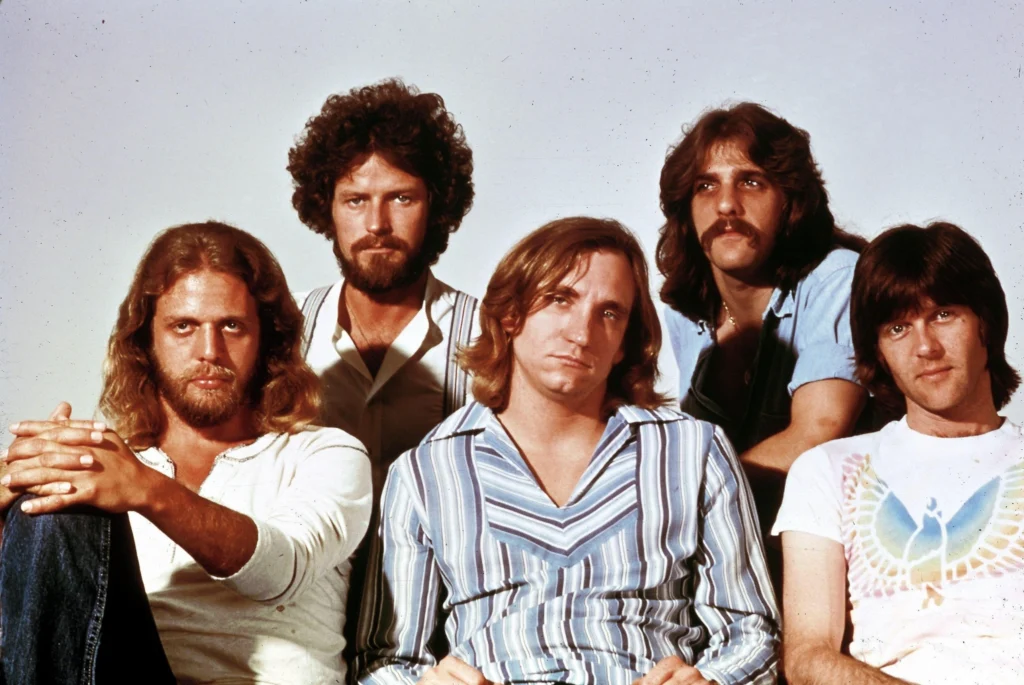
It was in this world, during the early 1970s, that a group of exceptionally talented young musicians came together and created a sound that would become almost inseparable from the mythology of California.
They called themselves the Eagles.
Their music spoke of open highways, beautiful women, lost innocence, romantic disappointment, friendship, ambition and the seductive promise of a better life somewhere beyond the next bend in the road. Yet beneath the apparently effortless melodies and exquisite vocal harmonies lay something altogether more complex: a growing awareness that the American dream, however alluring, might conceal its own disappointments.
The Eagles were not merely a successful rock band. They became the musical chroniclers of a particular moment in American history, when the idealism of the 1960s was giving way to the uncertainties, extravagances and contradictions of the following decade.
More than half a century later, their songs remain astonishingly fresh, capable of transporting the listener back to a place that may never have existed quite as beautifully as the music suggests.
The Birth of a Californian Legend
Los Angeles in the early 1970s was an extraordinary meeting place for musicians. The folk revival, country music, blues and rock and roll were converging in an atmosphere of artistic experimentation that produced some of the most influential recordings of the century.
The Laurel Canyon neighbourhood had become a legendary enclave of singers and songwriters. Joni Mitchell, Jackson Browne, David Crosby, Stephen Stills, Graham Nash and numerous others were creating music that combined lyrical introspection with a distinctly American sense of freedom.
Into this environment arrived two young men whose partnership would eventually transform popular music.
Glenn Frey, born in Detroit in 1948, possessed an instinctive understanding of melody, rhythm and the irresistible appeal of a well-crafted song. He had moved to Los Angeles in pursuit of a musical career and soon became part of the city’s flourishing community of young performers.
Don Henley, born in Texas in 1947, brought a very different temperament. Thoughtful, intense and possessed of a distinctive, slightly melancholy voice, he had a remarkable gift for expressing emotional complexity through deceptively simple lyrics.
Their personalities were not always compatible, but their artistic instincts complemented one another magnificently.
The two met in Los Angeles in 1970, and their subsequent association with Linda Ronstadt proved decisive.
Ronstadt, already establishing herself as one of America’s most compelling female singers, recruited Frey and Henley for her touring band. Among the other musicians involved were guitarist Bernie Leadon and bassist Randy Meisner.
The four soon recognised that they possessed the makings of something exceptional.
In 1971, they formed the Eagles.
Their ambition was straightforward, although achieving it would require considerable imagination: to combine the storytelling traditions of country music with the energy of rock and roll, creating songs that were simultaneously sophisticated, accessible and unmistakably American.
Their timing could scarcely have been better.
Take It Easy: The Open Road Beckons
The Eagles’ debut album, released in 1972, introduced a sound that seemed to encapsulate the freedom of the American West.
Its most memorable song, Take It Easy, had been begun by Jackson Browne and completed by Glenn Frey. With its buoyant rhythm, relaxed harmonies and references to the highways of Arizona, it became an instant classic.
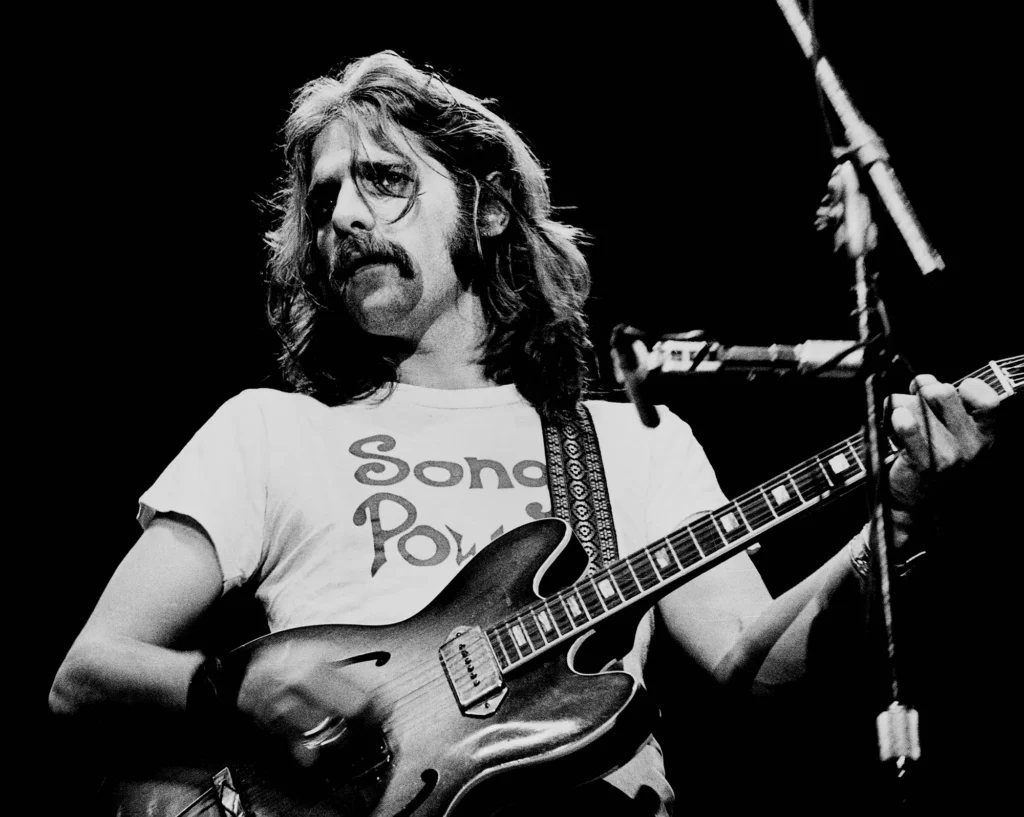
There was something wonderfully liberating about the recording.
At a time when rock music was becoming increasingly elaborate, theatrical and occasionally self-important, the Eagles offered a refreshing alternative. Their arrangements were polished without being ostentatious, their melodies immediately memorable, and their lyrics possessed an appealing conversational intimacy.

The album also included Witchy Woman, with its mysterious atmosphere and darker undertones, and Peaceful Easy Feeling, a song whose gentle romanticism became emblematic of the band’s early identity.
The Eagles seemed to have discovered the musical equivalent of driving along a deserted Californian highway in a convertible, with the Pacific Ocean glittering in the distance.
Yet even these early recordings contained suggestions of the melancholy that would become increasingly important to their work.
Freedom, after all, can be accompanied by loneliness. The open road offers endless possibilities, but it also implies that one has left something behind.
This tension between exhilaration and regret would become one of the defining characteristics of their music.
Desperado: The Poetry of the Outsider
In 1973, the Eagles released Desperado, an ambitious concept album inspired by the mythology of the American frontier and the lives of nineteenth-century outlaws.
It was an imaginative departure from their debut.
The romanticised figures of the American West became metaphors for isolation, pride, ambition and the emotional consequences of choosing independence over intimacy.
The title song, written by Frey and Henley, remains one of their finest achievements.
Desperado is not simply a ballad about a solitary man. It is a meditation on emotional self-imprisonment, on the human tendency to mistake detachment for freedom and on the tragedy of allowing opportunities for love to pass unrecognised.
Henley’s performance is particularly affecting. His voice conveys both sympathy and gentle reproach, as though addressing someone whose greatest enemy is his own inability to accept happiness.
The song’s restrained arrangement allows the emotional force of the lyrics to emerge naturally.
It also revealed something important about the Eagles: beneath their image as handsome young musicians enjoying the Californian sunshine were songwriters capable of considerable psychological insight.
Their finest compositions were not merely pleasant melodies. They were miniature narratives, often populated by characters struggling with choices, disappointments and the passage of time.
In this respect, the Eagles belonged to a distinguished American tradition extending from country ballads and folk storytelling to the novels of John Steinbeck and the cinema of the Western frontier.
Their songs were frequently about people who had travelled a long way, only to discover that they could not entirely escape themselves.
The Ascent to Stardom
The albums that followed established the Eagles as one of America’s most commercially successful groups.
On the Border, released in 1974, marked a gradual movement towards a more forceful rock sound. Its standout single, Best of My Love, became their first American number-one hit.
The following year brought One of These Nights, an album that demonstrated how far the band had progressed.
The title track combined a seductive rhythm with sophisticated harmonies, while Lyin’ Eyes offered one of the most accomplished examples of storytelling in popular music.
The latter song, inspired by observations of the glamorous but often emotionally complicated social world of Los Angeles, tells the story of a young woman whose marriage to a wealthy older man has brought material comfort but little fulfilment.
Its narrative unfolds with the precision of a short story.
There is no need for dramatic musical effects. The quiet sadness of the situation is conveyed through carefully observed details and a melody of extraordinary elegance.
Another song from the album, Take It to the Limit, showcased Randy Meisner’s remarkable vocal range.
Meisner, whose delicate tenor contributed so much to the Eagles’ early harmonies, delivered a performance that became one of the group’s most celebrated concert moments.
By the middle of the decade, the Eagles had become international stars.
Their records sold in enormous quantities, their concerts attracted devoted audiences, and their songs dominated American radio.
But success was beginning to alter the delicate balance that had made the group so effective.
Bernie Leadon, whose country and bluegrass influences had been essential to the original sound, was increasingly uncomfortable with the band’s movement towards harder rock. He departed in 1975.
His replacement was Joe Walsh, an extraordinarily gifted guitarist whose exuberant personality and powerful playing would transform the Eagles’ musical identity.
The arrival of Walsh marked the beginning of their most celebrated period.
It also coincided with the creation of an album that would secure their place in musical history.
Hotel California: Paradise Lost
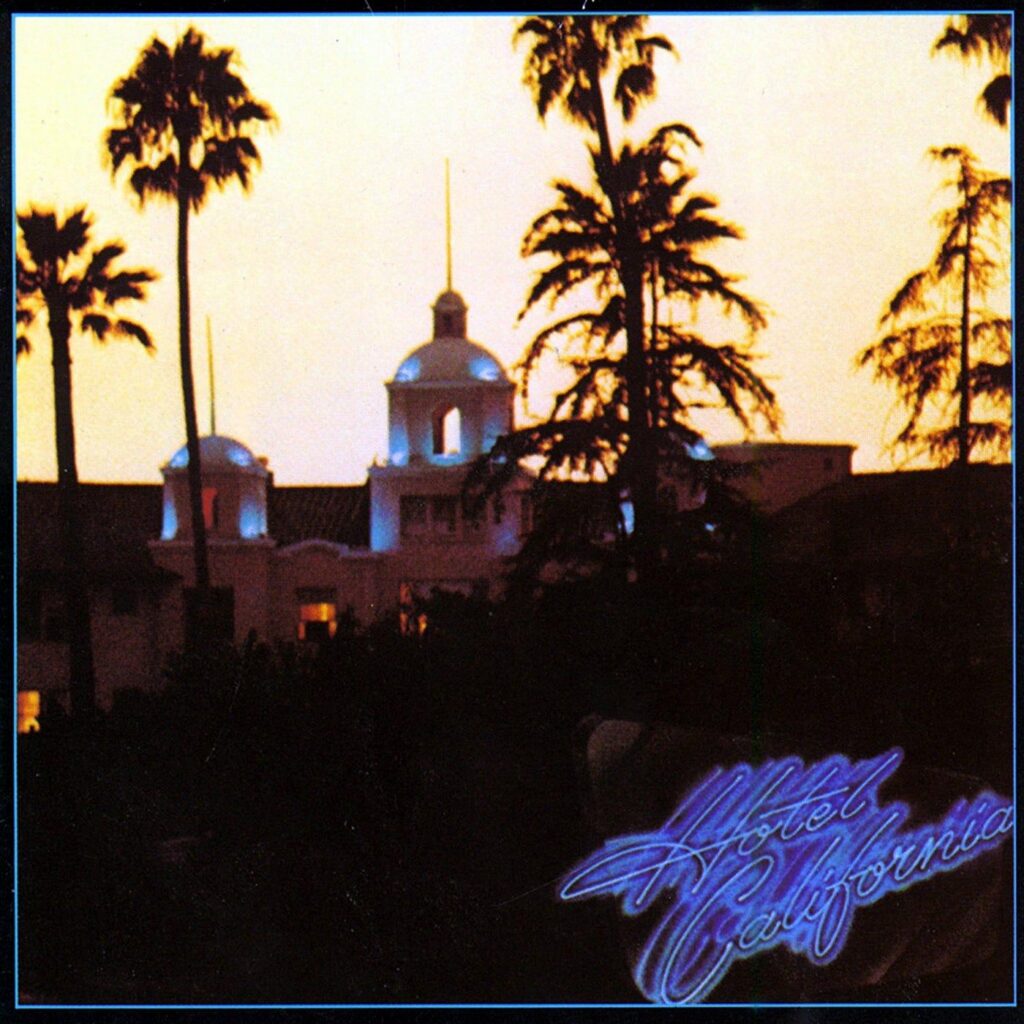
When Hotel California appeared in December 1976, it represented the culmination of everything the Eagles had been attempting to achieve.
It was also a profound departure from the carefree optimism of their earliest recordings.
The California of Take It Easy had been a land of possibilities, where the open road promised adventure and the future seemed limitless. The California of Hotel California was altogether more ambiguous: glamorous, seductive, wealthy and increasingly haunted by the consequences of its own excesses.
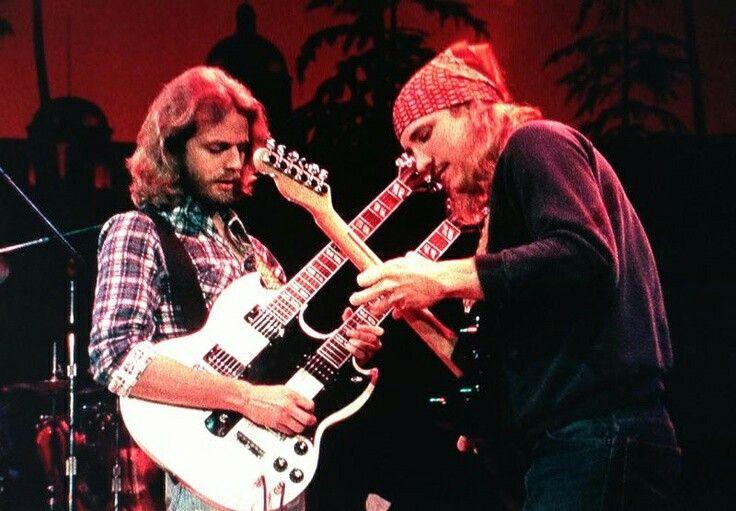
The album’s title song, composed by Don Felder, Don Henley and Glenn Frey, became one of the most recognisable recordings in the history of popular music.
Its opening guitar passage creates an atmosphere of almost cinematic mystery. The listener is drawn into a strange nocturnal landscape, where a weary traveller encounters an apparently luxurious hotel whose hospitality conceals something profoundly disturbing.
The narrative unfolds like a Gothic tale transplanted to the Californian desert.
Its imagery has inspired endless interpretations. Some have imagined occult symbolism, others an allegory of addiction, spiritual imprisonment or the corrupting influence of wealth.
Henley has repeatedly explained that the song concerns, among other things, the darker side of the American dream and the excesses of American culture.
This interpretation is perhaps the most compelling.
The hotel becomes a metaphor for a society intoxicated by pleasure, material abundance and self-indulgence, where the pursuit of freedom ultimately creates a different form of captivity.
It is also possible to understand the song as a reflection of the Eagles’ own extraordinary circumstances.
By 1976, they had achieved the fame, wealth and admiration that countless musicians could only dream of possessing. Yet success had brought its own complications: exhausting tours, personal rivalries, strained relationships and the increasingly artificial existence of international celebrities.
The very world they had once regarded as paradise was beginning to resemble an elaborate gilded cage.
Musically, Hotel California is equally remarkable.
The interplay between Don Felder and Joe Walsh, culminating in the celebrated extended guitar duet, represents one of the great achievements of classic rock. Its intricate construction gives the impression of spontaneity while revealing extraordinary musical discipline.
The song has endured because it operates on several levels simultaneously. It can be enjoyed simply as a magnificent rock recording, appreciated as an atmospheric narrative or examined as a sophisticated commentary on modern society.
Few compositions have managed to achieve all three with such apparent ease.
The Elegance of Melancholy
Although the title track inevitably dominates discussions of the album, Hotel California contains several other masterpieces.
New Kid in Town explores the fickleness of fame and the uncomfortable realisation that success is never entirely secure.
Its gentle melody disguises an observation of considerable cruelty: public admiration is temporary, and there is always someone younger, more fashionable or more exciting waiting to replace yesterday’s favourite.
For musicians whose careers depended upon the affections of an unpredictable audience, the subject could hardly have been more personal.
Life in the Fast Lane, by contrast, is an exhilarating portrait of hedonism and reckless self-destruction. Joe Walsh’s unforgettable guitar riff drives a song that captures the atmosphere of a society moving at dangerous speed.
Then there is The Last Resort, one of Don Henley’s most ambitious compositions.
A sweeping reflection on the settlement and transformation of the American landscape, it examines the destructive consequences of humanity’s endless pursuit of paradise.
Its message extends far beyond California.
The song considers how people, having exhausted the beauty and resources of one place, move onwards in search of another, frequently destroying precisely those qualities that attracted them in the first place.
There is something almost prophetic about its environmental concerns.
Together, these recordings transformed Hotel California into more than a collection of successful songs. It became a portrait of America at a moment when prosperity and disillusionment were beginning to coexist uneasily.
The album’s commercial triumph was immense. By 2026, it had been certified 28-times platinum in the United States, while Their Greatest Hits (1971–1975) had surpassed 40 million certified units, making it the country’s best-selling album. Rhino Media+1
The Eagles had reached the summit of popular music.
Unfortunately, remaining there would prove considerably more difficult than arriving.
Behind the Harmonies: Rivalry, Ambition and Excess
The extraordinary musical precision of the Eagles concealed relationships that were often anything but harmonious.
Glenn Frey and Don Henley had become the band’s dominant creative partnership. Their leadership was instrumental in its success, but it also created tensions with musicians who understandably wished to exercise greater artistic independence.
Don Felder, whose contribution to the composition of Hotel California was indispensable, increasingly resented what he perceived as the unequal distribution of influence within the group.
Joe Walsh, meanwhile, brought immense musical energy but also a famously turbulent lifestyle.
The pressures of international fame were considerable.
The Eagles belonged to an era when successful rock musicians inhabited a world of almost unimaginable indulgence. Expensive hotels, private aircraft, extravagant parties and the constant availability of alcohol and drugs formed part of a culture in which restraint was rarely celebrated.
The irony was unmistakable.
A band whose songs so often warned against excess was itself navigating the temptations of the very lifestyle it portrayed.
Their internal disagreements were compounded by relentless touring and the increasingly demanding process of recording new material.
Randy Meisner departed in 1977 and was replaced by Timothy B. Schmit, another accomplished singer and bassist who had previously belonged to Poco.
The new line-up recorded The Long Run, released in 1979.
The album produced further successes, including Heartache Tonight, I Can’t Tell You Why and the title track.
Yet the creative process had become exhausting.
Where earlier recordings had emerged from youthful enthusiasm and artistic discovery, the Eagles now faced the burden of enormous expectations.
Every album was expected to be a masterpiece. Every concert had to justify their extraordinary reputation.
By 1980, the tensions had become intolerable.
The group’s final concert before its long separation, at Long Beach, California, in July of that year, became notorious for the hostility between Frey and Felder.
The Eagles had become one of the most successful bands in the world, but their personal relationships had deteriorated to the point where continuing together seemed impossible.
They separated, and for fourteen years the possibility of a reunion appeared remote.
Fourteen Years of Silence
The break-up did not bring an end to the individual careers of the Eagles’ principal members.
Don Henley established himself as an important solo artist, achieving considerable success with songs such as The Boys of Summer, The End of the Innocence and The Heart of the Matter.
His solo recordings retained the introspective qualities that had distinguished his finest work with the Eagles, frequently exploring nostalgia, political disillusionment and the emotional consequences of growing older.
Glenn Frey pursued a more relaxed, rhythm-and-blues-influenced direction, producing hits including The One You Love, You Belong to the City and The Heat Is On.
Joe Walsh continued his own distinctive musical career.
Nevertheless, something was missing.
However accomplished their individual recordings might have been, none could entirely reproduce the chemistry that had existed when their voices and instruments came together.
The Eagles had possessed a collective musical identity greater than the sum of its individual parts.
Their harmonies were instantly recognisable. Their arrangements combined precision with warmth, and their songs seemed to occupy a unique territory between country music, sophisticated pop and rock.
During the 1980s, their recordings continued to attract new listeners.
Indeed, their popularity demonstrated that the band’s appeal was not dependent upon contemporary fashion.
While musical tastes moved through punk, new wave, synthesiser-driven pop and heavy metal, the Eagles’ songs retained an extraordinary capacity to connect with audiences.
Their music had become part of the permanent landscape of American popular culture.
Hell Freezes Over: The Return of the Eagles
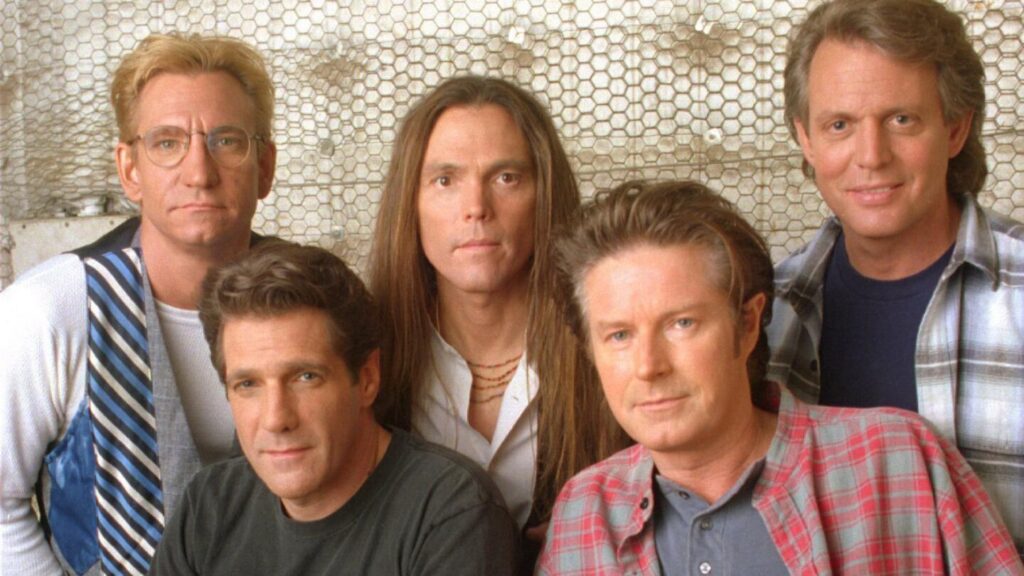
(Bob Carey / Los Angeles Times)
In 1994, the apparently impossible happened.
The Eagles reunited.
The occasion was accompanied by a characteristically dry sense of humour. Having previously suggested that the band would reunite only when hell froze over, they chose Hell Freezes Over as the title of their comeback album.
The reunited line-up consisted of Frey, Henley, Walsh, Schmit and Felder.
Their return demonstrated that the passage of time had done little to diminish their musical abilities.
If anything, maturity lent additional depth to songs that had originally been written by much younger men.
Desperado, once a reflection on youthful emotional isolation, acquired a different poignancy when performed by musicians approaching middle age.
Take It Easy became a celebration of remembered freedom.
And Hotel California, with its dark meditation on success and excess, seemed even more relevant to men who had experienced the extraordinary rewards and considerable costs of international fame.
The reunion was a commercial triumph.
Audiences welcomed the Eagles with an enthusiasm that confirmed their exceptional standing in popular music.
Yet the old tensions had not entirely disappeared.
In 2001, Don Felder was dismissed from the group, leading to prolonged legal disputes and a deeply public disagreement over the band’s internal arrangements.
His departure brought an end to one of the most important creative relationships in the Eagles’ history.
The remaining members continued to perform and, in 2007, released Long Road Out of Eden, their first full studio album since The Long Run.
It was an ambitious collection that demonstrated Henley and Frey’s continuing interest in the political, environmental and moral questions that had informed their earlier work.
The Eagles were no longer the carefree young musicians of the early 1970s.
They had become elder statesmen of American rock, carrying with them both the triumphs and the scars of an extraordinary career.
Glenn Frey: The Loss of a Founding Spirit
On 18 January 2016, Glenn Frey died at the age of sixty-seven.
His death represented an immense loss, not merely to the Eagles but to American popular music.
Frey had been much more than a guitarist and singer.
He possessed a remarkable instinct for musical structure, an understanding of what made a melody memorable and an ability to recognise the potential of ideas that might otherwise have remained unfinished.
His collaboration with Don Henley had produced songs of exceptional longevity.
Their partnership was sometimes difficult, occasionally tempestuous and undeniably productive.
Together, they had created a body of work that captured the emotional landscape of an entire generation.
Without Frey, the Eagles’ future appeared uncertain.
For a time, Henley suggested that the band had effectively come to an end.
Yet music has a curious ability to survive the people who create it.
In 2017, the Eagles returned to the stage with a revised line-up that included Vince Gill, the distinguished country musician, and Deacon Frey, Glenn’s son.
The presence of Deacon introduced an unexpectedly moving dimension to their performances.
There was something profoundly affecting about seeing a son helping to preserve the musical legacy of his father, singing songs that had become part of the cultural inheritance of millions.
It was not an attempt to replace Glenn Frey, whose contribution could never truly be replicated.
Rather, it represented a continuation of the musical tradition he had helped establish.
The death of Randy Meisner in July 2023 brought another moment of sadness, reminding admirers that the musicians who had created the soundtrack of their youth were themselves passing into history.
An Extraordinary Legacy
The Eagles’ achievements are remarkable by almost any measure.
They have sold more than 150 million albums worldwide, earned six Grammy Awards and were inducted into the Rock & Roll Hall of Fame in 1998. They also received the Kennedy Center Honors in 2016. LIVE IN CONCERT AT SPHERE+1
But commercial statistics, however impressive, tell only part of the story.
The true measure of their influence lies in the extraordinary familiarity of their songs.
A few notes of Take It Easy are sufficient to conjure the American highway.
The opening of Desperado evokes loneliness, regret and the painful recognition of opportunities lost.
Lyin’ Eyes transports the listener into a world of elegant houses, expensive restaurants and private unhappiness.
And Hotel California continues to summon its mysterious landscape of beauty, temptation and entrapment.
Their music has become a form of collective memory.
It belongs to those who first heard it on vinyl records in the 1970s, to those who discovered it through the compact discs of the 1980s and 1990s, and to younger generations encountering the songs through digital platforms.
What makes this longevity particularly remarkable is that the Eagles were never dependent upon spectacle.
They did not rely upon elaborate theatrical identities, provocative costumes or constantly changing artistic personas.
Their strength lay in musicianship, songwriting and the almost architectural precision of their vocal arrangements.
At their best, the Eagles achieved something deceptively difficult: they made sophisticated music sound entirely natural.
Their songs could be enjoyed without analysis, yet rewarded the most attentive listening.
This is perhaps the defining characteristic of enduring popular art.
From California to Las Vegas: The Eagles in 2026

More than fifty years after their formation, the Eagles remain an extraordinary concert attraction.
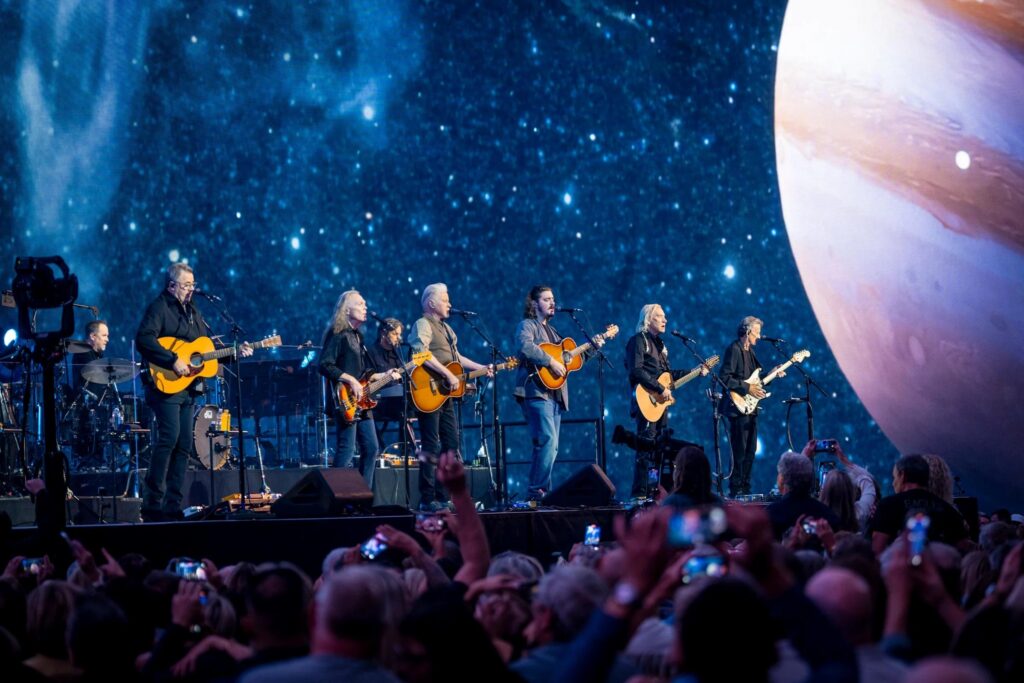
Their residency at the Sphere in Las Vegas, which began in September 2024, has brought their music into one of the most technologically advanced entertainment venues in the world.
The contrast is fascinating.
The band whose earliest songs celebrated the simplicity of the open road now performs beneath immense digital displays, surrounded by immersive visual effects and an extraordinarily sophisticated sound system.
Yet the essential attraction remains unchanged.
Audiences still come to hear the songs.
The residency has proved so successful that further performances were added throughout 2026, with dates extending into January 2027. Sphere+1
This continuing popularity is particularly striking in an entertainment industry characterised by rapid changes in fashion and increasingly fragmented audiences.
The Eagles have outlasted countless musical movements.
Their songs have remained relevant through successive generations of listeners, each discovering its own meaning in music written decades earlier.
There is something almost reassuring about this continuity.
In a world increasingly dominated by speed, novelty and disposable entertainment, the Eagles remind us that craftsmanship and emotional authenticity possess a value that cannot be manufactured by technology.
Their music belongs to an era, certainly, but it has never been confined to that era.
The American Dream, Remembered
Perhaps the greatest achievement of the Eagles is that they gave musical expression to the contradictions of the American dream.
Their early songs celebrated movement, independence and the possibility of reinvention.
Their later compositions explored the price of ambition, the emptiness that can accompany material success and the uncomfortable discovery that freedom does not necessarily bring happiness.
In this sense, their artistic development mirrored the transformation of America itself during the 1970s.
The optimism of the preceding decade gradually gave way to a more sceptical understanding of prosperity, power and personal fulfilment.
Yet the Eagles never entirely abandoned their romanticism.
Even their darkest songs possess moments of extraordinary beauty.
Their harmonies suggest reconciliation where the lyrics describe separation. Their melodies offer consolation even when the stories themselves end in disappointment.
It is this combination of melancholy and hope that gives their music its lasting emotional resonance.
For those who remember the 1970s, the Eagles provide an immediate passage back to a vanished world: the long summer evenings, the cars, the friendships, the romances and the intoxicating conviction that life still contained endless possibilities.
For younger listeners, their songs offer something equally valuable: an introduction to a musical culture in which melody, narrative and instrumental accomplishment were regarded as inseparable elements of artistic expression.
And for anyone who has ever experienced the strange mixture of freedom and loneliness that accompanies a long journey, their music possesses an almost irresistible familiarity.
One can imagine a car travelling westwards through the desert at sunset.
The landscape stretches towards the horizon, the sky deepens into shades of amber and violet, and somewhere on the radio a familiar guitar begins to play.
For a few moments, the passing years seem to disappear.
The road is open once again.
And the Eagles are still playing.
We invite you to watch the extraordinary Netflix documentary on the Eagles https://www.youtube.com/watch?v=Vkp-r9hysGQ


 Elga Wimmer


 Pablo H. Aznar

 Clifford Thurlow

 Antoinette Martin

 Romy Querol

 Bob Myriel

 Carlos Mundy
 Charles Markeaton-Mundy

 Ludovico di Valdieri