Carlos Mundy
An eyewitness account of New York’s most extraordinary nightclub, where glamour, freedom, excess and the most remarkable personalities of an era came together beneath one legendary roof.
At the end of September 1978, I arrived in New York for the very first time. I was twenty-two, embarking upon a year-long journey around the world, and Manhattan was to be the first stop on what promised to be a great adventure.
Little did I imagine that the month ahead would become one of the most extraordinary and unforgettable experiences of my youth.
Fortunately, I already had friends in the Big Apple. Among them was the Spanish designer Juanjo Rocafort, who lived in a spectacular penthouse in Olympic Tower on Fifth Avenue; the designer Mimi Trujillos, a close friend of Andy Warhol; Irma Rolon; and several other fascinating personalities who belonged to the extraordinary New York social scene of the late 1970s.
It was a city unlike any other, a place of extraordinary contrasts, where immense fortunes and artistic genius existed alongside urban decay, outrageous extravagance and an almost intoxicating sense of freedom.
And nowhere was that spirit more magnificently expressed than at Studio 54.
The Divine Carmen
My recollection of precisely how I first met Carmen D’Alessio has become somewhat hazy with the passage of time, although I know it was during my first few days in New York.
What I shall never forget is that it was thanks to Carmen that the doors of the legendary Studio 54 were opened to me.
For almost every night throughout October 1978, I found myself inside what was undoubtedly the most extraordinary nightclub in the world.

Those evenings remain engraved upon my memory. I witnessed a degree of freedom, exuberance and uninhibited pleasure that belonged to a particular moment in history. It was an era that could never be repeated, and one which, I suspect, those of us fortunate enough to have experienced it will never entirely cease to miss.
There is a very good chance, dear reader, that you may never have heard of Carmen D’Alessio.
Allow me, therefore, to introduce you to her. I can assure you that she is someone you would be delighted to meet.
Born in Lima, Peru, Carmen became one of the undisputed queens of New York nightlife and one of the most remarkable public relations personalities of her generation.
Her reputation and social connections seemed to know no boundaries. She possessed the extraordinary ability to summon celebrities, financiers, artists, aristocrats and beautiful people from every imaginable walk of life, bringing them together in precisely the right proportions.
Carmen was, and remains, something of an alchemist. She understood the elusive formula by which an ordinary gathering could be transformed into an unforgettable occasion.
With her captivating smile, irrepressible energy and wonderfully commanding personality, she had a gift for making everyone around her feel that they belonged to something special.
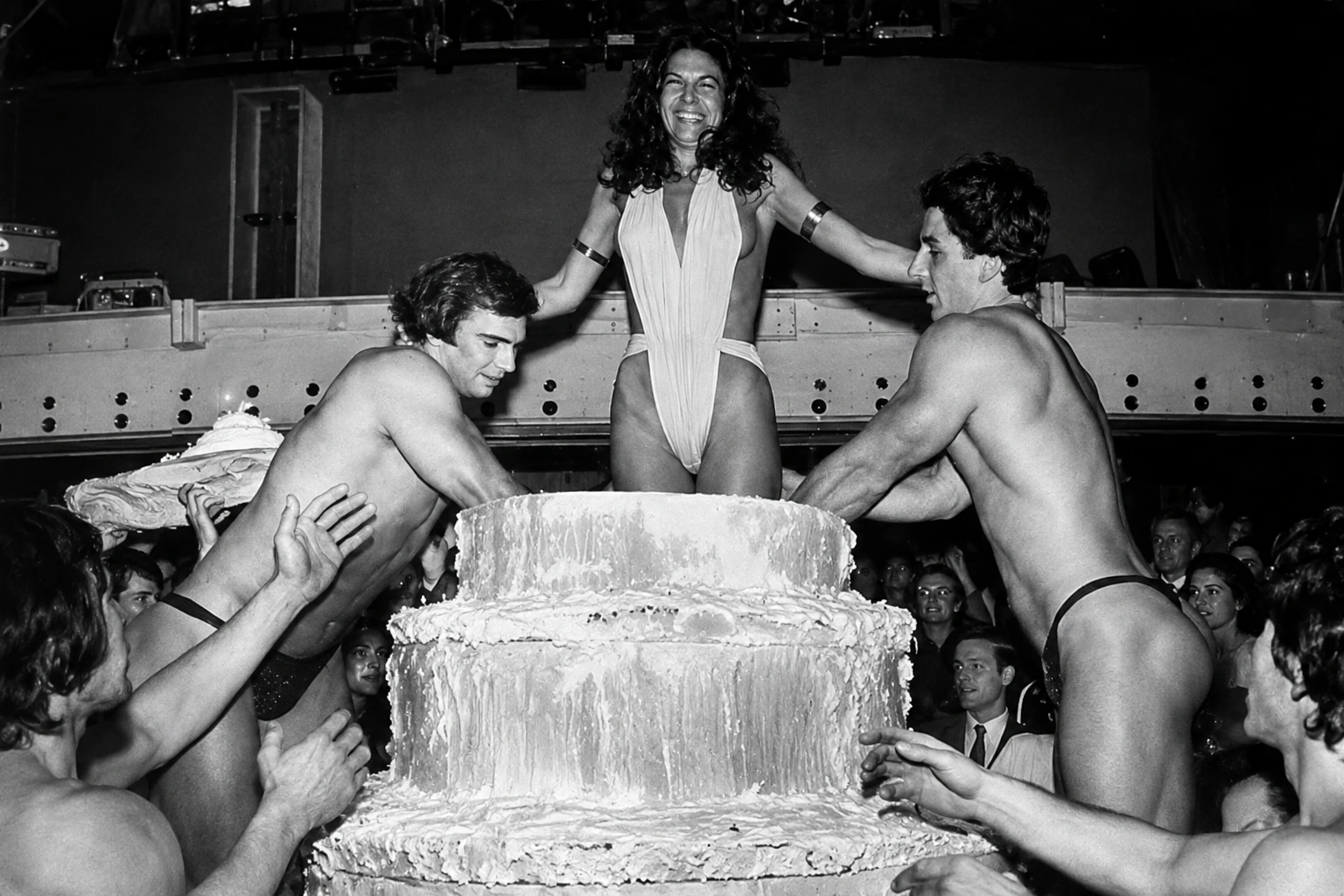
Her strength of character was remarkable, her enthusiasm contagious and her charm almost impossible to resist.
She was, in so many respects, one of the principal creative minds behind Studio 54.
And she had the extraordinary good fortune, as did those of us who knew her, to experience a unique moment in the history of New York.
Carmen already knew Steve Rubell and Ian Schrager through their earlier ventures outside Manhattan. She recognised their potential and helped bring their ambitions to the heart of the city.
She was instrumental in drawing their attention to the former theatre and CBS television studio at 254 West 54th Street, between Broadway and Eighth Avenue, and in persuading them to recognise its extraordinary possibilities.
For the pre-opening dinner, she even bought them Armani suits at Barneys and introduced them to such personalities as Andy Warhol, Halston and Calvin Klein.
The rest, as they say, is history.
The Temple of Hedonism
Carmen put Studio 54 on the international map by organising some of the most extravagant and imaginative parties New York had ever witnessed.
There was Bianca Jagger’s celebrated birthday party, when she appeared astride a magnificent white horse; Valentino’s spectacular circus-themed evening, complete with live animals; and the extraordinary celebration honouring Giorgio Armani, featuring a theatrical performance by drag ballerinas.
Carmen understood something that many public relations professionals have spent fortunes attempting to replicate ever since.

Celebrities are not necessarily wealthy. The wealthy are not necessarily beautiful, and beauty alone does not guarantee that someone is particularly interesting.
But bring together the rich, the famous, the beautiful and the eccentric in one enormous room, and something quite extraordinary can happen.
You create magic.
And people are irresistibly drawn to magic.
That, to my mind, was the great secret of Studio 54’s success.
Beneath its famous crescent moon, with its knowing expression and spoon poised suggestively before its nose, people danced, flirted, celebrated and surrendered themselves to the pleasures of the moment.
I doubt that there has ever been a place quite so uninhibited, at least not since the great bacchanalian celebrations of ancient Greece and Rome.
Studio 54 was not merely a nightclub.
It was a modern temple of hedonism.
Photograph: The legendary Studio 54 dance floor.
The list of celebrated personalities who passed through its doors reads like an encyclopaedia of twentieth-century fame.
Salvador Dalí, Betty Ford, John Travolta, John Lennon and Yoko Ono, Bianca Jagger, Marisa Berenson, Liza Minnelli, Michael Jackson, Arnold Schwarzenegger, Jacqueline Bisset, Jacqueline Kennedy Onassis, Princess Grace of Monaco, Elizabeth Taylor, Robert Redford, Carrie Fisher, Mary Tyler Moore, Mick Jagger, Jerry Hall, Lauren Hutton, Madonna, Prince Egon and Diane von Fürstenberg, Truman Capote, Keith Richards, Sylvester Stallone, Margaret Trudeau, David Bowie, Elton John, Elio Fiorucci, Cher, Debbie Harry, Alana and Rod Stewart, Kris Kristofferson, Rita Coolidge, John McEnroe, Halston, Andy Warhol, Calvin Klein, Rudolf Nureyev, Barbra Streisand and even Donald Trump were among the countless names associated with the club.

And those were merely the famous ones.
The real fascination lay in the extraordinary mixture of people.
Once you crossed the threshold and passed through what was known as the Corridor of Joy, where the cloakroom formed an antechamber to the dance floor, the ordinary rules of society seemed to dissolve.
Freedom was almost absolute.
Every conceivable passion, fantasy and eccentricity found its place within those walls.
Mechanics from New Jersey, waiters from the Bronx and students from Harlem mingled with European aristocrats, Hollywood stars, financiers, politicians, musicians, designers, models and athletes.
Whether one came from Fifth Avenue or the outer boroughs mattered remarkably little once inside.
There was, however, one essential requirement.
You had to look fabulous.
And fabulousness, at Studio 54, had very little to do with money.
Once admitted, everyone appeared to enjoy the same extraordinary liberty.


Nobody seemed particularly concerned with maintaining appearances in the conventional sense. Indeed, during that entire month, I cannot remember seeing anyone asking a celebrity for an autograph.
Fame was everywhere, and therefore ceased to be remarkable.
Every night brought new surprises.
There were performances by some of the greatest disco divas of the age: Grace Jones, Donna Summer, Amii Stewart, Diana Ross, Thelma Houston and Gloria Gaynor.
The music, the lighting, the extraordinary theatrical effects and the sheer energy of the crowd created an atmosphere that was almost impossible to describe to anyone who had not experienced it.
One simply had to be there.
The Most Famous Door in the World
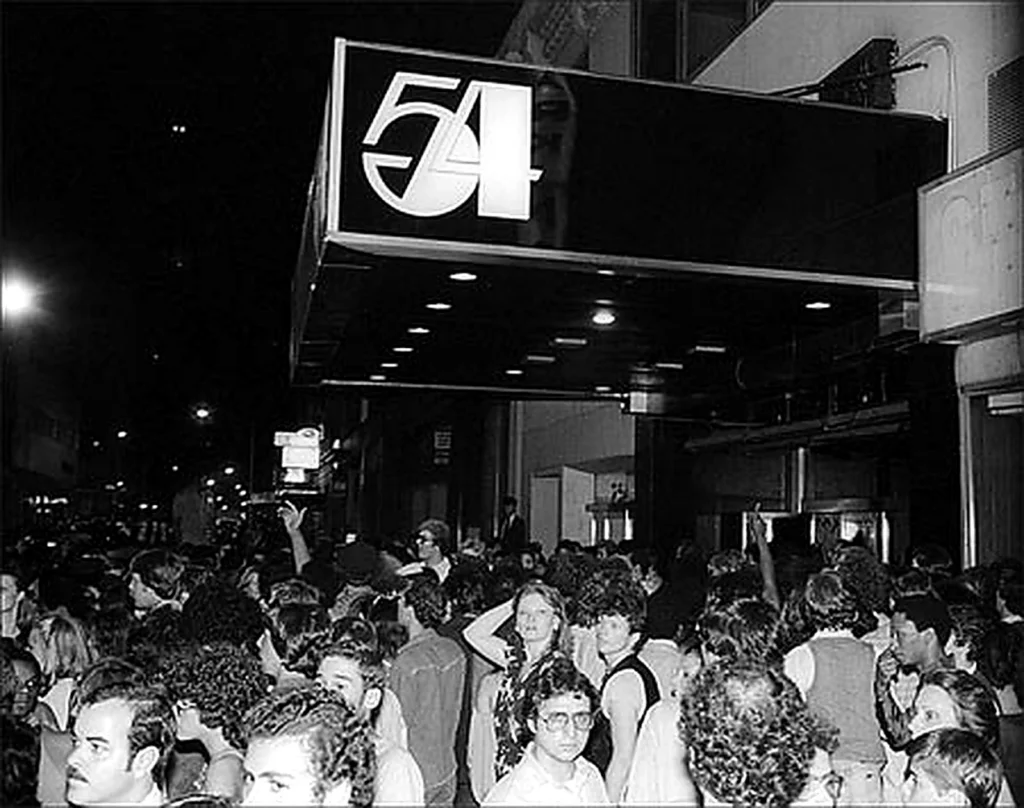
Legend has it that an enormous crowd gathered outside Studio 54 on its opening night, 26 April 1977, desperate to gain admission to what would soon become the epicentre of the international disco phenomenon.
For thirty-three extraordinary months, Studio 54 reigned virtually unchallenged as the world’s most celebrated nightclub.
It was the Olympus of the disco age.
By the time I arrived in October 1978, the establishment had already acquired an almost mythical reputation for excess, extravagance and extraordinary social encounters.
Every evening, the great and the good, the notorious and the beautiful, assembled outside its doors.
Yet possessing a celebrated name was no guarantee of admission.
The decision often rested with Marc Benecke, the formidable doorman who had become one of the most powerful figures in New York nightlife.
People offered him almost anything for the privilege of entering.
Most were disappointed.
Steve Rubell would also appear at the entrance from time to time, surveying the hopeful crowd and bestowing admission upon those who happened to catch his eye.
Even celebrities could find themselves turned away.
Warren Beatty was reportedly refused admission on one occasion.
More famously, Nile Rodgers and Bernard Edwards of Chic were denied entry, an experience that inspired their enormously successful song Le Freak.
Andy Warhol captured the paradox perfectly when he described the entrance as a dictatorship and the dance floor as a democracy.
It was a wonderfully accurate observation.
Outside, the most ruthless social selection imaginable.
Inside, an extraordinary degree of freedom.
Bob Colacello, editor of Warhol’s celebrated Interview magazine, once discussed with Rubell the unusual philosophy governing admission.
Rubell’s approach was based less upon conventional social standing than upon the creation of an exciting, beautiful and sexually liberated crowd.
The objective was not simply to fill the room.
It was to create an atmosphere unlike anywhere else.
Photograph: Steve Rubell with friends.
Among the personalities I encountered almost every night were two particularly unforgettable figures.
The first was Rollerina, a gentleman who appeared dressed as a fairy, complete with wings, a magic wand and roller skates. He glided through the club like some extraordinary apparition from a particularly extravagant fairy tale.
Rumour had it that beneath this theatrical alter ego was a successful Wall Street financier.
Whether true or not, the story only added to his mystique.
The second was the wonderful Disco Sally, an elderly lady who danced with an enthusiasm that would have exhausted people half her age.
She was one of Studio 54’s most beloved characters, a magnificent demonstration that age was no obstacle to enjoying life.
Stories circulated that she had danced until her final breath, although the legend was rather more dramatic than the reality.
What mattered was the spirit she represented.
Studio 54 was a place where people could become whoever they wished to be.
The evenings themselves were exercises in theatrical fantasy.
The lighting could suggest fog, storms, wind or snow. The club’s elaborate effects even recreated the passage of time, with artificial sunrises and sunsets unfolding above the dancers.
It was possible to experience an entire imaginary day without ever leaving the dance floor.
Photograph: The waiters of Studio 54. © Allan Tannenbaum / Zeitgeist Films.
Steve Rubell was, alongside Carmen, the heart and soul of the establishment.
During those extraordinary years, Carmen conceived and organised the magnificent celebrations, whilst Steve, a born showman, presided over the nightly spectacle.
Together, they made a formidable pair.
Their understanding of entertainment was almost theatrical.
Every element appealed to the senses, and every evening seemed designed to leave the guests longing for more.
During the month I spent there, I watched many of the same people return night after night.
I was one of them.
Studio 54 possessed an almost narcotic attraction.
You never tired of it.
You simply wanted to return.
Lust and Debauchery
The upper boxes of the former theatre offered a rather different form of entertainment.
People disappeared into their shadowy recesses, and I shall leave it to the reader’s imagination to decide precisely what took place.
Suffice it to say that Studio 54 did not acquire its reputation as a palace of modern bacchanalia without good reason.
For particularly privileged guests, there was also the basement.
This was a comparatively small, somewhat ramshackle space with low ceilings, where discretion was considerably more important than decoration.
It offered a refuge from the crowds and the possibility of indulging one’s whims without attracting too much attention.

One evening, Steve Rubell invited me downstairs.
I shall cherish the memory, although certain details are perhaps best left where they belong: in the delightful privacy of the past.
After all, we were young, carefree and thoroughly enjoying ourselves.
The dance floor itself was hardly a model of restraint.
Poppers, Quaaludes and cocaine were part of the prevailing culture, consumed with a casualness that would be startling today.
The atmosphere was one of almost complete abandon.
In the lounge, the waiters were another attraction altogether.
Hand-picked by Steve for their extraordinary good looks, they resembled a procession of modern Adonises, frequently bare-chested and very much part of the spectacle.
One of the young men said to have worked there was Alec Baldwin, long before his emergence as a celebrated Hollywood actor.
Everything at Studio 54 seemed designed to challenge convention.
Nothing was ordinary.
Nothing was restrained.
And that, of course, was precisely the point.
Epilogue: The End of a Dream
Every dream must eventually come to an end.
Studio 54 was no exception.
After almost three years of unprecedented fame, Steve Rubell and Ian Schrager became embroiled in a federal investigation involving tax evasion and the club’s financial affairs.
Their subsequent convictions and prison sentences brought the original Studio 54 era to an abrupt conclusion.
It was the end of the most extraordinary chapter in the history of disco.
On 4 February 1980, the club held its legendary farewell celebration, remembered as The End of Modern-Day Gomorrah.

Steve, Carmen and Ian presided over one final evening of extraordinary extravagance.
Some two thousand guests gathered to bid farewell to the nightclub that had become the symbol of an entire generation.
Diana Ross appeared in the DJ booth and sang for the assembled crowd.
It was an appropriately theatrical ending.
Two days later, Rubell and Schrager began serving their prison sentences.
They would ultimately spend approximately thirteen months behind bars before being released in April 1981.
The world they had created was already disappearing.

Following their release, Rubell and Schrager entered the hotel business, establishing the Morgans Hotel on Madison Avenue.
Schrager would go on to become one of the most influential hoteliers of his generation.
Rubell, meanwhile, remained closely associated with New York nightlife.
Together with Schrager, he was involved in the creation of the Palladium, the spectacular nightclub that opened in the 1980s and became famous for incorporating works by such artists as Keith Haring, Kenny Scharf, Jean-Michel Basquiat and Andy Warhol.
The Palladium became another important centre of Manhattan’s nightlife, although the spirit of Studio 54 could never truly be reproduced.
Steve Rubell died in 1989 from AIDS-related complications.
His funeral brought together many of the personalities who had populated his extraordinary world, including Donald Trump and numerous members of the original Studio 54 circle.
With his death, another part of that extraordinary era disappeared.
The Legend Lives On
In 1998, Miramax released Mark Christopher’s film 54, an attempt to recreate the atmosphere of the legendary nightclub.
Unfortunately, the original theatrical release offered a rather sanitised and superficial interpretation of the Studio 54 phenomenon.
Approximately forty-five minutes of material were removed, much of it dealing with the gay themes that had been central to the original story.
This was a particularly unfortunate decision.
The gay community was not a peripheral element of Studio 54.
It was fundamental to the club’s identity, creativity and atmosphere.

To minimise that contribution was to misunderstand the very essence of the establishment.
As one critic observed, attempting to make a film about Studio 54 whilst diminishing its gay dimension was rather like making a film about India whilst overlooking Hinduism.
Fortunately, Mark Christopher was eventually able to present his director’s cut at the Berlin International Film Festival in 2015.
The restored version received a considerably warmer reception and offered a more faithful representation of the world the director had originally intended to portray.
Matt Tyrnauer’s documentary Studio 54, released in 2018, provided another fascinating perspective upon the club’s extraordinary history.
Rather than concentrating exclusively upon the famous parties, Bianca Jagger’s white horse and the glittering personalities who frequented the establishment, the documentary examined the business relationship between Rubell and Schrager and the circumstances surrounding their spectacular rise and fall.
It was an interesting and revealing film.

Nevertheless, I found the relatively limited attention paid to Carmen D’Alessio deeply disappointing.
To my mind, her contribution to the creation and international reputation of Studio 54 was fundamental.
To tell the story without adequately acknowledging her role is to overlook one of the essential personalities behind its success.
It is a serious omission, and an unjust one.
Photograph: The iconic Man in the Moon installation at Studio 54.
There were, of course, countless other extraordinary celebrations.
For Elizabeth Taylor’s birthday, the club was transformed with an abundance of fresh gardenias, creating a fragrant and spectacular setting worthy of one of Hollywood’s greatest stars.
Such occasions were not simply parties.
They were productions, conceived with imagination and executed on a scale that would be almost inconceivable today.
The fascination with Studio 54 has endured long after the disappearance of its original clientele.
The exhibition Studio 54: Night Magic, presented at the Brooklyn Museum in New York, revisited the extraordinary cultural influence of the nightclub and the remarkable personalities who created its legend.
It was a reminder that Studio 54 represented far more than a fashionable place to dance.
It was an expression of a particular moment in American cultural history, when music, fashion, art, sexuality and celebrity converged with an intensity that has rarely been equalled.
Although Studio 54 continued operating under different management until 1986, it was never quite the same.
The original magic had vanished.
Its doors eventually closed, and the building passed into another chapter of its long theatrical history.
But the legend survived.
And for those of us fortunate enough to have experienced those extraordinary nights, it will never entirely fade.
I arrived in New York in September 1978 as a twenty-two-year-old setting out to discover the world.
I left a month later having witnessed something that no amount of travel, however extensive, could ever quite reproduce.
Studio 54 was more than a nightclub.
It was a moment in history.
And I was fortunate enough to have been there.
The Brooklyn Museum in New York had an exhibition called Studio 54: Night Magic, which was a big hit in the Big Apple.
Studio 54 was open until 1986. But it was never the same. It closed its doors forever in full decadence. But its legend will always live on because it is part of a generation’s history.


 Carlos Mundy

 Dixon Acosta

 Elga Wimmer


 Pablo H. Aznar


 Filippo degli Albizzi
 Milton Cooper