
 Carlos Mundy
Some places one visits, others one endures, but there are a precious few one inhabits entirely—places where time slows and the world beyond recedes into irrelevance. The Fairmont Tazi Palace in Tangier belongs firmly in the latter category.
A dear friend of mine has taken up residence there for the season and, with the sort of insistence one simply does not refuse, declared that I absolutely must see it for myself. She has asked to remain anonymous—an admirable commitment to discretion, though one suspects the palace staff may have noticed her. With the able assistance of the hotel’s impeccably polished PR director, the charming Rajae Jouhari, she arranged for me to spend a full twenty-four hours within its storied embrace. One does so love friends who understand the importance of a proper introduction.
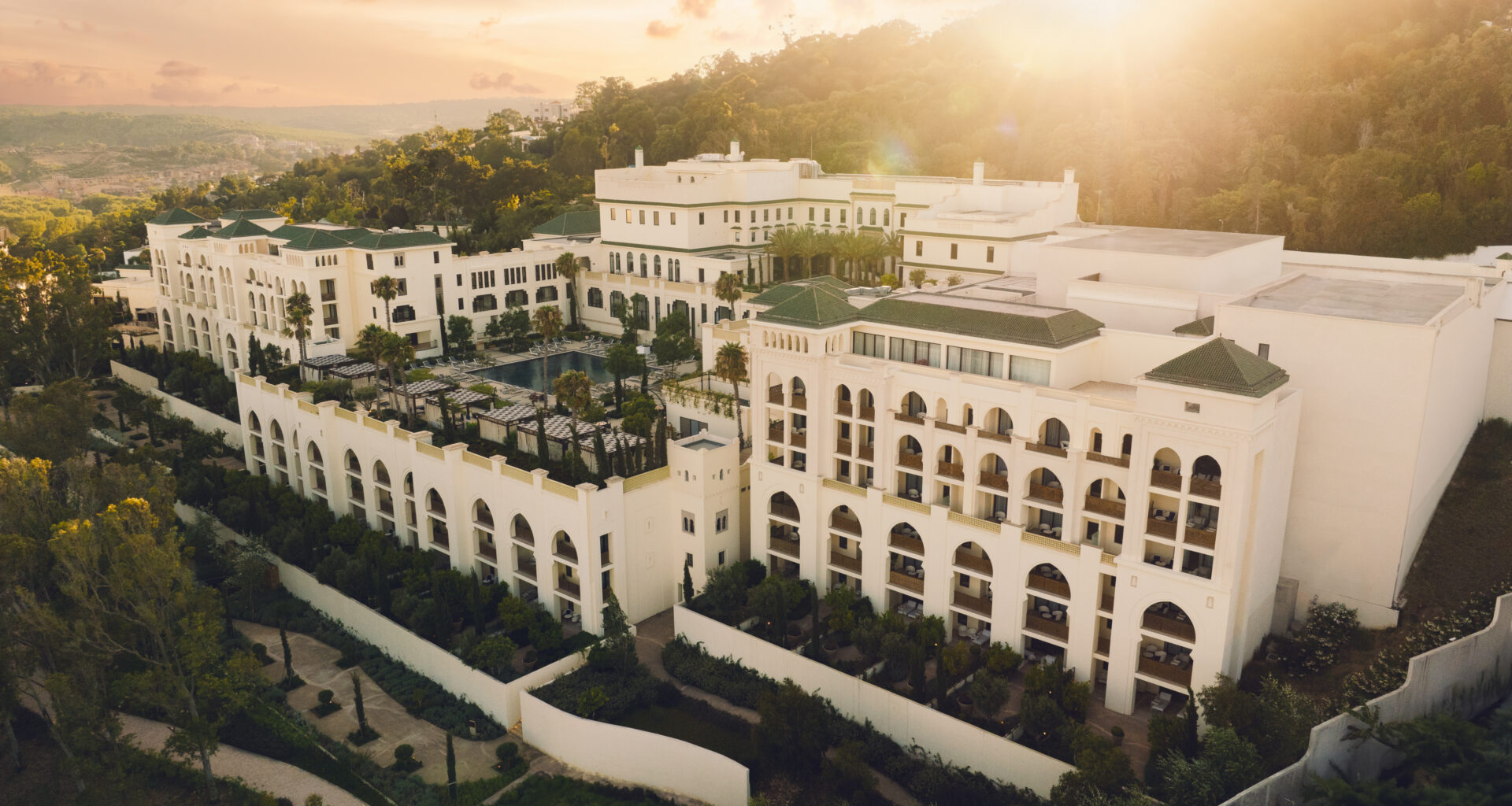
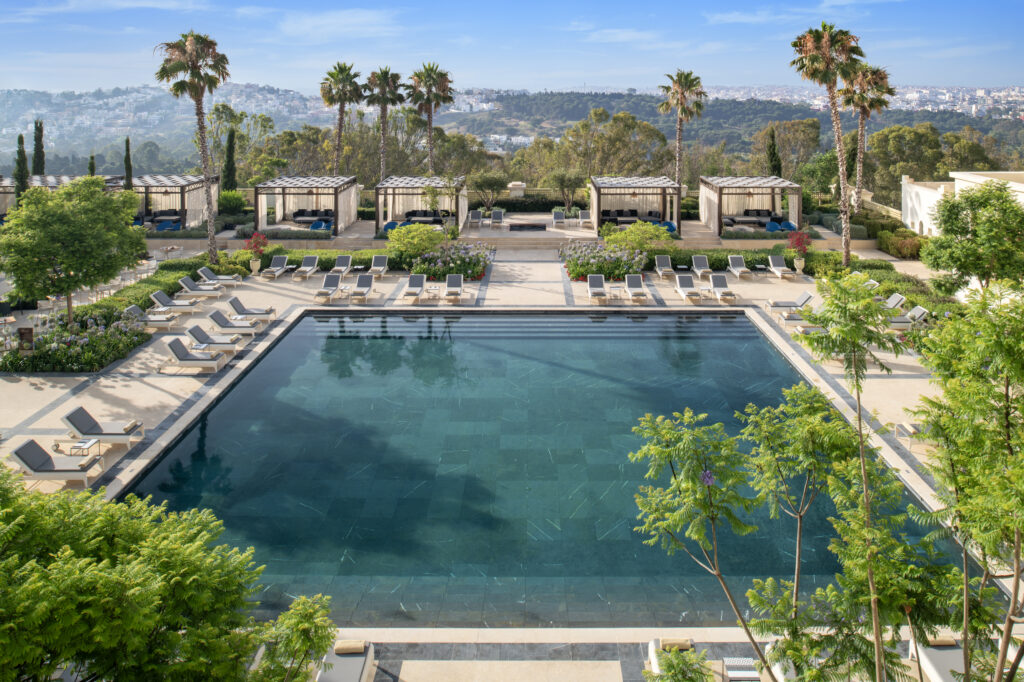
The palace is, of course, far more than a hotel. Perched high in the hills above Tangier, it gazes imperiously over the city and beyond to the Strait of Gibraltar. Conceived in the 1920s for Pasha Tazi, a courtly adviser to the Sultan, it was intended to embody both power and splendour. Then, as politics shifted—as politics invariably do—the palace languished in dignified neglect for decades. Now, following the most meticulous restoration, it has re-emerged not as a relic, but as an opulent retreat where history and modern luxury are joined with exquisite discretion.
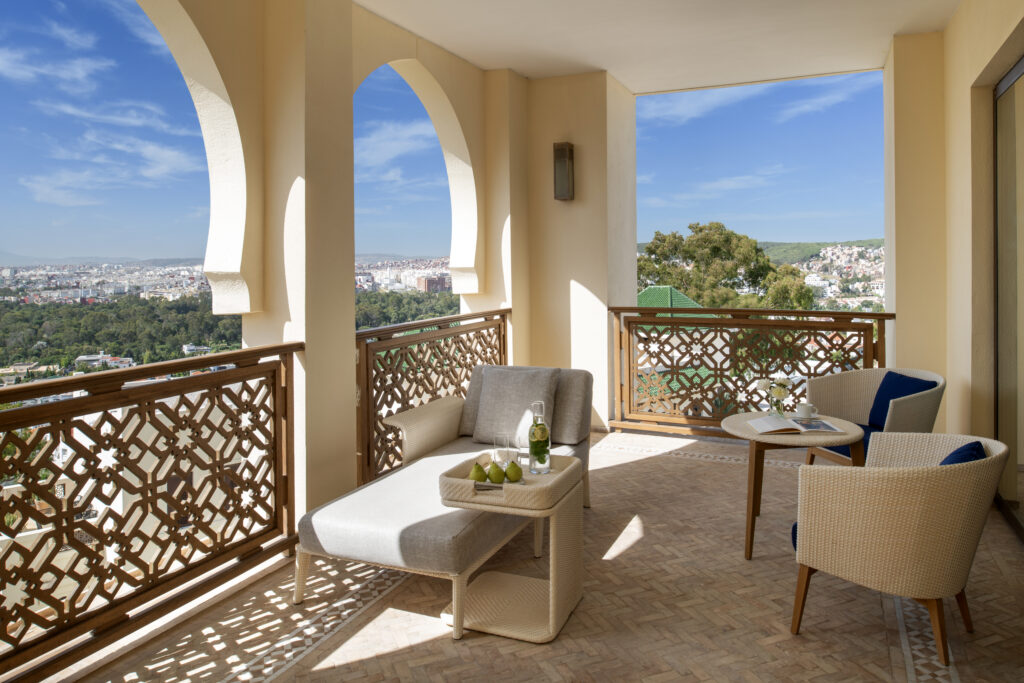
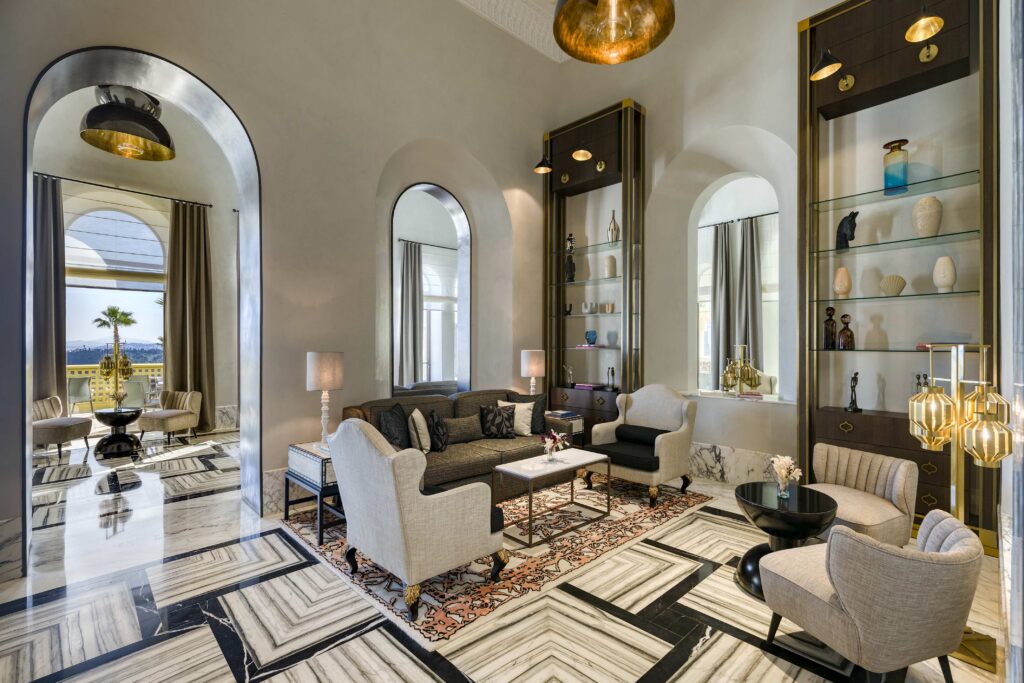
I arrived just before luncheon and was greeted by Othman Abdelghaniand, Directeur d’Hébergement. I was swept through the entrance by a reception team so gracious and efficient that one almost suspected choreography. My suite was a quietly decadent affair, complete with a private garden in which an orange tree stood in fragrant solitude. Having deposited my luggage and duly admired the marquetry, I was taken on a tour of the estate, the palace revealing itself room by room like a beautifully rehearsed performance. Light-dappled salons, murmuring fountains and terraces from which Tangier glimmered in the distance—it was all terribly intoxicating.
Luncheon was served at Social Kitchen, a restaurant that manages to be both stylish and refreshingly unpretentious. Its menu offers Japanese delicacies alongside the ubiquitous poké bowls of which the world appears so enamoured. To my surprise, the latter proved rather agreeable beneath the Moroccan sun: light and refreshing, without ever lapsing into the solemn earnestness of “health food”.
At four o’clock, I submitted to a pottery class. Ordinarily, one might imagine such activities to be ghastly diversions devised for tourists, but this was conducted with such authenticity that it proved genuinely diverting. Guided by patient artisans, I fashioned a modest clay vessel which, I am assured, may survive the journey home. It now sits upon a shelf, looking terribly pleased with itself.
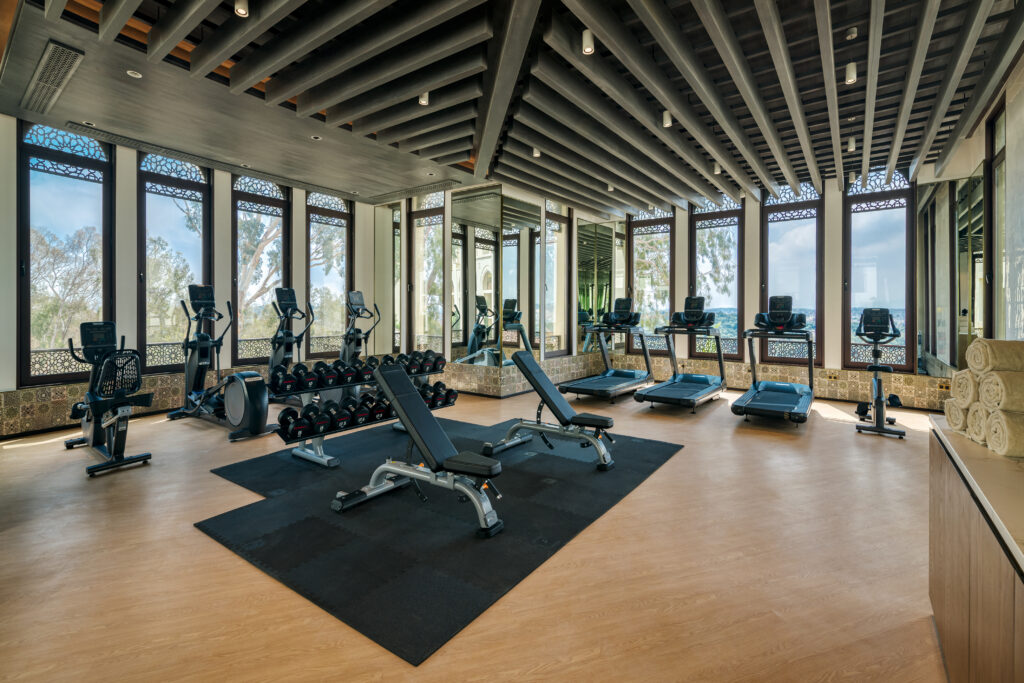
Later, a visit to the gym was in order. I make a point of inspecting the spa and fitness facilities wherever I stay and can confirm that the Tazi Palace does not disappoint. Vast windows framed views so spectacular that one could almost forgive oneself for lingering idly on the treadmill. The equipment was state-of-the-art, gleaming and faintly intimidating, while its round-the-clock availability is nothing short of a godsend for those of us who occasionally dine too well at supper.
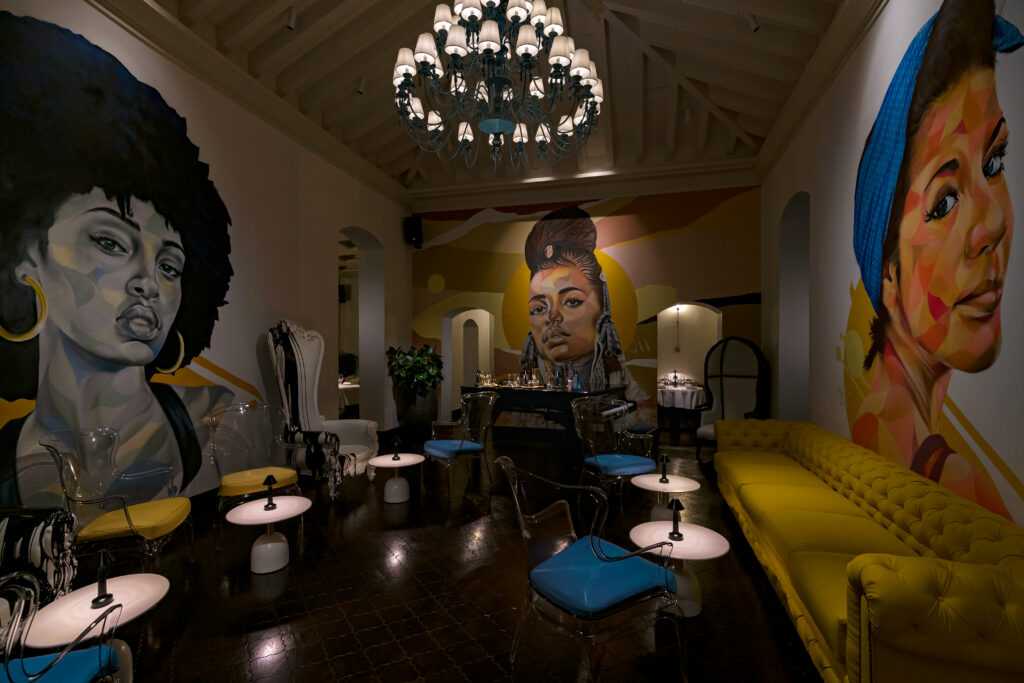
Speaking of supper, the evening was devoted to Parisa, the palace’s resplendent Persian restaurant—the first of its kind in Tangier and, indeed, the brand’s debut on the African continent. Executive Chef Mohamed Elmarsi greeted me personally, which I took as an excellent omen, and kindly agreed to indulge me with a tasting menu.
The result was nothing short of revelatory. We began with Zaytoon Parvade, a delicate mêlée of olives, walnuts and pomegranate that managed to be both bracing and elegant, followed by Kaslik Badinjane, a warm aubergine dip of positively operatic depth. The main courses—grilled fish and saffron-kissed chicken—arrived with quiet confidence, each mouthful a triumph of subtlety and finesse. I confess that I left the table enchanted, replete and possessed of the distinct suspicion that Persian cuisine had, until now, been criminally underestimated in Tangier.
Before I forget, it would be remiss of me not to mention the palace’s unofficial mascot: a rescued cat who roams the corridors as though he were master of the entire estate. He appears wherever one least expects him, invariably reclining upon the most comfortable sofa, and has become something of a talisman of good fortune. Quite right, too.
The following morning dawned with a breakfast that was both wholesome and immaculately presented, served in a dining room awash with sunlight. The staff—all strikingly young, handsome and impossibly multilingual—glided about with a charm at once effortless and sincere.
As I prepared to depart, it occurred to me that the Tazi Palace performs a most delicate balancing act: rooted in Morocco’s history yet wholly attuned to modern taste; grand but never pompous; cosmopolitan, yet unmistakably Moroccan.
In an age when so many so-called luxury destinations blur into one another, the Fairmont Tazi Palace offers something altogether rarer: a genuine sense of place and belonging. It is, quite simply, the sort of establishment where one does not merely stay; one resides.
Tangier may once have been regarded as a crossroads, a city en route to somewhere else, but that time has passed. For the discerning traveller, Tangier—and most especially the Tazi Palace—is the destination itself.


 Metaphore Magazine

 Carlos Mundy


 Jim Dunn
 Charles Markeaton-Mundy
 Gaspard de Montfort

 Milton Cooper
