
 Gaspard de Montfort
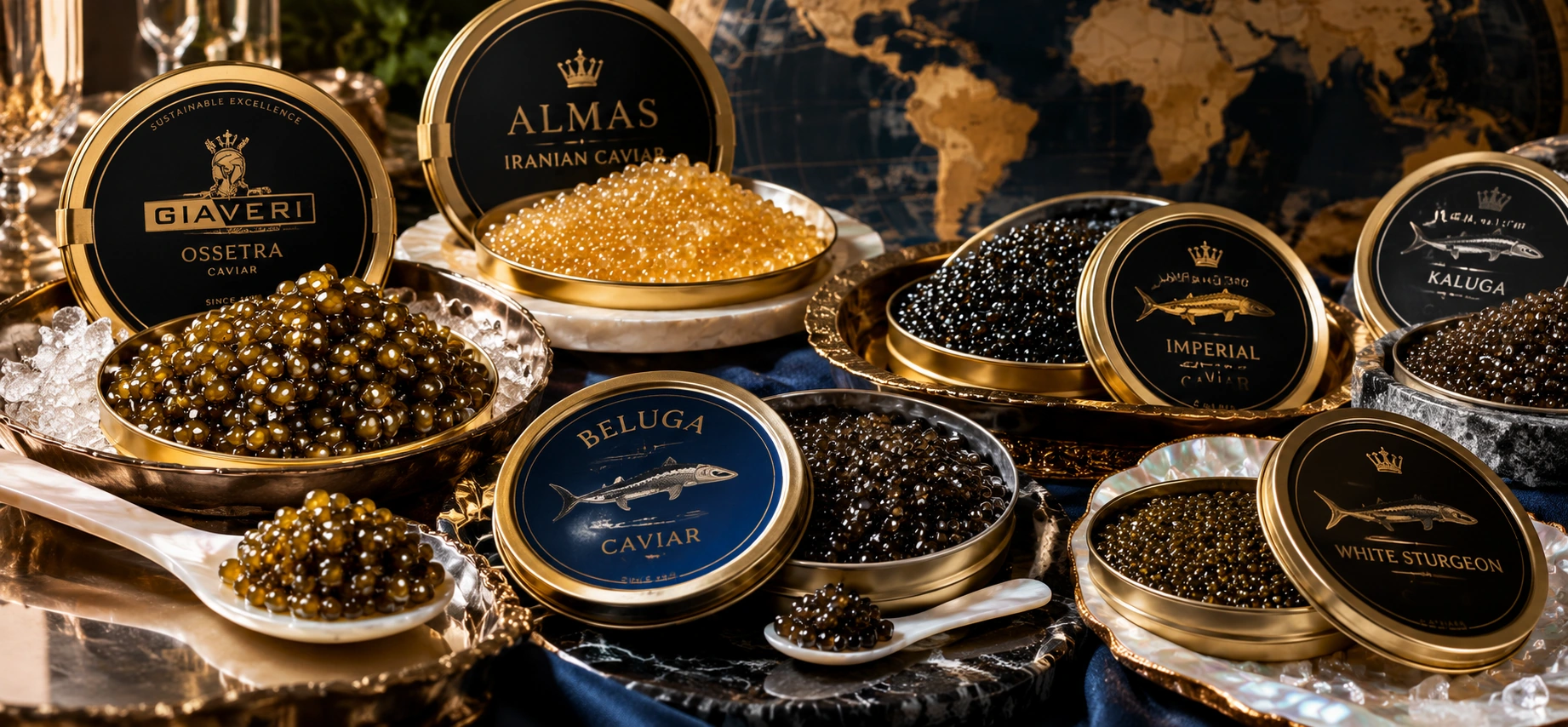
Once the almost mythical preserve of Russian aristocrats, Persian merchants and the grandest European dining rooms, caviar has undergone an extraordinary transformation. Today, some of the finest examples are produced not on the shores of the Caspian Sea but in the lakes, rivers and sophisticated aquaculture facilities of Italy, France, China, Poland, Uruguay and even Madagascar. As a new generation of producers challenges centuries of tradition, the world’s most celebrated delicacy is enjoying a renaissance in which provenance, craftsmanship and sustainability matter as much as prestige.


From the Imperial Courts to the Modern Gastronomic Table
Few foods possess the extraordinary mystique of caviar. For generations, the mere mention of Beluga, Oscietra or Sevruga evoked images of Imperial Russia, the Shahs of Persia, magnificent banquets in St Petersburg, and the legendary restaurants of Paris, London and New York.
Caviar was not simply something one ate. It was a declaration of refinement, an indulgence associated with wealth, ceremony and an appreciation of the rarest pleasures of the table.
Its delicate pearls, ranging from silvery grey to deep charcoal and occasionally pale gold, offered a gastronomic experience unlike any other: a subtle resistance against the palate, followed by a release of buttery, saline and sometimes gloriously nutty flavours.
For much of the twentieth century, the world’s finest caviar came from the Caspian Sea, particularly the waters controlled by Iran and the Soviet Union. Russian and Persian caviar became almost synonymous with the product itself.
That world has largely disappeared.
Decades of overfishing, illegal trafficking, habitat destruction, pollution and the disruption of sturgeon migration brought many wild populations dangerously close to extinction. International restrictions progressively curtailed the trade in wild sturgeon caviar, forcing the industry to reconsider its very existence.
What followed was one of the most remarkable transformations in modern gastronomy.
Rather than allowing caviar to become a relic of a vanished culinary age, entrepreneurs, aquaculture specialists and dedicated producers began breeding sturgeon in controlled environments, often thousands of miles from the Caspian.
The results have been extraordinary.
Today, exceptional caviar is produced in countries that would once have seemed unimaginable to the connoisseur. China has emerged as a major international force, Italy and France have developed highly respected producers, and countries as geographically diverse as Poland, Germany, Spain, the United States, Uruguay and Madagascar have established their own reputations.
The great paradox is that a delicacy once defined by its scarcity and geographical exclusivity has found a new future through cultivation.
And in many cases, the quality is superb.
The New Geography of Caviar
From the Caspian Sea to the world’s new sturgeon farms

China: The New Giant of the Caviar World
Perhaps the greatest surprise of the modern caviar industry is that China has become its most formidable commercial power.
On the shores of Qiandao Lake in Zhejiang Province, the company behind Kaluga Queen has developed an extraordinary aquaculture enterprise. Far removed from the Caspian, its facilities produce caviar that now appears on the tables of distinguished restaurants, luxury hotels and international airlines.
In 2025, Kaluga Queen reported sales of approximately 291.5 tonnes of caviar, representing 36.1 per cent of the global market by volume, according to its Hong Kong stock-exchange documentation. Its products reached customers in 46 countries and territories.
These are remarkable figures for an industry whose identity was once so closely associated with Russia and Iran.
Kaluga Queen specialises in several varieties, including Kaluga, Amur and hybrid sturgeon caviar, prized for their generous pearls, rich textures and elegant flavour profiles.
Its commercial achievement has challenged a long-standing prejudice: that exceptional caviar must necessarily come from Europe or the Caspian region.

Italy: A New European Centre of Excellence
Italy has quietly established itself among the most respected producers of farmed caviar.
In Lombardy, the company Calvisius has played a pioneering role in developing the industry, drawing upon Italian expertise in aquaculture, food processing and gastronomy.
Its operations are associated with the production of several sturgeon varieties, including white sturgeon and Beluga.
Other distinguished Italian names include Caviar Giaveri and Cru Caviar, each contributing to the country’s increasingly sophisticated reputation.
Italian caviar has become particularly attractive to chefs because of its consistency, traceability and ability to complement the delicate flavours of Mediterranean cuisine.
A spoonful of refined Oscietra beside a simple preparation of fresh pasta, for example, can produce an experience of remarkable elegance.

France: The Art of Refinement
France, whose gastronomic relationship with caviar is legendary, has become an important producer in its own right.
Aquitaine, particularly the region surrounding the Gironde estuary and the Dordogne basin, has developed a respected caviar industry.
Producers such as Sturia, Caviar de Neuvic and Prunier have helped establish French caviar as a serious alternative to the traditional Caspian varieties.
French producers have paid particular attention to the Siberian sturgeon, whose roe can offer remarkable delicacy, with clean marine notes, a pleasant buttery texture and a lingering finish.
France has also benefited from its exceptional culinary infrastructure. The proximity of leading chefs, luxury hotels, specialist merchants and discerning consumers has encouraged an almost artisanal approach to grading, maturation and presentation.
Today, a tin bearing the designation Caviar d’Aquitaine can command considerable respect among European connoisseurs.

Uruguay: South America’s Unexpected Success
Uruguay has become one of the most intriguing names in the international caviar business.
Its relatively clean freshwater resources and suitable aquaculture conditions have encouraged the development of sturgeon farming, particularly in the Río Negro region.
Black River Caviar has earned international recognition for its farmed caviar, demonstrating that South America can produce roe capable of competing with established European names.
Uruguay’s importance lies not only in its geographical novelty but also in the opportunities presented by carefully managed farming environments and modern production techniques.
It is an excellent illustration of how far the caviar industry has travelled from its historical origins.

Madagascar: Caviar from the Indian Ocean’s Great Island
Of all the new caviar-producing countries, Madagascar must surely be among the most unexpected.
In the highlands near Lake Mantasoa, east of Antananarivo, the enterprise behind Rova Caviar has developed a sturgeon-farming operation in a country more commonly associated with vanilla, spices and tropical biodiversity.
The enterprise was established by French entrepreneurs who recognised the potential of the region’s freshwater environment and relatively stable temperatures.
Its production includes several sturgeon varieties, and the company has sought to position Madagascan caviar within the international luxury market.
The very existence of such an enterprise illustrates the extraordinary versatility of modern aquaculture.
Caviar, once considered inseparable from the northern waters of Eurasia, is now being produced successfully on an island in the Indian Ocean.
Poland: A Rising European Power
Poland has become another significant producer, supported by its freshwater resources and established aquaculture expertise.
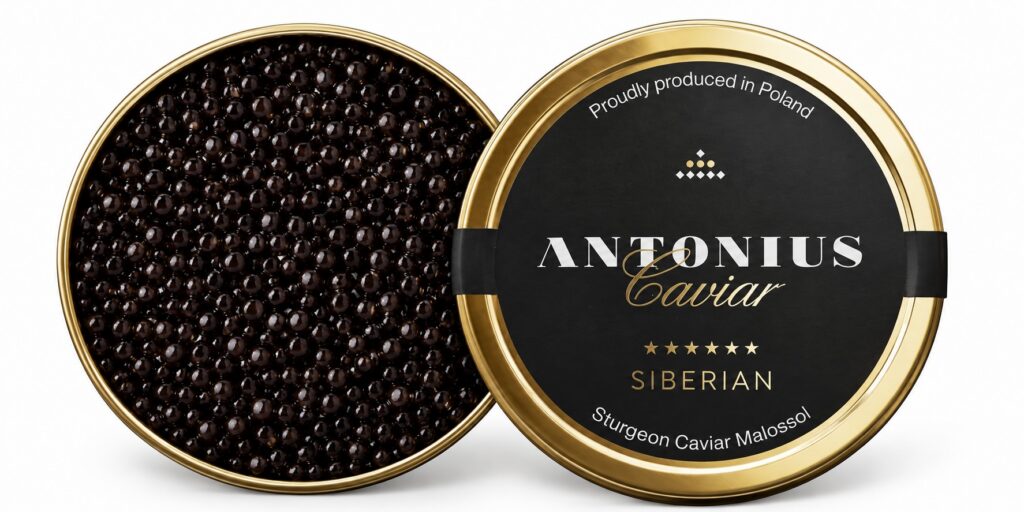
Antonius Caviar is among the country’s most prominent names, producing caviar from Siberian and Russian sturgeon.
Polish caviar has attracted attention for its consistency and competitive positioning within the premium market.
The country also benefits from its proximity to the principal European centres of luxury gastronomy, allowing fresh products to reach customers relatively quickly.
Alongside Italy and France, Poland is helping redefine the geography of European caviar.
Other countries deserve recognition. Spain, particularly through Caviar de Riofrío in Andalusia, has developed a distinguished reputation for organic aquaculture. Germany produces notable caviar, whilst the United States has established an industry involving both imported sturgeon species and native American white sturgeon.
Even Britain has entered the field through specialist producers, demonstrating the remarkable extent of this international expansion.
Iran and Russia, meanwhile, have not disappeared from the business. Both continue to produce farmed caviar, and their historical expertise remains considerable. What has changed is their former near-monopoly over the finest roe.
The modern caviar industry is truly international.
The World’s Finest Caviars: Understanding the Great Varieties


One of the most persistent misconceptions surrounding caviar is that its quality depends primarily upon its country of origin.
In reality, the species of sturgeon, the age and health of the fish, the quality of its environment, the treatment of the roe and the skill of the producer all contribute to the final result.
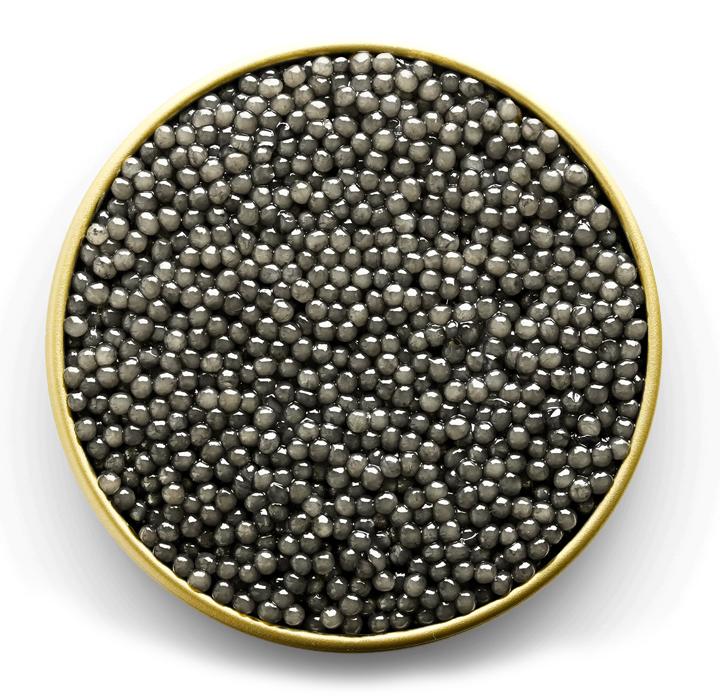
The finest caviar should possess a clean aroma, individual pearls of pleasing consistency, an elegant balance of salinity and a flavour that develops gradually on the palate.
A strong fishy smell, excessive saltiness or unpleasantly mushy texture are generally undesirable.
Among the great varieties, several deserve particular attention.
Beluga: The Aristocrat of Caviar
Beluga, produced by Huso huso, remains the most celebrated and often the most expensive of the traditional varieties.
Its pearls are exceptionally large, ranging from dark grey to a beautiful silvery colour. The texture is soft and delicate, almost melting against the tongue, whilst the flavour is buttery, subtle and lingering.
The Beluga sturgeon is a slow-maturing fish, which makes production particularly expensive. A farm may have to wait well over a decade before obtaining its first commercially valuable roe.
Beluga remains the ultimate expression of caviar luxury for many enthusiasts, although others prefer the more pronounced flavour of Oscietra.
Its rarity also means that authentic Beluga should always be purchased from reputable suppliers with proper documentation.
Oscietra: The Connoisseur’s Favourite
If Beluga is the aristocrat, Oscietra is arguably the intellectual of the caviar world.
Produced principally from Russian sturgeon, Acipenser gueldenstaedtii, its eggs are generally medium to large, with colours ranging from dark brown and grey to warm amber and occasionally golden hues.
What distinguishes exceptional Oscietra is its complexity.
The flavour can suggest toasted hazelnuts, fresh butter, minerals and the faintest suggestion of the sea. The finish is often remarkably long.
For many experienced connoisseurs, an outstanding Oscietra offers a more interesting gastronomic experience than Beluga.
Golden Oscietra is particularly prized, although colour alone should never be regarded as a guarantee of quality.
Sevruga: The Most Expressive of the Classics
Sevruga, from Acipenser stellatus, produces smaller pearls with a comparatively pronounced flavour.
It is often more intensely saline, with a lively marine character and a distinctive finish.
Although traditionally less expensive than Beluga, first-rate Sevruga is a delicacy in its own right.
It appeals particularly to those who prefer caviar with a more assertive personality.
Kaluga: The Modern Challenger
Kaluga, Huso dauricus, and especially hybrids involving the Amur sturgeon, have become enormously important in contemporary caviar production.
Their large, glossy pearls can offer a luxurious buttery texture reminiscent of Beluga, often with a firmer membrane and a slightly more pronounced flavour.
Much of the finest Kaluga-hybrid caviar now comes from China.
For buyers seeking an opulent caviar experience without necessarily paying Beluga prices, a superior Kaluga hybrid can be an excellent choice.
Baerii: The Elegant Everyday Luxury
Siberian sturgeon, Acipenser baerii, has become one of the principal foundations of European aquaculture.
Its eggs are generally smaller than those of Beluga or Kaluga, with colours ranging from dark charcoal to brown.
The flavour can be clean, mineral, lightly earthy and pleasantly saline.
Baerii is frequently more affordable because the species can mature comparatively quickly under appropriate farming conditions.
It is an excellent introduction to genuine sturgeon caviar and can also be a highly sophisticated product when produced and cured with care.
These distinctions are reflected in specialist tasting guides, although the character of each harvest can vary considerably.
What Does the Finest Caviar Cost in 2026?
Caviar prices have always been part of its mystique. Yet today’s market is far more varied than it was during the age of wild Caspian caviar.
One can purchase a small tin of genuine farmed sturgeon caviar for considerably less than the price of dinner in a fashionable London restaurant, whilst the rarest selections still command extraordinary sums.
The following are actual advertised UK retail prices from established merchants, illustrating the considerable differences between varieties and grades.
| Caviar | Retailer | 30g | 50g |
|---|---|---|---|
| Royal Baerii | The Caviar Bar | £29 | £48 |
| Oscietra | The Caviar Bar | £37 | £61 |
| Royal Kaluga | The Caviar Bar | £46 | £76 |
| Royal Oscietra | Petrossian | £77 | £128 |
| Golden Oscietra | Fortnum & Mason | £125 | £200 |
| Sevruga | Fortnum & Mason | £125 | £200 |
| Royal Beluga | Petrossian | £204 | £340 |
| Beluga 000 | Fortnum & Mason | £225 | £375 |
| Almas | Fortnum & Mason | — | £500 |
UK advertised retail prices observed in October 2026, including published listings and prices from a June 2026 guide. Availability and prices may change. The products differ in grading, sourcing and presentation, so the figures are illustrative rather than directly equivalent.
How Much Does Caviar Cost?
The differences are striking. A 30g tin of Baerii may cost less than £30 from one supplier, whilst an equivalent quantity of prestigious Beluga can exceed £200.
At the upper end, 50g of Almas caviar is advertised by Fortnum & Mason at £500, equivalent to £10,000 per kilogram.
Almas, traditionally associated with exceptionally pale roe from rare albino Beluga sturgeon, occupies a special place in the mythology of caviar. It is a luxury defined by scarcity as much as by taste.
However, the most expensive caviar is not necessarily the most enjoyable.
An excellent £80 tin of Oscietra can provide greater pleasure than a considerably more expensive but less distinguished selection of Beluga.
The essential consideration is the quality of the particular product, rather than its price or the romance of its name.
Why Caviar Remains So Expensive
The extraordinary prices associated with premium caviar are not simply the consequence of clever marketing.
Sturgeon farming is an unusually capital-intensive undertaking.
A producer must establish a suitable aquaculture environment, acquire and maintain breeding stock, provide specialised feed, monitor water quality and employ skilled personnel, often for many years before the first significant commercial return.
Unlike salmon or trout farming, where production cycles can be comparatively short, caviar production requires extraordinary patience.
Depending upon the species and farming conditions, a female sturgeon may require roughly seven to fifteen years to produce her first commercially useful roe, sometimes considerably longer.
During that time, the farm must finance the care of thousands of fish without receiving income from their caviar.
The financial risk is considerable.
Modern techniques can help producers monitor egg development and determine the appropriate harvesting moment. Some farms also employ methods intended to permit repeated harvesting without killing the fish, although these techniques present their own practical and quality-control challenges.
Once harvested, the eggs must be carefully separated, graded, cleaned, salted and packed under strict hygienic conditions.
The traditional malossol method, literally meaning lightly salted, remains highly valued because it allows the natural character of the roe to emerge without excessive salinity.
The entire process demands precision.
Too much salt can overwhelm the flavour. Poor handling can damage the delicate membrane. Inadequate refrigeration can compromise freshness and safety.
The finest producers therefore combine the patience of traditional agriculture with the precision of modern food science.
The Great Caviar Houses: Tradition Meets the New Producers

Petrossian — Paris
Founded in Paris in 1920 by the Armenian brothers Melkoum and Mouchegh Petrossian, the house helped establish caviar as one of the defining luxuries of European gastronomy.
Today, Petrossian remains a celebrated name, selecting, maturing and marketing caviar from different producers and regions. Its expertise lies as much in the art of selection and maturation as in the prestige of its historic name.Petrossian

Prunier — Paris
One of the great historic names in French gastronomy, Prunier is inseparable from the golden age of Parisian caviar service.
Its heritage connects the aristocratic dining culture of the twentieth century with the contemporary world of farmed French caviar.Prunier

Calvisius — Italy
A pioneer of modern European sturgeon aquaculture, Calvisius represents the emergence of Italy as a serious producer of luxury caviar.
Its strength lies in combining controlled farming with a sophisticated approach to processing and presentation.Calvisius

Kaluga Queen — China
The most powerful symbol of the industry’s geographical transformation, Kaluga Queen has established Chinese caviar within the international luxury market.
Its remarkable scale, sophisticated farming methods and growing presence in fine dining have made it one of the most influential businesses in the modern industry.Kaluga Queen
The distinction between a caviar house and a caviar producer is worth understanding. Historic merchants may select and mature roe obtained from several farms, whereas integrated producers breed the sturgeon and process the eggs themselves. A prestigious Parisian label does not necessarily indicate that the caviar was farmed in France.
That is why provenance should always be established from the actual product documentation rather than assumed from the merchant’s address.
The Art of Eating Caviar: Simplicity Is the Ultimate Luxury


11
There is a certain elegance in the traditional manner of serving caviar that no elaborate culinary invention can improve upon.
The finest caviar needs remarkably little accompaniment. Indeed, the more exceptional the product, the stronger the argument for allowing it to speak for itself.
A small quantity served directly from a chilled tin, using a mother-of-pearl, horn or other non-reactive spoon, remains the most revealing way to appreciate its character.
The first sensation should be the delicate texture of the pearls, followed by a gradual release of flavour. Good caviar should not assault the palate with salt. Its pleasure lies in subtlety, balance and persistence.
For a more substantial presentation, warm blinis accompanied by a little crème fraîche remain a classic choice. Small boiled potatoes, served warm with unsalted butter, provide another delightful combination, particularly with Oscietra or Baerii.
At the finest restaurants, chefs increasingly incorporate caviar into sophisticated preparations involving scallops, oysters, lobster, delicate fish, eggs and potatoes.
The challenge is always the same: to enhance the caviar without overwhelming it.
One of the most elegant contemporary approaches is to place a generous spoonful of Oscietra upon a perfectly cooked potato with a little cultured butter. The warmth releases the caviar’s aromas, whilst the simplicity of the ingredients allows its extraordinary complexity to emerge.
Champagne, Vodka or White Wine?
Champagne remains the natural companion to caviar, particularly a fine Blanc de Blancs made predominantly or entirely from Chardonnay.
Its acidity and mineral freshness provide an exquisite contrast to the buttery richness of the roe.
A mature Champagne with greater complexity can be magnificent alongside Oscietra, whilst a younger, more incisive style may be particularly successful with Baerii or Sevruga.
The Russian tradition of serving very cold vodka has its own undeniable charm. A good, clean vodka refreshes the palate without competing with the caviar’s delicate flavours.
For those who prefer wine, a fine Chablis, a mineral-driven white Burgundy or a distinguished dry Riesling can be exceptional.
The essential principle is restraint. Strongly oaked wines, excessively sweet accompaniments and heavily seasoned dishes risk concealing precisely those qualities for which the finest caviar is prized.
Sustainability: The Delicate Question Behind the New Industry
The development of sturgeon aquaculture has been essential to reducing the legitimate market’s dependence upon endangered wild populations.
But the assumption that all farmed caviar is automatically sustainable would be mistaken.
Aquaculture can present environmental challenges involving water consumption, energy requirements, feed production, waste management and animal welfare.
Standards vary between countries and individual farms.
There is also the continuing problem of illegal wild-caviar trafficking and the mislabelling of products.
The Convention on International Trade in Endangered Species of Wild Fauna and Flora, commonly known as CITES, has established a system of identification and traceability for internationally traded sturgeon caviar.
A CITES label provides information concerning the species, source and origin of the product, helping distinguish legally produced caviar from material that may have entered the market unlawfully.
Nevertheless, enforcement remains imperfect. A CITES report has warned that illegal trade and fraudulent labelling continue despite the growth of aquaculture, which accounts for more than 95 per cent of legal international caviar trade.
For the discerning consumer, therefore, responsible purchasing should involve more than selecting a famous brand.
The most trustworthy producers should be able to explain where their sturgeon are raised, which species are involved, how the fish are managed and how the caviar is processed.
Transparency has become an essential component of genuine luxury.
How to Recognise an Exceptional Caviar
A true connoisseur does not judge caviar by the colour of the tin or the prestige of the name alone.
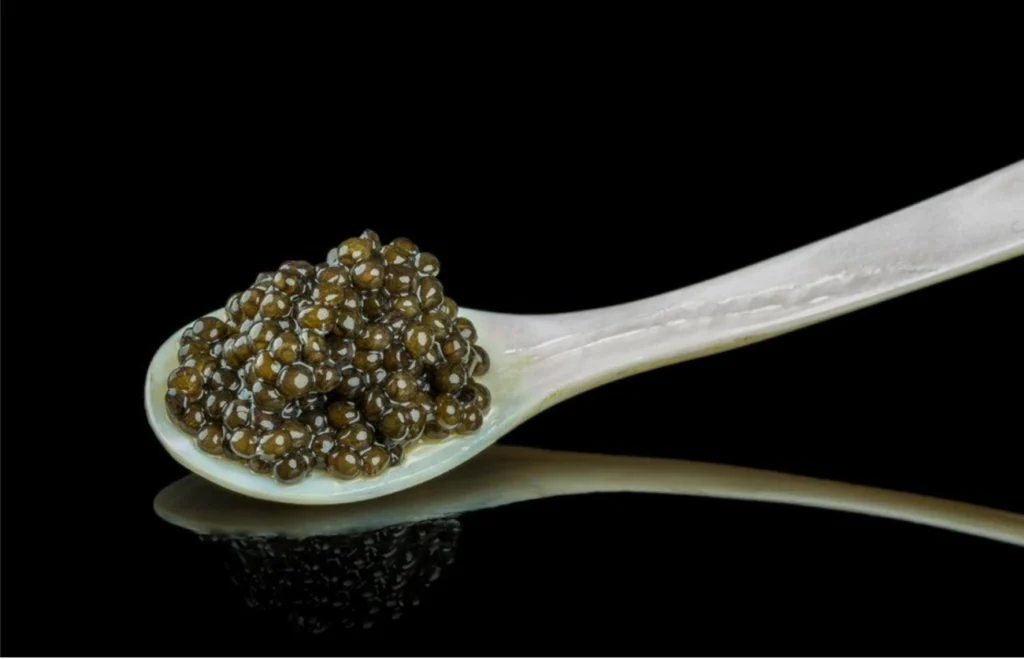
The first consideration is appearance. The pearls should generally be well defined and possess an attractive natural lustre. Their size and colour will vary according to species, but within a particular grade a pleasing degree of uniformity is desirable.
The aroma should be clean and delicate, never aggressively fishy.
Upon tasting, the eggs should yield naturally, releasing flavours that evolve rather than disappear immediately.
The best examples often possess an extraordinary finish, with delicate impressions of butter, hazelnuts, minerals or the sea lingering long after the pearls themselves have dissolved.
Freshness and storage are equally important. Caviar is highly perishable and should be maintained at the temperature specified by its producer, commonly around 0–4°C, with particular attention to the use-by date. Once opened, it is best enjoyed promptly.
For someone discovering caviar, an excellent Oscietra is perhaps the most rewarding introduction. It combines elegance, complexity and the characteristic texture that makes this delicacy so distinctive.
For those seeking an exceptionally creamy and luxurious experience, Beluga or superior Kaluga hybrid may be preferable.
And for the more adventurous palate, a distinguished Sevruga can offer an intensity that is entirely its own.
The Future: Will Caviar Become an Everyday Luxury?
Perhaps the most fascinating question surrounding the new caviar industry is whether a product once reserved for the exceptionally wealthy will become increasingly accessible to a broader public.
The evidence suggests that this transformation is already under way.
China’s remarkable production capacity, the development of sophisticated farms throughout Europe and the Americas, and improvements in breeding and processing have created a market that is considerably more diverse than the one that existed a generation ago.
There is now a meaningful distinction between exceptional rarity and everyday indulgence.
A small tin of good Baerii or Oscietra can be enjoyed at home without the expense of a grand restaurant, whilst the finest Beluga and rare selections remain among the most exclusive products in gastronomy.
In this respect, caviar is following a path already familiar in the worlds of wine, Champagne and fine chocolate.
Knowledge is becoming as important as price.
Consumers are learning to distinguish species, origins, farming methods and flavour profiles. Producers are increasingly judged by the quality of their work rather than the geographical prestige of their address.
The industry is also experimenting with new forms of presentation, from tasting experiences and specialist boutiques to more informal ways of incorporating caviar into contemporary cuisine.
It would be premature to suggest that caviar is about to become an ordinary supermarket staple. Its long production cycles and demanding handling requirements will continue to make genuine sturgeon roe relatively expensive.
But the era in which excellent caviar was necessarily Russian or Persian has unquestionably passed.
A New Aristocracy of Taste
There is something wonderfully ironic about the transformation of caviar.
For centuries, its prestige rested upon a combination of geographical rarity, aristocratic association and limited availability.
Today, the finest examples may come from a Chinese lake, an Italian aquaculture facility, a French river valley, a Polish farm or the highlands of Madagascar.
The Caspian Sea will always occupy a distinguished place in the history of caviar. Its extraordinary sturgeon populations created the traditions, reputations and culinary mythology upon which the industry was built.
But history and quality are not necessarily the same thing.
A magnificent Oscietra produced in Italy deserves to be judged on its merits, just as a superb Kaluga hybrid from China should be appreciated without prejudice concerning its origins.
The new generation of producers has demonstrated that excellence can be cultivated, provided nature is treated with patience, expertise and respect.
For the gastronome, this is exceptionally good news.
Never before has there been such an opportunity to explore the remarkable diversity of genuine sturgeon caviar, comparing the buttery delicacy of Beluga with the nutty complexity of Oscietra, the expressive salinity of Sevruga and the luxurious richness of Kaluga.
The old aristocracy of caviar was defined by geography and privilege.
The new aristocracy is increasingly defined by craftsmanship, provenance and taste.
And perhaps that is the most welcome development of all: the world’s most celebrated delicacy has escaped the confines of its imperial past without surrendering the qualities that made it extraordinary.
Caviar is no longer simply a luxury inherited from history.
It has become one of the most fascinating expressions of modern gastronomy.
Editorial note: Pricing is based on published UK retail listings available in October 2026. Individual products, grades, harvests and prices vary. Global production figures are drawn from industry and company disclosures, while sustainability observations reflect CITES documentation.


 Metaphore Magazine
 Carlos Mundy




 Gaspard de Montfort

 Charles Markeaton-Mundy

 Milton Cooper

