
 Charles Markeaton-Mundy
Peru’s first elected woman president has promised order, investment and a leaner, cleaner state. Two months in, the numbers are kinder to her than one might have expected. Many Peruvians have full faith in her abilities.
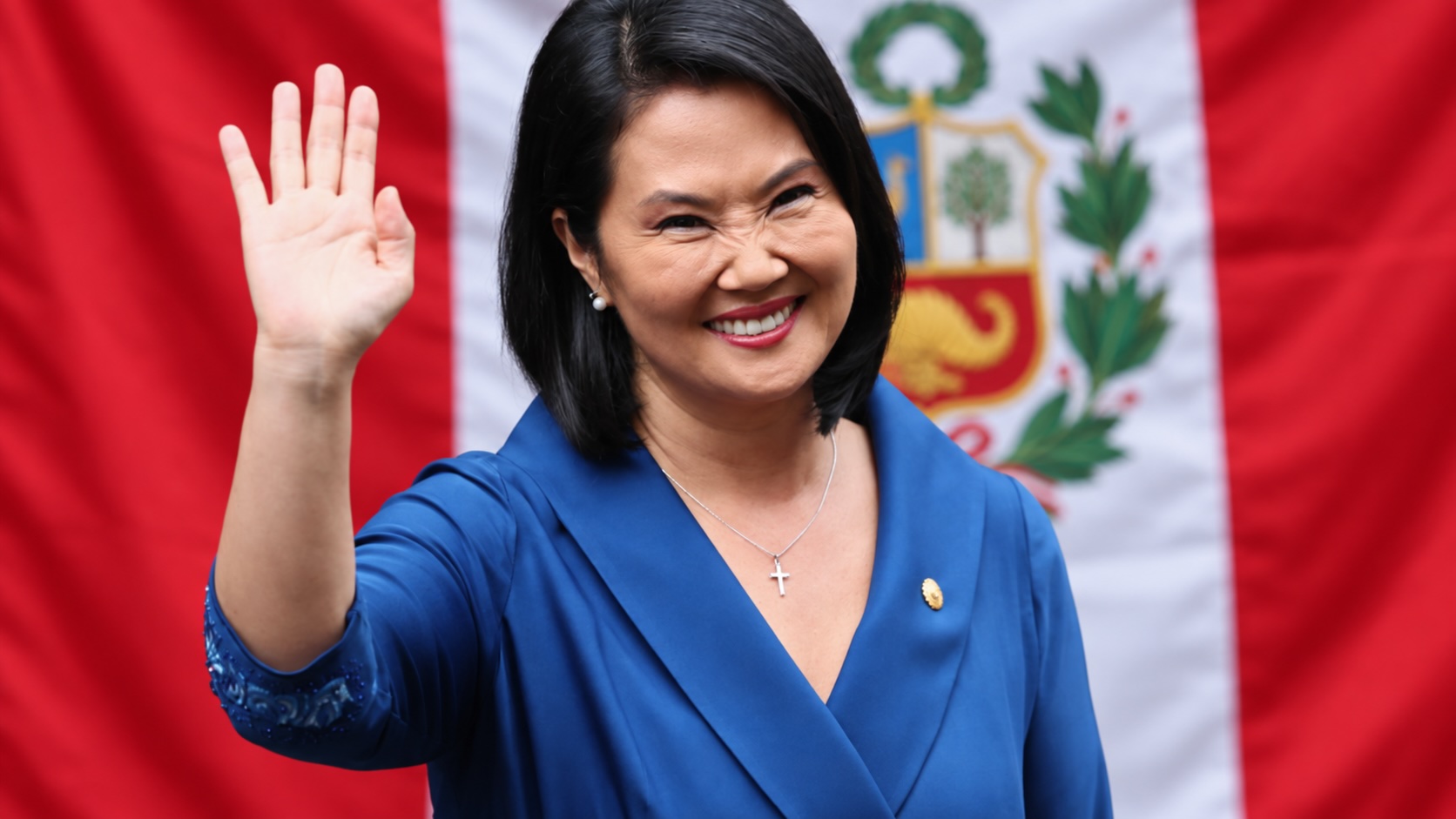
“The clock has started,” Keiko Fujimori informed Congress on 28 July, scarcely a few minutes after the presidential sash had been placed upon her shoulders. “The 1,826 days of work for the greatness of our homeland begin right now.”
It was a thoroughly characteristic remark. Exact, faintly severe, and with the arithmetic done well beforehand. She had counted the days of her own term, and she was rather keen that everyone else should know it. “From this 28 July 2026, we shall begin to write our future for the next five years,” she said. “Not one day more.”
For a woman who had spent the better part of fifteen years trying to get into that building, it was a curiously modest undertaking. It was also a shrewd one. Peru has managed eight presidents in ten years. Some were impeached, one attempted to dissolve Congress, and a good many ended up in the dock. Peruvians have, not unreasonably, come to regard politics much as the English regard the weather: noisy, capricious and seldom the bearer of good news. A leader offering five orderly years, followed by a dignified exit, was offering something the country had not enjoyed for a very long time.
A long road to the palace
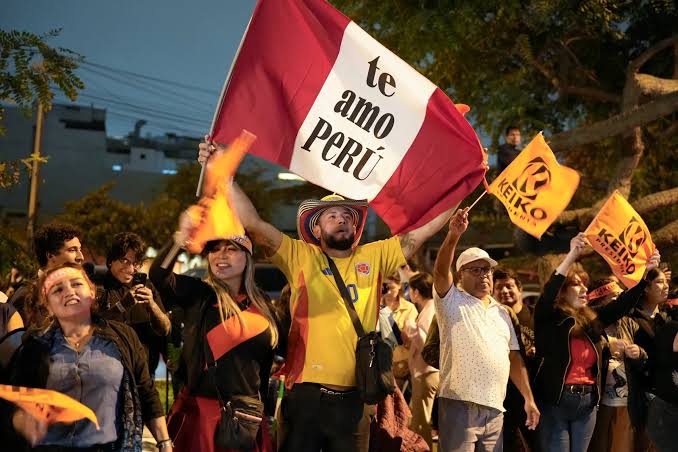
She won at the fourth attempt, and only by the narrowest of margins. The run-off on 7 June against the left-wing candidate Roberto Sánchez was so close that the electoral authorities spent the best part of a month poring over contested ballots. When the result was at last confirmed, she had taken 50.135% of the vote. Her majority was 49,641 out of more than 18 million.
A result that close can wound a presidency before it has properly begun, and her opening address suggested she was perfectly aware of it. “I take office with the firmness needed to govern,” she said, “but also with the sensitivity required to listen to and heal the wounds of our people.” She spoke of a single Peru, “vibrant, multicultural, strong and ancient”, and declared order and national reconciliation to be “perfectly compatible”. One need not be a Fujimorista to concede that it was handsomely put.
She has, of course, carried the family name throughout. It belonged to her late father, Alberto, whose government in the 1990s saw off hyperinflation and the Shining Path, remade the economy along free-market lines, and ended, rather less gloriously, in scandal and a prison cell. She became first lady at nineteen, after her parents separated. She read business in the United States, came home, and built Fuerza Popular into the most durable party in a country where parties have a habit of collapsing after every election.
She has also, it must be said, spent time in pretrial detention. For years prosecutors pursued her over alleged illegal campaign financing connected with Odebrecht, the Brazilian construction firm. Peru’s Constitutional Court dismissed the case in October 2025, and within a matter of days she announced she would stand again. Her supporters call it vindication. Her detractors remain unpersuaded. Either way, she took office knowing full well that every promise she makes about clean government will be weighed against her own history. That may, in the end, be the most compelling reason for her to keep them.
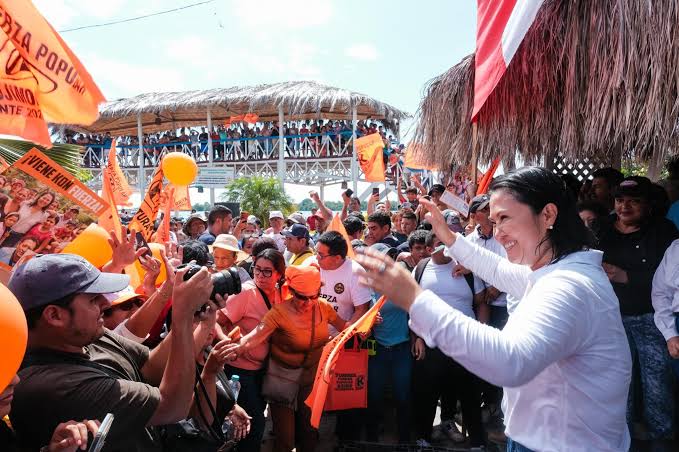
Mrs Fujimori’s first piece of good fortune is that she has inherited an economy in working order, which in Latin America is rather less common than it ought to be.
Growth is running at about 3.5%, comfortably above the regional average, according to Americas Quarterly. Private investment is growing at double digits. Public debt stands at about 30% of GDP, against a Latin American average of nearer 75%. Copper and gold prices are high enough to shore up almost any budget one cares to name. Peru’s finance ministry has raised its forecast for 2026 growth to 3.4%, and the economy minister, Elmer Cuba, has ventured that 4% is not out of the question.
Her first significant decision was, admirably, to leave well alone. She asked Julio Velarde, who has run the central bank since 2006 and is among the most esteemed central bankers in the hemisphere, to stay on. She then handed the finance ministry to Mr Cuba, a former central bank board member with a reputation for sober competence. Business economists took the pairing as an unmistakable signal: nobody intended to meddle with the one institution that has kept Peru on an even keel through a decade of political pandemonium.
The markets duly took note. The central bank’s July survey found sixteen of eighteen business confidence indicators in positive territory, and the twelve-month outlook at its highest since November 2017. Before she had even been sworn in, Moody’s observed that her victory had improved the prospects for private investment.
Ask a Peruvian businessman what holds him back and, as often as not, he will not begin with taxes. He will tell you about the paperwork. A mine may take a decade to travel from discovery to production. A market trader in Arequipa may spend weeks queuing for permits that ought to be dealt with in an afternoon.
Mrs Fujimori’s programme addresses this head on. It promises a “deregulatory shock”: the abolition of more than 500 redundant administrative procedures, and a reduction of at least 40% in the average time taken to approve investment projects. A scheme called “Licencia 0” would allow small businesses to open at once, on the strength of a tax number and a sworn declaration, at no cost whatever, by obliging the tax office, the property registry and local councils to speak to one another. A national digital single window would move 80% of business procedures online.
“Our entrepreneurs are not asking for privileges,” she told Congress. “They are asking the state to stop putting obstacles in their way and to help them grow.”
The targets are hardly timid: US$5bn to US$7bn in fresh private investment each year, and half a million jobs. Economists tend to favour the cuts to red tape above all, not least because they cost the Treasury next to nothing. There is a social dimension, too. The minimum wage is to rise by 15%, from S/1,130 to S/1,300. The Pensión 65 payment to the poorest elderly Peruvians is to be doubled. And Lima has been promised four new metro lines, which, given the city’s traffic, would be no small mercy.
The copper question
If Peru is to become one of the great economic engines of Latin America, it is mining that must do the heavy lifting. Minerals account for around 60% of exports. The country has an undeveloped pipeline of projects worth some US$64bn, roughly 70% of it copper. And the energy transition, with its electric motor cars, national grids and data centres, runs very largely on copper.
For years, a great deal of that metal has stayed resolutely in the ground. Projects have stalled on permits and, more often, because neighbouring communities felt they bore the costs of extraction without sharing in the rewards. Mrs Fujimori’s answer is to direct 40% of mining royalties to the communities that host the mines. She has also been refreshingly plain about water. It should go first to people, then to farming and livestock, and only “last of all” to extraction.
The early signs are encouraging. The government expects mining investment to exceed US$7bn this year, the highest figure in a decade. Tía María, Southern Copper’s project in Arequipa, which had been blocked for the better part of ten years, is now 42% built. The prime minister, Luis Galarreta, has told Congress the government means to unlock more than US$33bn in mining investment over five years.
Then there is the sea. The Chinese-built megaport at Chancay, north of Lima, handled more than 290,000 containers in the first eight months of this year, an increase of 55%. It has made Peru something of a short cut between South America and Asia. In September Mrs Fujimori stood alongside the American Secretary of State, Marco Rubio, in Lima. She is courting Washington while doing business with Beijing, and a country with a Pacific port, modest debts and a great deal of copper is rather well placed to do both.
The matter of corruption
On corruption, the figures she has chosen to put before the public are large enough to be thoroughly embarrassing. Peru’s comptroller estimates that the state lost more than S/24bn to corruption and misconduct in 2023, very nearly 13% of the public budget. Waste and inefficiency, she says, cost more than S/40bn a year besides.
Her approach relies less on spectacular arrests than on the patient reconstruction of how the state actually works. Public procurement, which accounts for 24% of national spending, is to be overhauled. A new National Digital Authority is planned, and every citizen is to receive a digital identity, so that fewer dealings depend upon an official who might be persuaded to look the other way. The civil service is to be reformed on the basis of merit. On the campaign trail she spoke of “an army of compliance officers” stationed at precisely those bottlenecks where small bribes change hands. Her programme aims to cut annual losses to corruption by 30% by 2031.
“We have to confront all of it,” she said during the campaign, “grand corruption and petty corruption, the kind that affects ordinary citizens.”
In her inaugural address she declared that no police officer who placed himself at the service of criminals would enjoy her government’s protection. That is no idle remark in a country where extortion and contract killings dominated the election, and where a great many families pay a weekly “cupo” to the gangs merely to keep their shops open.
In fairness, her critics are not without a point. Peruvian newspapers observed that her campaign plan against corruption was rather thin on timetables, and that her inaugural speech named the problem without setting out concrete measures. The designs are on the table. The test is whether anyone actually builds them.
Mrs Fujimori is hardly short of difficulties. Her party is the largest bloc in both houses of the new two-chamber Congress, yet commands a majority in neither. Her request for 120 days of decree powers, spanning 66 measures from security to tax simplification, has had a distinctly chilly reception. A 205-page draft report from the Chamber of Deputies’ constitution committee recommends that it be rejected outright and consigned to the archive, on the grounds that the government has demonstrated neither the precision nor the urgency the constitution requires. The committee sat on 29 September in a session of some ill temper. Fuerza Popular’s attempt to censure the committee’s chairwoman, Giannina Avendaño of Juntos por el Perú, was not even admitted, and the members managed to get through only a portion of the eight subject areas before the session was adjourned. The debate resumes this morning, and no vote has yet been taken. Her own party and Renovación Popular argue that the request should be trimmed rather than thrown out, while another bloc has proposed granting powers solely for crime and the El Niño emergency. Her ministers, for their part, say that should the request fail they will simply send ordinary bills marked urgent. The prime minister, Luis Galarreta, has been rather less diplomatic, urging deputies to “get over the election”.
A powerful coastal El Niño is gathering off the Pacific shore. Inflation closed August at 4.4%, above the central bank’s target. The regional and municipal elections on 4 October may well hand the mining regions, many of which voted against her in June, to local leaders of a decidedly unfriendly disposition. Some of her social promises have already been quietly deferred to 2027.
And yet the polls suggest Peruvians are prepared to give her a fair hearing. Her approval stands at between 53% and 60%. In a country that has turned upon its presidents swiftly and often, that is not to be sniffed at.
The wager
The case for Peru as a Latin American powerhouse is by no means fanciful. Few countries in the region can match its combination of low debt, an independent central bank, a new Pacific gateway and the very metal on which the world’s energy transition depends. What has held Peru back has never really been the economy. It has been the state: the unfinished roads and metro lines, the water that never quite reaches the tap, the police station perennially short of officers.
That is precisely the gap Mrs Fujimori was elected to close, and she has said as much herself. Her aim, she told Congress, is not merely to administer the state but to close “the enormous social deficit that affects millions of Peruvians”.
She has some sixty days behind her and roughly 1,760 still to come. It was she who started the count, and one suspects she will know better than anybody how quickly they slip away.


 Carlos Mundy

 Giovanni R. Ruffini Professor of History Fairfield University, USA


 Charles Markeaton-Mundy

 Gaspard de Montfort

 Milton Cooper

2 comments
Hi My friend! Very nice writting and positive way of presenting our new president. I trust her and she has a rough work fighting against corruption and criminality but we hope she will do the right thing to bring this beautiful country peace, a safe place to live and opportunities for young people to stay here and find jobs! She is a smart woman with strong character and knows her duties perfectly. I do trust my country with be a much better place to live very soon! 🙏.
Thank you for your note, very complete and clearly explained. I will share it among my friends.
A big huge for you and let’s hope to meet again soon. ❤️
Thank you so much for your comments. I truly believe that President Fujimori will be able to lead Peru and make it the country it deserves to be. I hope to travel and meet her soon.
Comments are closed.