
 Gaspard de Montfort
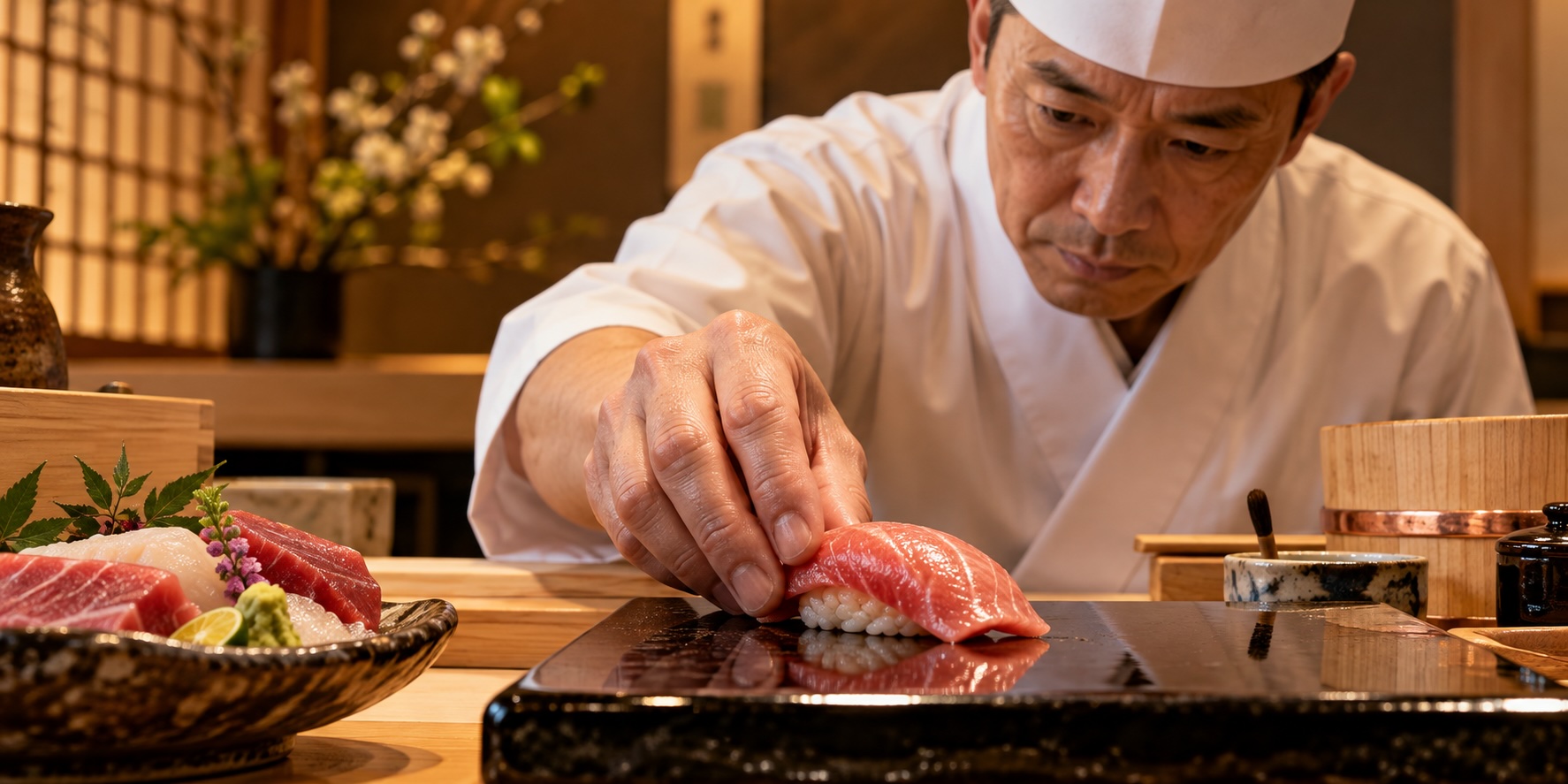
In a discreet corner of Tokyo, far removed from the theatrical extravagance of contemporary luxury dining, chef Takashi Saito has devoted his life to an art in which a few grains of rice, a perfect slice of fish and the movement of a master’s hands can become an experience of extraordinary beauty. Sushi Saito is more than a restaurant. It is an expression of Japanese philosophy, discipline and the relentless pursuit of perfection.


The Restaurant Where Perfection Is Measured in Seconds
There are restaurants whose reputations are built upon spectacular interiors, celebrated architects, elaborate tasting menus and the international fame of their chefs. And then there are establishments whose greatness is revealed through an almost astonishing absence of ostentation.
In Tokyo, a city that has elevated the art of dining to an exceptional level, Sushi Saito belongs firmly to the latter tradition.
It is not a restaurant designed to impress through extravagance. There are no theatrical chandeliers, no elaborate architectural gestures and no procession of dishes intended primarily to astonish the eye.
Instead, there is a beautiful wooden counter, a handful of fortunate guests and a chef whose entire professional existence has been devoted to understanding the infinitely subtle relationship between fish, rice, temperature, texture and time.
The chef is Takashi Saito, one of the most respected practitioners of Edomae sushi, the traditional style that developed in nineteenth-century Edo, the city now known as Tokyo.
His restaurant has long occupied an almost mythical position among serious Japanese gastronomes and international connoisseurs.
For years, Sushi Saito held three Michelin stars, placing it among the most distinguished sushi establishments in the world. Its subsequent absence from the Michelin Guide did not reflect a deterioration in quality; Michelin ceased listing it because reservations were no longer sufficiently accessible to the general public.
In 2026, Sushi Saito remains among the recipients of Tabelog’s prestigious Gold Award, a distinction based upon evaluations by diners in Japan. It also appears at No. 72 on the extended Asia’s 50 Best Restaurants list
There is, of course, no universally recognised single best Japanese restaurant in the world. Japanese gastronomy embraces many distinct disciplines, from sushi and tempura to kaiseki and charcoal-grilled cuisine.
Yet if one were to select an establishment that embodies the Japanese pursuit of culinary perfection, Sushi Saito would be an exceptionally persuasive choice.
Takashi Saito: The Master Behind the Counter
In Japanese gastronomy, the word shokunin describes an artisan whose devotion to a particular craft transcends the ordinary notion of professional competence.
A shokunin does not simply learn a skill and repeat it. He spends his life refining it, questioning it and searching for improvements so subtle that they may be imperceptible to anyone but another master.
Takashi Saito belongs to this tradition.
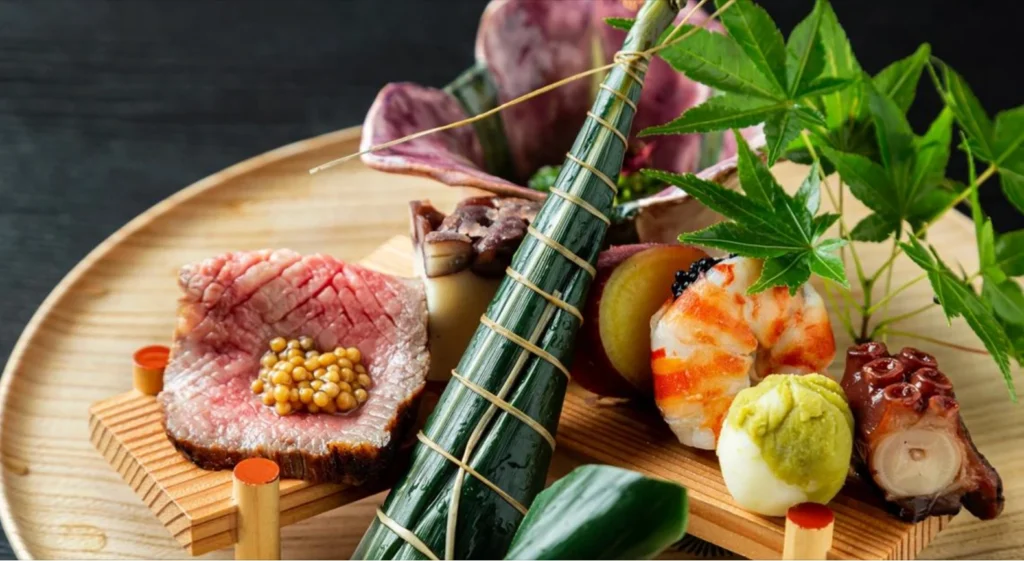
His career has been shaped by the rigorous apprenticeship system that has defined the finest Japanese kitchens for generations. Young chefs are expected to master fundamental tasks before advancing to more complex responsibilities.
The preparation of rice, the cleaning of fish, the maintenance of knives and the precise organisation of the working environment are not considered secondary matters. They are the foundations upon which excellence is built.
Saito’s reputation rests upon an extraordinary understanding of the balance between shari, the seasoned rice, and neta, the seafood placed upon it.
To the uninitiated, a piece of nigiri sushi may appear almost absurdly simple.
A small mound of rice. A slice of fish. Perhaps a touch of wasabi.
Yet that simplicity conceals an extraordinary number of decisions.
How should the rice be cooked? Which vinegar should season it? At what temperature should it be served? How thick should the fish be sliced? Should it be aged, salted, marinated or served immediately? How firmly should the rice be shaped?
Each decision influences the final experience.
The extraordinary achievement of a master such as Saito is to bring these elements into a harmony that appears effortless.
The Philosophy of Edomae Sushi


To understand Sushi Saito, one must first appreciate the tradition from which it emerged.
Edomae sushi originated during the Edo period, when Tokyo Bay provided an abundant supply of seafood to the growing city.
Before modern refrigeration, sushi chefs developed techniques for preserving and enhancing fish through salting, marinating, simmering and curing.
These methods were not merely practical solutions to the problem of freshness. Over time, they became sophisticated culinary techniques in their own right.
A piece of tuna might be marinated in soy sauce. A delicate white fish might be lightly salted. Shellfish could be simmered in a carefully prepared broth. Other seafood might be aged to develop deeper flavour and a more appealing texture.
The result was a cuisine built upon restraint and precision.
Modern Edomae masters continue to refine these traditions, often incorporating advances in refrigeration and a more scientific understanding of maturation.
One of the most fascinating aspects of great sushi is that the freshest possible fish is not necessarily the most delicious.
Certain species benefit from carefully controlled ageing, which allows natural enzymatic processes to develop umami and modify texture.
The finest sushi chefs understand precisely when a particular fish reaches its optimum condition.
It is this knowledge, acquired through experience rather than simply following a recipe, that distinguishes the exceptional from the merely accomplished.
At Sushi Saito, the relationship between rice and fish is central to the experience.
The rice must possess sufficient character to complement the seafood without overwhelming it. Its acidity, temperature and texture must remain in delicate balance.
A single piece of sushi may be assembled in seconds, but the preparation behind it can represent days of work and decades of accumulated knowledge.
The Omakase Experience: Placing One’s Trust in the Chef
At Sushi Saito, the dining experience follows the Japanese tradition of omakase, an expression that can be translated as placing oneself in the chef’s hands.
Rather than selecting individual dishes from an extensive menu, guests entrust the progression of their meal to the chef’s judgement.
This relationship between diner and chef is one of the defining pleasures of exceptional Japanese gastronomy.
The sequence may begin with delicate seasonal seafood preparations before progressing towards the individual pieces of nigiri that form the heart of the experience.
Each piece is prepared and presented at the moment the chef considers ideal.
The guest is not merely being served food. He is participating in a carefully orchestrated progression of flavours, textures and temperatures.
The distinctions between different cuts of tuna can be particularly revealing.
Akami, the leaner red flesh, offers a clean, concentrated flavour. Chutoro, with its moderate marbling, introduces a richer and more delicate texture. Otoro, the prized fatty belly, can possess an almost melting quality.
A masterful progression through these cuts demonstrates how dramatically the character of a single fish can change.
Other seasonal offerings may include sea urchin, prawns, shellfish, squid and carefully selected white fish.
What appears on the counter depends upon the season and the chef’s assessment of the ingredients available.
There is no need for elaborate decoration. The food itself provides the beauty.
The Japanese Understanding of Luxury
Perhaps the most fascinating aspect of Sushi Saito is the way in which it challenges Western assumptions about luxury.
In Paris, London or New York, the most expensive restaurants have traditionally expressed their status through sumptuous surroundings, elaborate service and magnificent dining rooms.
Japan offers another interpretation.
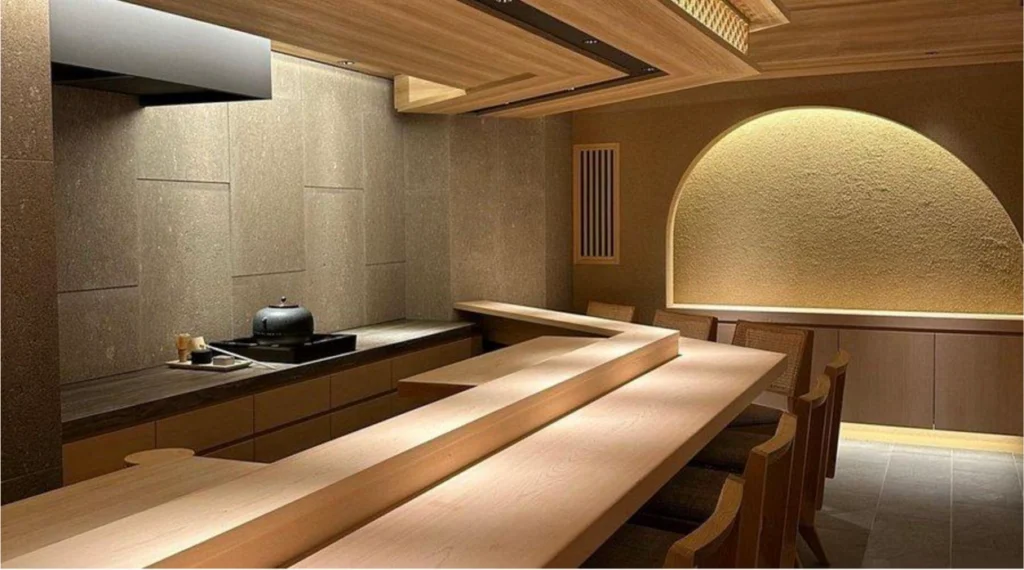
At the highest level, luxury may consist of sitting at a simple wooden counter whilst an extraordinary craftsman prepares something specifically for you.
The rarity lies not in the decoration but in the knowledge, time and human attention devoted to the experience.
The counter itself plays an important role. It removes the distance between kitchen and dining room, allowing guests to observe the chef’s movements and appreciate the discipline behind every preparation.
Even the silence between courses can become part of the occasion.
This is closely connected to the Japanese appreciation of wabi-sabi, the beauty of simplicity, restraint and the imperfect or transient, although the philosophy of a great sushi counter cannot be reduced to any single aesthetic tradition.
What matters is the recognition that sophistication need not announce itself.
Sometimes, the most extraordinary luxury is that which appears almost entirely natural.
What Does Dinner at Sushi Saito Cost?
Exceptional Japanese gastronomy is rarely inexpensive, particularly when it involves the finest seasonal seafood and the personal attention of a celebrated master.
Published estimates place Sushi Saito’s omakase experience in the region of ¥40,000 per person, although this should be treated as an indicative figure rather than a verified current tariff. Drinks, additional charges and the particular dining arrangement may affect the final bill.
The restaurant’s exclusivity presents an even greater challenge than its price.
Reservations are notoriously difficult to obtain. Access has historically depended heavily upon established customers, personal introductions and relationships with selected hotel concierges.
For the international visitor, obtaining a seat can therefore require considerable planning, and even the services of a distinguished luxury hotel cannot guarantee success.
This scarcity has contributed to Sushi Saito’s legendary reputation.
But it also raises an interesting question: should a restaurant’s greatness be judged by how difficult it is to enter?
The answer, surely, is no.
Exclusivity may enhance a restaurant’s mystique, but the ultimate judgement must rest upon the quality of its cuisine.
Sushi Saito’s distinction is that its reputation was established through exceptional craftsmanship long before the difficulty of obtaining a reservation became part of its mythology.
Is Sushi Saito Truly the Best Japanese Restaurant in the World?

The answer depends upon what one means by Japanese gastronomy.
For the purist devoted to Edomae sushi, Sushi Saito belongs unquestionably in the conversation about the world’s greatest restaurants.
Yet Japan’s culinary heritage encompasses traditions every bit as sophisticated.
Kyoto’s great kaiseki restaurants celebrate the changing seasons through a succession of exquisitely balanced dishes, combining flavour, ceramics, flowers and presentation in a form of culinary theatre.
Tempura masters devote their lives to understanding the precise relationship between oil, temperature and ingredients.
Other chefs explore the extraordinary possibilities of charcoal grilling, soba, tofu and regional Japanese cooking.
In Tokyo, Myojaku offers a particularly compelling alternative. Under chef Hidetoshi Nakamura, the restaurant was promoted to three Michelin stars in the 2026 Tokyo Guide, with inspectors praising its purity, harmony and extraordinary sensitivity to ingredients.
Meanwhile, Sushi Sugita and other celebrated sushi counters command immense respect among Japanese diners.
The 2026 Tabelog Awards recognised Sushi Saito, Sushi Sugita, Sushi Amamoto and several other distinguished establishments in their Gold category, illustrating just how competitive the highest level of Japanese gastronomy has become.
And it is worth remembering that the highest-ranked restaurant in Japan on the 2026 Asia’s 50 Best Restaurants list was Osaka’s La Cime, although its cooking is principally modern French cuisine informed by Japanese ingredients and sensibilities.
There can therefore be no definitive international champion of Japanese cuisine.
But Sushi Saito remains an outstanding representative of one of its most demanding and revered traditions.
Beyond Michelin Stars: The Measure of True Excellence
Michelin’s arrival in Japan transformed international perceptions of the country’s gastronomic landscape.
Tokyo rapidly established itself as one of the world’s most richly decorated culinary capitals.
The 2026 Michelin Guide Tokyo includes twelve three-star restaurants, twenty-six with two stars and 122 with one star. These figures illustrate the extraordinary concentration of culinary talent within a single city.
Yet Japan also possesses its own powerful systems of culinary recognition.
Tabelog, whose annual awards draw upon the evaluations of Japanese diners, has become an influential measure of domestic gastronomic reputation.
Its Gold category represents restaurants considered worthy of an exceptional journey, regardless of location.
For international visitors, the coexistence of these different systems offers an important lesson.
Michelin stars are valuable, but they do not encompass the entirety of Japanese culinary excellence.
Some of the most remarkable dining experiences in Japan take place in establishments with little international publicity, where generations of accumulated expertise are expressed through apparently simple food.
A tiny tempura restaurant in Tokyo, a family-run soba establishment in the countryside or a discreet kaiseki house in Kyoto may provide memories as enduring as those created in the world’s most celebrated dining rooms.
Japan’s gastronomic greatness lies precisely in this depth.
A Culinary Experience That Transcends Fashion
The international restaurant industry is constantly reinventing itself.
New techniques emerge, elaborate tasting menus become fashionable, and chefs compete to create ever more astonishing combinations of ingredients.
There is much to admire in this spirit of innovation.
Yet Sushi Saito represents something different.
Its achievement is not based upon the pursuit of novelty for its own sake, but upon the belief that perfection can be approached through the endless refinement of an established tradition.
The same essential ingredients that defined Edomae sushi more than a century ago remain at the centre of the experience.
Fish. Rice. Vinegar. Wasabi.
And the hands of the chef.
The difference lies in the understanding of those ingredients and the extraordinary discipline required to bring them into harmony.
In an age when luxury is frequently confused with extravagance, this philosophy feels particularly relevant.
It reminds us that the finest things in life are not necessarily the most elaborate.
They are often those in which nothing unnecessary remains.
The Lasting Genius of Japanese Gastronomy
There are meals that satisfy hunger, others that provide pleasure, and a rare few that alter one’s understanding of what food can become.
At its highest level, Japanese gastronomy belongs to that final category.
It teaches the diner to appreciate distinctions that might otherwise pass unnoticed: the temperature of rice, the texture of a particular fish, the fragrance of freshly prepared wasabi, or the delicate balance between sweetness, acidity and umami.
Sushi Saito exemplifies this philosophy.
Its reputation has been earned through years of extraordinary dedication to a culinary tradition that places discipline above spectacle and substance above ostentation.
For the fortunate few who experience it, the memory is unlikely to be of an extravagant dining room or an elaborate presentation.
It will be of a master standing behind a wooden counter, shaping a few grains of rice, placing a perfectly prepared slice of fish upon them and offering the result with quiet confidence.
An apparently simple gesture.
And perhaps one of the most eloquent expressions of culinary perfection in the world.
Restaurant information

Saito Japan, 〒106-0032 Tokyo, Minato City, Roppongi, 1 Chome−4−5 1F4.5(544)
Reservations are exceptionally restricted and should be investigated well in advance.


 Metaphore Magazine


 Francesc Miralles



 Charles Markeaton-Mundy

 Gaspard de Montfort

 Milton Cooper

 Carlos Mundy