
 Lavinia Ellington-Wentworth
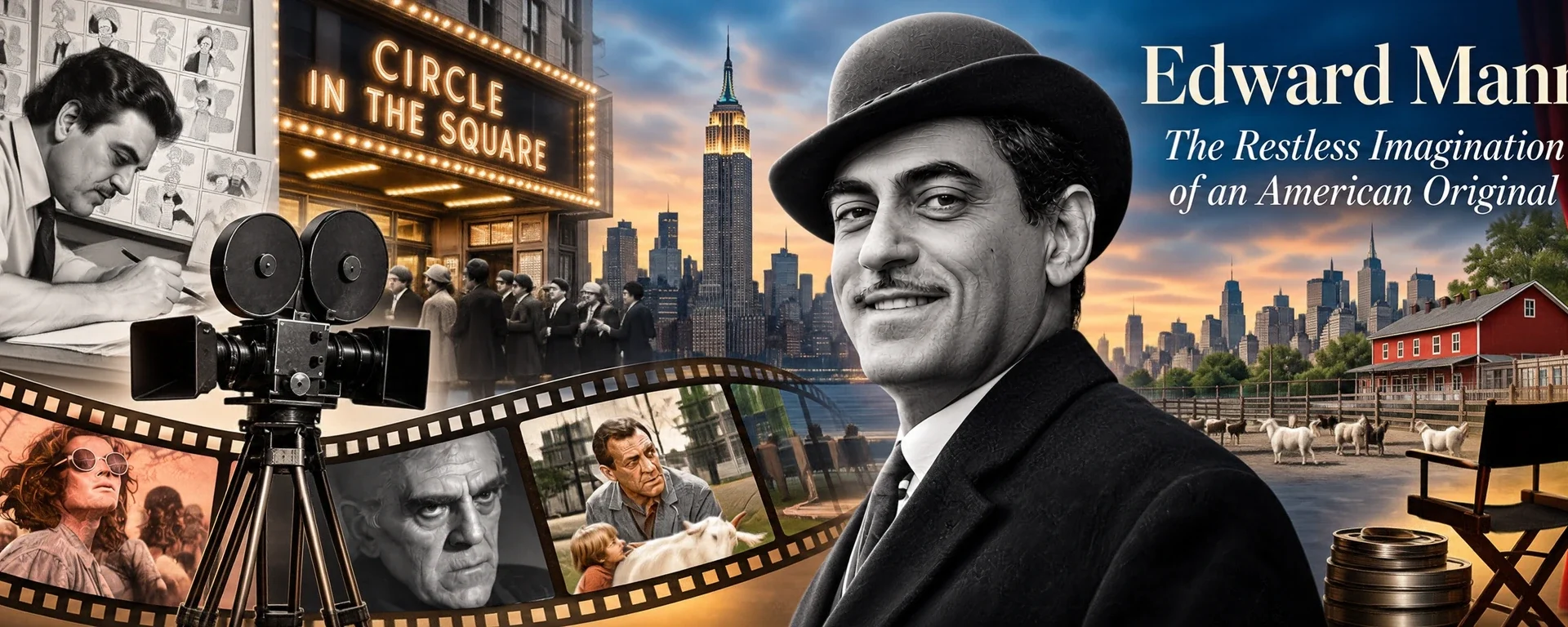
Film director, playwright, cartoonist, producer and cultural adventurer, Edward Mann belonged to a generation of creative spirits who refused to recognise boundaries between the arts. His remarkable journey through the American cultural landscape reveals a man whose imagination was as independent as it was unpredictable.
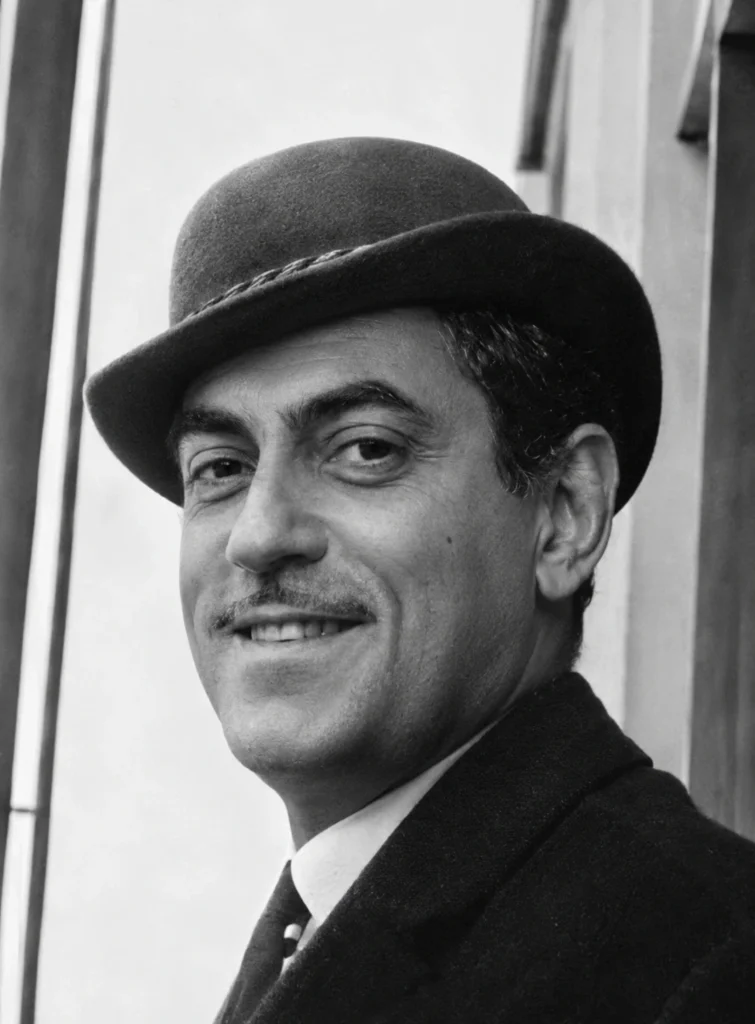
The history of American cinema is generally written around a familiar constellation of celebrated directors, legendary performers and influential producers. Yet beyond the brilliance of Hollywood’s most recognisable names lies another, equally fascinating history: that of the independent spirits who moved between artistic disciplines, challenged convention and contributed to the cultural transformation of their times without necessarily receiving the recognition they deserved.
Edward Andrew Mann belonged to this extraordinary company.
Born in the Bronx, New York, on 7 October 1922, Mann would pursue a career that embraced drawing, theatre, screenwriting, directing, producing and music. His life unfolded against some of the most consequential cultural developments of twentieth-century America, from the creative ferment of post-war New York to the countercultural experimentation of the 1960s.
He was neither a conventional Hollywood director nor an artist easily confined to a single discipline. His professional life was distinguished by an unusual willingness to explore entirely different forms of expression, often in the company of artists who would themselves become significant figures in American cultural history.
From the Drawing Board to the New York Stage
Long before Mann entered the world of cinema, his imagination found expression through the illustrated page.
During the 1940s, he worked as a cartoonist, contributing to established American comic strips, including Andy Gump and Joe Palooka. In 1952, he created his own strip, Blade Winters, which appeared in the New York Post. He also worked on Dixie Dugan, a syndicated comic strip that enjoyed considerable popularity.
The experience was more than an apprenticeship in illustration. Comic strips demanded an understanding of character, rhythm, visual composition and the economy of storytelling. A cartoonist had to communicate emotion and narrative through carefully selected images, often with remarkably little dialogue.
These were skills that would prove equally valuable in the theatre and cinema.
Yet Mann’s ambitions were already extending beyond the drawing board. New York in the years following the Second World War was becoming a remarkable laboratory of theatrical experimentation. Young actors, writers and directors were questioning the conventions of commercial Broadway, searching for more intimate, psychologically convincing and artistically adventurous forms of performance.
Mann became part of that movement.
Circle in the Square: A Revolution in American Theatre
One of the most important chapters in Mann’s career was his involvement in the establishment of the original Circle in the Square Theatre alongside theatrical producer Ted Mann, to whom he was not related.
The theatre emerged during a period when the distinction between Broadway and the developing Off-Broadway movement was becoming increasingly important. Smaller theatrical spaces offered opportunities for experimentation that the commercial stage could seldom accommodate.
Circle in the Square would become one of the defining institutions of this transformation.
Its intimate approach to performance helped challenge the conventional relationship between actors and audiences. Productions could be experienced with a proximity and emotional immediacy that was difficult to reproduce in the great Broadway auditoriums.
The theatre eventually became associated with some of the most distinguished names in American acting and drama, contributing to the development of a theatrical culture in which artistic conviction could take precedence over commercial expectation.
Mann’s association with its formative years, particularly between 1950 and 1953, places him within an important moment in the evolution of American theatre.
It also reveals something fundamental about his artistic temperament: he was drawn to places where established rules were being reconsidered and new possibilities were being explored.
Hollywood, Counterculture and the Cinema of the Unexpected
By the 1960s, Mann had turned increasingly towards filmmaking, entering an industry undergoing profound changes.
The traditional Hollywood studio system was losing some of its authority. Independent productions were becoming more visible, while younger audiences were demanding films that reflected changing attitudes towards sexuality, authority, social identity and personal freedom.
Mann’s cinematic work would reflect this atmosphere of experimentation, although his interests were too eclectic to be associated exclusively with any particular movement.
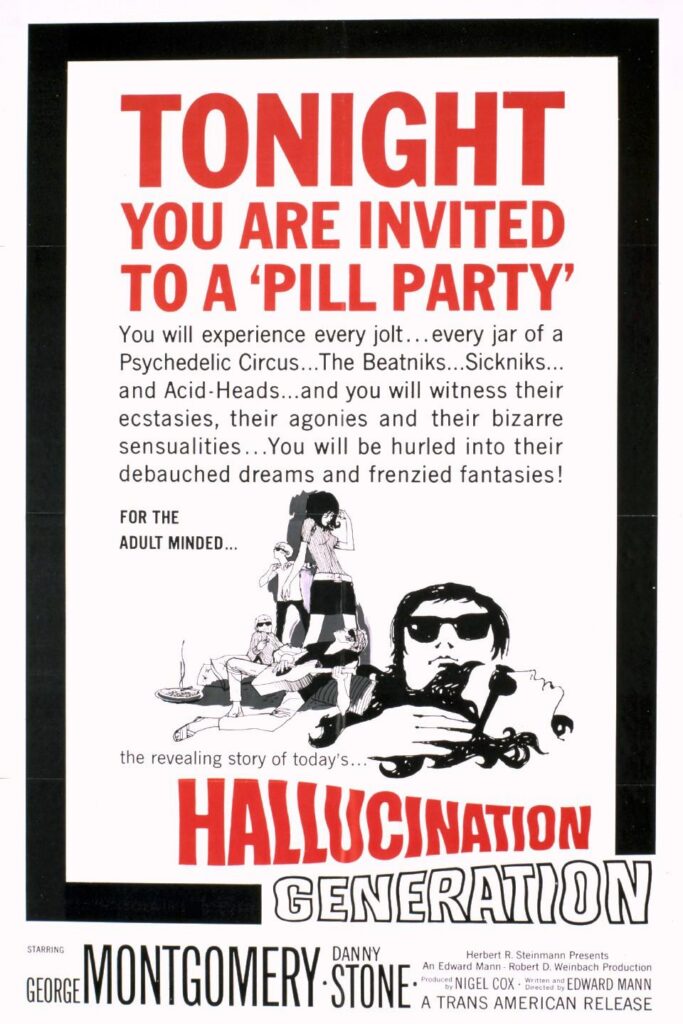
His 1966 film Hallucination Generation offered an early exploration of the emerging psychedelic counterculture. Set against a world of youthful disillusionment and drug experimentation, the film belonged to a period when cinema was beginning to confront social phenomena that mainstream entertainment had often preferred to ignore.
Today, the film is interesting not merely for its narrative but as an artefact of its era, capturing the anxieties, visual experimentation and fascination with altered consciousness that characterised much of the decade.
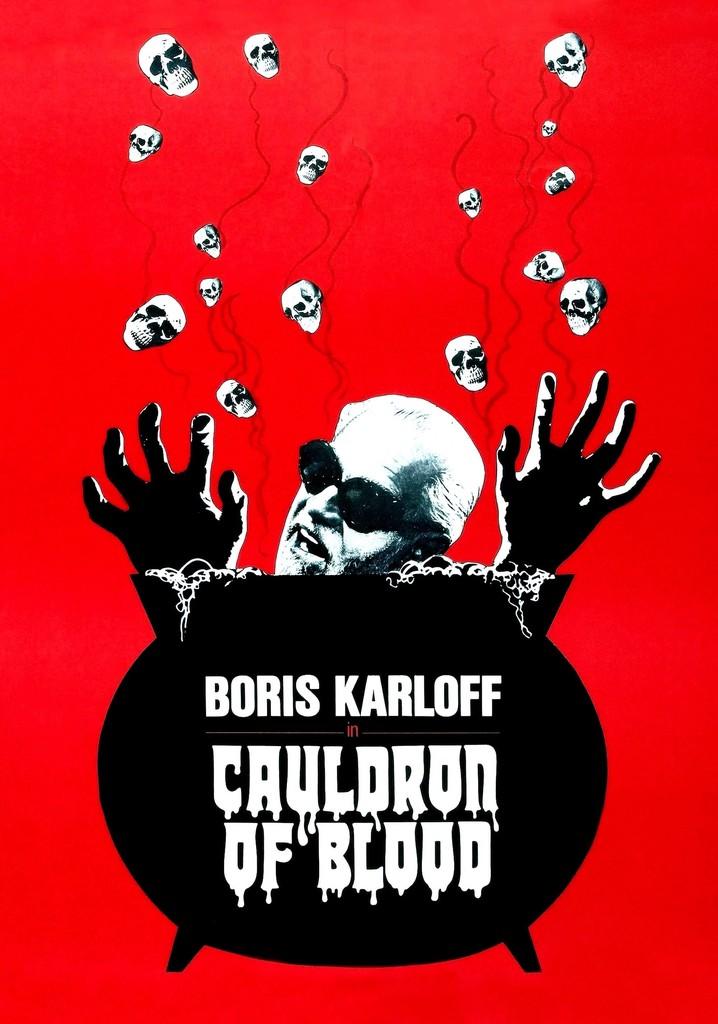
Mann subsequently directed Cauldron of Blood, a horror film featuring the legendary Boris Karloff alongside Jean-Pierre Aumont and Viveca Lindfors.
The production belonged to the tradition of atmospheric European horror cinema, a world of macabre intrigue and theatrical excess that stood in striking contrast to Mann’s earlier involvement in experimental New York theatre.
His screenwriting career was equally varied. He contributed to Island of Terror (1966), starring Peter Cushing, and later to The Mutations (1974), Seizure (1974) and The Killer Inside Me (1976), the latter adapted from Jim Thompson’s disturbing crime novel.
These productions suggest an artist fascinated by the possibilities of genre, whether psychological suspense, science fiction, horror or crime.
A Rainbow over Manhattan: The Film That Deserves Rediscovery
Perhaps the most revealing film of Mann’s career was also one of his most humane.
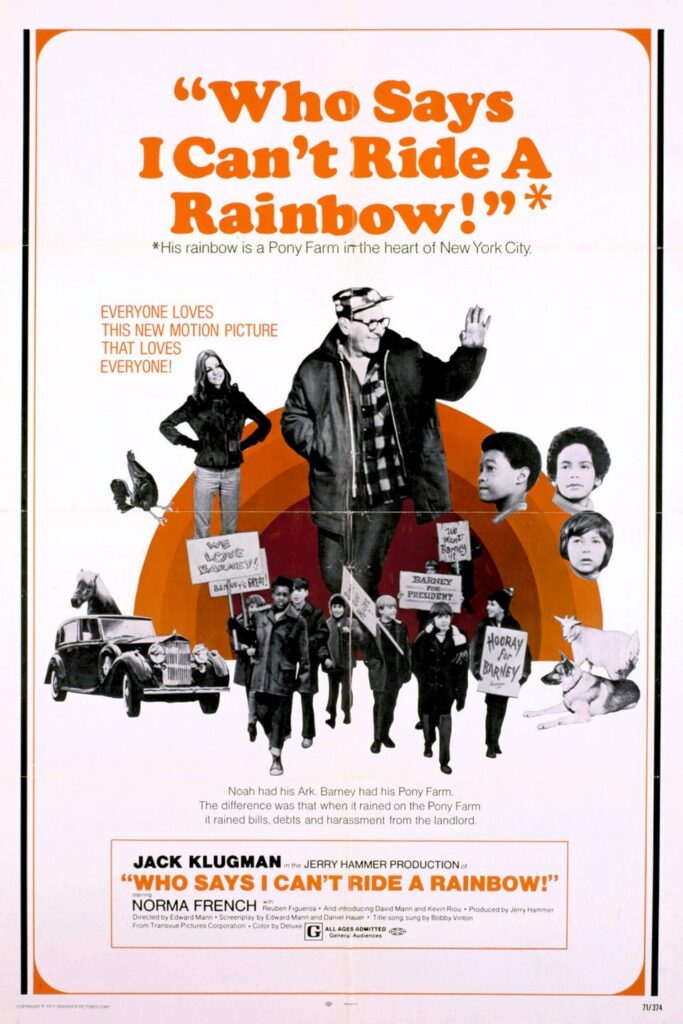
Released in 1971, Who Says I Can’t Ride a Rainbow! starred Jack Klugman in a story inspired by the real-life experiences of Barney Morovitz, who operated an animal farm in the heart of New York City.
At first glance, the premise might appear almost whimsical: a man struggling to preserve a place where children could encounter animals amid the concrete and commercial pressures of Manhattan.
Yet beneath its apparently modest narrative lay questions about community, childhood, urban transformation and the fragile survival of places that possess emotional rather than purely financial value.
In a city perpetually reinventing itself, the little farm represented something increasingly endangered: a space in which innocence, generosity and human connection could exist independently of commercial ambition.
Mann directed and co-wrote the film, which was shot on location in New York. His own son, David Mann, also appeared in the production.
Most remarkably, the film included one of the earliest screen appearances of a young actor who would become one of the most recognisable and respected figures in international cinema: Morgan Freeman.
Freeman appeared in the role of Afro, decades before the performances that would establish his worldwide reputation.
That small connection gives the film an additional place in cinema history, although its significance extends beyond the presence of a future star.
The film’s contemporary reception was mixed. Some critics considered its treatment of the material insufficiently developed, while others appreciated its warmth and resistance to excessive sentimentality.
Yet viewed from a historical perspective, it offers a valuable portrait of a New York that has largely disappeared, and of the struggle to preserve human-scale institutions against the relentless advance of urban development.
The Creative World of Woodstock
Mann’s artistic interests were not confined to the metropolitan worlds of Broadway and Hollywood.
He was also associated with the cultural and theatrical community of Woodstock, New York, during the 1960s, a period when the town was consolidating its reputation as a gathering place for artists, musicians, writers and independent thinkers.
Woodstock had possessed a creative identity long before its name became internationally synonymous with the legendary 1969 music festival. Its artistic communities had developed through decades of experimentation in painting, performance, craftsmanship and music.
For an individual such as Mann, whose career had never respected the conventional divisions between artistic disciplines, this environment must have offered considerable attraction.
His involvement in Woodstock’s cultural movement was consistent with the broader trajectory of his life: an attraction to communities in which artistic exchange, unconventional ideas and personal freedom were valued.
There is something particularly revealing about the geographical range of Mann’s creative existence. The Bronx of his childhood, the theatres of Greenwich Village, the independent film sets of the 1960s and the artistic atmosphere of Woodstock belonged to different worlds, yet each contributed to the changing cultural identity of post-war America.
Mann moved among them with an ease that reflected his unusually broad interests. IMDb
A Return to Broadway and the World of James Baldwin
One of the most compelling episodes in Mann’s later career came in 1983, when he was among the producers of the Broadway musical Amen Corner, based on the play The Amen Corner by the distinguished American writer James Baldwin.
Baldwin’s original drama explored religious authority, family relationships, personal sacrifice and the tensions within an African-American church community in Harlem.
Its adaptation into a musical brought together theatre, gospel traditions and the social concerns that had made Baldwin one of the most influential literary voices of his generation.
The production opened at the Nederlander Theatre on 10 November 1983. It was directed by Philip Rose, with music by Garry Sherman and lyrics by Peter Udell.
Although its Broadway run lasted only 28 performances, its existence represented an ambitious attempt to translate Baldwin’s emotionally complex dramatic world into musical theatre.
For Mann, involvement in the production marked a return to the theatrical environment in which he had played such an important role three decades earlier.
It was an appropriate continuation of a career characterised by artistic diversity and a willingness to participate in projects outside the commercial mainstream. IBDB+2
The Artist Who Refused to Be Categorised
What makes Edward Mann particularly interesting is not that every production bearing his name became a masterpiece. It is that his career challenges the assumption that an artist’s importance must be measured exclusively through commercial success or critical acclaim.
His filmography contains uneven productions, forgotten titles and works that remain largely within the province of specialist cinema enthusiasts. His contribution to theatre is less widely recognised than that of some of his contemporaries.
Nevertheless, taken as a whole, his life reveals an extraordinary range of artistic experience.
He belonged to the world of American newspaper illustration at a time when comic strips were a major form of popular storytelling. He participated in the emergence of one of New York’s important theatrical institutions. He worked in independent cinema during a period of social and artistic upheaval. He directed performers whose names would become familiar to generations of audiences and helped bring a work by James Baldwin to the Broadway stage.
Few careers move so freely between such different artistic territories.
There is also a deeper lesson in his professional restlessness.
The cultural history of the twentieth century was shaped not only by those who achieved international celebrity, but by countless individuals who created opportunities, established institutions, encouraged experimentation and connected different artistic worlds.
Mann was one of these individuals.
His achievements cannot be reduced to a single film, theatrical production or artistic movement. They are better understood as the cumulative expression of a creative life lived in constant motion.
An American Life Worth Remembering
Edward Mann died in Los Angeles on 14 September 1995, aged 72, following a life that had carried him through some of the most vibrant artistic environments of modern America. IMDb
More than three decades after his death, his name remains unfamiliar to many who nevertheless know the performers, films and institutions with which he was associated.
This is perhaps one of the paradoxes of cultural history. Recognition does not always follow influence, and the people who help create an artistic movement are not invariably those who become its most celebrated representatives.
Mann’s legacy invites us to reconsider what constitutes a meaningful artistic career.
He was a storyteller who understood that stories could be told through a drawing, a theatrical performance, a screenplay or a moving image. He was a participant in an age when the boundaries of artistic expression were being challenged with unprecedented energy.
Above all, he possessed the curiosity to move beyond the familiar and the independence to pursue his imagination wherever it led him.
In an era increasingly preoccupied with celebrity, commercial success and the machinery of fame, Edward Mann reminds us that some of the most interesting cultural lives are those that resist easy classification.
His was not the career of a man determined to conquer one artistic world. It was the life of someone who found the entire landscape of human creativity too fascinating to remain in only one corner of it.
Editorial note: This article concerns Edward Andrew Mann (1922–1995), the filmmaker and theatrical producer. He should not be confused with another Hollywood professional named Edward Mann (1912–1999), whose career was principally in film editing.


 Elga Wimmer


 Pablo H. Aznar

 Clifford Thurlow

 Carlos Mundy

 Antoinette Martin

 Laura Mitchell

 Avner Kessel

 Filippo degli Albizzi