
 Charles Markeaton-Mundy
How an ambitious royal initiative is redefining environmental leadership, rewarding human ingenuity and demonstrating that the future of our planet need not be a narrative of despair.
History has occasionally been transformed by an idea so audacious that its apparent simplicity conceals the magnitude of its ambition. When President John F. Kennedy declared in 1961 that the United States would send a man to the Moon and return him safely to Earth before the decade was over, he was proposing considerably more than a technological achievement. He was inviting an entire generation to believe that human ingenuity, when united behind a common purpose, could accomplish what had previously seemed impossible.
More than half a century later, Prince William has drawn inspiration from that extraordinary moment in history to confront a challenge of an altogether different nature: not the conquest of another celestial body, but the preservation of our own.
The Earthshot Prize, established by the Prince of Wales in 2020, is arguably one of the most ambitious environmental initiatives ever undertaken under royal patronage. Its premise is both disarmingly simple and profoundly revolutionary: rather than merely documenting the destruction of our planet, humanity must identify, encourage and finance the solutions capable of reversing it.
At a time when environmental discourse is so frequently dominated by apocalyptic predictions, political confrontation and a pervasive sense of helplessness, Earthshot offers something increasingly rare: a reason to believe in the future.
And following its spectacular 2026 ceremony in Mumbai, the initiative has acquired an even greater international significance.
A Royal Commitment Across Three Generations
To understand the significance of Prince William’s undertaking, one must first appreciate that environmental stewardship has long occupied a distinctive place within the British Royal Family.
His grandfather, Prince Philip, Duke of Edinburgh, was an environmental advocate long before conservation became a fashionable international cause. As the first president of the World Wildlife Fund’s British national organisation and subsequently president of WWF International, he recognised that the preservation of biodiversity was inseparable from the future prosperity of humanity.
His son, King Charles III, carried that conviction considerably further.
For more than five decades, Charles has spoken about organic agriculture, climate change, sustainable architecture, deforestation and the destructive consequences of treating nature as an inexhaustible commodity. Frequently dismissed in his younger years as eccentric or excessively idealistic, many of his concerns have subsequently entered the mainstream of international scientific and political discussion.
Prince William represents the third generation of this remarkable environmental continuity.
Yet his approach differs significantly from those of his father and grandfather.
Where Prince Philip helped to establish conservation as a matter of international responsibility, and King Charles became one of its most persistent advocates, William has sought to create an institution capable of accelerating measurable environmental progress.
The distinction is important.
Earthshot is not simply an appeal to conscience. It is an attempt to turn environmental responsibility into a practical, financially supported and internationally coordinated enterprise.
In doing so, the Prince of Wales has given the monarchy a particularly relevant role in one of the defining challenges of the twenty-first century.
Five Ambitions to Transform the World
The Earthshot Prize is organised around five objectives, each addressing a fundamental aspect of the environmental crisis.
Protect and Restore Nature
Reverse the destruction of ecosystems, protect biodiversity and restore the forests, wetlands and landscapes upon which life depends.
Clean Our Air
Combat pollution and accelerate technologies and policies that allow communities to breathe healthier air.
Revive Our Oceans
Protect marine biodiversity, restore damaged ocean environments and safeguard the livelihoods of coastal populations.
Build a Waste-Free World
Encourage circular economies in which resources are reused, pollution is reduced and waste becomes the foundation of new production.
Fix Our Climate
Accelerate the transition towards a low-carbon economy through scientific innovation, clean energy and sustainable development.
Each year, fifteen finalists are selected, with five winners receiving £1 million apiece to develop and expand their work.
But the financial reward is only one element of the initiative. Earthshot also connects innovators with investors, governments, philanthropic institutions, scientific organisations and commercial partners capable of transforming promising local projects into internationally applicable solutions. The Earthshot Prize+1
This is perhaps its greatest strength.
An invention that remains confined to a laboratory may be intellectually brilliant, but an invention that can be introduced across entire continents possesses the potential to change history.
Mumbai 2026: A Celebration of Global Ingenuity
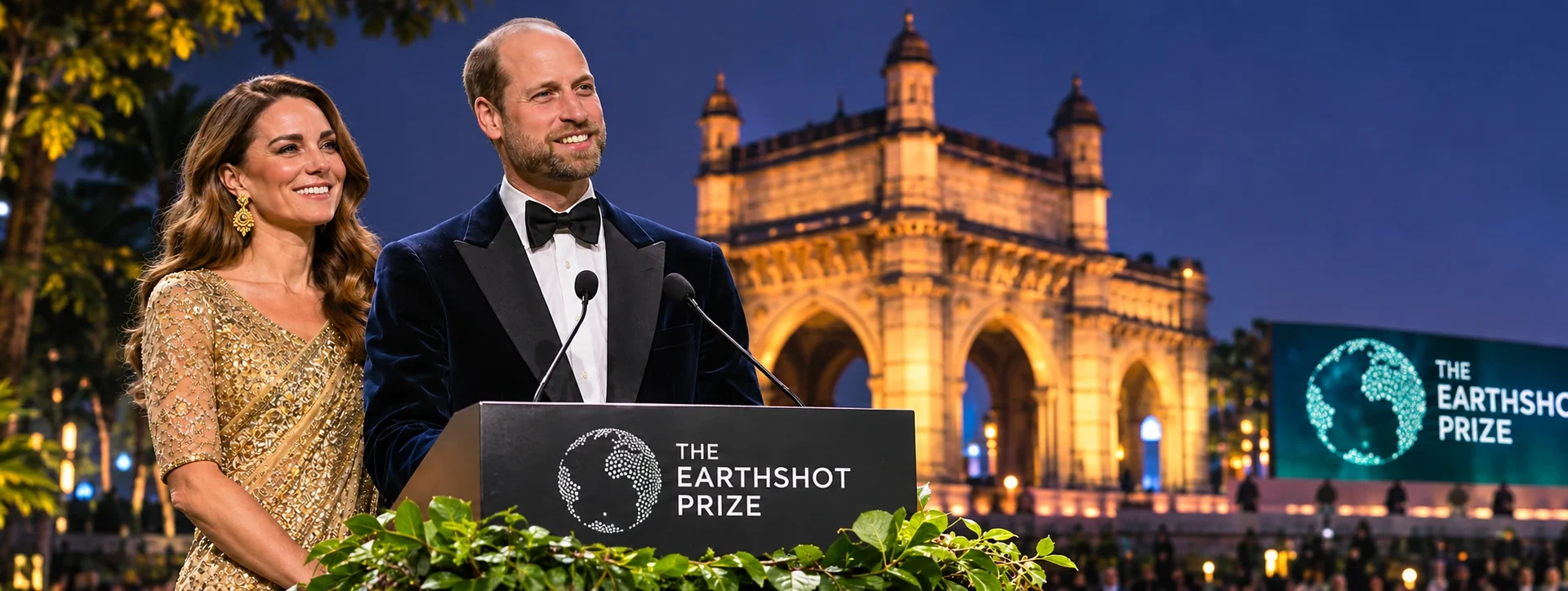
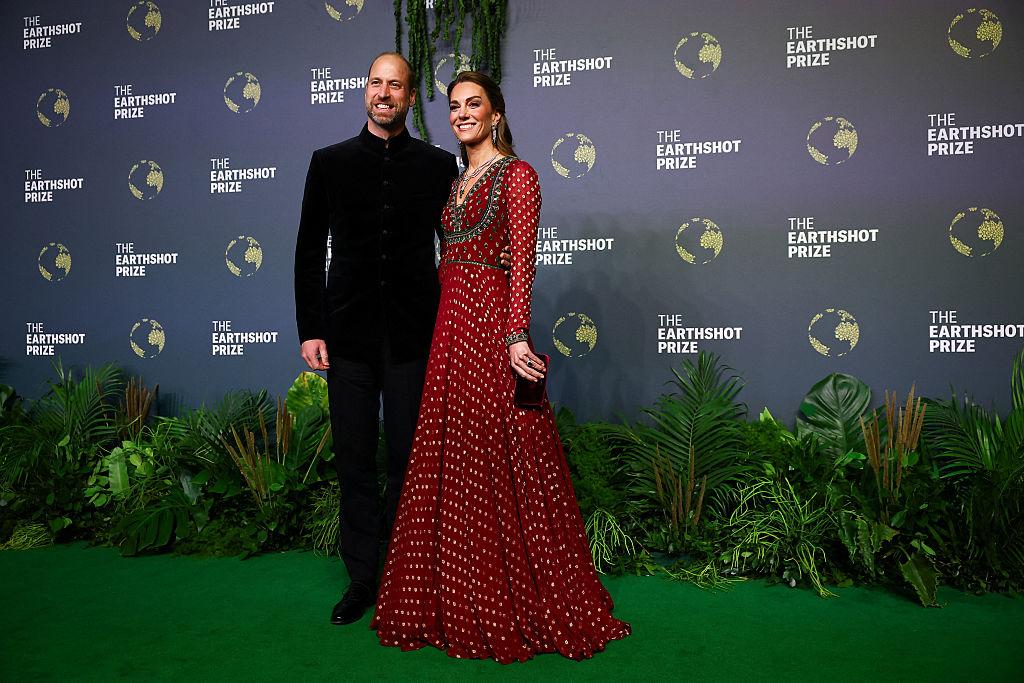
The 2026 Earthshot Prize ceremony, held in Mumbai on 17 November, offered a particularly compelling demonstration of the initiative’s growing international reach.
With the Prince and Princess of Wales in attendance, the event brought together environmental pioneers, scientists, entrepreneurs and prominent figures from Indian and international cultural life.
Among the participants were Bollywood stars Alia Bhatt and Sonam Kapoor, cricketing legend Sachin Tendulkar and Academy Award-winning actor Rami Malek.
Yet the true protagonists of the evening were not the celebrities, but the innovators whose work is already changing lives. The Earthshot Prize+1
Bhutan — Protect and Restore Nature

The Himalayan kingdom was recognised for its constitutional commitment to environmental protection and the safeguarding of watersheds that support populations across South Asia. Its conservation ambitions demonstrate how a relatively small nation can exercise an influence far beyond its borders.
Mahindra Last Mile Mobility, India — Clean Our Air
With more than 400,000 electric rickshaws sold, the company is demonstrating that cleaner urban transport can be economically viable for the drivers whose livelihoods depend upon it.
Niue Ocean Wide Trust — Revive Our Oceans
This Pacific initiative has developed an innovative conservation financing model to protect an immense marine area, creating a potentially valuable precedent for small island nations.
PFAS-Free France — Build a Waste-Free World
A citizens’ movement against persistent industrial chemicals helped secure important French legislation restricting certain uses of PFAS, illustrating the power of scientific evidence combined with public mobilisation.
Ørsted, Denmark — Fix Our Climate
Once heavily dependent upon coal, the energy company has transformed itself into a major force in offshore wind power, offering an important example of how established industries can reinvent themselves.The Earthshot Prize+1
What makes these five winners particularly fascinating is their diversity.
A Himalayan kingdom, an Indian transport manufacturer, a tiny Pacific island community, a French civic movement and a Danish energy corporation could scarcely be more different in their circumstances, resources or traditions.
Yet each has identified a practical means of confronting a problem that transcends national boundaries.
Their achievements also challenge the notion that environmental leadership must originate exclusively in the world’s wealthiest or most technologically advanced societies.
Indeed, some of the most imaginative solutions are emerging from communities whose very existence is intimately connected to the preservation of their natural surroundings.
Beyond Ceremony: Measuring Real Progress
The Earthshot Prize’s significance ultimately depends upon what happens after the applause has subsided.
According to the organisation’s own 2026 reporting, the 75 finalists supported between 2020 and the latest awards have collectively contributed to the following outcomes:
18m+
Tonnes of CO₂ avoided or captured
58m
Hectares of land protected or restored
85m
Hectares of ocean and coastline protected or restored
465,000
Tonnes of waste removed or avoidedFigures reported by the Earthshot Prize, November 2026, reflecting the collective work of its finalists rather than impacts attributable solely to the awards. The Earthshot Prize
These figures suggest that Earthshot has moved beyond the realm of symbolic recognition.
Nevertheless, the distinction between supporting an environmental project and causing its success must be carefully maintained. Some initiatives were already achieving significant results before becoming finalists. Others will require years of investment, regulation and institutional cooperation before their full potential can be realised.
The ultimate measure of Earthshot’s achievement will therefore be not simply the number of prizes distributed, but the extent to which its intervention helps promising solutions expand beyond what they might otherwise have accomplished.
That is a more demanding standard, but also a far more meaningful one.
The Monarchy as a Force for International Cooperation
One of the most intriguing aspects of the Earthshot Prize is what it reveals about the continuing relevance of constitutional monarchy in the modern world.
Unlike elected politicians, whose priorities are inevitably influenced by electoral cycles and the immediate demands of government, members of a royal family can devote themselves to causes requiring decades of sustained attention.
Environmental preservation is precisely such a cause.
Forests cannot be restored within a parliamentary term. Marine ecosystems do not recover according to electoral timetables. The development of new technologies, the transformation of industrial practices and the establishment of international conservation networks require patience, continuity and confidence.
These are qualities that a hereditary institution, at its best, is unusually well placed to encourage.
Prince William’s position also enables him to bring together individuals and organisations that might otherwise have little opportunity to collaborate.
Royal influence, when exercised with intelligence and discretion, can open doors that conventional diplomacy or commercial negotiation might struggle to unlock.
The Earthshot Prize Council itself illustrates this international reach. Its members include Queen Rania of Jordan, actress Cate Blanchett, chef and humanitarian José Andrés, environmental leader Christiana Figueres and prominent representatives of business, science and civil society. The Earthshot Prize
Their participation gives the initiative an international dimension that extends considerably beyond the United Kingdom.
It also demonstrates how the contemporary monarchy can exercise influence without assuming political authority.
Prince William is not attempting to legislate environmental policy or dictate the decisions of sovereign governments. Rather, he is using his international standing to encourage cooperation, attract investment and celebrate achievements that might otherwise remain insufficiently recognised.
There is something particularly compelling about this form of royal leadership: influence exercised through persuasion, continuity and the prestige of an institution whose history reaches far beyond the present political moment.
The Next Generation Is Already Participating
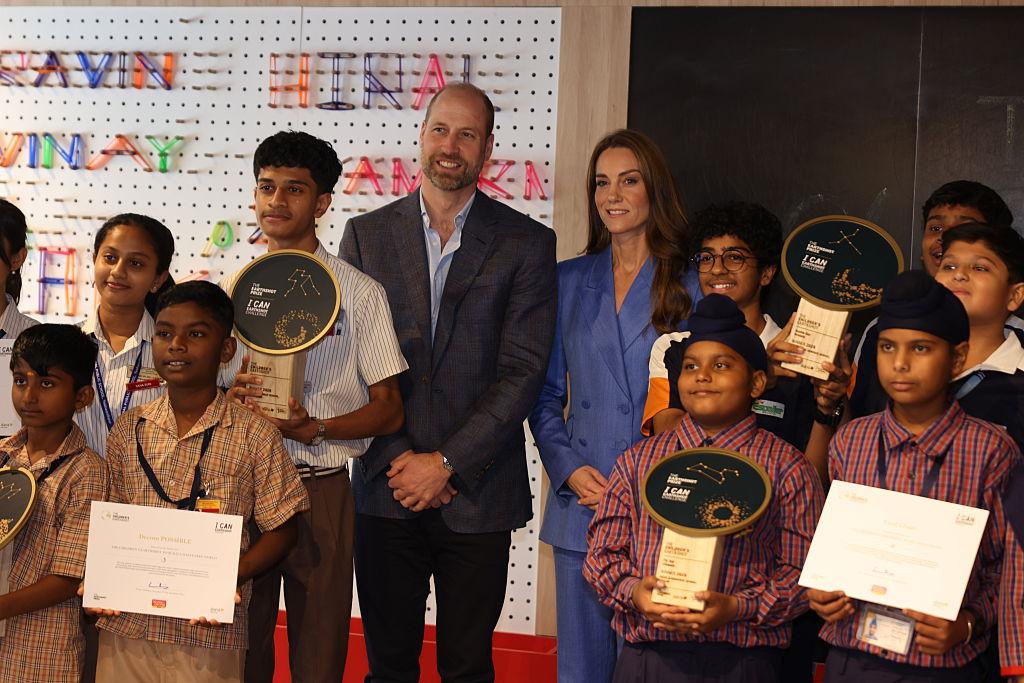
The 2026 edition also introduced an inspiring development: the inaugural Children’s Earthshot Awards.
Working with the Brazilian organisation Alana and the international educational movement Design for Change, the initiative reached nearly one million students across approximately 15,000 schools in 24 Indian states.
Children aged between nine and seventeen were invited not merely to learn about environmental problems, but to develop practical solutions.
Among the winning projects were a low-cost cooling device designed to preserve vegetables during extreme heat, biodegradable ceremonial lamps intended to reduce river pollution and an air filter constructed from natural materials.
Each winning team received a grant of US$2,000 to advance its work. The Earthshot Prize
The significance of this initiative should not be underestimated.
Environmental education has too often concentrated upon teaching children about the disasters they may inherit. While scientific awareness is essential, a childhood dominated by predictions of ecological catastrophe risks producing resignation rather than determination.
Earthshot proposes a different educational philosophy.
It tells young people that their ideas matter, that practical ingenuity can overcome seemingly formidable obstacles and that they need not wait until adulthood to make a contribution.
The distinction between raising awareness and encouraging action is fundamental.
A child who develops a successful solution to a local environmental problem may acquire something far more valuable than an abstract understanding of climate change: the conviction that individual initiative can make a difference.
The Extraordinary Power of Optimism
Perhaps the most distinctive feature of the Earthshot Prize is its refusal to surrender to pessimism.
Environmental problems are real, serious and in many cases accelerating. The loss of biodiversity, pollution of rivers and oceans, degradation of forests and consequences of global warming demand urgent and sustained attention.
Yet acknowledging the gravity of these challenges does not require abandoning confidence in humanity’s capacity to respond.
On the contrary, history provides abundant examples of extraordinary progress achieved when scientific discovery, technological innovation, political determination and human imagination have converged.
Earthshot seeks to create precisely that convergence.
Its philosophy is not that environmental problems will somehow resolve themselves, nor that technological ingenuity alone can eliminate the need for responsible government and changes in human behaviour.
Rather, it is that the solutions already being developed deserve the resources, visibility and institutional support necessary to realise their potential.
The Prince of Wales expressed this conviction during the Mumbai ceremony, declaring:
“Change is not only possible. It is already happening.”
The Earthshot Prize
Those words capture the essential difference between Earthshot and much of contemporary environmental rhetoric.
The initiative is concerned not merely with what humanity must stop doing, but with what humanity is capable of achieving.
There is an important psychological dimension to this approach.
Fear can draw attention to a crisis, but it rarely provides a sufficient foundation for sustained collective endeavour. Hope, when supported by credible evidence and practical opportunities, can be a considerably more productive force.
Earthshot’s optimism is therefore not an exercise in wishful thinking. It is an attempt to make progress visible, tangible and worthy of emulation.
A Legacy Greater Than an Award
The Earthshot Prize has already established itself as a distinctive international environmental institution. Its longer-term significance, however, remains to be determined.
By 2030, when the initiative reaches the conclusion of its original decade of action, its success should be judged by the environmental solutions it has helped bring to scale, the partnerships it has encouraged and the measurable improvements those efforts have delivered.
There will inevitably be disappointments. Not every promising innovation will succeed. Some projects will encounter political resistance, financial difficulties or technological limitations. Others may prove less effective when transferred from one country or community to another.
Such uncertainties are inherent in any serious attempt to encourage innovation.
But they do not diminish the importance of the undertaking.
Indeed, one of Earthshot’s most valuable contributions may prove to be the establishment of a model in which environmental achievement is celebrated with the same enthusiasm traditionally reserved for sporting victories, artistic accomplishment or scientific discovery.
For Prince William personally, the Prize may become one of the defining achievements of his public life.
It combines the conservation legacy of his grandfather, the environmental convictions of his father and his own determination to give the modern monarchy a practical international purpose.
It also offers a persuasive answer to those who question whether hereditary institutions can retain meaningful relevance in a rapidly changing world.
The answer lies not exclusively in ceremony, tradition or constitutional responsibility, important though these remain, but also in the capacity to bring people together around objectives that transcend political divisions and national frontiers.
Ultimately, the most enduring legacy of the Earthshot Prize may not be the ceremonies, the distinguished guests or even the millions of pounds distributed to its winners.
It may be the creation of an international culture in which environmental ingenuity is recognised, rewarded and actively encouraged.
President Kennedy’s Moonshot demonstrated that humanity could reach another world.
Prince William’s Earthshot asks whether that same spirit of determination, imagination and collective endeavour can be employed to preserve the extraordinary world we already possess.
The first was a triumph of exploration. The second could become a triumph of civilisation.
Editorial research: The Earthshot Prize’s official mission and objectives, 2026 winners and impact report and finalists and winners. Article updated to reflect the Mumbai awards of 17 November 2026.


 Carlos Mundy

 Dixon Acosta

 Elga Wimmer



 Metaphore Magazine

 Milton Cooper

 Ludovico di Valdieri

 Lavinia Ellington-Wentworth

 Laura Mitchell