

 Thubten Namdrol
A call for the freedom of the Panchen Lama, the rights of the Tibetan people, and an end to the digital rewriting of history.
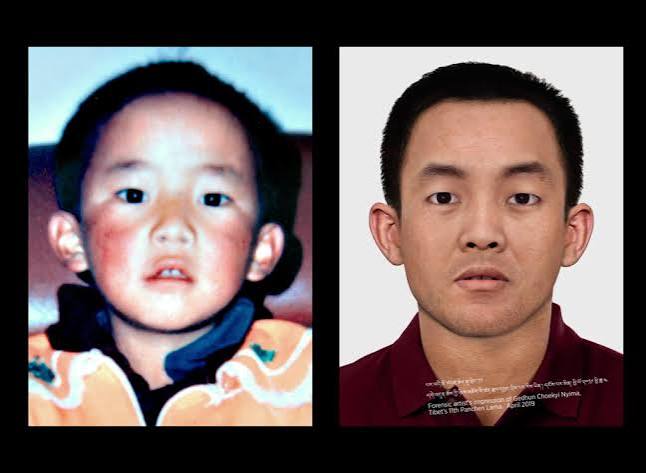
In May 1995, a six-year-old Tibetan boy named Gedhun Choekyi Nyima became the centre of one of the most extraordinary acts of religious interference of the modern era.
The Dalai Lama recognized Gedhun Choekyi Nyima as the 11th Panchen Lama, one of the most important figures in Tibetan Buddhism. Three days later, the child and his parents disappeared.
Thirty-one years later, the world still does not know where he is.
The Chinese government has acknowledged taking the boy and his family into state protection, but it has never allowed independent observers, journalists, diplomats or religious authorities to meet him or establish independently what happened to him. Chinese officials have repeatedly claimed that he is alive, healthy and living an ordinary life. Yet there is no independent evidence confirming his whereabouts or his freedom.
In 2025, the United Nations human-rights system again expressed grave concern over his continuing enforced disappearance. UN experts noted that China had refused to provide precise information about his fate and whereabouts despite repeated requests. (SP Communication Reports)
The question is therefore painfully simple:
If Gedhun Choekyi Nyima is free, why can nobody see him?
A child became a religious prisoner
The significance of the Panchen Lama goes far beyond one individual.
For centuries, the Dalai Lama and the Panchen Lama have had an important relationship in Tibetan Buddhism, including roles in recognizing the reincarnations of major religious leaders. Control over the Panchen Lama therefore has implications for the future leadership of Tibetan Buddhism itself.
After Gedhun disappeared, Chinese authorities installed another child, Gyaltsen Norbu, as their officially recognized Panchen Lama.
The Chinese state had effectively created two competing Panchen Lamas: one recognized by the Dalai Lama and the Tibetan religious tradition, and another recognized by Beijing.
That was not simply a dispute over theology.
It was an assertion of political power over religious succession.
China subsequently introduced regulations giving the state authority over the recognition of reincarnate Tibetan Buddhist leaders. UN experts have expressed concern about China’s attempts to regulate the reincarnation system and its continuing enforced disappearance of Gedhun Choekyi Nyima. (SP Communication Reports)
The implications reach directly toward the future succession of the Dalai Lama.
The Chinese government has made clear that it intends to have a role in determining who may be recognized as the next Dalai Lama. The Tibetan religious tradition, meanwhile, maintains that such decisions belong to Tibetan Buddhist authorities rather than a secular government.
This is why the fate of one little boy matters so profoundly.
What has happened to Tibet?
The Panchen Lama’s disappearance is not an isolated incident.
Across Tibetan areas, international human-rights organizations and governments have documented restrictions on religious practice, language, movement and cultural expression.
Human Rights Watch reported in 2025 that Tibetan areas remained subject to intense surveillance and restrictions, including arbitrary detention and enforced disappearance. It also documented policies requiring Tibetan children to receive education increasingly centred on Mandarin Chinese and described the relocation of Tibetan communities from traditional villages. (Human Rights Watch)
In 2026, Human Rights Watch reported that China’s “Children’s Speech Harmonization” policy was further limiting Tibetan-language education among young children, warning that the policy was accelerating the erosion of Tibetan language and cultural identity. (Human Rights Watch)
The issue is therefore not merely whether Tibetans are permitted to remain physically in Tibet.
It is whether they are permitted to remain Tibetan.
A culture can be suppressed without every building being demolished. A language can disappear without a law explicitly declaring it illegal. A religion can be weakened without every monastery being closed.
If children are educated away from their mother tongue, if monasteries are placed under political supervision, if religious leaders are required to demonstrate political loyalty, if images of the Dalai Lama are prohibited, and if communication with people outside Tibet can result in punishment, the cumulative effect can be devastating.
The United States State Department has documented restrictions on Tibetan religious practice, political indoctrination of monks and nuns, restrictions on the Dalai Lama’s image, interference with monasteries and state control over the recognition of Tibetan Buddhist leaders. (State.gov)
Now the battle is entering the digital age
There is another development that deserves far greater international attention.
China’s control over the Tibetan narrative is no longer confined to newspapers, television, textbooks and restrictions on foreign access.
It is increasingly moving into artificial intelligence.
In 2026, the Chinese state promoted an AI language model called DeepZang, presented as a platform for people around the world to learn about Tibetan culture, history and politics. The International Campaign for Tibet has argued that the system risks becoming another mechanism for disseminating the Chinese government’s preferred interpretation of Tibet. (International Campaign for Tibet)
And in June 2026, a Tibet International Communication Conference in Lhasa explicitly brought together artificial intelligence, storytelling, historical narratives and international communication as part of China’s effort to shape how Tibet is understood abroad. The International Campaign for Tibet described this as an increasingly technologically sophisticated attempt to control the global narrative. (International Campaign for Tibet)
This is where the world must be particularly careful.
Artificial intelligence can be enormously beneficial. But AI trained, controlled or filtered by a government can also become an extraordinarily powerful instrument for manufacturing historical memory.
A generation from now, someone may ask an AI:
“Who is the Panchen Lama?”
What answer will they receive?
Will they learn about a six-year-old boy recognized by the Dalai Lama and then disappeared?
Or will they receive a carefully constructed official narrative in which the Chinese government’s chosen religious figure is presented as the legitimate Panchen Lama and the disappearance of Gedhun Choekyi Nyima is reduced to a footnote?
That is not science fiction.
It is a question we should already be asking.
You cannot erase a person by controlling the information about him
The tragedy of Gedhun Choekyi Nyima is that he has effectively been erased from public life while remaining alive, according to the Chinese government’s own claims.
His photograph is restricted.
His whereabouts are unknown.
His family has not been independently accessible.
His religious education and freedom cannot be independently verified.
And the Tibetan people have been denied the ability to know their religious leader for themselves.
That is why the international demand should be extraordinarily simple:
Let the Panchen Lama be seen.
Allow independent international representatives to meet Gedhun Choekyi Nyima.
Allow him to speak freely.
Allow him to say who he is.
Allow him to decide for himself what religious life he wishes to lead.
Allow his family to speak freely.
If China is correct that he has lived a normal and happy life, there should be nothing to fear from allowing independent observers to establish the truth.
The world must not allow history to be rewritten by algorithms
The Tibetan question is ultimately about more than geopolitics.
It is about whether a government should be able to determine what a people are allowed to remember, what language their children learn, which religious leaders they may follow, and ultimately which version of their own history the rest of the world is permitted to hear.
For decades, Tibet has struggled to make its story heard beyond its borders.
Now there is a new danger.
The old censorship machine can be supplemented by something far more sophisticated: algorithms capable of producing convincing answers, images, videos and narratives at extraordinary speed and scale.
The answer cannot be another propaganda machine.
It must be truth, transparency and independent verification.
Every government has the right to defend its historical interpretation. No government should have the right to prevent the world from independently investigating the fate of a child who disappeared after being recognized as a major religious leader.
Gedhun Choekyi Nyima was six years old when he disappeared.
He should not have to disappear from history simply because China controls the territory in which he was born.
And Tibetans should not have to surrender their language, their faith or their history in order to live in their own homeland.
The Panchen Lama should be allowed to come out of the shadows.
His family should be allowed to speak.
Independent observers should be allowed to establish the truth.
And the world must ensure that artificial intelligence never becomes the machine that makes a disappeared child disappear twice: first from the world, and then from history.
Further Reading: Isabel Hilton’s The Search for the Panchen Lama
For those wishing to understand more fully the extraordinary story of the Panchen Lama — and the collision between an ancient spiritual tradition and the political power of modern China — I strongly recommend Isabel Hilton’s remarkable book, The Search for the Panchen Lama. Hilton, a distinguished British journalist and long-standing observer of China and Tibet, takes the reader deep into the events surrounding the search for the Eleventh Panchen Lama, travelling from the Dalai Lama’s headquarters in India to monasteries and remote communities across the Himalayan world.
It is far more than the story of a missing child. Hilton explains with considerable clarity the centuries-old relationship between the Dalai Lama and the Panchen Lama, the spiritual traditions governing the recognition of reincarnated lamas, and the extraordinary political struggle that erupted when Gedhun Choekyi Nyima was recognised by the Dalai Lama as the Eleventh Panchen Lama in 1995. Soon afterwards, the boy and his family disappeared from public view, while Beijing subsequently installed its own chosen Panchen Lama.
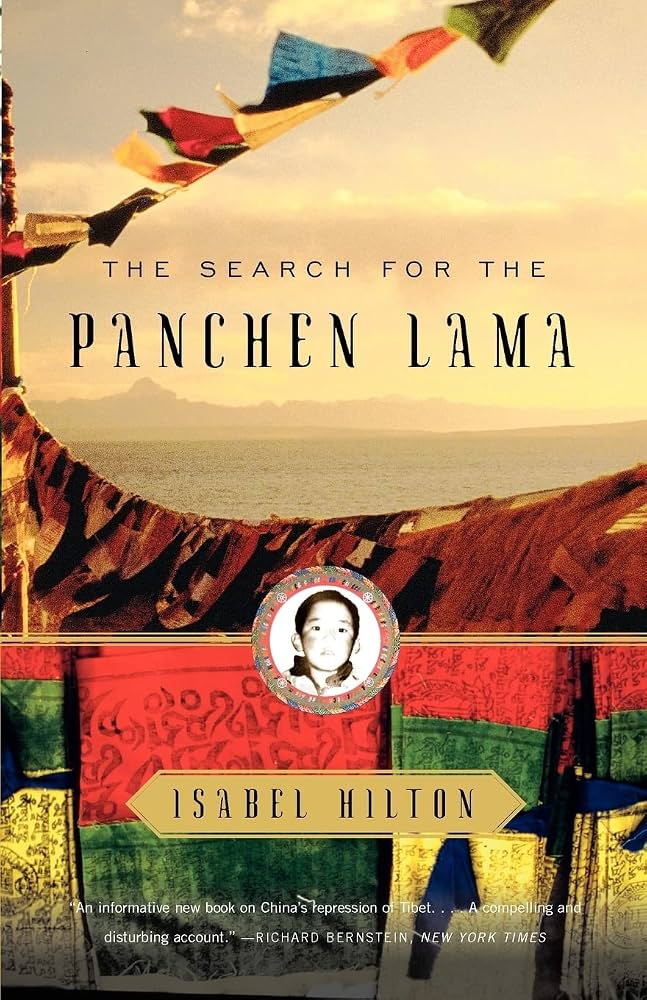
Beautifully written, meticulously researched and at times deeply moving, The Search for the Panchen Lama provides essential context for understanding why the fate of one Tibetan child matters far beyond Tibet itself. It also helps the reader understand what is ultimately at stake: not merely the identity of one religious figure, but the question of whether a government can claim authority over belief, reincarnation and the spiritual succession of an ancient civilisation.
More than a quarter of a century after its publication, Hilton’s book remains an indispensable companion to the story told in this article — and, for anyone seeking to understand the continuing struggle over Tibet’s religious and cultural future, an exceptionally worthwhile read.
More information: https://www.tashi-lhunpo.org.uk/the-panchen-lamas/


 Carlos Mundy

 Dixon Acosta


 Giovanni R. Ruffini Professor of History Fairfield University, USA


 Charles Markeaton-Mundy

 Gaspard de Montfort

 Milton Cooper
