

 Lavinia Ellington-Wentworth
In his new book, Carlos Mundy reopens the extraordinary story of Prince Alexis d’Anjou-Durassow — a man caught between some of Europe’s greatest dynasties, a contested inheritance and one of the most enduring mysteries of the twentieth century.
History likes certainty. It likes dates, documents and conclusions. It prefers its kings crowned or deposed, its dynasties neatly arranged in genealogical tables and its dead safely accounted for.
Occasionally, however, a life appears that refuses to fit comfortably within those boundaries.
Prince Alexis d’Anjou-Durassow was one such life.
In The Truth About the Royal House of Anjou-Naples & Prince Alexis d’Anjou-Durassow, author Carlos Mundy enters a world in which medieval dynasties intersect with the Russian Revolution; where questions of blood, adoption and legitimacy become inseparable from personal identity; and where documents preserved for decades within families challenge us to reconsider what we think we know.
It is a story that begins long before Alexis himself.
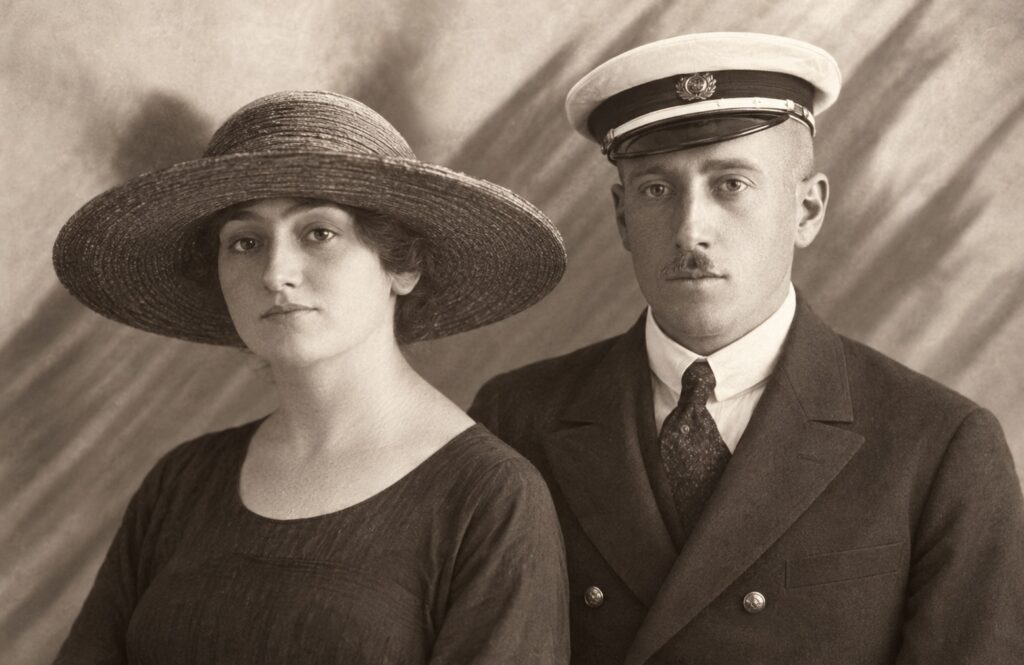
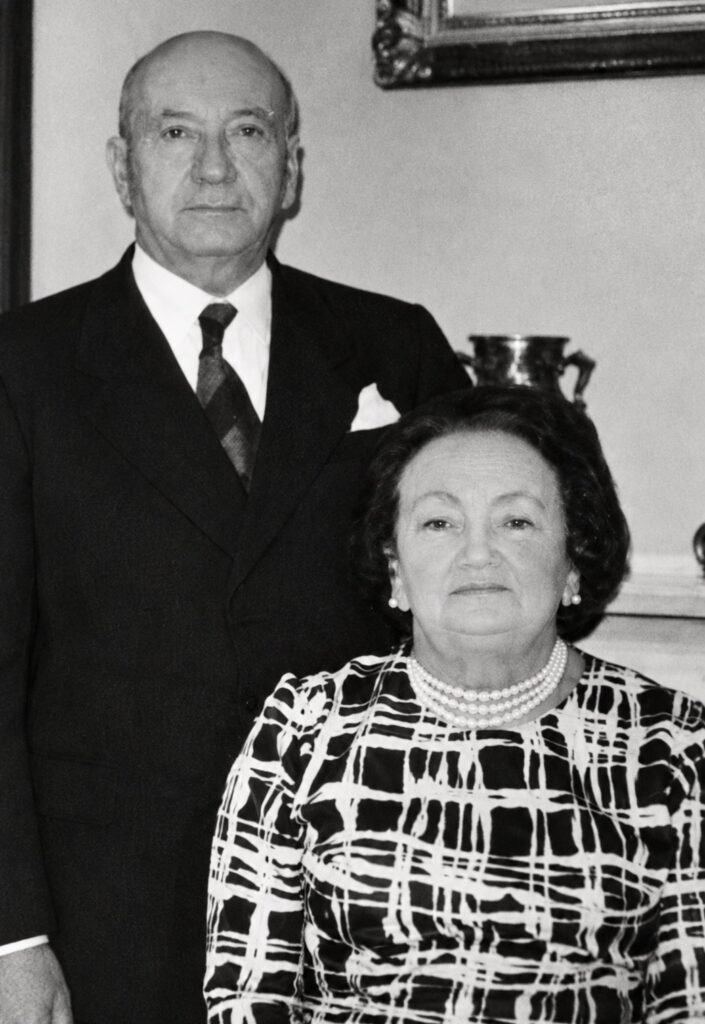
Mundy takes the reader back to the great Capetian House of Anjou, founded by Charles of Anjou, younger brother of Saint Louis, King Louis IX of France. From its French origins, the Angevin dynasty created an extraordinary network of power stretching through southern Italy, Sicily, Hungary, Albania, Greece and the eastern Mediterranean. For more than two centuries its members occupied a central position in European politics, acquiring kingdoms and principalities through an intricate combination of marriage, conquest, papal patronage and dynastic ambition.
It is against this formidable historical background that the book introduces the much later House of Anjou-Durassow and the remarkable figure who would eventually inherit its name.
Alexis’s story could almost have been devised by a novelist.
At its heart lies an intensely human question: what makes us who we are?
Blood? A name? Legal recognition? Family memory? Or the person whom others acknowledge us to be?
Alexis’s biological father was Victor Brimeyer. Yet Prince Vasili d’Anjou-Durassow recognised Alexis as his own son and heir. Following Vasili’s death, this relationship was reinforced in 1979 when Prince Nicholas Louis d’Anjou-Durassow formally adopted Alexis, describing him in the instrument as the only son of his deceased cousin Prince Vasili.
Mundy is careful not to collapse these different concepts into one another. Biological descent, legal adoption and dynastic succession are not necessarily the same thing — a distinction that becomes essential as Alexis’s increasingly complicated story unfolds.
Through his mother, Alexis belonged to the Dolgouruky family. His d’Anjou-Durassow identity came through Vasili’s recognition and the subsequent adoption. The most extraordinary strand, however, concerns the Romanovs.
Alexis grew up within a family tradition according to which his maternal grandmother was none other than Grand Duchess Maria Nikolaevna, daughter of Emperor Nicholas II of Russia.
And with that, what might have remained an obscure chapter of European dynastic history enters one of the great historical controversies of the twentieth century.
Few events have acquired the almost mythological power of the fate of Nicholas II, Empress Alexandra and their five children.
The accepted historical and forensic account holds that the Imperial Family was murdered at Ekaterinburg in July 1918. Over the succeeding century, the discovery and scientific examination of remains have provided substantial evidence supporting that conclusion.
Mundy does not simply brush that evidence aside.
Instead, the book asks a more uncomfortable question: should historical consensus prevent genuinely new evidence from being examined?
Its answer is no.
The author presents family testimony, photographs, documents and genealogical material associated with the Dolgouruky family, Grand Duchess Maria Nikolaevna and Prince Alexis, while acknowledging that the most consequential propositions require independent scientific and archival verification.

That intellectual distinction is important.
The book does not require the reader to believe that every extraordinary claim surrounding Alexis must therefore be true. Indeed, Mundy repeatedly argues the opposite: documents must be authenticated, provenance established, scientific claims independently tested and DNA evidence, where applicable, subjected to properly documented and reproducible analysis.
The result is less an attempt to replace one historical orthodoxy with another than an invitation to reopen the file.
And then there is Alexis himself.
He emerges from these pages as a fascinatingly contradictory man.
Had he confined himself to the identity already available to him — Alexis d’Anjou-Durassow, recognised son and heir of Prince Vasili, with his documented connection to the Dolgouruky family — his life might have followed a very different course.
Instead, Alexis continually complicated his own story.
Names accumulated. So did titles, adoptions, dynastic assertions and political adventures. Dolgouruky represented his maternal inheritance; Romanov the descent he believed came through his grandmother; d’Anjou-Durassow his paternal recognition; Bourbon-Condé entered the story through another adoption; and other dynastic and political episodes followed.
Individually, some of these elements could be explained. Collectively, they created an identity so elaborate that the credible parts of Alexis’s story became increasingly difficult to separate from the controversial ones.
That may be the great tragedy at the centre of Mundy’s book.


Alexis did not necessarily suffer because there was nothing authentic about him. Rather, the book argues that he obscured what was authentic by continually adding to it.
His critics consequently found it easy to dismiss the whole man.
Mundy refuses to do that.
Nor does he attempt to turn Alexis into an immaculate hero. His errors of judgement, questionable associations and hunger for recognition are part of the story. But a man’s mistakes, the author argues, cannot retrospectively make genuine documents cease to exist or legitimate family relationships disappear.
It is a surprisingly modern question: when reputation overwhelms evidence, how do we recover the person underneath?
One of the pleasures of the book is that its royal world bears little resemblance to the sanitised monarchy of popular imagination.
These are dynasties shaped by assassination, revolution, exile, morganatic marriages, disputed successions, political vendettas and extraordinary reversals of fortune.
Even the early history reads like grand opera.
Charles of Anjou rose from younger son of the French royal house to King of Sicily, defeated Manfred at Benevento, destroyed the last Hohenstaufen challenge and attempted to build an Angevin Mediterranean system stretching towards Constantinople. Yet the seemingly formidable edifice fractured spectacularly with the Sicilian Vespers of 1282.
Centuries later, dynastic politics remained scarcely less dramatic.
The book’s second major historical movement takes the reader into nineteenth- and twentieth-century Spain, where Bourbons, Orléans and rival branches of Europe’s royal houses collided with revolution and changing concepts of legitimacy. One particularly extraordinary episode concerns Infante Don Enrique de Bourbon, Duke of Seville, whose bitter conflict with Antoine d’Orléans, Duke of Montpensier, ended in a pistol duel outside Madrid in 1870 and Don Enrique’s death.
Against such a background, Alexis’s later life begins to seem less an inexplicable anomaly than the final act of a European world in which names, inheritances and dynastic recognition could still carry enormous emotional weight.

Yet beneath all the heraldry and genealogy lies something much more intimate.
Alexis’s repeated search for recognition — particularly paternal recognition — gives the book an unexpected emotional centre.
Here was a man whose biological father was not the man he wished to regard as his father; whose identity was reinforced through recognition and adoption; whose maternal ancestry carried its own extraordinary history; and who spent much of his adult life seeking confirmation from people and institutions capable of validating who he believed himself to be.
Suddenly the story is no longer simply about whether someone was entitled to call himself a prince.
It becomes a story about belonging.
And perhaps that explains why Alexis remains so intriguing.
His world of royal houses and genealogical claims can seem remote from contemporary life, but his central dilemma is anything but remote. Most human beings want to know where they come from. Alexis wanted something more difficult: he wanted the world to acknowledge where he believed he belonged.
Mundy’s final position is deliberately more measured than the sensational nature of the material might suggest.
The book does not ask its reader to accept every claim Alexis made. It argues that each should be examined separately and that demonstrable facts should not be discarded simply because they coexist with claims that remain disputed.
That may ultimately prove to be the book’s most compelling proposition.
Historical truth rarely arrives as a perfectly preserved document waiting politely in an archive. It survives in fragments: photographs, letters, legal instruments, family memories, official records and sometimes in stories whispered through generations.
Some fragments prove authentic.
Others do not.
The historian’s responsibility is to discover which is which.
Research into the fate of the Russian Imperial Family and the material surrounding Alexis continues, and Mundy acknowledges that any extraordinary conclusions will require extraordinary scrutiny. He pays particular tribute to historian Marie Stravlo and to researchers of the Russian Imperial Family Historical Society, whose work, he writes, has helped preserve documents, photographs and memories connected with the story.
And so the book closes without pretending to provide the comfort of a final full stop.
Perhaps that is appropriate.
For beneath its princes, dukes, emperors, revolutions and lost dynasties, The Truth About the Royal House of Anjou-Naples & Prince Alexis d’Anjou-Durassow is ultimately concerned with something larger: how history decides what is true, who is believed and what happens to those whose lives fall inconveniently between accepted versions of the past.
Prince Alexis spent much of his life demanding that the world recognise who he believed himself to be.
Carlos Mundy’s book asks a rather different question.
What if, instead of either believing Alexis or dismissing him, we finally examine the evidence?



 Kamal Kumar

 Cristina Pedrazuela
 Charles Markeaton-Mundy

 Gaspard de Montfort

 Milton Cooper
