
 Elga Wimmer
In the annals of art history, few tales carry the intrigue and audacity of the Tiara of Saitaferne. This infamous 19th-century forgery deceived curators enchanted the public and even earned a coveted place within the Louvre Museum, one of the world’s most venerable institutions. Masquerading as a masterwork from ancient Greece, this tiara’s eventual exposure as a hoax would become a cautionary tale for the ages, revealing that even the most astute scholars are not impervious to the charms of a beautifully wrought illusion.
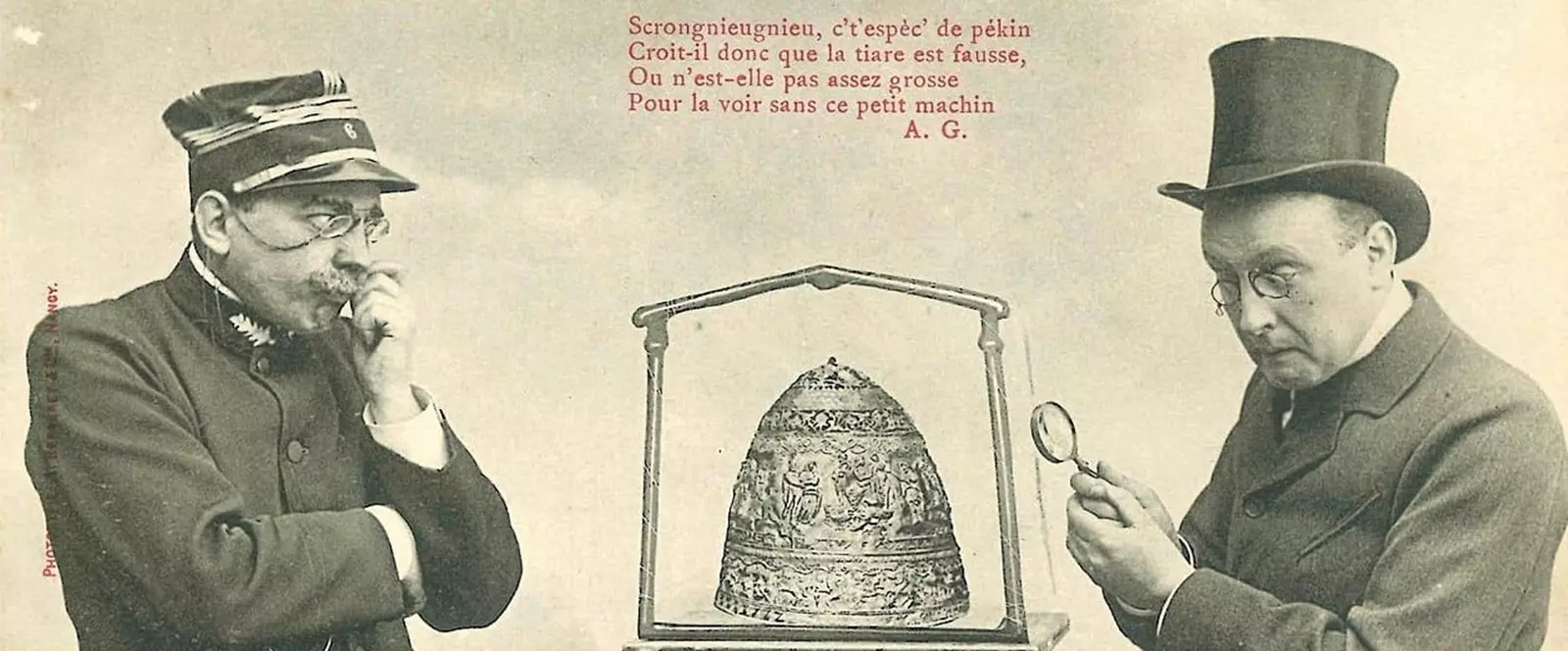
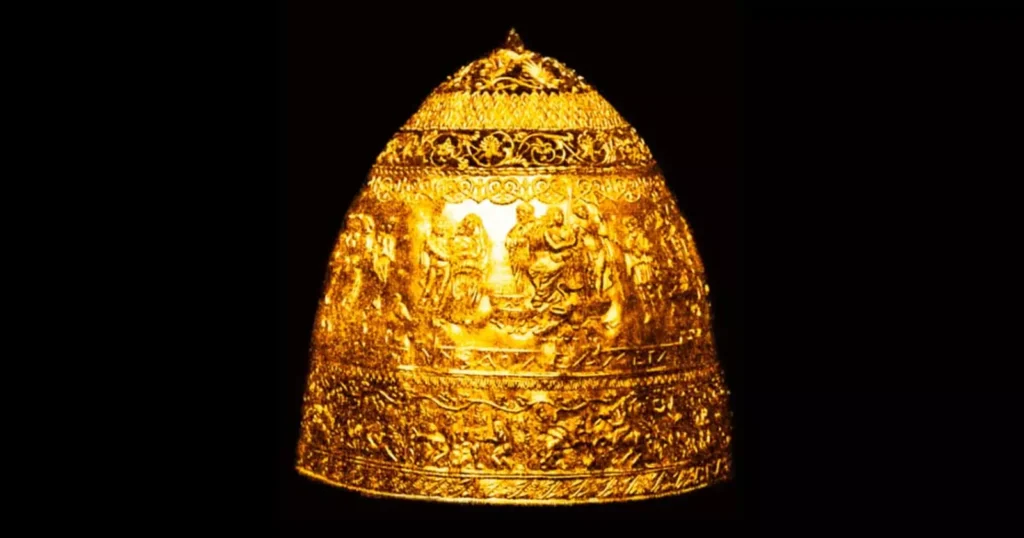
The tiara emerged on the European scene in 1896 when the allure of archaeology held society in thrall. Unknown people purportedly crafted the extraordinary golden crown, named after King Saitaferne—a Scythian monarch referenced by Greek historians— in the 3rd century BCE. Weighing close to a kilogram of solid gold, it showcases intricate scenes from Greek mythology, highlighting the fusion of Greek and Scythian artistic traditions. When it came into the hands of the Louvre’s curators, they accepted it eagerly, confident they had acquired a relic of singular importance.
An antique dealer named Schapschelle Hochmann, claiming to have unearthed it from the tomb of King Saitaferne, presented the artefact to the Louvre. The public, enchanted by its artistry and the allure of antiquity, flocked to marvel at the tiara. Its prestige soared, becoming the crowning jewel of the Louvre’s ancient collection. However, cracks in its seemingly unassailable authenticity began to be noticed, leading to the tiara’s eventual exposure as a forgery.
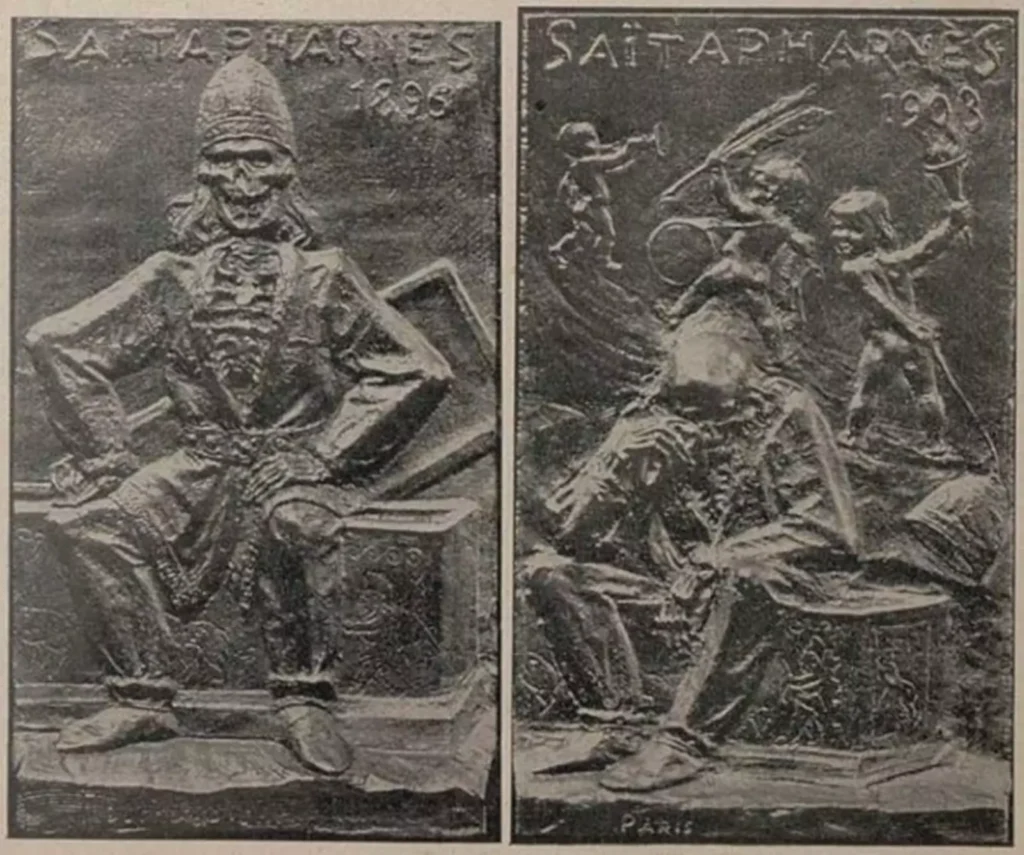
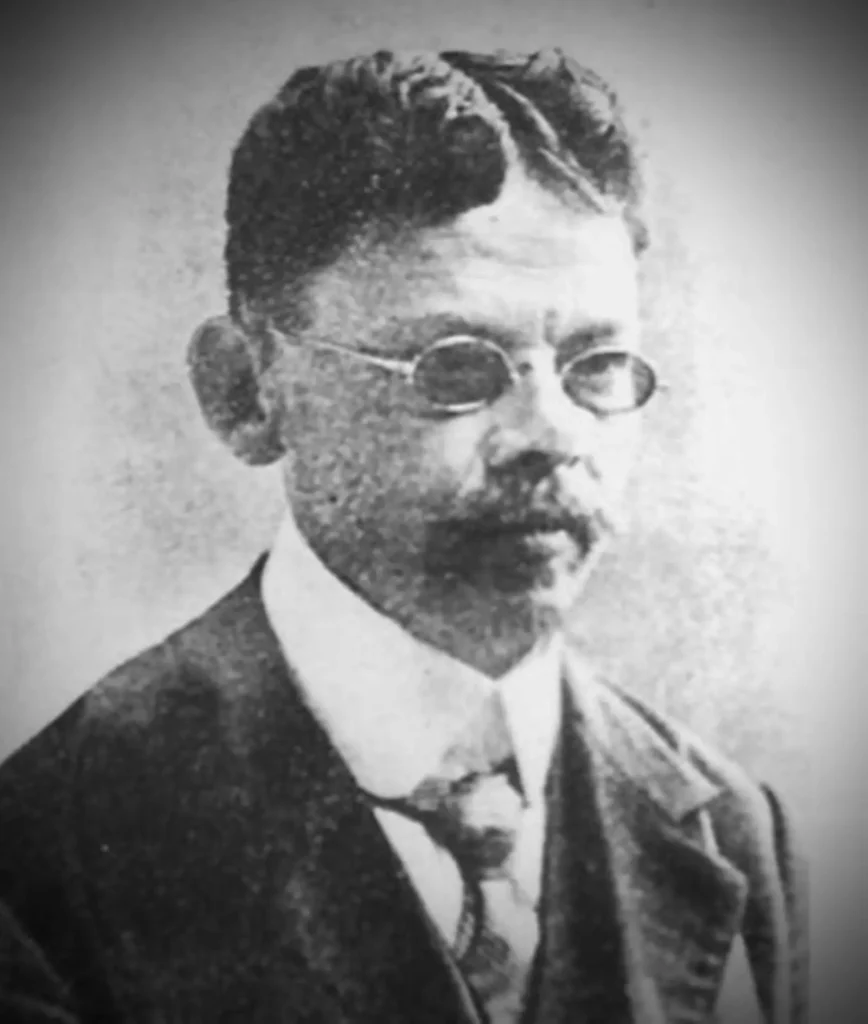
Doubts first arose among astute scholars who noted stylistic anomalies within the tiara’s decorations. Its condition, pristine to the point of improbability, raised eyebrows, for genuine relics of that era seldom emerge unscathed by time. Eventually, mounting scepticism led the Louvre to undertake a rigorous investigation, and it was then that the unsettling truth emerged: the tiara was a forgery. The work had, in fact, been commissioned from a Ukrainian jeweller named Israel Rouchomovsky, whose skill was such that he had fashioned an object capable of beguiling the most exacting connoisseurs. When Rouchomovsky discovered his creation’s fate, he expressed mingled pride in his craft and lament at its misappropriation.
The Louvre removed the tiara from its galleries, yet the scandal left an indelible impression on its reputation. The Tiara of Saitaferne symbolised the art world’s vulnerability to illusion and the dangers of a fervent quest for antiquities. Its tale remains a salutary reminder that in matters of art, beauty and history can blind even the keenest of minds to the spectre of deceit.
Despite its questionable history, the tiara continues to captivate people today. Recently displayed at the Roemer und Pelizaeus Museum in Hildesheim, Germany, the tiara received a Guinness World Record for being one of the greatest goldsmithing deceptions in history. It periodically reappears in Salon of Fakes exhibitions, serving as a vivid example of how ambition and illusion can lead even the most sophisticated institutions astray.
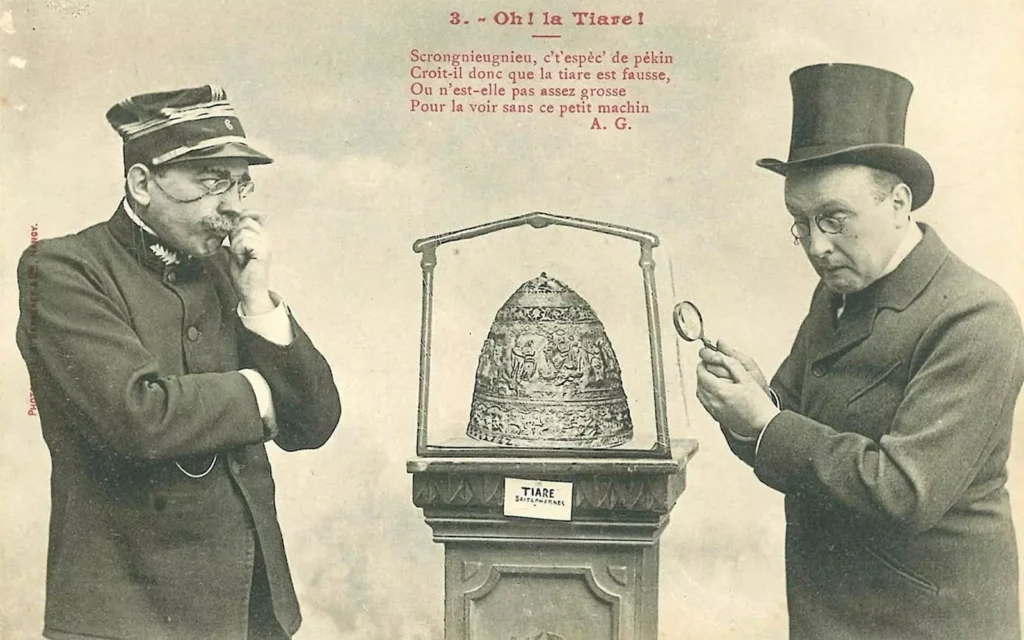
For Israel Rouchomovsky, the tiara was both a masterwork and a paradox. In creating a thing of profound beauty, he unwittingly forged his legacy as the architect of one of art history’s most beguiling deceptions. The Tiara of Saitaferne reminds us, in its gilded splendour, that in art—as in life—the boundary between truth and illusion is all too easily crossed.
To see more articles related to this topic, follow this link.


 Elga Wimmer

 Pablo H. Aznar

 Clifford Thurlow


 Antoinette Martin

 Romy Querol

 Charles Markeaton-Mundy

 Gaspard de Montfort

 Milton Cooper
