
 Lavinia Ellington-Wentworth
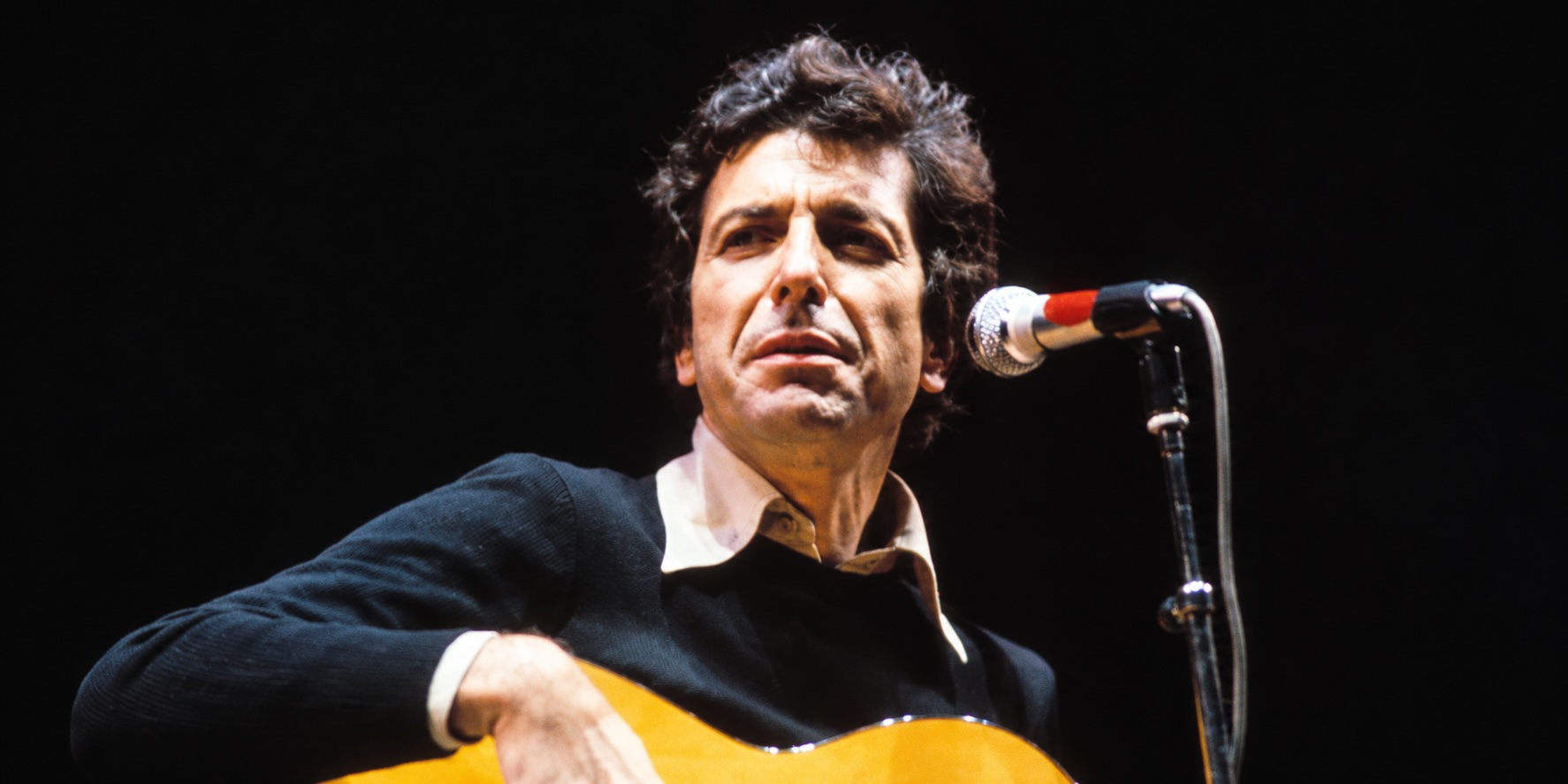
He went in search of silence and believed his fortune would allow him to grow old in peace. Instead, Leonard Cohen discovered that millions had disappeared. At 73, he was forced back onto the road. What followed was not merely a comeback, but one of the most magnificent final acts in the history of popular music.
There is something almost unbearably Leonard Cohen about the story.
A man spends a lifetime writing about love and loss, desire and disappointment, fidelity and betrayal, faith and the innumerable weaknesses of the human heart. He becomes successful enough to withdraw from the noise of the world and entrusts the mundane business of money to someone close to him. He retreats to a Zen monastery in the mountains above Los Angeles, rises before dawn, meditates, cooks, studies and searches for that elusive tranquillity which neither fame nor romance had ever quite given him.
And while he is contemplating the impermanence of material things, much of his material security is disappearing.
The story might almost have been conceived by Cohen himself.
Except that it happened.
The Poet Who Walked Away
By the early 1990s, Leonard Cohen had already lived several artistic lives.
Born in Montreal in 1934, he had first established himself as a poet and novelist before becoming, relatively late, a recording artist. He was already 33 when Songs of Leonard Cohen appeared in 1967.
What followed was one of the most singular careers in modern music.
There was never anything conventional about Cohen. He possessed neither the voice of a traditional singer nor the swagger of a rock star. He appeared instead as something altogether rarer: part poet, part troubadour, part philosopher, part seducer and, occasionally, part prophet.
Songs such as Suzanne, Bird on the Wire, Famous Blue Raincoat and, eventually, Hallelujah established him as one of the great lyricists of his generation. His work concerned itself with subjects pop music often approached superficially but Cohen treated with almost biblical seriousness: sex, loneliness, God, ageing, jealousy, redemption and the dangerous territory between love and possession.
Success, however, did not quieten him.
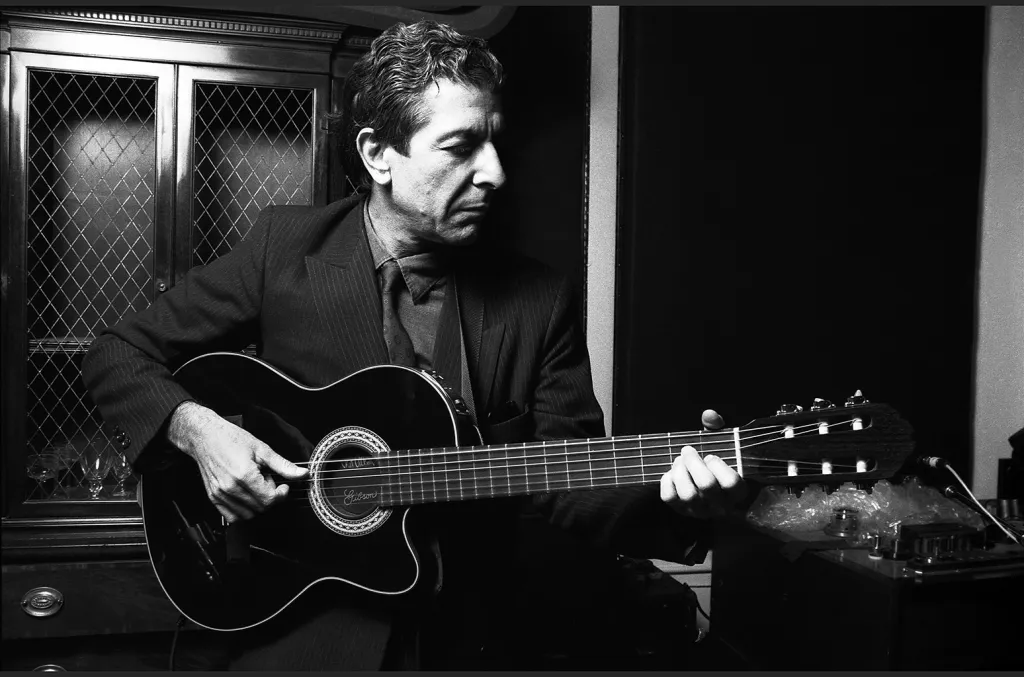
In 1993, after decades of recording and touring, Cohen withdrew to the Mount Baldy Zen Center in California, where he remained for several years. He was ordained as a Zen Buddhist monk in 1996 and given the name Jikan, generally translated as “silence”.
There is something wonderfully contradictory about one of the twentieth century’s great men of words being given a name associated with silence.
Cohen embraced the discipline of monastic life. He rose early. He meditated. He performed ordinary tasks. He served his teacher, the Zen master Joshu Sasaki.
He had, apparently, reached the stage of life at which a successful man might reasonably begin withdrawing from worldly affairs.
And he could afford to do so.
Or so he believed.
A Fortune Entrusted to Another
For years, Cohen had delegated considerable control over his business affairs to his manager, Kelley Lynch.
This was not an unusual arrangement. Artists create; managers manage. The more successful the artist becomes, the more complicated the financial machinery surrounding him becomes: publishing rights, royalties, investments, companies, taxes, contracts and licensing agreements.
Trust becomes indispensable.
And therein lies the danger.
Cohen later explained that the solitary nature of his work made him grateful to have somebody handling the business side of his career. Lynch acquired extensive control over his financial affairs.
The relationship lasted for years.
Then the edifice collapsed.
In 2005 Cohen sued Lynch and others, alleging serious financial misconduct. According to his lawsuit, more than $5 million had been taken from his accounts, including money intended to provide for his retirement. Contemporary reports said that a retirement fund once worth millions had been reduced to approximately $150,000. Cohen was also forced to deal with legal costs and complicated tax consequences arising from the missing money.
Lynch disputed Cohen’s allegations when the lawsuit was filed. In 2006, however, Cohen obtained a default judgment against her, with the court ordering her to pay approximately $9.5 million. He would never meaningfully recover the money.
For a man in his early seventies, it was catastrophic.
Cohen had spent decades earning enough money to believe that his old age was secure.
Suddenly it wasn’t.
When Betrayal Is Personal
Money can be replaced.
Trust is rather more difficult.
That distinction is important to understanding why Cohen’s experience was so painful. This was not simply a bad investment or an unfortunate business transaction conducted at arm’s length.
The person at the centre of the dispute had been part of Cohen’s life for many years.
That transforms financial loss into something much darker.
The deepest betrayals rarely come from enemies. An enemy is expected to oppose you. Betrayal requires trust first.
Perhaps that is why the episode feels so uncannily appropriate to Cohen’s artistic universe.
For decades he had written about the instability of human relationships. His lovers wounded one another. His narrators desired and deceived. Saints and sinners frequently occupied the same body. Faith existed beside doubt; tenderness beside cruelty.
Cohen understood that human beings are seldom simply good or simply wicked.
Then, late in life, the poet who had spent decades examining betrayal found himself confronting it not as metaphor, but as bank statements, lawyers and court proceedings.
Yet his reaction was remarkable.
There was anger, certainly, and there was litigation. Cohen was no fool. Spiritual detachment did not mean allowing injustice to proceed unchallenged.
But there was surprisingly little public self-pity.
Instead, Leonard Cohen went back to work.
At 73, Back to the Beginning
There was one obvious way for Cohen to rebuild his finances.
He could perform.
There was only one problem.
He had not toured for fifteen years.
Most performers in their seventies would have regarded such a prospect with horror. Touring is exhausting even for the young: airports, hotels, rehearsals, soundchecks, interviews, late nights, changing time zones and the physical demands of performing for hours beneath stage lights.
Cohen was 73.
Nevertheless, in 2008 he returned to the road. Contemporary accounts were quite explicit that repairing his finances was an important motivation for the enormous tour.
What happened next is one of the loveliest ironies in modern musical history.
The tour that necessity helped create became a triumph.
Audiences did not encounter a defeated elderly man reluctantly performing his old songs to pay the bills.
They encountered Leonard Cohen.
Older, certainly.
Slower, perhaps.
But somehow more completely himself than ever.
He appeared on stage elegantly dressed, frequently in a dark suit and his characteristic fedora. He would kneel during songs. He would remove his hat in acknowledgement of his musicians. He addressed audiences with courtly grace and dry humour.
And, astonishingly, he sometimes skipped onto the stage.
The voice had changed too.
Cohen’s voice had never been conventionally beautiful. Age transformed it into something deeper still: a subterranean baritone, weathered by experience, in which every word seemed to have travelled some distance before reaching the microphone.
Songs written by a younger man suddenly possessed different meanings when sung by an old one.
Love songs became memories.
Songs about death ceased to be abstractions.
Lines about regret acquired the authority of experience.
And Hallelujah, a song that had travelled through countless other voices and interpretations, returned to the man who had written it carrying the weight of a lifetime.
The World Had Been Waiting
The remarkable thing was that Cohen discovered not merely that he could still perform, but that the world had been waiting for him.
His concerts became major cultural events.
He returned to Britain, appeared at Glastonbury and performed before enormous audiences around the world. Reviews were frequently ecstatic. The man who had returned partly because he needed money discovered an audience larger and more devoted than perhaps even he had expected.
The scale of the comeback was extraordinary.
The tours took him through Europe, North America and Australasia. According to reports at the time, his 2009 world tour alone generated millions of dollars.
But reducing what happened to money would miss the point entirely.
Cohen recovered something considerably more valuable.
He recovered his place on the stage.
And audiences recovered Leonard Cohen.
A generation that had known him principally through recordings could suddenly see him in person. Younger listeners who had discovered Hallelujah through other performers encountered the extraordinary man who had actually written it. Long-standing admirers who might reasonably have assumed that Cohen’s touring years were finished were given another opportunity.
The catastrophe had become a gift.
Not, of course, because betrayal is desirable. There is nothing romantic about having one’s financial security destroyed.
But human beings do not control everything that happens to them.
They do control, at least sometimes, what happens next.
That is where Cohen’s story becomes something larger than the story of a famous musician.
The Art of Beginning Again
Modern culture is obsessed with youth.
Careers are supposedly established at thirty, consolidated at forty and protected thereafter. Reinvention belongs to the young. Old age is presented as a gradual retreat from relevance.
Leonard Cohen demolished that assumption.
He did not merely survive a disaster in his seventies.
He began another chapter.
And it was magnificent.
The years following his return to touring brought not only concerts but a remarkable late flowering of recorded work. Old Ideas appeared in 2012, followed by Popular Problems in 2014 and, finally, You Want It Darker in 2016.
Cohen was no longer pretending that mortality belonged to somebody else.
He was writing towards it.
The young Cohen had written beautifully about death.
The old Cohen could see it approaching.
That distinction gave his final work an extraordinary power.
There is a temptation when discussing ageing artists to praise them merely for continuing. Cohen deserved something more. His late work was not interesting because an elderly man happened still to be making records.
It was interesting because he still had something to say.
Indeed, perhaps he had more to say precisely because he had lost so much.
A Final Encounter With His Betrayer
The story acquired another extraordinary chapter in 2012.
By then, the conflict between Cohen and Lynch had moved far beyond the original financial litigation. Lynch was convicted in Los Angeles of offences connected with harassing communications and violations of restraining orders involving Cohen and others. She was sentenced to 18 months in jail and five years’ probation.
Cohen appeared in court.
He had every reason to be vindictive.
Instead, he was Leonard Cohen.
“It gives me no pleasure to see my one-time friend shackled to a chair in a court of law,” he told the court.
Those words tell us something important about the man.
Forgiveness does not require pretending that wrongdoing never occurred. Compassion does not demand abandoning justice. One can defend oneself vigorously while refusing to surrender entirely to hatred.
Cohen went further.
He expressed the hope that Lynch might move away from anger and revenge towards remorse, kindness and self-reform.
It was an extraordinary response from somebody who believed that the same person had helped destroy the financial security accumulated over his lifetime.
But perhaps Cohen understood something his songs had been telling us all along.
Victory over an enemy is one thing.
Refusing to become consumed by the enemy is another.
The Magnificent Irony
And so we arrive at the great irony of the story.
Had Leonard Cohen’s fortune remained intact, he might have enjoyed a comfortable retirement.
Perhaps he would have written.
Perhaps he would have recorded occasionally.
Perhaps he would have remained largely withdrawn from public life.
We cannot know.
What we do know is that financial disaster helped push him back onto the road.
And the road led to Glastonbury, London, New York, Australia and packed arenas around the world.
It led to thousands upon thousands of people standing in darkness listening to that extraordinary voice.
It led to new albums.
It led to a final creative flowering.
It led Leonard Cohen back to us.
The person whose actions helped deprive him of his retirement savings inadvertently helped deprive him of retirement itself.
There is something almost biblical about that reversal.
The wound did not disappear.
It became part of the story.
There Is a Crack in Everything
Cohen died in Los Angeles in November 2016. He was 82.
By then, his position in modern culture was beyond dispute. He was no longer simply the melancholy Canadian songwriter admired by poets, intellectuals and a devoted following. He had become one of the defining literary voices of popular music.
And his final decade had become essential to that legacy.
Perhaps this is why the story of his lost fortune continues to fascinate.
It is not really about money.
It is about what remains when money disappears.
Cohen lost millions, but he had not lost his talent.
He had not lost his discipline.
He had not lost his humour.
He had not lost the songs.
And, most importantly, he had not lost the capacity to begin again.
There is a lesson here which extends far beyond music.
Life does not always permit us to choose the circumstances of our reinvention. Sometimes reinvention arrives disguised as catastrophe.
A business collapses. A marriage ends. A fortune disappears. A trusted friend betrays us. An apparently secure future suddenly vanishes.
At such moments, there are two stories available.
One concerns what has been taken.
The other concerns what remains.
Leonard Cohen chose the second.
At 73, when another man might understandably have surrendered to bitterness, he put on his suit, straightened his tie, placed his hat upon his head and walked back onto the stage.
Then he sang.
Night after night.
City after city.
Until an apparent ending had become one of the most glorious beginnings of his life.
Perhaps that is the final, exquisite irony of Leonard Cohen’s betrayal.
Millions could disappear from a bank account. Trust could be shattered. Retirement could vanish. Courts could determine damages without ever restoring what had truly been lost.
But the essential Leonard Cohen remained beyond anybody’s reach.
They could take the money.
They could not take the words.
They could not take the music.
Epilogue: And the Songs Continue
Ten years after Leonard Cohen’s death, the story has still not ended.
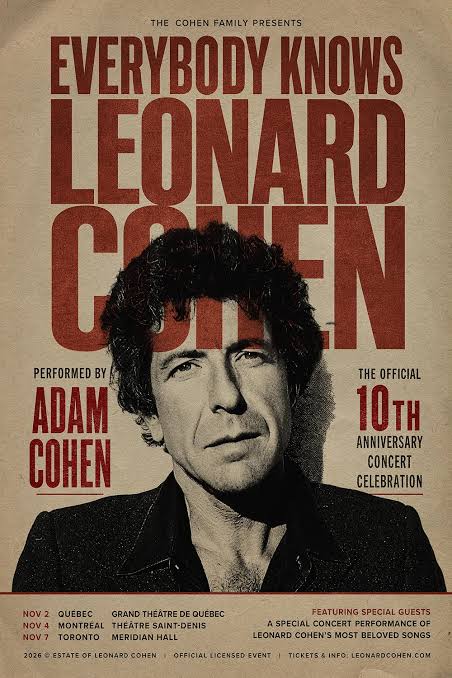
In November 2026, Everybody Knows, the official Leonard Cohen tribute production, will take to the stage in Canada in what promises to be a particularly poignant celebration of his life and work. Created and directed by Adam Cohen, Leonard’s son, the production brings together some of his father’s most enduring songs with rare photographs and archival film.
But there is an especially beautiful detail.
Adam Cohen will share the stage with his own son.
Three generations of the Cohen family are therefore bound together in this final chapter: Leonard through his words, his voice, his image and his music; Adam as the son preserving and interpreting that inheritance; and Leonard’s grandson carrying it into another generation.
The response has already been sufficiently strong for an additional performance to be added at Montreal’s Théâtre Saint-Denis on 5 November. The Canadian dates begin at the Grand Théâtre de Québec on 2 November, followed by two Montreal performances on 4 and 5 November, before moving to Toronto’s Meridian Hall on 7 November.
There could scarcely be a more appropriate coda to Leonard Cohen’s story.
The man who discovered in his seventies that his financial future had been devastated was forced to return to the songs he had spent a lifetime creating. Those songs restored his career, carried him around the world once more and introduced his work to another generation.
Now they are passing to yet another.
Perhaps that is the final answer to the betrayal that nearly destroyed his retirement. Money, however considerable, eventually changes hands and disappears. Art can prove considerably more durable.
Leonard Cohen left behind something that could neither be misappropriated nor recovered through a court judgment: a body of work capable of surviving him.
In 2026, his son and grandson will walk onto a stage in Montreal and prove it.
The money disappeared. The man eventually departed. The songs remained.
For more info visit the offical website: https://www.leonardcohen.com/


 Carlos Mundy
 Dixon Acosta
 Elga Wimmer
 Metaphore Magazine
 Pablo H. Aznar
 Clifford Thurlow
 Milton Cooper
 Lavinia Ellington-Wentworth
 Ludovico di Valdieri
 Avner Kessel