
 Avner Kessel
With the single currency falling to its lowest level in seventeen months, France confronting a mounting sovereign debt crisis and Spain heading towards an unexpected general election, Europe faces a troubling convergence of political uncertainty, fiscal vulnerability and economic pressure. The question is no longer simply whether the euro can recover, but whether the European Union possesses the political cohesion and economic flexibility necessary to restore confidence in its future.

Europe finds itself confronting an uncomfortable reality. The political and economic foundations upon which the European Union has built its ambitions are once again being tested, not by a crisis originating on its periphery, but by instability within two of its most important member states: France and Spain.
The euro, long presented as the most tangible symbol of European integration, has suffered a succession of losses against the American dollar, reaching a seventeen-month low of approximately $1.1161 on 5 October. By 9 October, the currency remained under pressure and was heading towards its fifth consecutive weekly decline. The immediate causes are readily identifiable: mounting anxiety over France’s public finances, political uncertainty in Madrid, higher energy prices and the relative strength of the United States economy. Yet the implications extend well beyond the foreign exchange markets.
For the European Union, the present turbulence raises a fundamental question about the relationship between national sovereignty, fiscal responsibility and the increasingly centralised economic architecture of the eurozon
The euro was intended to bind Europe’s economies together through a shared monetary destiny. Instead, periods of political instability repeatedly expose the difficulties of maintaining a common currency among nations whose economic circumstances, political priorities and public finances remain profoundly different.
France: The Financial Vulnerability at the Heart of Europe
France occupies a particularly sensitive position within the European project. As the eurozone’s second-largest economy, a founding member of the European integration movement and one of the continent’s principal diplomatic and military powers, its financial stability carries consequences far beyond its borders.
For decades, successive French governments have struggled to reconcile an extensive social welfare system, substantial public expenditure, relatively modest economic growth and the demands of fiscal discipline.
Those tensions have now become increasingly difficult to contain.
France’s public debt is approaching 120 per cent of gross domestic product, while its budget deficit remains substantially above the European Union’s prescribed ceiling of 3 per cent. The French government’s proposed 2027 budget envisages reducing the deficit from approximately 5.4 per cent to 5 per cent of GDP, a relatively modest adjustment given the scale of the country’s accumulated obligations.
Financial markets have responded accordingly.
At the beginning of October, yields on ten-year French government bonds approached 5 per cent, while the difference between French and German borrowing costs widened to levels not witnessed since 2012. The widening spread reflects the additional compensation investors are demanding to hold French sovereign debt rather than traditionally safer German government bonds.
The significance of this development should not be underestimated.
For years, France benefited from its reputation as one of Europe’s most dependable sovereign borrowers. That assumption is now being challenged. Although French bond markets experienced some relief later in the week, investors have become increasingly discriminating about the risks associated with individual European governments.
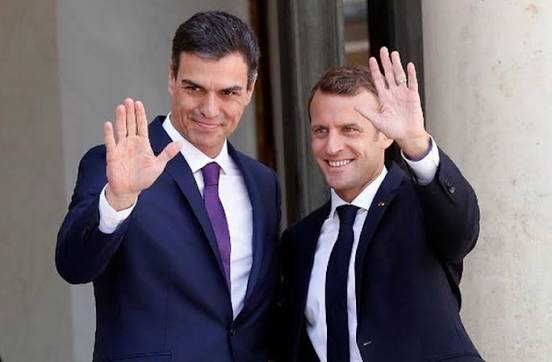
Higher borrowing costs create an especially difficult predicament for a heavily indebted state. As existing obligations mature and must be refinanced, the Treasury may be required to issue new debt at substantially higher interest rates. Over time, this increases the burden of debt servicing, reduces the resources available for public services and infrastructure, and makes fiscal consolidation more politically contentious.
France therefore confronts an unenviable dilemma. Substantial spending reductions or tax increases risk provoking domestic opposition and weakening economic activity, while postponing difficult decisions could further undermine investor confidence.
The approaching presidential election of 2027 adds another dimension of uncertainty. France’s fragmented parliamentary landscape makes the passage of contentious fiscal reforms particularly difficult, and investors have become increasingly attentive to whether any government can establish a credible medium-term strategy for stabilising the country’s finances.
This is not merely a French problem. It is a European one.
Spain: Political Uncertainty Returns to Madrid
Across the Pyrenees, Spain is experiencing a different, although potentially consequential, form of instability.
Prime Minister Pedro Sánchez’s decision to call an early general election for 29 November 2026, following parliamentary defeats over housing legislation, has introduced a fresh element of uncertainty into the European political landscape.
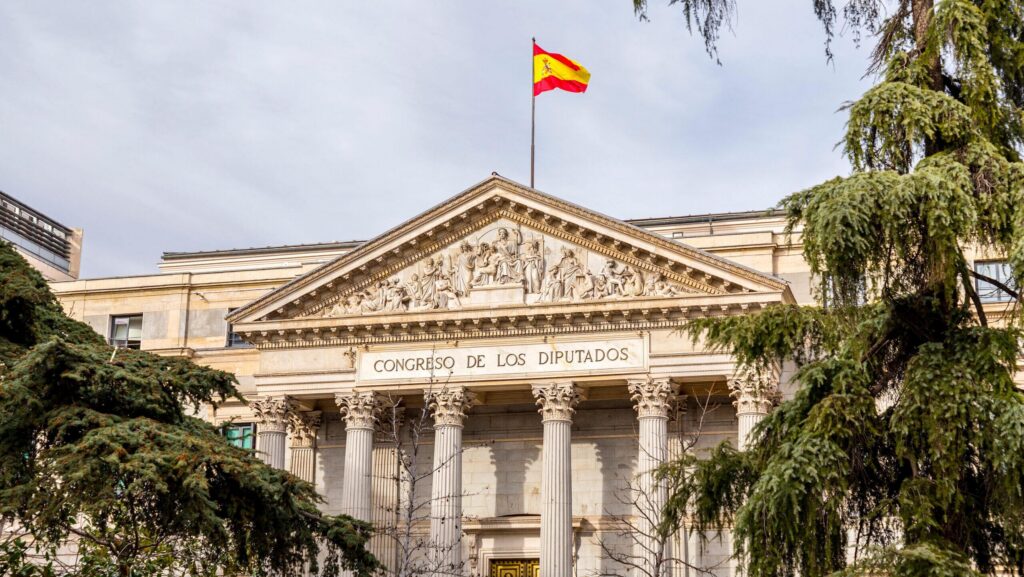
The election, originally expected several months later, comes after a prolonged period in which the Spanish government has depended upon complex parliamentary arrangements and negotiations with smaller regional parties.
The immediate catalyst was the rejection of two government housing decrees, but the broader issue concerns the difficulties of governing with a fragmented parliamentary majority.
Spain’s political situation is nevertheless different from that of France, and the distinction matters.
Unlike France, Spain has enjoyed comparatively strong economic growth in recent years. Its government bonds have also proved more resilient than their French equivalents, despite the uncertainty surrounding the election. By early October, Spanish ten-year government borrowing costs remained substantially below those of France, illustrating the extent to which investors distinguish between political turbulence and underlying fiscal vulnerability.
Spain therefore represents both a source of political uncertainty and an important reminder that the eurozone is not experiencing a uniform economic deterioration.
Nevertheless, the prospect of a change in government raises questions over future taxation, public expenditure, housing policy, immigration and relations with European institutions.
Whatever the composition of the next administration, Spain will need to reconcile domestic political demands with the obligations of eurozone membership and the expectations of international investors.
For Brussels, the simultaneous difficulties confronting Paris and Madrid are especially awkward. Two major member states are preoccupied with domestic political challenges at precisely the moment when Europe requires greater clarity over its economic direction.
The Euro: A Currency Under Renewed Pressure
5 October low
$1.1161
17-month low against the dollar
Weekly trend
5 weeks
Consecutive declines in prospect
September inflation
3.8%
Eurozone annual rate
Market and inflation figures reported during the week ending 9 October 2026
The decline of the euro is particularly revealing because currency markets respond not merely to present economic conditions but also to expectations concerning the future.
A weakening currency can improve the international competitiveness of European exports by making goods manufactured within the eurozone less expensive for overseas buyers. For economies dependent upon international trade, this can provide a welcome advantage.
Yet the benefits are accompanied by considerable disadvantages.
Europe remains heavily dependent upon imported energy, raw materials and industrial inputs, many of which are priced internationally in American dollars. A weaker euro can therefore increase the domestic cost of essential imports, aggravating inflationary pressures at a time when households and businesses are already struggling with elevated prices.
The renewed rise in energy costs has compounded these difficulties. On 9 October, Brent crude traded above $100 per barrel, reflecting the continuing consequences of conflict and instability in the Middle East.
The euro’s difficulties are not, however, attributable exclusively to European political developments. The strength of the American dollar, changing expectations for US interest rates and international demand for safer assets have all contributed to recent exchange-rate movements.
Nevertheless, the combination of French fiscal anxiety and Spanish political uncertainty has made European assets less attractive to some international investors.
This is where a financial disturbance can acquire a wider economic significance. When confidence deteriorates, investment decisions may be postponed, borrowing costs can rise and businesses become more reluctant to commit capital to long-term projects.
For a continent already wrestling with the challenges of industrial competitiveness, energy security and technological transformation, such hesitation carries an appreciable cost.
The European Central Bank’s Difficult Balancing Act
The European Central Bank now faces one of the more delicate monetary policy environments of recent years.
Under President Christine Lagarde, the institution must pursue price stability across economies whose circumstances differ considerably.
Eurozone inflation reached 3.8 per cent in September, well above the ECB’s 2 per cent target. The central bank had already increased its principal interest rates in June and September, bringing its deposit facility rate to 2.50 per cent.
Ordinarily, persistent inflation would strengthen the argument for maintaining restrictive monetary conditions. Yet the recent turmoil in sovereign debt markets complicates that calculation.
Higher interest rates can increase financing costs for governments, businesses and households. In countries with particularly high public debt, they may also intensify concerns over long-term fiscal sustainability.
Conversely, an excessively accommodative monetary policy could weaken confidence in the ECB’s commitment to controlling inflation.
The institution therefore faces competing pressures: preserving price stability while ensuring that financial fragmentation does not prevent its monetary policy from operating effectively throughout the eurozone.
The ECB possesses instruments designed to address disorderly movements in sovereign debt markets, including the Transmission Protection Instrument introduced in 2022. Such measures, however, are not intended to provide governments with unconditional protection from the consequences of their fiscal decisions.
This distinction is fundamental. Central banks can help preserve the functioning of financial markets, but they cannot permanently substitute for credible national budgets or sustained economic reform.
The Wider European Problem: Debt, Growth and Competitiveness
The difficulties facing France and Spain have revived a broader debate about Europe’s economic model.
For much of the post-war period, Western European prosperity rested upon a combination of industrial strength, relatively affordable energy, expanding international trade and extensive social protection.
Several of those foundations have become less secure.
European manufacturers now compete with American businesses benefiting from deep capital markets and substantial technological investment, while Chinese industries have expanded their presence across sectors ranging from electric vehicles to renewable energy equipment.
The continent also faces substantial expenditure requirements associated with defence, infrastructure, energy security and demographic ageing.
These demands arrive at a moment when public finances in several member states offer limited room for manoeuvre.
Italy, for example, continues to carry one of the largest sovereign debt burdens in the eurozone. Its debt-to-GDP ratio stands at approximately 139 per cent, and recent bond-market turbulence has increased scrutiny of its fiscal outlook. Belgium and Greece have also experienced pressure in their sovereign debt markets
Yet Europe is far from economically uniform. Germany continues to attract safe-haven investment, while Spain’s recent growth performance demonstrates that political fragmentation need not automatically produce economic stagnation.
Indeed, the German government has raised its growth forecast for 2026 to 1.3 per cent, providing evidence of resilience despite the difficult international environment.
The Wall Street Journal
+1
The real challenge for European policymakers is therefore not simply to reduce expenditure or increase taxation. It is to establish the conditions in which productive investment, innovation, entrepreneurship and sustainable economic growth can flourish.
Without stronger growth, attempts to repair public finances become considerably more painful. Without fiscal credibility, meanwhile, governments risk losing the confidence necessary to finance their obligations at affordable rates.
Brussels and the Question of European Sovereignty
Beyond the immediate financial turbulence lies a political debate that has accompanied European integration for decades.
How much authority should national governments retain over their economic affairs, and how much should be exercised collectively through European institutions?
Supporters of deeper integration argue that a common currency requires stronger fiscal coordination, more consistent economic policies and institutions capable of responding decisively to crises.
From this perspective, the difficulties confronting France and Spain demonstrate the need for greater European cooperation rather than a retreat towards national economic independence.
Critics of centralisation advance a different argument. They maintain that the eurozone’s institutional arrangements constrain the ability of individual governments to respond to domestic economic conditions, while placing considerable pressure upon national budgets and limiting the flexibility traditionally provided by independent monetary policy.
Both arguments acquire renewed importance when financial markets begin questioning the sustainability of sovereign borrowing.
The European Union has survived previous crises, including the sovereign debt emergency that engulfed several member states during the early 2010s. Since then, the ECB and European institutions have developed additional mechanisms to manage financial instability.
Nevertheless, the underlying tension between shared monetary policy and nationally determined fiscal policy remains.
The present circumstances do not establish that the eurozone is approaching disintegration. They do, however, illustrate how quickly national political disputes can acquire consequences for an entire monetary union.
What the Crisis Means for European Citizens
For ordinary Europeans, the significance of these developments extends beyond exchange rates, bond yields and parliamentary arithmetic.
The consequences may eventually be felt through the cost of living, mortgage repayments, business financing, employment prospects and the ability of governments to maintain public services.
A sustained period of elevated borrowing costs would make it more expensive for governments to finance infrastructure, education, healthcare and other commitments. Businesses could face higher financing costs, while consumers may encounter renewed pressure from imported inflation.
The situation is especially sensitive because many European households have already experienced several years of economic uncertainty.
Governments attempting to restore fiscal discipline must therefore consider not only the confidence of financial markets but also the social and political consequences of their decisions.
Austerity pursued without sufficient regard for growth and social stability can provoke resistance. Equally, promises of continued expenditure without credible financing may simply postpone the adjustment and increase its eventual cost.
Europe’s leaders face the difficult task of finding a sustainable balance.
Is Europe Approaching Another Sovereign Debt Crisis?
Comparisons with the eurozone debt crisis of 2010–2012 are understandable, particularly given the recent widening of sovereign bond spreads.
There are, however, important differences.
The European banking system operates under a substantially different regulatory framework, the ECB has accumulated considerable experience in managing financial turbulence, and additional institutional safeguards now exist.
Christine Lagarde has explicitly distinguished the present circumstances from the crises of 2008 and 2011, even while acknowledging the seriousness of France’s debt position
Moreover, the recent stabilisation of French bond markets demonstrates that investors have not abandoned European sovereign debt indiscriminately.
The greater concern is the possibility of contagion: a situation in which fears surrounding one country’s public finances lead investors to demand substantially higher returns from other governments, regardless of their individual economic fundamentals.
Such a development would make the task of monetary policy considerably more difficult and could place additional strain upon public finances throughout the eurozone.
At present, the evidence points to heightened financial vulnerability and political uncertainty rather than an established systemic sovereign debt emergency.
The distinction is important, even if it offers little justification for complacency.
Europe at a Crossroads
The difficulties confronting France and Spain have exposed a problem that extends beyond the fortunes of individual governments or political parties.
Europe must determine how to preserve its social achievements, restore fiscal credibility and strengthen its economic competitiveness in an international environment that has become markedly less forgiving.
The continent possesses extraordinary advantages: a highly educated population, sophisticated infrastructure, substantial accumulated wealth, world-class research institutions and an immense cultural and industrial inheritance.
What remains contested is how those strengths can best be translated into sustained prosperity.
Some argue that the answer lies in greater European integration, common investment programmes and more coordinated fiscal policies. Others favour deregulation, stronger national accountability, lower taxation and a more decentralised economic structure.
Neither approach eliminates the necessity of confronting difficult choices over expenditure, investment, productivity and the sustainability of public debt.
The euro’s recent decline is therefore more than a passing episode of currency-market volatility. It is a reminder that confidence in a currency ultimately depends upon confidence in the economic and political institutions standing behind it.
France must establish a credible path towards fiscal stability. Spain must navigate its electoral uncertainty while preserving the economic progress of recent years. Brussels and the European Central Bank must meanwhile demonstrate that the institutions of the eurozone can accommodate national differences without allowing those differences to develop into financial instability.
Europe is not without the resources to overcome its present difficulties. The more consequential question is whether its governments can translate those resources into the economic growth, fiscal stability and institutional confidence upon which the continent’s long-term prosperity depends.
For a European Union confronting profound changes in the international economic order, the answer will matter far more than the euro’s value on any particular trading day.
Reporting and research: Reuters, Euronews, European Central Bank, MUFG Research and Financial Times, 5–9 October 2026. Market figures are time-specific and may change after publication.
I can also monitor the French bond market, the euro and Spain’s November election, and prepare an updated edition of the article when significant developments occur.


 Carlos Mundy
 Giovanni R. Ruffini Professor of History Fairfield University, USA


 Metaphore Magazine
 Milton Cooper
 Lavinia Ellington-Wentworth
 Ludovico di Valdieri