 Milton Cooper
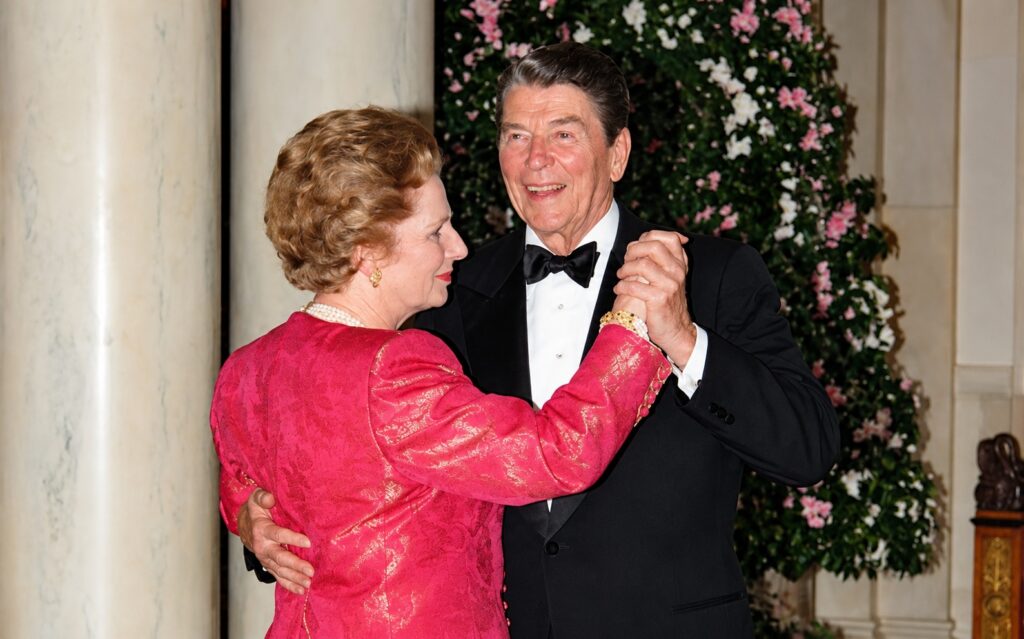
Margaret Thatcher and Ronald Reagan formed one of the defining political partnerships of the twentieth century. They were ideological allies, personal friends and, in many respects, kindred political spirits. Their shared belief in individual liberty, national strength, freer markets and resistance to Soviet communism helped to transform the political landscape on both sides of the Atlantic.
Yet the mythology that subsequently grew around them has sometimes obscured an important truth: Thatcher and Reagan did not always agree.
Indeed, some of their disagreements were considerable.
The Falklands War presented Washington with an uncomfortable dilemma. The Reagan administration initially sought to mediate between Britain and Argentina, while Thatcher regarded the recovery of the islands and the principle of self-determination as non-negotiable. Reagan later attempted to persuade Thatcher to moderate Britain’s pursuit of complete military victory, without success.
There were further tensions after the war, including a bitter disagreement over an American position at the United Nations concerning the Falklands. Thatcher made her displeasure unmistakably clear.
Then came Grenada in 1983. The American invasion of a Commonwealth country without adequate prior consultation with London infuriated Thatcher. Reagan’s own papers record British unhappiness at the lack of consultation.
Yet none of this destroyed their partnership.
That is precisely what made the Thatcher–Reagan relationship so formidable. It was an alliance between two strong leaders, not an arrangement in which one obediently followed the other. Each governed according to what he or she regarded as the national interest. They could disagree, occasionally profoundly, and then return to the larger principles and strategic interests that united them.
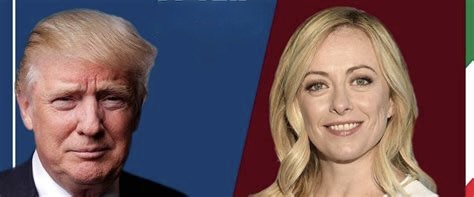
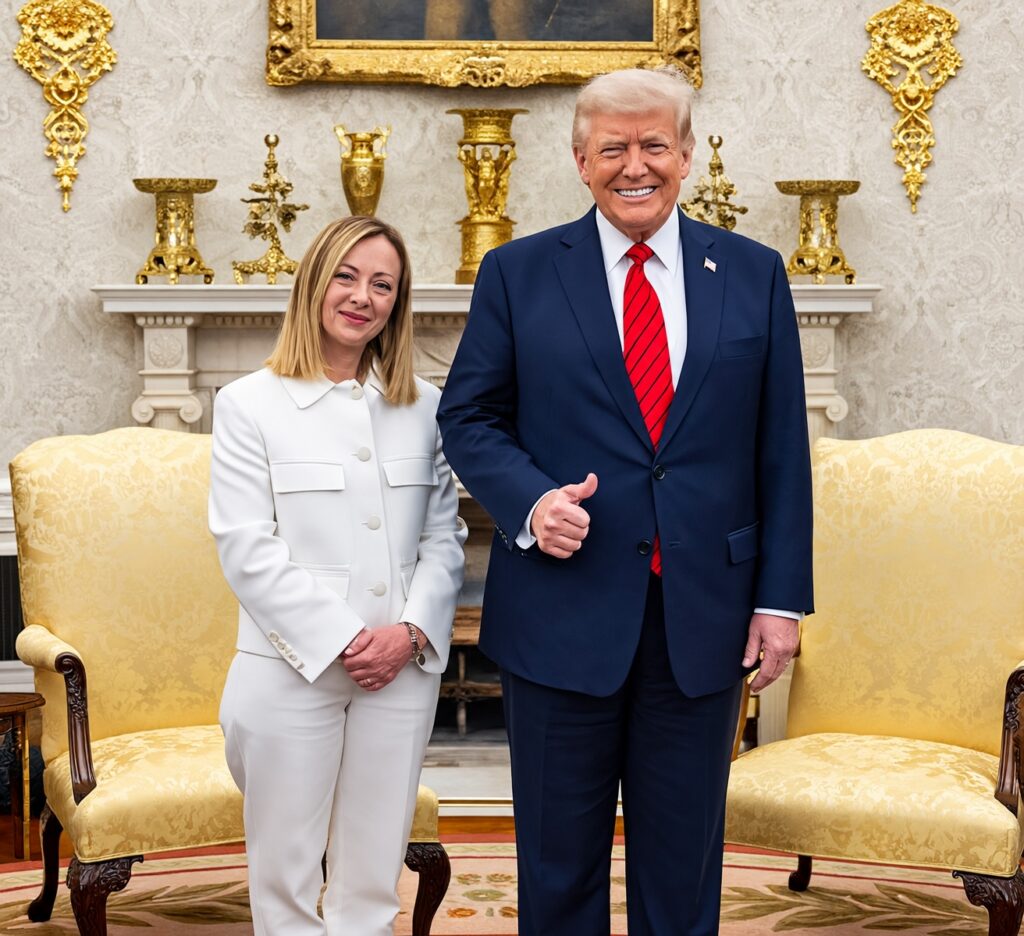
It is worth remembering this as we consider another intriguing transatlantic political relationship: that between Giorgia Meloni and Donald Trump.
Could Italy’s Prime Minister become Trump’s Margaret Thatcher?
At first sight, the comparison is tempting.
Meloni has emerged as one of the most consequential conservative leaders in Europe. Her emphasis on national sovereignty, border control, family, identity and the importance of the nation state places her naturally within many of the political currents that brought Trump back to the White House.
There are obvious differences of temperament and political tradition, but there is also a recognisable philosophical affinity.
Both have challenged the assumptions of the progressive political establishment. Both have questioned orthodoxies surrounding immigration and borders. Both have emphasised national sovereignty and criticised supranational institutions when they believe those institutions have exceeded their proper authority.
Both, moreover, understand something that parts of the European political establishment have been extraordinarily slow to grasp: voters do not necessarily regard attachment to nation, family, tradition and inherited culture as embarrassing remnants of the past.
For many, they remain the foundations upon which a functioning society rests.
Yet the comparison becomes more interesting precisely where Trump and Meloni diverge.
Recent events have demonstrated that Meloni is no American satellite.
She publicly described Trump’s decision to threaten tariffs against European allies during the confrontation over Greenland as a mistake. She sought dialogue rather than escalation, while maintaining that Greenland’s future and European sovereignty could not simply be brushed aside.
More recently, disagreements over the use of Italian military facilities during the Middle Eastern conflict produced a still more visible strain. Italy initially denied permission for some American military aircraft to land at Sigonella before proceeding to the Middle East, and Trump subsequently criticised Meloni publicly over the issue.
This was hardly the behaviour of a European leader prepared to accept Washington’s wishes unquestioningly.
And that is why the Thatcher analogy may actually have become stronger rather than weaker.
Thatcher was America’s closest European ally, but she was never America’s subordinate. When British and American interests coincided, the relationship could be extraordinarily powerful. When they did not, she said so.
Meloni increasingly appears willing to do much the same.
The lesson of Thatcher and Reagan is that disagreement need not signify rupture. On the contrary, a mature alliance between strong governments must be capable of surviving disagreement.
The more interesting question, therefore, is not whether Meloni agrees with Trump on everything. She plainly does not. It is whether the two leaders possess sufficient common political ground to disagree over particular questions while maintaining a broader strategic relationship.
There are compelling reasons why they might.
Meloni’s politics are rooted in sovereignty. So are Trump’s.
But sovereignty inevitably creates disagreement between sovereign nations.
“America First” and “Italy First” can coincide, but they cannot always be identical. If each phrase means anything, there will inevitably be occasions upon which the interests of Washington and Rome diverge.
That is not necessarily a weakness. It is the logical consequence of the very philosophy both leaders profess.
Here, again, Thatcher provides an illuminating comparison.
She admired Reagan enormously and shared much of his political worldview. But she was Prime Minister of the United Kingdom, not the representative of American interests in Europe. When she believed Britain required a different course, friendship did not prevent her from pursuing it.
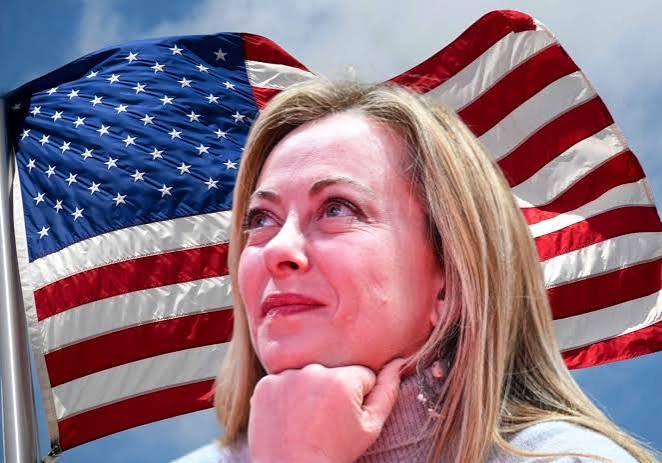
Meloni faces the same fundamental test.
Her challenge is particularly complicated because Italy occupies a very different geopolitical position from Thatcher’s Britain. It is a founding member of the European Union, a member of the eurozone and NATO, a Mediterranean power exposed directly to migration from North Africa, and a country whose economic fortunes are deeply intertwined with those of continental Europe.
She cannot simply reproduce Thatcherism in Italian colours.
Nor, for that matter, is Meloni simply an Italian version of Trump.
Her political style is more disciplined. Her relationship with European institutions has proved considerably more pragmatic in government than some expected before she entered office. She has combined criticism of aspects of the European project with an ability to operate within its institutions.
That distinction matters.
Thatcher herself was not opposed to Europe. She opposed the development of a centralised European political structure that, in her view, progressively diminished national sovereignty. Her quarrel was not with European civilisation but with the direction of European integration.
Meloni’s position contains echoes of that distinction.
She has not attempted to take Italy out of the European Union. Rather, she has argued for a Europe in which nations retain more of their identity, democratic authority and freedom of action.
There is another important distinction.
Meloni’s conservatism is more explicitly cultural than Thatcher’s was. Thatcher’s politics centred heavily upon economic freedom, private ownership, individual responsibility, trade-union reform and the reduction of the state’s role in the economy.
Meloni combines economic conservatism with a much more pronounced concern for national identity, demographic decline, family and Italy’s Christian cultural inheritance.
Her conservatism is therefore unmistakably Italian.
She speaks to a country whose difficulties are not those of Britain in 1979. Italy faces an ageing population, low birth rates, enormous public debt, irregular migration across the Mediterranean, sluggish productivity and the perennial difficulty of reconciling national political choices with European fiscal and regulatory structures.
The measure of Meloni’s leadership will ultimately be whether she can translate political confidence into durable reform.
Rhetoric alone is never enough.
Thatcher’s historical importance rests not simply upon what she said but upon what she changed. Her governments transformed industrial relations, privatised large state enterprises, altered taxation and challenged assumptions about the proper relationship between the individual and the state.
Whether one admires or deplores those reforms, their scale is undeniable.
Meloni’s eventual historical standing will similarly depend upon results rather than symbolism.
Can she reduce the burdens upon Italian enterprise? Can she confront demographic decline? Can she make government more efficient? Can she reconcile controlled immigration with Italy’s economic requirements? Can she defend Italian interests within Europe without isolating Italy from the European institutions upon which it also depends?
And can she maintain a close relationship with the United States without surrendering the independence necessary for an Italian Prime Minister?
The last question has become particularly important.
Trump is an unusually transactional President. His conception of alliances places considerable emphasis upon reciprocity, defence expenditure, trade balances and demonstrable benefit to the United States.
Meloni, meanwhile, has every reason to preserve America’s commitment to European security while also defending Italian and European economic interests.
There will therefore be disagreements.
There should be.
The real test is what happens afterwards.
Thatcher and Reagan survived the Falklands. They survived Grenada. They survived differences over the Middle East and other matters because their relationship rested upon something larger than agreement over every individual policy.
Their partnership possessed strategic depth.
Whether Trump and Meloni can develop anything comparable remains uncertain. The world they inhabit is very different. The Cold War provided Thatcher and Reagan with an overwhelming common adversary and therefore an unusually powerful strategic bond. Today’s international order is considerably more fragmented.
Nor should superficial similarities obscure substantial differences between the four figures.
Trump is not Reagan. Meloni is not Thatcher.
Reagan possessed the sunny optimism of post-war America and an almost evangelical faith in the country’s possibilities. Trump is more combative, transactional and suspicious of the international architecture constructed by his predecessors.
Thatcher, meanwhile, possessed an extraordinary intellectual certainty and an appetite for economic confrontation that Meloni has not sought to reproduce wholesale.
History does not repeat itself so conveniently.
But occasionally it rhymes.
And there is something recognisable in the spectacle of a strong European conservative leader establishing a personal relationship with a powerful Republican President while remaining perfectly prepared to tell him when she believes he is wrong.
Indeed, that may be the most Thatcherite thing about Giorgia Meloni.
The temptation in politics is to confuse friendship with obedience. Thatcher never did.
Neither, increasingly, does Meloni.
The question is whether disagreement will ultimately deepen the Trump–Meloni relationship by establishing it as a partnership between equals, or reveal limits that the warmth of their earlier encounters concealed.
That answer will emerge only with time.
But if Meloni can preserve the relationship while defending Italian and European interests when they diverge from Washington’s—and if Trump can accept such independence from an ally—the comparison with Thatcher and Reagan will become considerably more interesting.
Their alliance mattered not because Margaret Thatcher always said yes to Ronald Reagan.
It mattered because she could say no—and remain his ally.


 Carlos Mundy
 Giovanni R. Ruffini Professor of History Fairfield University, USA


 Metaphore Magazine
 Lavinia Ellington-Wentworth
 Ludovico di Valdieri
 Avner Kessel