
 Nabil Haddadin
For centuries, the Sufis have searched for God through love, poetry, music, contemplation and the purification of the soul. Their vision produced Rumi and some of the Islamic world’s greatest spiritual traditions. It has also made them targets of extremists determined to impose a harsher and more literalist conception of the faith.
There is another Islam.
It is the Islam of the poet and the mystic; of the traveller searching for God within himself; of candlelit shrines and ancient manuscripts; of music, contemplation and poetry; of men and women who have spent centuries asking not how much territory religion can conquer, but how completely the human ego can surrender itself to God.
It is the Islam of the Sufis.
To encounter Sufism after encountering the terrible images that have come to define Islamist extremism in the modern imagination can be startling. Here is a tradition emerging from the same civilisation and the same Qur’an, yet speaking repeatedly of love, beauty, humility, spiritual purification and the longing of the human soul for its Creator.
Its great figures include some of the most extraordinary spiritual personalities of the Islamic world: Rabia al-Adawiyya, the eighth-century woman mystic whose poetry expressed an almost absolute love of God; the great Persian masters Attar and Hafez; Jalal al-Din Rumi, whose poetry has crossed religions, languages and centuries; Ibn Arabi, the formidable Andalusian metaphysician; and countless sheikhs, dervishes, poets and wandering mystics whose names have disappeared but whose traditions remain alive.
To call Sufism merely a sect of Islam would be misleading.
It is better understood as Islam’s great mystical current — tasawwuf in Arabic — encompassing numerous schools, orders and intellectual traditions across both Sunni and Shia societies.
There is no single Sufism.
Its expressions have stretched from Morocco and Senegal through Egypt, Turkey, Syria and Iraq to Iran, Central Asia, Afghanistan, Pakistan, India, Indonesia and beyond. Its theology and practices differ considerably between places and periods.
What connects them is an emphasis upon the interior life.
Where religion can become preoccupied with external rules, Sufism asks what is happening within the soul of the person observing them.
A man may kneel in prayer while consumed by hatred.
He may fast while intoxicated by pride.
He may know scripture while knowing nothing of compassion.
He may proclaim his devotion to God while secretly worshipping his own ego.
For the Sufi, therefore, the greatest battlefield is frequently not the territory outside us.
It is the territory within.
The Greater Journey
At the heart of Sufi spirituality lies the search for closeness to God.
The human being, in this understanding, is distracted by the material world, by appetite, vanity, ambition, anger and above all by the nafs — the lower self or ego that constantly attempts to place itself at the centre of existence.
The spiritual journey is consequently one of purification.
It is an attempt to polish what Sufi writers have often imagined as the mirror of the heart until it can once again reflect the divine.
This gives Sufism its extraordinarily introspective character.
The enemy is not always somebody else.
The enemy may be one’s own arrogance.
The conquest that matters may not be of another people but of oneself.
And the victory may be the moment at which the individual ceases asking what God can provide for him and begins asking how completely he can surrender himself to God.
This is why love occupies such an extraordinary position in Sufi literature.
Not sentimental love.
Not merely romantic love.
But divine love — the consuming desire of the created being to return spiritually towards the Creator.
Few expressed this more powerfully than Jalal al-Din Muhammad Rumi.
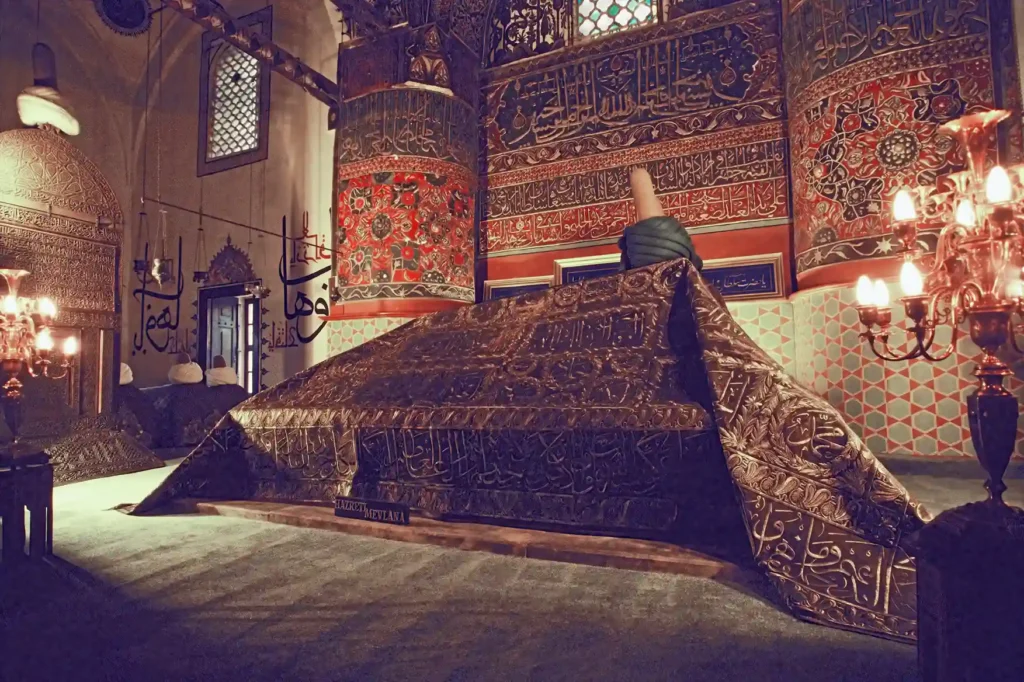
Born in the thirteenth century and eventually settled in Konya, in present-day Turkey, Rumi became one of history’s great mystical poets. His encounter with the mysterious wandering mystic Shams of Tabriz transformed his life. Their relationship became the catalyst for an immense spiritual and literary outpouring in which human longing repeatedly becomes a metaphor for the soul’s longing for God.
Centuries later, Rumi speaks across boundaries that would appear otherwise insurmountable.
Muslims read him.
Christians read him.
Jews read him.
Agnostics read him.
People who know almost nothing about Islam encounter his poetry and recognise something universal within it: separation, longing, love, loss and the human desire to become something greater than the isolated self.
That may be Sufism’s most remarkable quality.
At its finest, it speaks a language that remains unmistakably Islamic while reaching towards something recognisably universal.
When Music Becomes Prayer
Sufism also produced some of the most beautiful cultural traditions of the Islamic world.
There is dhikr — the remembrance of God — in which divine names, Qur’anic passages or devotional formulas may be repeated until prayer becomes almost rhythmic.
There is sama, spiritual listening, in which music and poetry may become instruments of contemplation.
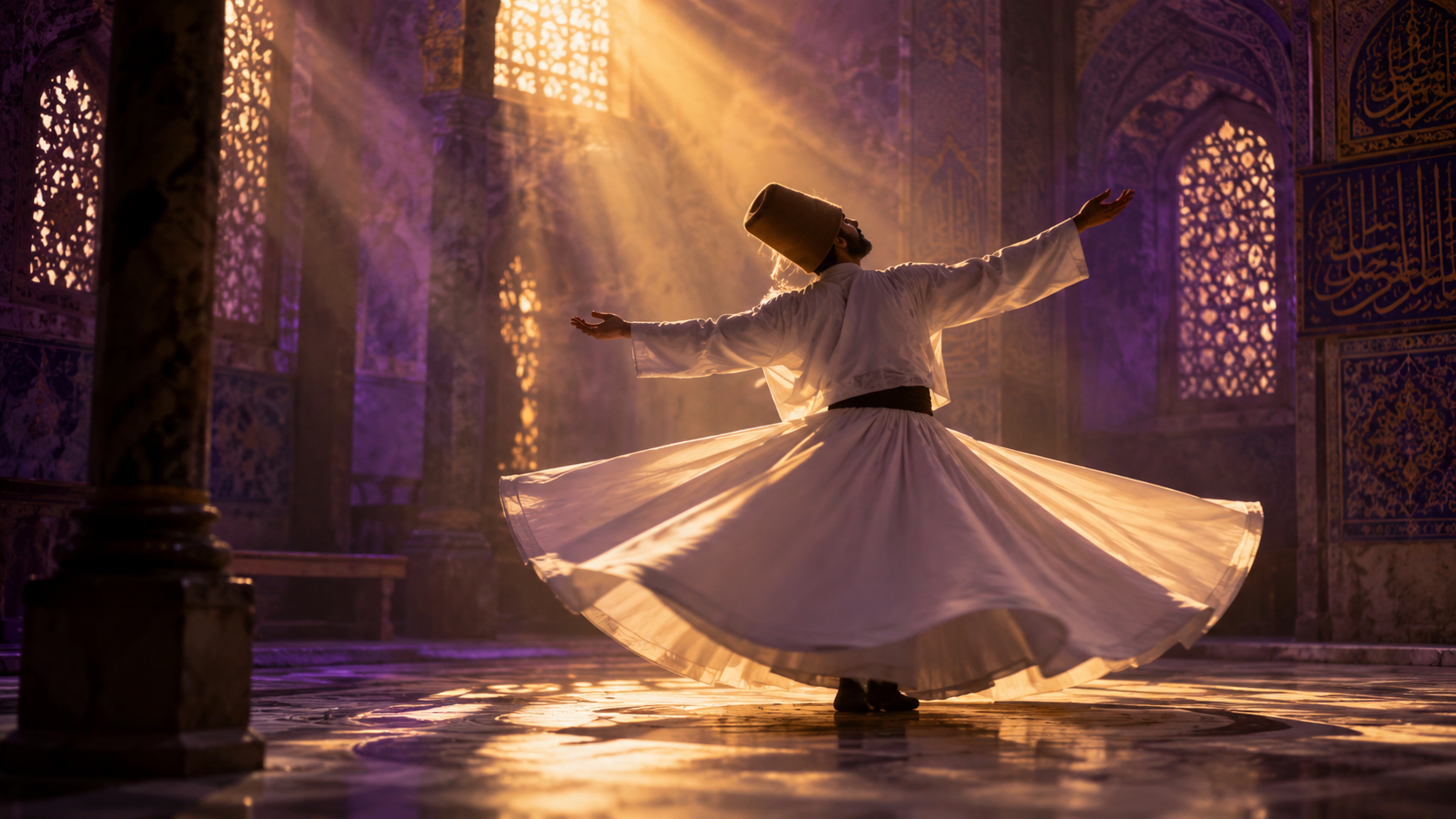
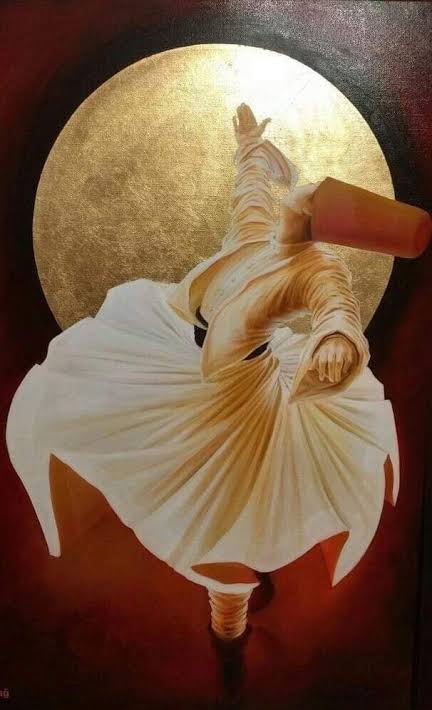
There is the extraordinary tradition associated with the Mevlevi order, inspired by Rumi, whose whirling ceremony has become one of the world’s most recognisable images of Islamic mysticism.
The dervish turns.
One hand reaches upwards, symbolically receiving from God; the other points towards the earth. The body rotates while the self seeks stillness. What appears from outside to be dance is intended as remembrance.
The symbolism is magnificent.
The universe moves.
The planets turn.
The blood circulates.
Life itself is movement.
And at the centre of movement the mystic searches for the unmoving reality of God.
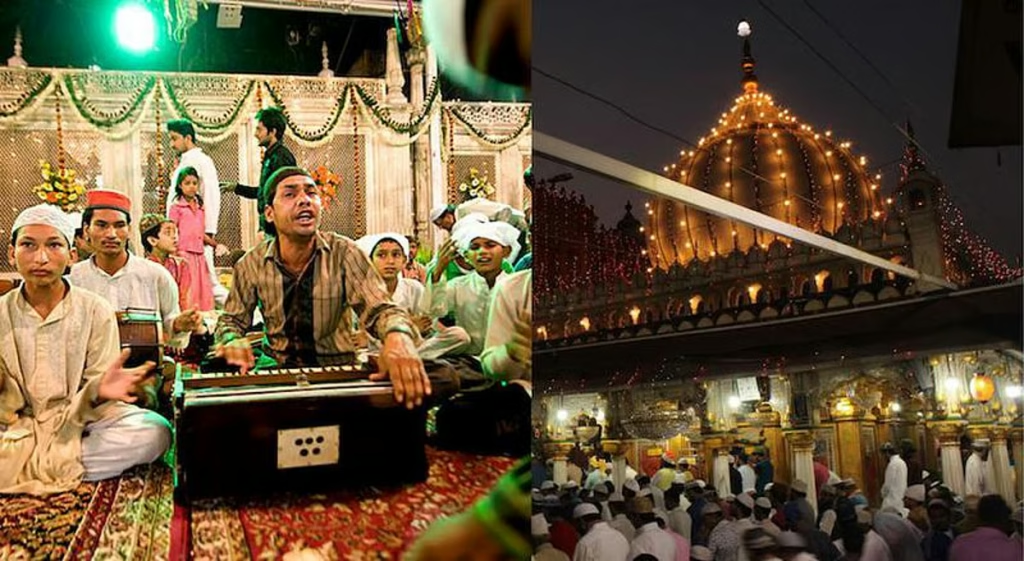
Elsewhere Sufi traditions produced qawwali, the ecstatic devotional music associated particularly with South Asia. Poetry, rhythm and the repetition of sacred language gradually intensify until the boundary between intellectual understanding and emotional experience begins to dissolve.
To the mystic, God is not merely a proposition to be demonstrated.
God is a reality to be experienced.
The Woman Who Loved God
One of the most beautiful figures in early Sufism was not a warrior, caliph or theologian.
She was a woman.
Rabia al-Adawiyya of Basra, who lived in the eighth century, became associated with an extraordinarily pure conception of divine love.
The spiritual idea attributed to her is radical in its simplicity: one should not worship God merely from fear of Hell or from desire for Paradise.
One should love God for God Himself.
This represents something profound in the history of religious thought.
Religion can easily become transactional: behave correctly and receive eternal reward; behave incorrectly and suffer punishment.
Rabia’s spirituality reaches beyond the transaction.
If one loves only because one expects payment, is that truly love?
Her answer was essentially no.
The highest spiritual state was to love the divine without bargaining.
More than twelve centuries later, the idea remains arresting.
Ibn Arabi and the Immensity of God
If Rumi was one of Sufism’s great poets of love, Ibn Arabi was one of its towering metaphysical intellects.
Born in Murcia in Muslim Spain in 1165, he travelled extensively through the Islamic world and eventually died in Damascus. His writings explored existence, revelation, imagination and humanity’s relationship with the divine with a sophistication that has inspired centuries of interpretation and controversy.
Ibn Arabi’s thought is too complex to reduce to modern slogans about religious tolerance. Scholars continue to debate precisely how some of his most famous ideas should be understood.
Yet there is an unmistakable expansiveness to his spiritual universe.
God cannot simply be reduced to the prejudices, categories and limitations of the individual believer.
That idea has enormous consequences.
The moment a human being becomes absolutely certain that his own understanding exhausts the mystery of God, mysticism becomes a threat to him.
For the mystic says: God is greater.
Greater than your politics.
Greater than your tribe.
Greater than your anger.
Greater even than your understanding of Him.
And therein lies one of the great conflicts within religious history.
Why Extremists Hate the Shrine
If Sufism has produced such beauty, why have Sufis repeatedly become targets of Islamist extremists?
The answer is partly theological.
Many Sufi traditions developed around tariqas, or spiritual orders, in which disciples receive guidance from a sheikh or spiritual master. The tombs of celebrated saints and teachers frequently became places of pilgrimage. Visitors might pray there, remember the dead, seek blessing or ask God for assistance through the spiritual intercession associated with a saint.
For many Muslims these traditions became entirely natural elements of religious life.
For certain puritanical movements, however, they represented an intolerable corruption of Islam.
The dispute centres particularly upon tawhid — the absolute unity of God — and shirk, the association of partners with God.
Hard-line Salafi and jihadist movements have sometimes regarded the veneration of saints, visitation of tombs and certain forms of intercession as forms of idolatry.
Once that judgement is made, the shrine ceases to be regarded as heritage.
It becomes an offence to God.
And once a building has been transformed intellectually from a monument into an idol, destroying it can be presented as an act of purification.
This helps explain why extremists have attacked shrines, tombs and other sacred places across parts of the Muslim world. Islamic State and related movements have destroyed religious sites they considered manifestations of idolatry, while radical Salafist attacks in Libya included the destruction and desecration of historic Sufi shrines and teaching centres.
But the conflict goes deeper than architecture.
The War Against Memory
To destroy a shrine is also to attack memory.
Sufi Islam is deeply rooted in place.
A saint lived here.
A teacher taught here.
A poet wrote here.
Generations came here.
Parents brought their children here.
The dead were remembered here.
A community’s relationship with God became intertwined with a physical landscape.
Destroy the shrine and one attempts to break that continuity.
This is why the destruction of religious heritage by extremists has often been so chilling. It is not simply vandalism. It can represent an attempt to erase alternative ways of being Muslim.
The extremist is not merely saying, I disagree with your interpretation of Islam.
He is saying, in effect: your Islam must disappear.
And that exposes something fundamental about totalitarian religious ideology.
It cannot easily tolerate ambiguity.
Mysticism thrives upon it.
The mystic asks.
The fanatic answers.
The mystic contemplates mystery.
The fanatic demands certainty.
The mystic suspects his ego.
The fanatic is frequently certain that God agrees with him.
The mystic seeks transformation of the self.
The extremist seeks submission of the other.
These contrasts should not be mistaken for precise definitions of every Sufi or every fundamentalist. History is more complicated than that, and Sufi orders themselves have sometimes been politically militant or involved in armed resistance.
But as descriptions of two religious temperaments, the contrast is illuminating.
The Islam the Extremists Could Not Erase
The campaign against Sufism has never been confined to ISIS.
Different Sufi communities have suffered under different authorities for different reasons. In Iran, for example, members of the Nematollahi Gonabadi order have faced pressure, detention and destruction of places of worship; Iranian religious authorities have also publicly denounced Sufi beliefs as deviant.
Elsewhere, Sufi shrines and communities have been attacked by jihadist organisations that regard popular devotional traditions as heretical.
Yet Sufism survives.
Perhaps that should not surprise us.
You can dynamite a tomb.
It is considerably more difficult to dynamite a poem.
You can burn a shrine.
You cannot easily burn an idea that has travelled from parent to child for eight hundred years.
You can prohibit music.
But somewhere somebody will remember the melody.
And Rumi will still be Rumi.
Another Face of Islam
For Western audiences, Sufism is particularly important because it complicates a dangerously simplistic picture.
There is no single Muslim mind.
There never has been.
Islamic civilisation has contained philosophers and literalists, mystics and jurists, rationalists and traditionalists, monarchists and revolutionaries, poets and warriors, ascetics and merchants. Sunni and Shia traditions themselves contain enormous internal diversity.
The struggle against jihadism therefore cannot sensibly become a struggle against every manifestation of Islam.
Indeed, many of the people whom extremists have murdered have themselves been Muslims.
Islamic State’s victims have included Muslims whom the organisation deemed insufficiently pure. The logic of takfir — declaring other professed Muslims unbelievers or apostates — has been one of the particularly destructive features of modern jihadist ideology. Research into contemporary jihadism has documented the importance of this exclusionary tradition to extremist movements.
Sufism presents a particularly powerful contradiction to the proposition that Islam inevitably leads towards fundamentalism.
Here is an Islamic tradition that produced centuries of poetry about love.
Here are Muslims singing.
Muslims dancing.
Muslims contemplating.
Muslims venerating beauty.
Muslims asking whether the greatest obstacle separating man from God might not be another civilisation, another religion or another people — but man’s own ego.
That Islam exists too.
A Bridge Between Civilisations
There is something else in Sufism that the modern world badly needs.
The West and the Islamic world increasingly encounter one another through politics.
Immigration.
Terrorism.
Gaza.
Iran.
Afghanistan.
Integration.
Colonialism.
War.
The relationship becomes an endless argument.
Sufism permits a different conversation.
Read Rumi alongside St John of the Cross and suddenly Christianity and Islam are no longer merely rival political identities. They become two great religious civilisations containing men and women struggling to describe experiences that language can scarcely contain.
Place Rabia beside St Teresa of Ávila and one encounters two women separated by centuries and theology yet consumed by the question of what it means truly to love God.
Read Ibn Arabi beside Meister Eckhart and one enters the extraordinary territory in which the mystics of different traditions approach the limits of language itself.
Their doctrines are not identical and should not artificially be made so.
But their questions sometimes recognise one another.
What remains when the ego disappears?
Can God be known intellectually, or only encountered?
What is divine love?
Why does separation from God feel like exile?
Can suffering transform the soul?
What does it mean to surrender?
These are not Muslim questions.
They are not Christian questions.
They are human questions.
And perhaps this explains why the poetry of the Sufis has travelled so extraordinarily well beyond the civilisation that produced it.
The Rose and the Sword
There are two images of Islam with which the twenty-first century has become familiar.
One is the masked extremist holding a weapon and proclaiming absolute certainty.
The other is much older.
It is the mystic carrying almost nothing, searching for God.
One seeks power over others.
The other seeks mastery over himself.
One dreams of conquest.
The other dreams of annihilating the ego.
One fears doubt.
The other enters mystery.
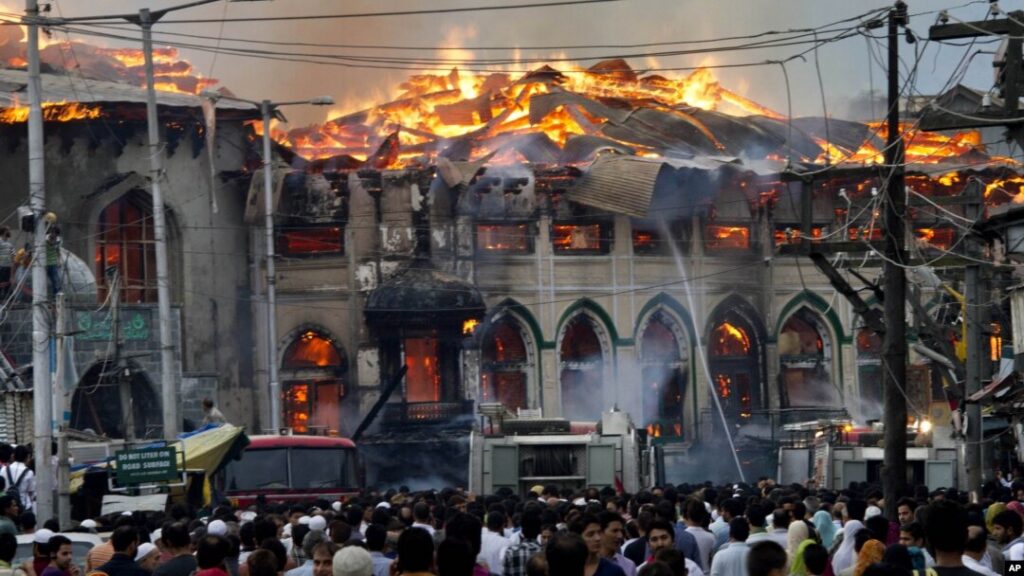
One destroys the tomb of the saint.
The other sits beside it and remembers.
The great tragedy is that the first image has so often obscured the second.
For anyone wishing genuinely to understand Islam — whether Muslim, Christian, Jewish, agnostic or atheist — Sufism deserves to be rediscovered.
Not because it represents every Muslim.
It does not.
Not because its history is without contradiction.
It is not.
And certainly not because difficult theological and political questions surrounding Islam should be replaced by romantic poetry.
They should not.
Sufism matters because it demonstrates something more important.
Within the same civilisation from which modern jihadism emerged also arose one of humanity’s great traditions of mystical love.
The extremists understand the challenge this represents.
That is why some of them have attacked the shrines.
A religion expressed through fear can command obedience.
A religion experienced through love asks something infinitely more difficult: the transformation of the human heart.
Perhaps the Sufis understood long ago what every fanatic ultimately fears.
You may conquer a city.
You may impose a law.
You may destroy a monument.
You may silence a musician.
You may even murder the mystic.
But you cannot command the soul to love God.
And you cannot force God to belong only to you.
Editor’s Note
This article opens a three-part Metaphore series, Islam, Freedom and the West, examining one of the most consequential—and too often oversimplified—questions of our time: the relationship between Islamic faith, political Islam and the liberal civilisation of the West.
We begin not with terrorism, conflict or geopolitics, but with beauty.
Sufism reveals an Islamic tradition of extraordinary spiritual depth: a world of mysticism, poetry, contemplation and divine love that gave us Rumi, Ibn Arabi, Rabia al-Adawiyya and centuries of artistic and philosophical achievement. It also reminds us that Islam has never spoken with a single voice.
Our second article, The Muslims Fighting for the Enlightenment, will turn to those Muslims and former Muslims confronting questions of religious freedom, women’s equality, secular law, freedom of expression and the right to believe—or cease believing—without coercion.
The series will conclude with Mosab Hassan Yousef: The Son of Hamas Who Warns the West, an altogether more disturbing examination of Islamist ideology and of Yousef’s contention that Western civilisation has become dangerously uncertain about defending its own principles.
The purpose of this series is neither to romanticise Islam nor to demonise it. It is to make distinctions that contemporary debate too often refuses to make: between Islam and Islamism, faith and political ideology, devotion and coercion, the Muslim believer and the jihadist extremist.
We begin with Sufism because before confronting what fanaticism can destroy, it is worth remembering what faith can create.


 Carlos Mundy
 Dixon Acosta
 Elga Wimmer


 Metaphore Magazine


 Laura Mitchell
 Mayte Hidalgo