
 Carlos Mundy
Twenty years ago, Olympic champion Jan Tops set out to transform the economics, presentation and international reach of show jumping. With the Longines Global Champions Tour, he created a circuit that takes the world’s finest horses and riders from Miami Beach to Monaco, Paris, London, Shanghai and the Middle East, backed by prize money, luxury hospitality, global broadcasting and a sophisticated commercial industry. In doing so, Tops has given equestrian sport something comparable in ambition to tennis’s Grand Slams and golf’s great international tournaments.
There are certain moments when a sport changes not because its rules have been rewritten, but because somebody sees what it might become.
For show jumping, that person has been Jan Tops.
An Olympic gold medallist, horseman, entrepreneur and businessman, Tops understood something that now seems obvious but was far from obvious two decades ago. Show jumping already possessed almost everything required to become one of the world’s great international sporting spectacles: extraordinary athletes, magnificent horses, enormous personal and financial commitment, danger, elegance, glamour and a global community of owners and enthusiasts.
What it lacked was a platform commensurate with the quality of the sport.
Tops set out to build one.
When he founded the Global Champions Tour in 2006, his ambition went considerably beyond establishing another series of horse shows. He wanted to take elite show jumping into the great cities and destinations of the world, substantially increase its prize money, improve facilities for horses and riders, create first-class hospitality for owners, sponsors and spectators, attract international media coverage and turn a succession of competitions into a coherent championship capable of sustaining interest throughout a season.
Twenty years later, the scale of what he created is remarkable. The 2026 Longines Global Champions Tour spans 17 stages across four continents and offers more than €36 million in prize money. Global Champions
In sporting and commercial terms, Tops has helped move international show jumping into territory occupied by the great global properties of tennis, golf, Formula One and sailing: elite athletes travelling between prestigious destinations, competing for substantial purses before an international audience while sponsors, owners, hospitality, broadcasting and luxury brands form an increasingly sophisticated industry around them.
It has become far more than a horse show.
It is a global circuit.
From Olympic champion to sporting entrepreneur
Tops approached the problem from the unusual position of having already succeeded at the highest level himself.
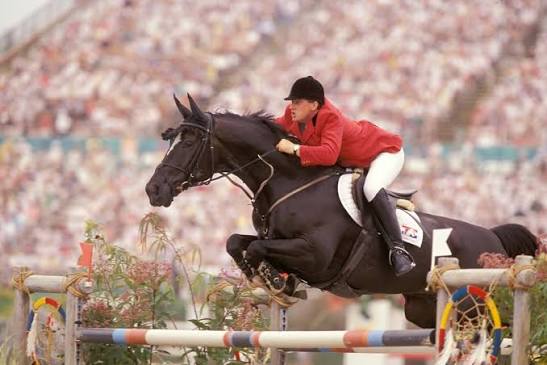
As a member of the Dutch team, he won Olympic team gold at Barcelona in 1992. His competitive career gave him an intimate understanding not merely of what spectators see in an arena, but of everything required to put a horse and rider there: breeding, training, ownership, transportation, veterinary care, course design, facilities, prize money and the enormous investment behind a truly international show-jumping operation.
Looking back on the Tour’s twentieth anniversary, Tops explained that his experience as a rider taught him what the sport required competitively, but also what was missing in its presentation, media opportunities, sponsorship and long-term commercial sustainability. Global Champions
That distinction is important.
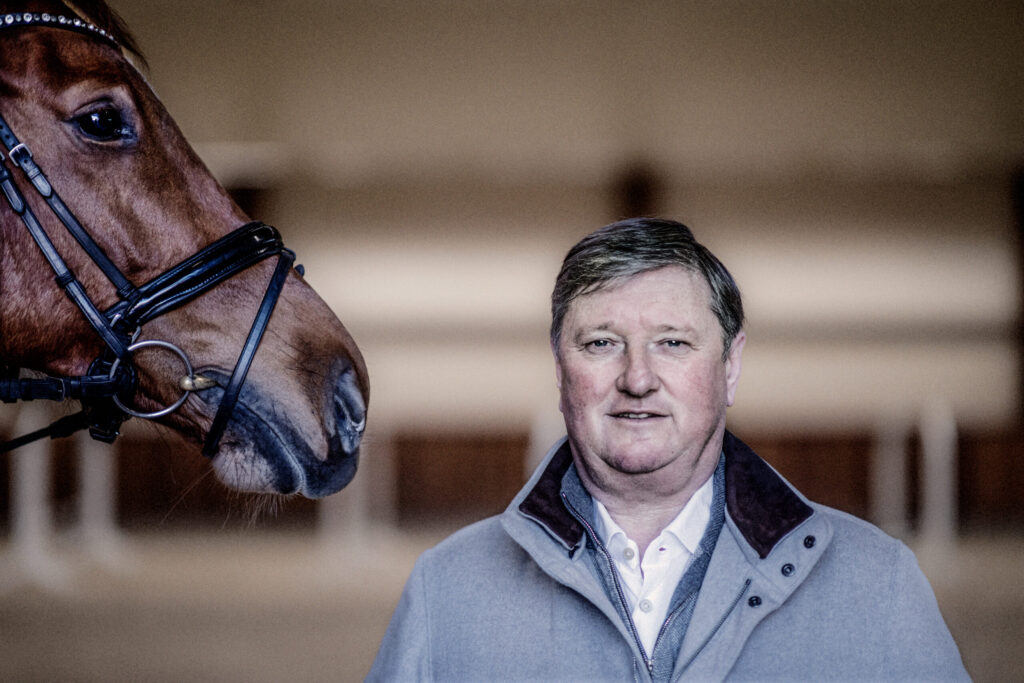
Tops did not try to change the essence of show jumping. He changed the stage upon which it was presented.
The concept resembles what the great professional circuits have achieved in other sports. Wimbledon does not make tennis compelling merely because two people hit a ball across a net; Augusta is not one of sport’s great occasions merely because eighteen holes of golf are being played. Their significance comes from an accumulation of excellence — history, setting, athletes, spectators, broadcasting, sponsorship, hospitality, prize money and prestige.
Tops recognised that show jumping could create its own version of that equation.
And rather than waiting for somebody else to build it, he did so himself.
From Miami Beach to Monaco
Perhaps the most immediately visible achievement of the Longines Global Champions Tour is geography.
Tops realised that if show jumping wanted to reach beyond its traditional audience, it could not always expect the audience to come to the sport.
Sometimes the sport had to go to the audience.
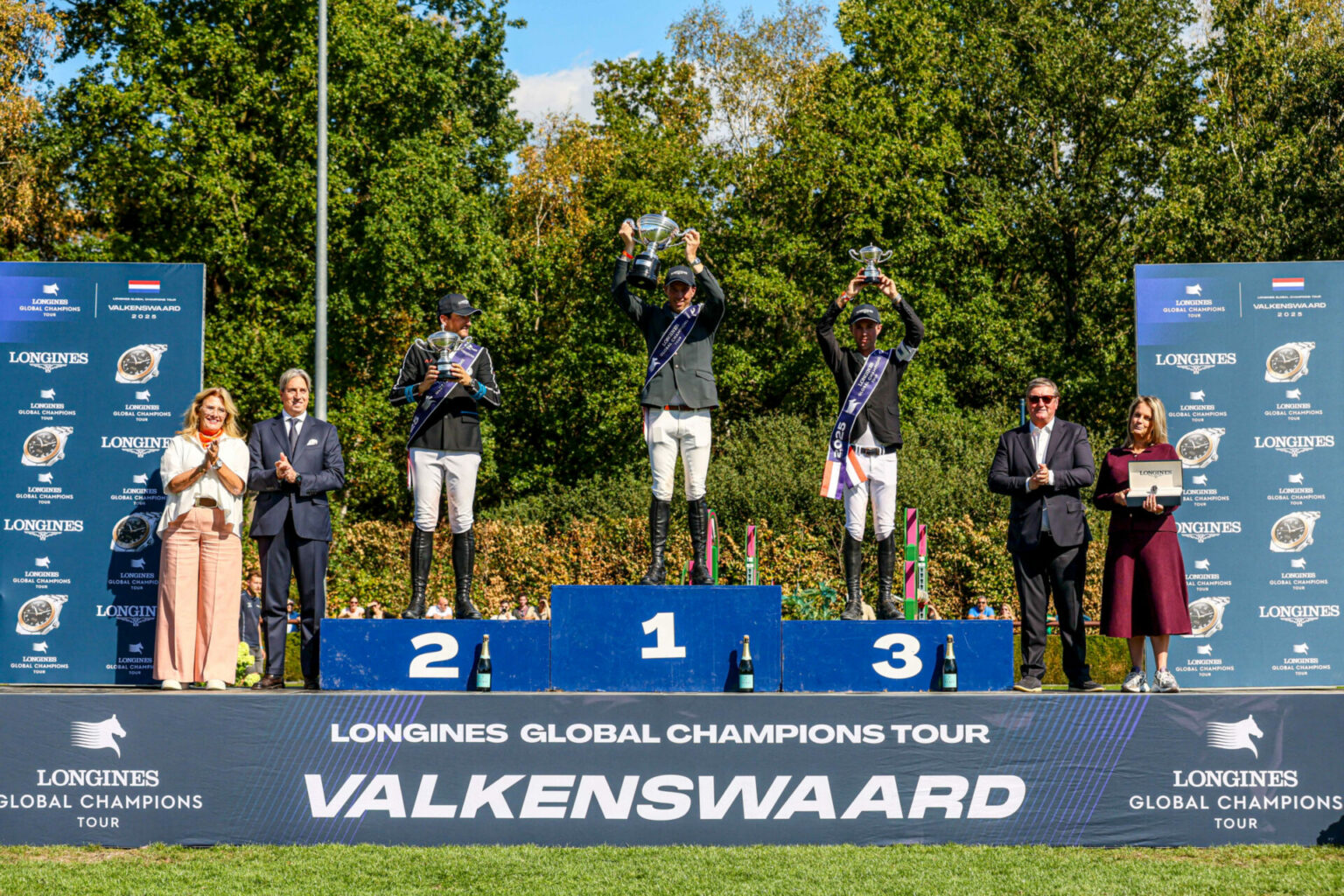
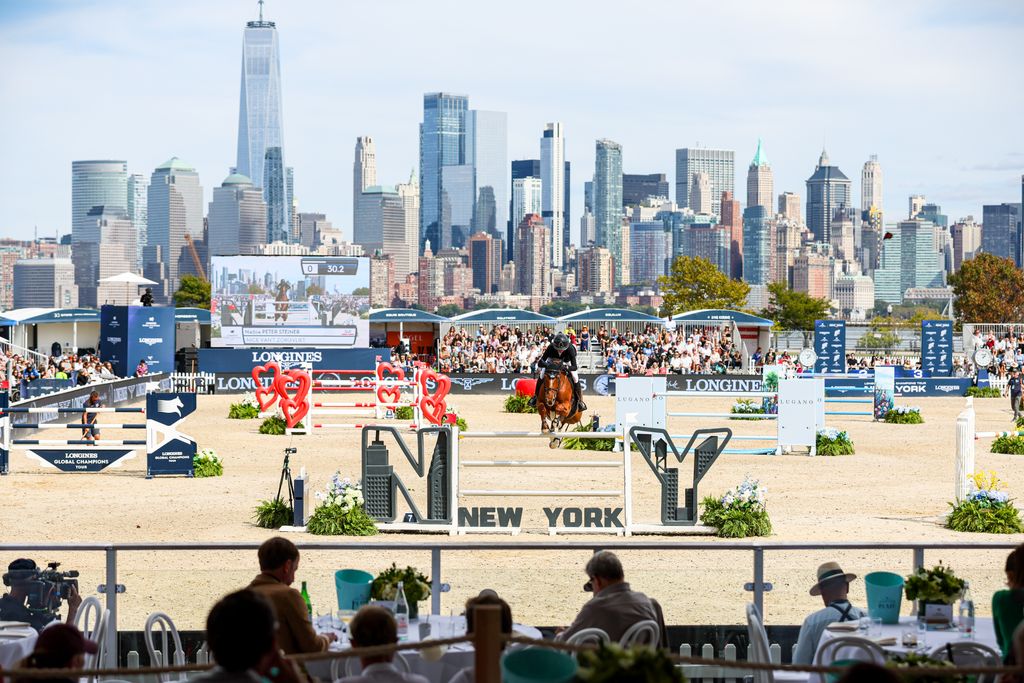
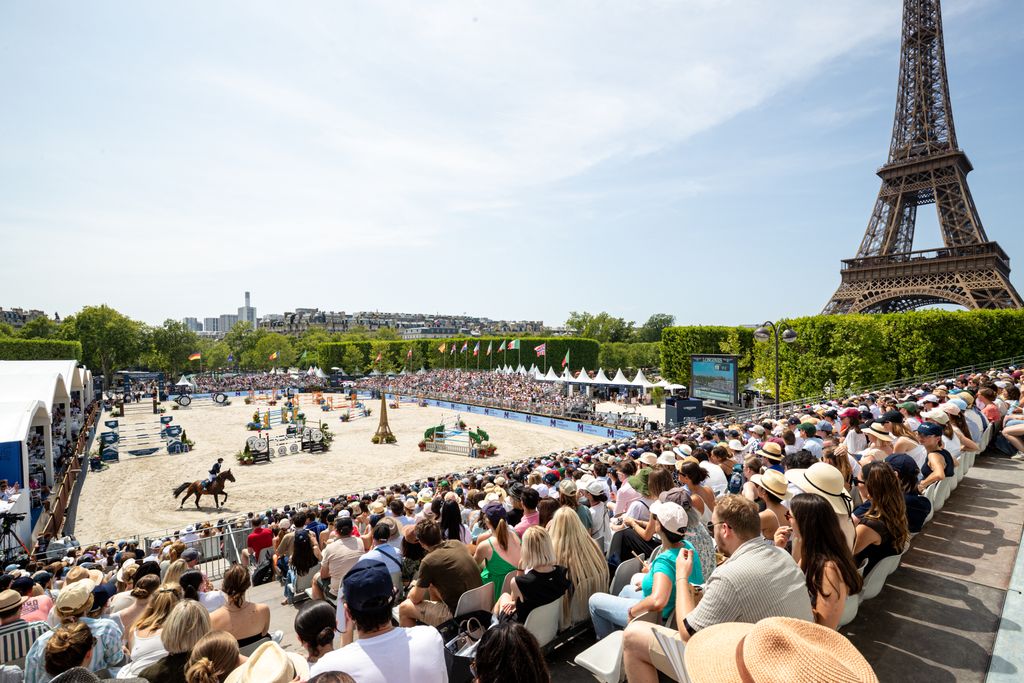
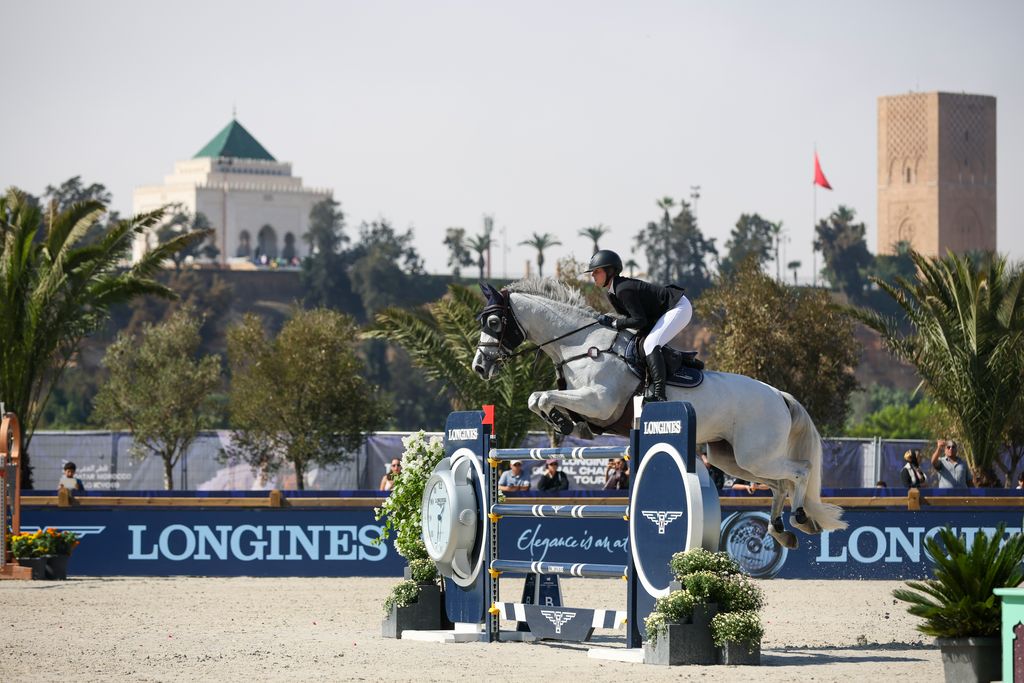
The 2026 calendar illustrates just how far that philosophy has developed. The season began in Doha before travelling to Miami Beach, Mexico City and Shanghai, followed by Madrid, Cannes, Saint-Tropez, Paris, Monaco, Riesenbeck, London, Valkenswaard, Rome, Cairo and Rabat, before the GC Playoffs in Riyadh. A Vienna stage was also listed provisionally on the published calendar. Global Champions
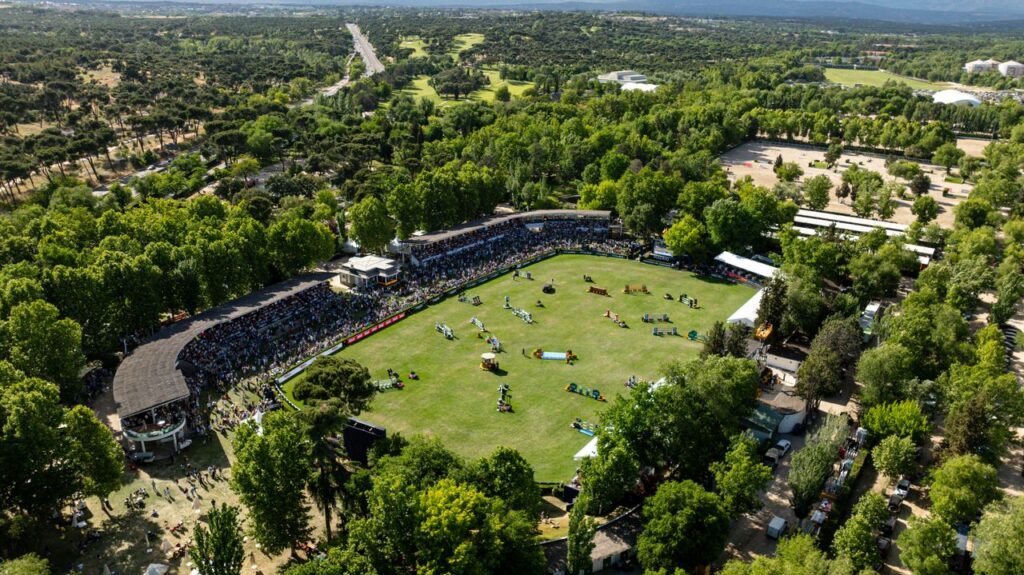
These are not interchangeable sporting grounds.
They are part of the product.
In Miami, horses compete beside the Atlantic Ocean. Monaco places international show jumping alongside the yachts and architecture of Monte Carlo. Paris has brought the sport into the orbit of the Eiffel Tower. London stages the Tour on the historic South Grounds of the Royal Hospital Chelsea. Shanghai has given the championship a foothold in one of Asia’s most important cities. And in 2026, Cairo brought the Tour to perhaps its most extraordinary backdrop yet: the Pyramids. Global Champions
It is an approach familiar from Formula One. Monaco, Singapore and Abu Dhabi are not simply places where races happen; location is woven into the identity of the event.
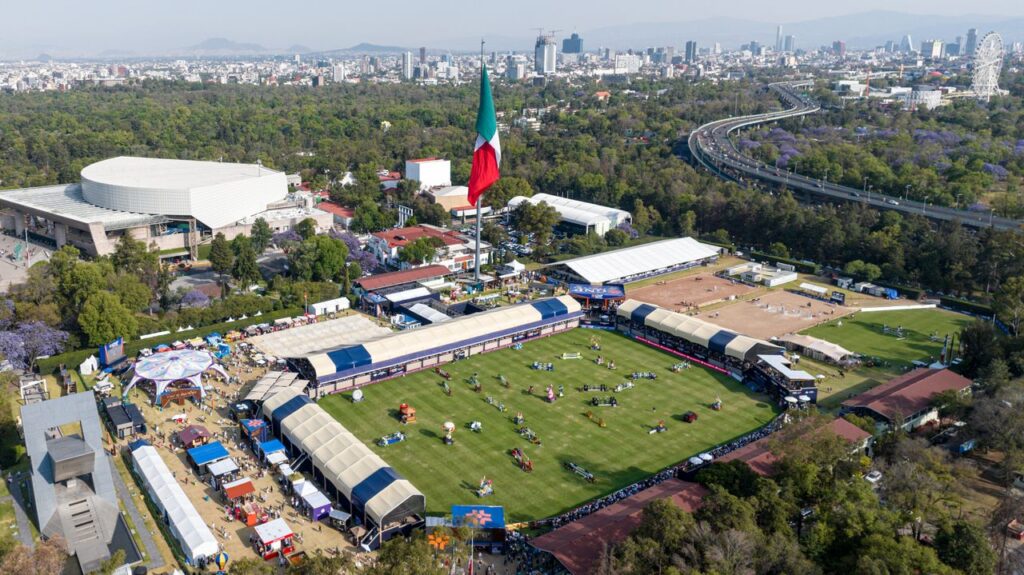
Tops has applied a comparable understanding to equestrian sport.
The consequence is that an LGCT event can sell two experiences simultaneously: exceptional competition for the knowledgeable equestrian spectator and a glamorous international occasion for someone who may never previously have considered spending an afternoon watching show jumping.
That second audience is enormously important to the future of the sport.
Putting serious money behind serious sport
Prestige alone, however, does not create a professional sporting ecosystem. Money matters.
Here, too, Tops has been transformative.
The 2026 LGCT season offers more than €36 million in prize money. The London Grand Prix alone carried a record €1 million purse, with more than €1.33 million available during its three-day meeting — the largest Grand Prix prize fund yet offered in Britain. Global Champions
To put the evolution into perspective, the GC Playoffs have offered more than €10 million during a single weekend. The 2025 Prague Playoffs distributed more than €11.4 million, including €10 million around the GCL Super Cup. For 2026, the LGCT Super Grand Prix carries a €1.25 million prize fund. Global Champions
This matters far beyond the bank account of the winning rider.
International show jumping is an exceptionally capital-intensive sport. Behind a horse entering a 1.60-metre Grand Prix stands an entire economic structure: owner, rider, breeder, groom, trainer, veterinarian, farrier, transporter, stable staff and often agents and commercial partners. There are breeding establishments, training yards, veterinary practices, specialist feed companies, saddlers, equipment manufacturers, insurance businesses, bloodstock and horse-sales operations and an international transport industry capable of moving some of the world’s most valuable equine athletes safely between continents.
Prize money therefore has an effect throughout the ecosystem.
One of the leading figures in the sport, Olympic champion Ludger Beerbaum, has said that the “whole economy” of show jumping has benefited from the developments associated with the Global Champions model. Swedish Olympic champion Peder Fredricson similarly credits Tops’s innovations with creating stronger competitions, higher prize money and opportunities to compete in exceptional cities. Global Champions
That may prove to be one of Tops’s most enduring achievements: he understood that sporting excellence and economic sustainability cannot indefinitely be separated.
Show jumping’s answer to the Grand Slam mentality
The comparison with tennis and golf needs some qualification. Wimbledon and the Masters are individual historic championships, whereas the LGCT is a season-long circuit. Structurally, it combines elements of a tour championship, a Grand Prix series and a culminating final.
But the comparison becomes compelling in terms of ambition.
Tennis understands that its finest players must repeatedly meet on the greatest stages. Golf understands that elite tournaments require exceptional courses, significant purses, international broadcasting and major commercial partners. Formula One understands that spectators follow personalities and teams throughout a season, rather than treating every race as an unrelated event.
Tops brought these ideas together for show jumping.
An LGCT Grand Prix is contested over formidable 1.60-metre courses. Forty riders qualify for each Grand Prix, collecting championship points through the season, with their best eight results contributing to the overall championship. Each Grand Prix winner also earns a coveted place in the season-ending Super Grand Prix. Global Champions
Suddenly, winning in Paris or Monaco is not merely an isolated triumph.
It contributes to a narrative.
There are points to accumulate, championships to pursue, rivals to overcome and a final destination towards which the season builds.
That is precisely what successful international sports properties understand: audiences need not merely competition, but continuity.
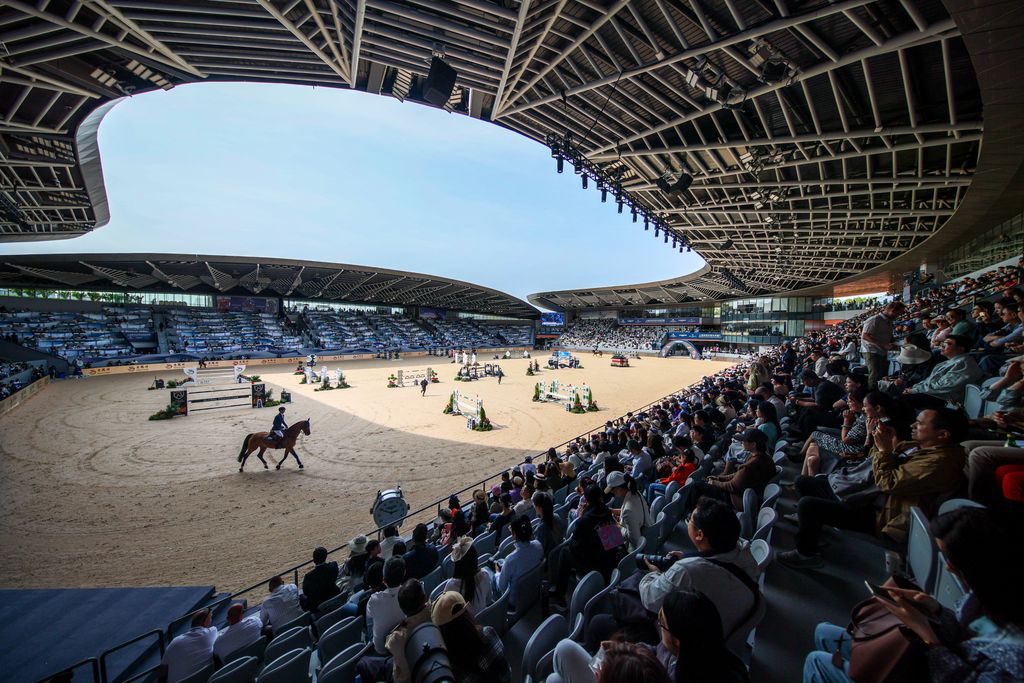
Then Tops created teams
If the creation of the Global Champions Tour changed the presentation of individual show jumping, Tops’s next major innovation was more radical still.
In 2016 came the Global Champions League — GCL.
Show jumping has, of course, always possessed national team competition. But GCL deliberately broke with nationality. Riders from different countries could compete together under privately backed team identities, creating a structure much closer to professional league sport.
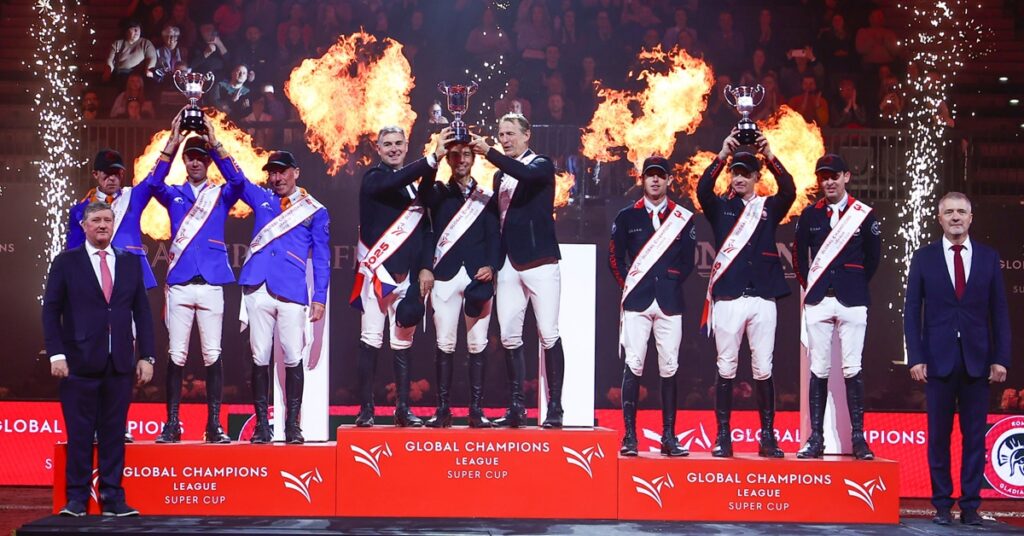
For 2026, 17 multinational teams compete across the season. Each has six athletes and must include at least one under-25 rider. Team managers select combinations according to form, horses, experience and tactics. Global Champions
The implications extend well beyond colourful team jackets.
GCL introduced team ownership, management, strategy and commercial identity into elite show jumping. A spectator can now follow a team throughout a season in much the same way that followers of other professional sports maintain allegiance beyond an individual athlete.
It also created something especially valuable for a sport traditionally centred upon individual horse-and-rider combinations: another point of entry for investors and sponsors.
Prominent figures have become team owners. Georgina Bloomberg, for example, has been a GCL team owner since the league’s inaugural 2016 season while also competing as a rider. Ludger Beerbaum combines the roles of champion rider, team owner and manager with Riesenbeck International. Global Champions
At the same time, the mandatory U25 element gives emerging riders the opportunity to compete within teams alongside established international champions.
This is not merely spectacle. It is infrastructure for the next generation.
The enormous industry behind one weekend
Watching a beautifully turned-out horse enter a pristine arena can disguise the extraordinary logistical machine required to put it there.
Miami offers a particularly revealing example.
For its Miami Beach stage, Global Champions effectively creates an international five-star equestrian venue from nothing on an empty stretch of beach.
Planning begins as much as six months beforehand. Permits must be negotiated, city authorities coordinated and suppliers organised. Once construction begins, the build takes roughly three weeks and involves more than 500 people.
The arena, grandstands and hospitality structures have to be erected. Stabling and specialist flooring must be installed. Around 64 truckloads of specialist footing are brought onto the beach. Meanwhile, the horses themselves arrive aboard dedicated aircraft. Global Champions
Consider what those numbers mean.
A few days of sport generate work for event planners, architects, builders, security companies, caterers, hospitality staff, broadcasters, photographers, digital teams, stable managers, veterinarians, grooms, transport specialists and innumerable suppliers.
Then there are the spectators filling hotels and restaurants, international owners arriving with guests, sponsors entertaining clients and global audiences watching remotely.
The horse entering the arena is merely the visible point of an enormous economic pyramid.
Tops has understood this perhaps better than anyone.
Luxury without losing the horse
There is another reason the model works.
Equestrian sport occupies an unusual cultural position. At its best it combines genuine athletic danger with elegance, tradition, fashion and lifestyle. The audience naturally overlaps with sectors including luxury watches, automobiles, fashion, private banking, property and travel.
The long-standing title partnership with Longines therefore makes intuitive sense. Precision, heritage, internationalism and elite performance are values that can be expressed through both horology and show jumping.
But the commercialisation works only if the sport remains credible.
And this is where Tops’s background as a champion rider becomes particularly important. The luxury village, champagne, hospitality and magnificent locations may attract attention, but none of them matters if the competition itself is second-rate.
The principle has therefore been deceptively simple: put the best around the best.
Global Champions itself describes Tops’s philosophy in almost precisely those terms: “Only the best for the best.” Global Champions
The best horses.
The best riders.
Serious prize money.
Exceptional footing and facilities.
Prestigious locations.
First-class hospitality.
International broadcasting.
Once those elements are assembled consistently, the commercial partners follow because they are associating themselves with genuine sporting excellence rather than an artificial luxury event with horses added as decoration.
Taking the arena to the world
Perhaps the least visible but most consequential element of Tops’s revolution has been broadcasting.
A sport cannot truly become global if one must physically attend to follow it.
The Global Champions operation has consequently invested heavily in television, streaming, digital distribution and its own GCTV platform. Its broadcasting relationships over the years have included Eurosport, CBS, DAZN, CCTV, Fox Sports Australia and beIN Sports, alongside national and regional broadcasters. Global Champions
That has enormous implications for riders and owners.
A horse is no longer competing solely before several thousand spectators sitting around an arena. A successful combination can be seen internationally. Riders acquire recognisable public identities. Sponsors receive exposure beyond hospitality guests at the venue. Team brands become meaningful. Owners see their investment participating on an international stage.
This is how a sport develops stars.
And stars are essential if show jumping is to continue broadening its appeal beyond those already immersed in horses.
The horse remains at the centre
For all the talk of prize money, teams, television rights and luxury hospitality, the reason show jumping can support such an ambitious platform remains something that no marketing department could manufacture.
The horse.
Few sports offer anything remotely comparable to the relationship between an international show jumper and an exceptional Grand Prix horse.
A Formula One driver has a machine beneath him. A tennis player has a racquet in his hand. The show jumper enters the arena with another living athlete — one weighing perhaps 600 kilograms, possessing its own character, fears, intelligence and competitive instinct.
At 1.60 metres, success depends upon an almost invisible communication between the two.
The rider must calculate distance, rhythm, stride and time while responding continuously to the horse beneath him. The horse must trust the rider sufficiently to attack enormous obstacles at speed. One fractionally mistimed stride can determine the competition.
Tops has not needed to manufacture drama because show jumping already possesses it.
His genius has been to package that drama at the level it deserves.
A twenty-year transformation
In 2026 the Global Champions Tour celebrates its twentieth anniversary.
What began in 2006 as Jan Tops’s ambitious attempt to give show jumping a truly global championship has become an international sporting property encompassing the individual Longines Global Champions Tour, the team-based GCL, major season-ending Playoffs, broadcasting, streaming, hospitality, sponsors, team owners and some of the most spectacular temporary sporting venues anywhere in the world.
The numbers tell part of the story: four continents, 17 destinations and more than €36 million in LGCT prize money in 2026. Global Champions
But numbers alone do not explain Tops’s achievement.
He changed expectations.
Riders came to expect better facilities and greater rewards. Owners could see their horses competing on a truly international platform. Sponsors discovered a sophisticated sporting environment through which to reach a valuable global audience. Cities found that show jumping could become a destination event. Television and streaming took the sport beyond the arena. Young riders acquired pathways towards competing alongside champions.
And rival organisers inevitably had to take notice.
The standard had moved.
Jan Tops’s legacy
There are great riders, and there are great entrepreneurs. Very occasionally, one person manages to be both.
Jan Tops won his Olympic gold medal in Barcelona in 1992. That alone would have secured his place in Dutch equestrian history.
What he did afterwards may ultimately prove still more consequential.
He looked at a sport he had spent his life inside and recognised that its sporting quality had outgrown the way in which much of it was being presented. He saw magnificent horses, exceptional riders and committed owners — but also an opportunity to create larger audiences, richer competitions, better facilities and a truly international championship.
Then he spent two decades building it.
Tennis has Wimbledon, Roland-Garros, Melbourne and New York. Golf has Augusta, St Andrews and the great championship courses of the world. Formula One moves from Monaco to Singapore, Silverstone and Abu Dhabi.
And international show jumping now has its own journey: Miami Beach, Mexico City, Shanghai, Madrid, Cannes, Saint-Tropez, Paris, Monaco, London, Rome, Cairo, Doha, Riyadh and beyond.
The comparison should not be taken to mean that these sports are identical. They are not. Rather, Tops understood the lesson the world’s greatest sports had learnt long before: elite athletes deserve elite stages, meaningful prize money and an international audience.
In creating the Global Champions Tour, Jan Tops did not reinvent show jumping.
He did something more valuable.
He showed the world what show jumping could become.


 Carlos Mundy
 Dixon Acosta
 Elga Wimmer


 Metaphore Magazine


 Laura Mitchell
 Mayte Hidalgo