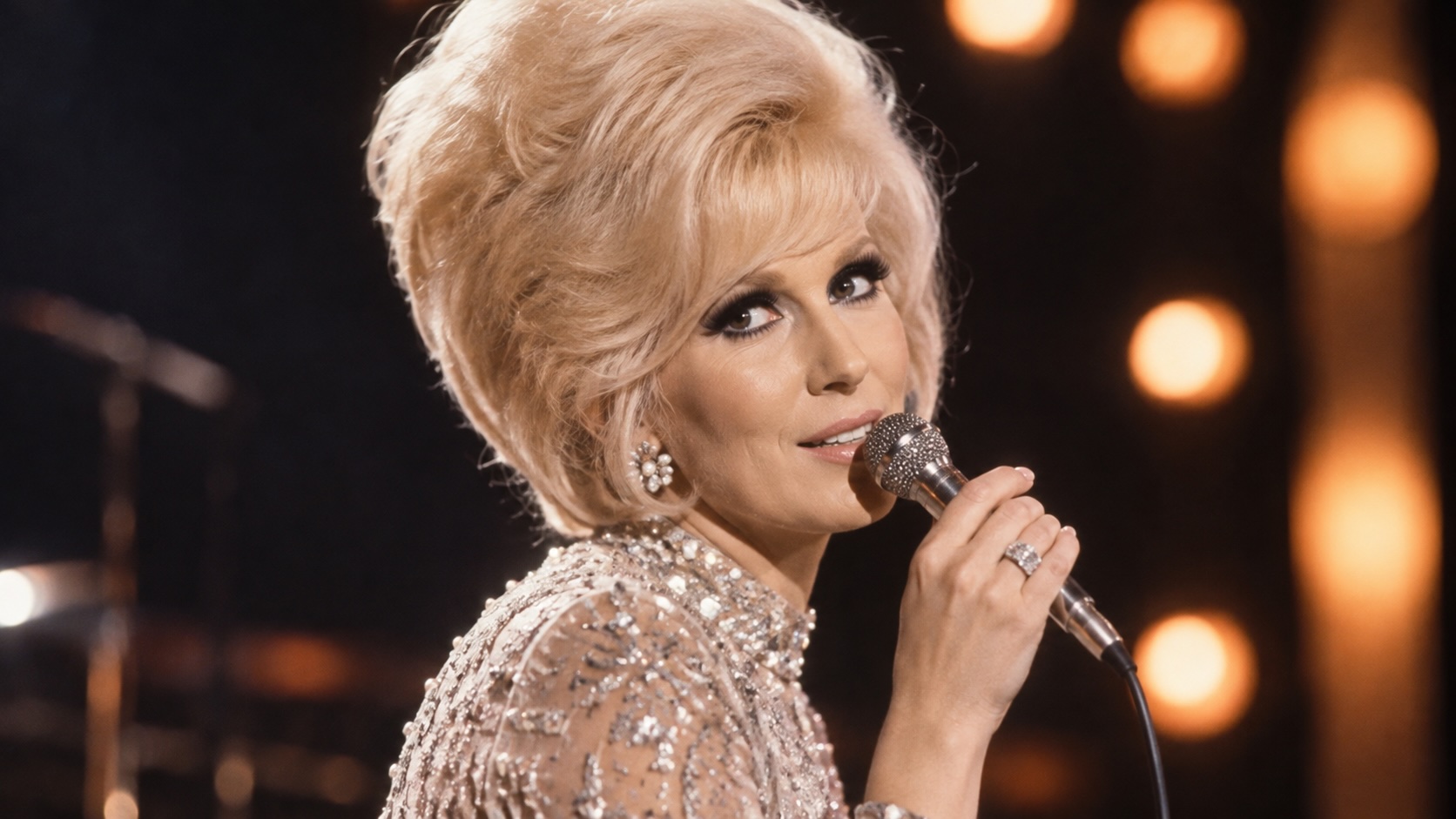
 Lavinia Ellington-Wentworth
There have been bigger stars, more flamboyant performers and singers with greater vocal ranges. But few possessed what Dusty Springfield had: a voice that could make three minutes of popular music feel like an intimate confession. From the exuberance of “I Only Want to Be with You” to the devastating restraint of “The Look of Love” and the perfection of Dusty in Memphis, she became not merely one of Britain’s greatest singers, but one of the most extraordinary voices of twentieth-century popular music.
Some voices belong to an era.
Others somehow escape it.
More than a quarter of a century after Dusty Springfield’s death, put on “The Look of Love” and something extraordinary still happens.
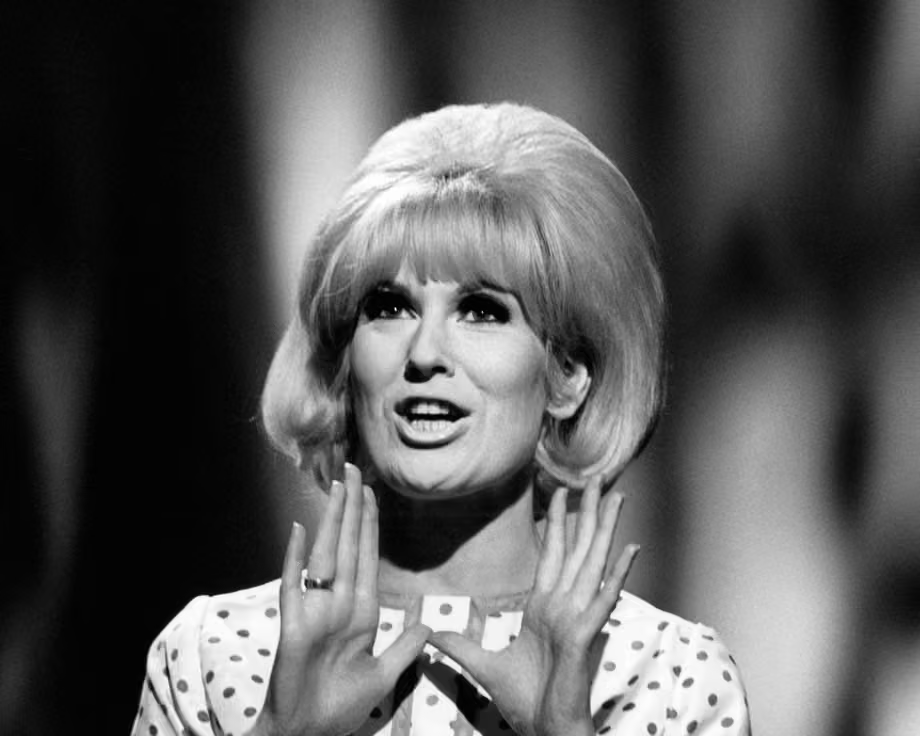
The orchestration may belong unmistakably to the 1960s. The clothes, the television studios, the enormous hair and spectacular black eye make-up belong to another world entirely.
But the voice does not.
It sounds immediate.
Intimate.
Sensual.
And, above all, vulnerable.
There is a slight breathiness to it, an extraordinary control, and something else considerably harder to define: the impression that behind every perfectly placed note lies an emotion she is only just managing to contain.
Dusty Springfield did not merely sing songs.
She inhabited them.
That is why she remains one of the great voices of twentieth-century popular music.
Mary Becomes Dusty
The woman who would become Britain’s greatest white soul singer began life very differently.
She was born Mary Isobel Catherine Bernadette O’Brien in West Hampstead, London, on 16 April 1939, into an Irish Catholic family.
Music surrounded her childhood. Her father encouraged Mary and her brother Dion to listen carefully to records and identify instruments and musical structures. The young Mary absorbed jazz, standards and popular music, but it was the extraordinary voices coming from America that would ultimately transform her.
Peggy Lee.
Jo Stafford.
Ella Fitzgerald.
And, increasingly, the great Black singers of rhythm and blues, gospel and soul.
Before Dusty Springfield existed, Mary O’Brien had to invent her.
She first sang professionally with the Lana Sisters, an all-female vocal group, before joining her brother — by then known as Tom Springfield — and Tim Feild in The Springfields.
The group became enormously successful.
They were clean-cut, melodic and wholesome, specialising in folk-influenced popular music. In 1962, Silver Threads and Golden Needles became a significant American hit.
But Mary was listening to something else.
America was changing.
Motown was rising.
Soul music was emerging.
Rhythm and blues was crossing racial and geographical boundaries.
And Mary O’Brien wanted to sing differently.
In 1963, she left The Springfields.
Dusty Springfield was born.
A Voice Appears
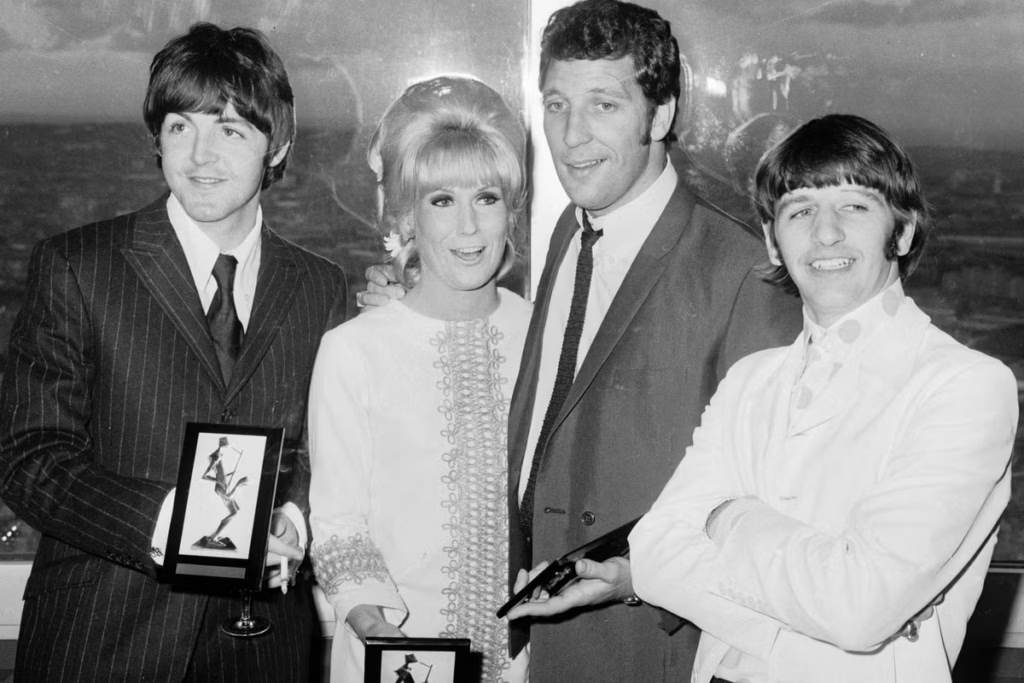
Her first solo single was an announcement.
“I Only Want to Be with You.”
Released in November 1963, it exploded with energy.
The drums.
The strings.
The backing vocals.
And above everything else, that voice.
It reached No. 4 in Britain and became a hit in America during the first great wave of the British Invasion.
Yet Dusty sounded unlike the British performers arriving alongside her.
She was not trying to be a female version of The Beatles.
She was drawing from another source altogether.
Black American music.
Soul.
Gospel.
Motown.
The girl from West Hampstead had somehow discovered within herself a voice that could inhabit those musical traditions with astonishing conviction.
The question has followed her career ever since:
How?
There is no satisfactory technical answer.
Great singing can be analysed, but greatness itself resists dissection.
Dusty possessed impeccable phrasing, remarkable breath control, an instinctive understanding of dynamics and an extraordinary ability to colour individual words.
But many singers possess technique.
Dusty possessed something rarer.
Emotional truth.
The Voice Behind the Voice
Dusty Springfield was not a vocal acrobat.
That distinction matters.
Modern popular music often encourages singers to demonstrate their voices: enormous ranges, extended notes, vocal runs and spectacular displays of power.
Dusty rarely needed any of that.
Her genius lay in restraint.
Listen carefully to “You Don’t Have to Say You Love Me.”
It is a huge song — melodramatic, orchestral, almost operatic in emotional scale.
A lesser singer could easily have destroyed it by oversinging.
Dusty does the opposite.
She allows the arrangement to become enormous around her while keeping the essential emotion intensely personal.
The result is devastating.
When she reaches the central plea, we do not hear a singer demonstrating her ability.
We hear a woman asking someone not to leave.
That distinction separates performance from art.
The Sound of Vulnerability
There was always a contradiction between Dusty’s appearance and her voice.
Visually, she was magnificently artificial.
The peroxide-blonde bouffant.
The panda-black eyes.
The glamorous dresses.
The carefully constructed image.
Dusty Springfield was, in some respects, a character Mary O’Brien created and then inhabited.
Yet when she sang, the artifice disappeared.
Few singers have sounded so emotionally exposed.
That contrast made her fascinating.
Behind the towering hair and make-up was a deeply private, complicated woman who suffered from insecurity and perfectionism. Her personal life was far more difficult than the glamorous public image suggested.
And perhaps that explains something about the voice.
Dusty understood longing.
She understood uncertainty.
She understood the desire to be loved and the fear that love might disappear.
These are the great subjects of popular music.
She did not have to act them.
The Look of Love
Then there is “The Look of Love.”
Burt Bacharach and Hal David created one of the most sophisticated popular songs ever written.
Dusty made it immortal.
Originally associated with the 1967 James Bond spoof Casino Royale, the song could easily have become merely another elegant piece of cinematic seduction.
Instead, Dusty turned it into something almost indecently intimate.
She barely seems to sing parts of it.
She breathes them.
The voice approaches a whisper and then retreats from it. Every pause matters. Every intake of breath matters.
There is desire in the performance, certainly.
But also hesitation.
That is what makes it extraordinary.
Seduction without vulnerability is merely performance.
Dusty gave it both.
Bacharach himself understood how exceptional she was. His melodies were notoriously difficult, full of unusual intervals, changing time signatures and unexpected turns. Dusty possessed the musical intelligence to negotiate them while making the listener entirely unaware of their technical complexity.
The difficulty disappeared.
Only the emotion remained.
Dusty and Black America
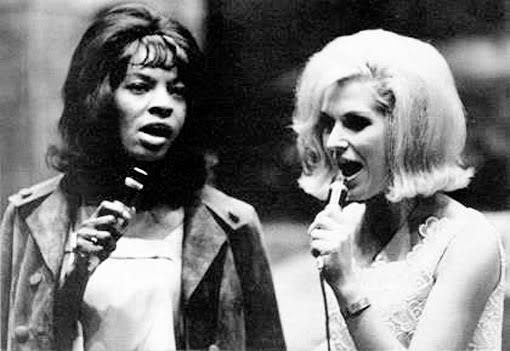
Dusty’s relationship with Black American music is essential to understanding her.
She did not invent soul music, nor did she pretend to.
She revered it.
And crucially, at a time when many British listeners had little exposure to American soul artists, Dusty used her fame to champion them.
The television special The Sound of Motown, broadcast by Ready Steady Go! in 1965 and hosted by Springfield, introduced British television audiences to an extraordinary assembly of Motown performers, including The Supremes, Stevie Wonder, Martha and the Vandellas and The Miracles.
Dusty was not the star demanding centre stage.
She was the enthusiast opening the door.
There was, however, another side to Dusty Springfield that deserves to be remembered alongside her extraordinary musical achievements. Behind the glamorous image, the enormous blonde hair and the unmistakable voice was a woman whose sense of fairness could be remarkably uncompromising. In December 1964, at the height of her early fame, she demonstrated that her admiration for Black music was accompanied by something considerably more important: a willingness to stand up for the dignity of the people who had created it.
Dusty had agreed to undertake a concert tour of South Africa, a country then governed by the brutal system of apartheid, under which racial discrimination was not merely tolerated but enforced by law. Before travelling, however, she had insisted upon an unusual and courageous provision in her contract: she would perform only before audiences in which Black and white spectators were permitted to sit together.
For a young British singer enjoying spectacular commercial success, this was no insignificant stipulation. South Africa offered lucrative opportunities to international entertainers, many of whom were prepared to accept the country’s racial restrictions as an unfortunate condition of doing business. Dusty refused to make that accommodation.
The authorities were less than amused. Her manager, Vic Billings, was repeatedly pressed to sign documents accepting the segregation of audiences, while Dusty herself was confronted with official warnings. Yet she and her accompanying musicians, The Echoes, went ahead with performances before multiracial audiences, refusing to abandon the principle upon which their agreement had been made.
Eventually, the South African government ordered her to leave the country within twenty-four hours. The tour was abruptly terminated, and Dusty returned to Britain at the centre of an international controversy.
What makes the episode particularly revealing is that Dusty did not regard herself as a political campaigner. She saw the matter in far simpler, more human terms. Anyone wishing to attend one of her concerts, she believed, should be entitled to do so regardless of colour, religion or background. It was an elementary principle of decency, and one upon which she was unwilling to compromise.
Her stand attracted considerable support. Members of Parliament spoke in her defence, fellow musicians applauded her courage, and the affair became a subject of debate within the British entertainment industry. There were critics, too, who complained that her actions might jeopardise future engagements for British performers in South Africa. Yet that criticism merely exposed the uncomfortable question at the heart of the controversy: was commercial advantage more important than human equality?
Dusty had already supplied her answer.
The significance of her actions becomes even greater when placed in the context of her musical life. She had immersed herself in the work of Black American singers, learning from their phrasing, their emotional honesty and their extraordinary musical traditions. She admired artists whose talents were frequently celebrated while their rights were denied. For Dusty, it was evidently impossible to separate respect for the music from respect for the people who made it.
The following year, she would help introduce Motown to a wider British television audience, giving prominent exposure to some of the most remarkable Black performers of their generation. Her defiance in South Africa and her championing of Motown were different expressions of the same conviction: that talent, beauty and humanity recognise no racial boundaries.
There is something especially admirable about the simplicity of her position. Dusty did not set out to become a symbol of resistance to apartheid. She wanted to sing, and she wanted everyone to be able to listen. When a government told her that this was unacceptable, she chose to leave rather than surrender her principles.
It was an act of moral courage that deserves a prominent place in her legacy. Long before the international cultural boycott of apartheid South Africa became a defining cause for the entertainment world, a young British singer had already demonstrated that an artist’s conscience could be more valuable than a lucrative contract.
Dusty Springfield possessed one of the most beautiful voices in popular music. In South Africa, she proved that she also knew when that voice must be accompanied by action.
Dusty in Memphis
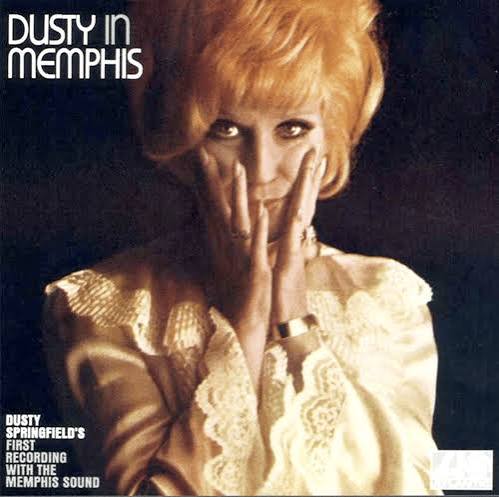
And then came the record upon which much of her artistic immortality rests.
Dusty in Memphis.
Released in 1969, it was not initially the enormous commercial triumph one might imagine from its subsequent reputation.
But history has treated it differently.
Today it is routinely regarded as one of the great albums of popular music.
The idea itself was audacious.
Take an English pop singer to the American South, surround her with some of the musicians responsible for the sound she adored, and see what happened.
The sessions were associated with the legendary American Sound Studio in Memphis, with producers Jerry Wexler, Tom Dowd and Arif Mardin.
Dusty was terrified.
She knew exactly whose territory she was entering.
This was the world of Aretha Franklin and the great American soul tradition. Springfield’s perfectionism and insecurity became so intense that much of her final vocal work was completed later in New York.
None of that anxiety can be heard as weakness on the finished record.
Instead, it became intensity.
The album contains “Son of a Preacher Man.”
It may be the most famous recording of her career.
The song is sensual without trying to be provocative, rhythmic without losing intimacy, and technically controlled while sounding utterly natural.
Dusty never imitates a Black American singer.
That is crucial.
She finds her own place within the music.
And that is why it works.
What Made Her Different
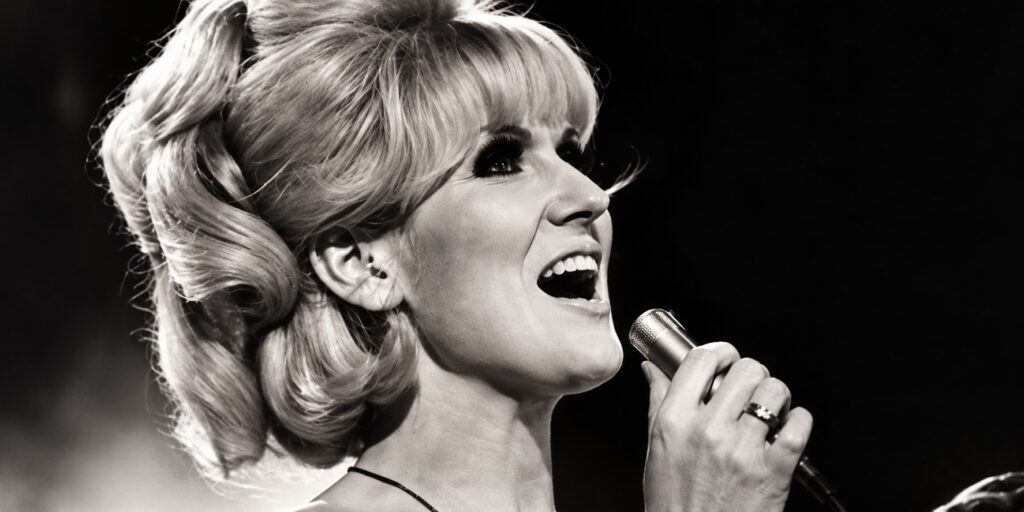
There have been singers with greater range.
There have been singers with more raw power.
There have been singers capable of greater technical fireworks.
But popular music is not an Olympic competition.
The greatest voice is not necessarily the one capable of singing the highest note.
What matters is whether we believe it.
With Dusty, we almost always do.
Her voice possessed an extraordinary combination of qualities.
It could be powerful without becoming aggressive.
Sensual without becoming vulgar.
Melancholic without becoming sentimental.
Sophisticated without becoming cold.
Vulnerable without becoming weak.
And perhaps most unusually, it could sound both British and American without quite belonging entirely to either.
She created her own territory.
A Perfectionist in the Studio
Dusty’s recordings also reveal another side of her artistry that the image of the glamorous chanteuse can obscure.
She was obsessive about sound.
Vocals could require repeated takes. She was intensely particular about arrangements, acoustics and the precise emotional effect of a recording.
Studios did not always satisfy her.
She was known to seek out spaces with the reverberation she wanted, including stairwells and even ladies’ lavatories, because the natural echo produced a particular quality that conventional recording booths sometimes failed to provide.
This was not eccentricity for its own sake.
Dusty heard things.
She understood that the human voice changes according to the physical space surrounding it.
Long before digital software made almost any acoustic effect available at the touch of a button, she was searching physically for the sound inside her head.
The immaculate records were not accidents.
They were constructed.
The Difficult Years
The 1970s and early 1980s were much less kind.
Musical fashions changed.
Dusty moved to America.
Her record sales declined.
Her private life became increasingly troubled, and struggles with alcohol, drugs and mental health contributed to periods of instability.
There were relationships with women at a time when homosexuality was treated very differently by both the press and society. Springfield spoke with unusual openness in 1970 about being attracted to both men and women, although the language available to public figures at the time was very different from that of today.
Her sexuality was only one part of a complicated private life, but secrecy and social attitudes inevitably imposed their own burdens.
The extraordinary voice remained.
The world simply stopped listening as carefully.
For a while.
The Pet Shop Boys Bring Dusty Back
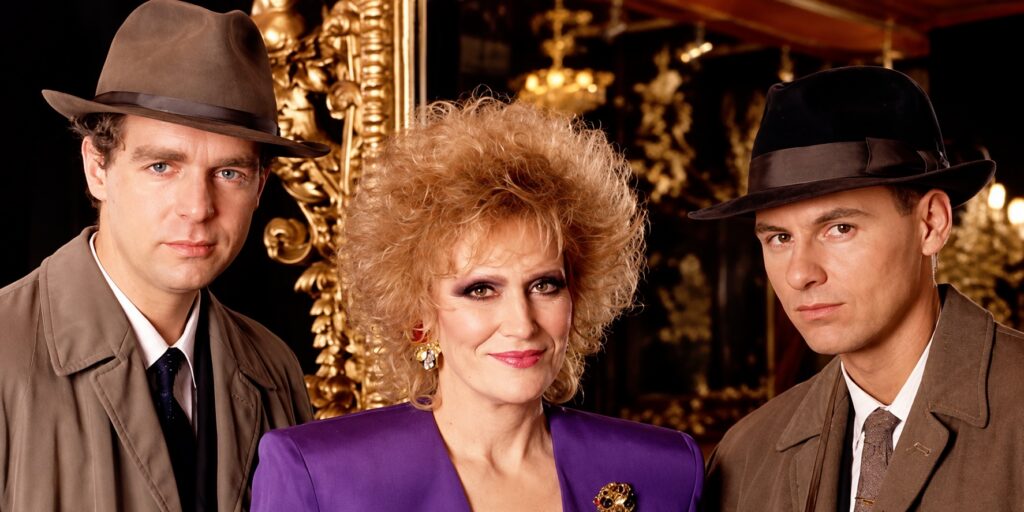
Then came one of the great second acts in British pop.
In 1987, the Pet Shop Boys invited Dusty Springfield to sing with them on “What Have I Done to Deserve This?”
It was inspired casting.
Neil Tennant and Chris Lowe understood what younger audiences had partly forgotten.
Dusty’s voice was timeless.
Placed against the cool electronic architecture of the Pet Shop Boys, that warm, breathy, unmistakably human instrument sounded magnificent.
The record became a major international hit.
Suddenly Dusty Springfield was not merely a star from the 1960s.
She was contemporary again.
The collaboration continued, most notably with “Nothing Has Been Proved,” written by the Pet Shop Boys for the film Scandal.
Again, the contrast was perfect.
Electronic modernity.
Emotional timelessness.
Dusty had returned.
The Woman Behind the Hair
There is something poignant about the difference between Dusty Springfield the icon and Mary O’Brien the woman.
Dusty was enormous.
Mary could be terribly insecure.
Dusty looked supremely confident.
Mary often doubted herself.
Dusty commanded television screens.
Mary struggled with periods of profound personal unhappiness.
Perhaps the persona was armour.
Many great performers construct exaggerated public identities precisely because the person underneath them feels vulnerable.
The stage becomes a place where uncertainty can temporarily be transformed into certainty.
When the music started, Mary knew who Dusty was.
And so did everybody else.
A Voice Silenced Too Soon
In the 1990s, Springfield was diagnosed with breast cancer.
There was treatment and a period of remission, but the disease returned.
She died on 2 March 1999 at her home in Henley-on-Thames.
She was only fifty-nine.
Her recognition had already become substantial. She had been appointed OBE and was inducted into the Rock and Roll Hall of Fame in 1999, shortly after her death.
But awards are almost beside the point.
The real memorial is the voice.
Put on the records.
That is where Dusty remains.
The Greatest British Female Voice?
Such judgements are inevitably subjective.
Britain has produced extraordinary female singers.
Shirley Bassey possessed volcanic power.
Annie Lennox brought intelligence and dramatic authority.
Kate Bush created an entirely original artistic universe.
Amy Winehouse possessed a remarkable instinct for jazz and soul.
Adele brought the tradition of the great emotional vocalist to another generation.
But Dusty occupies a particular place among them.
She was there near the beginning.
At a moment when British popular music was discovering that it could compete with America, Dusty demonstrated something even more ambitious: that a British singer could absorb American musical influences without becoming a mere imitation of them.
She helped establish the idea of the British soul singer.
Every British vocalist who subsequently crossed the Atlantic carrying soul in her voice travelled, in some measure, along a road Dusty helped to open.
Beyond the Sixties
Calling Dusty Springfield a “Sixties singer” is therefore rather like calling Frank Sinatra a singer of the 1940s.
It mistakes the period in which an artist first flourished for the limits of the artist.
Dusty’s great recordings survive because the fundamental emotions inside them have no decade.
Desire has not changed.
Jealousy has not changed.
Loneliness has not changed.
Heartbreak has not changed.
The terrible uncertainty of loving someone more than they love you has certainly not changed.
Dusty understood all of them.
And she understood something else.
A singer does not need to tell us everything.
Sometimes the most powerful emotion lies in what is withheld.
A fraction of a second before a word.
A breath.
A hesitation.
A note allowed to fade rather than being forced.
Silence was part of Dusty’s instrument.
The Voice That Still Whispers
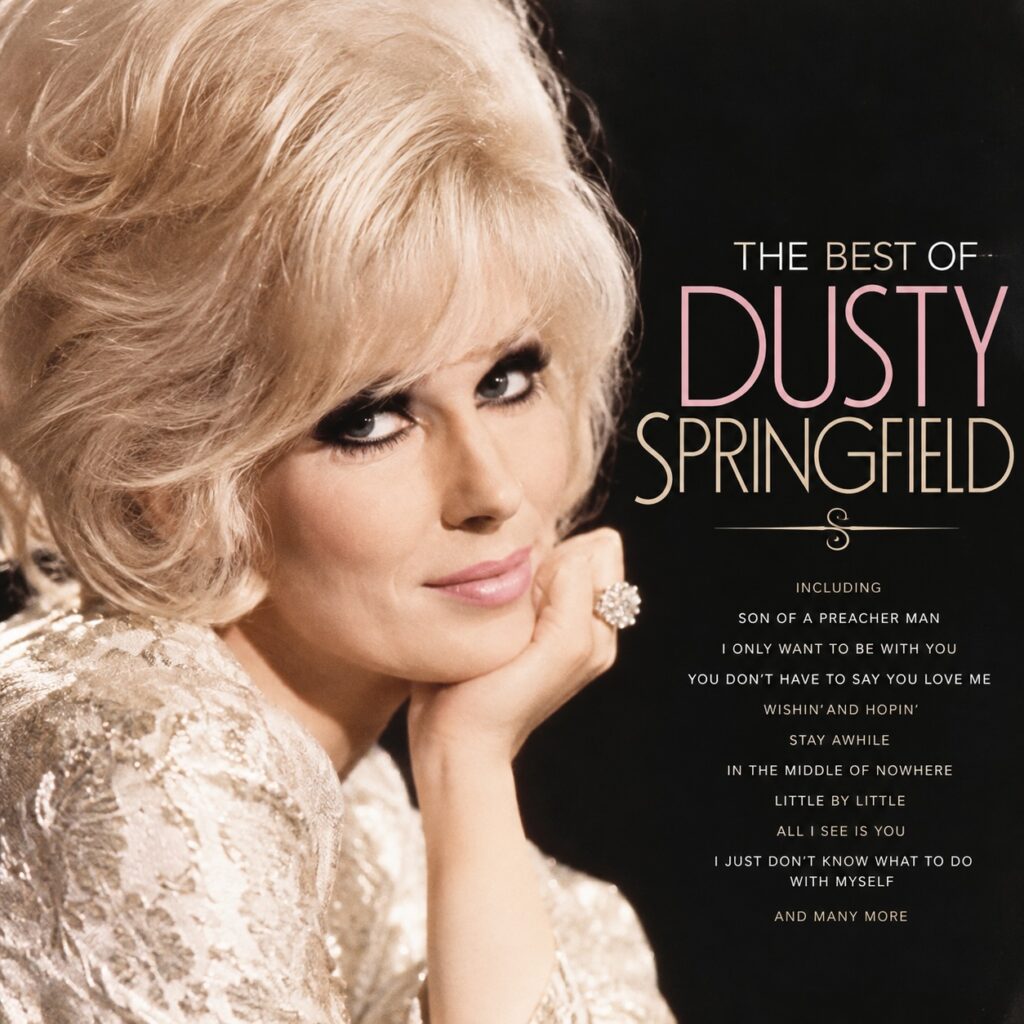
Popular music has changed almost beyond recognition since Mary O’Brien walked into a recording studio.
Analogue tape became digital recording.
Singles became downloads and then streams.
Television variety shows became social media.
The record shop disappeared from many high streets.
Stars can now be created globally in hours.
But technology has never discovered how to manufacture the thing Dusty Springfield possessed.
It can correct pitch.
It can alter timing.
It can create harmony.
It can reproduce almost any acoustic environment imaginable.
What it cannot manufacture is the sensation that the person singing understands exactly what you are feeling.
Dusty could do that.
She could take somebody else’s words and make them sound autobiographical.
She could take an elaborate orchestral arrangement and somehow make it feel as though she were singing to one person.
She could turn vulnerability into strength.
And she could make sadness beautiful without ever making it trivial.
That is why, decades after her death, the bouffant hair and black mascara may identify the photograph, but they do not explain the legend.
For that, one has to listen.
Listen to “I Just Don’t Know What to Do with Myself.”
Listen to “You Don’t Have to Say You Love Me.”
Listen to “The Look of Love.”
Listen to “Son of a Preacher Man.”
And then listen to the silences between the words.
There are many magnificent singers in the history of popular music.
There was only one Dusty Springfield.
And that extraordinary voice — smoky, sensual, vulnerable, powerful and instantly recognisable — remains one of the most beautiful sounds the twentieth century gave us.


 Carlos Mundy
 Dixon Acosta
 Elga Wimmer
 Metaphore Magazine
 Pablo H. Aznar
 Clifford Thurlow
 Milton Cooper
 Ludovico di Valdieri
 Avner Kessel