
 Ludovico di Valdieri
How the World Abandoned Elegance in the Name of Comfort
There was a time, not so very long ago, when people took pride in how they dressed. Men wore jackets to dinner, women dressed with a sense of occasion, and the simple act of leaving one’s home involved a certain consideration for one’s appearance and, by extension, for the people one might encounter. Elegance was not necessarily a question of wealth, nor was it the exclusive privilege of the aristocracy. It was a matter of upbringing, self-respect and an understanding that the way one presented oneself to the world said something about one’s character.
Today, much of that has disappeared.
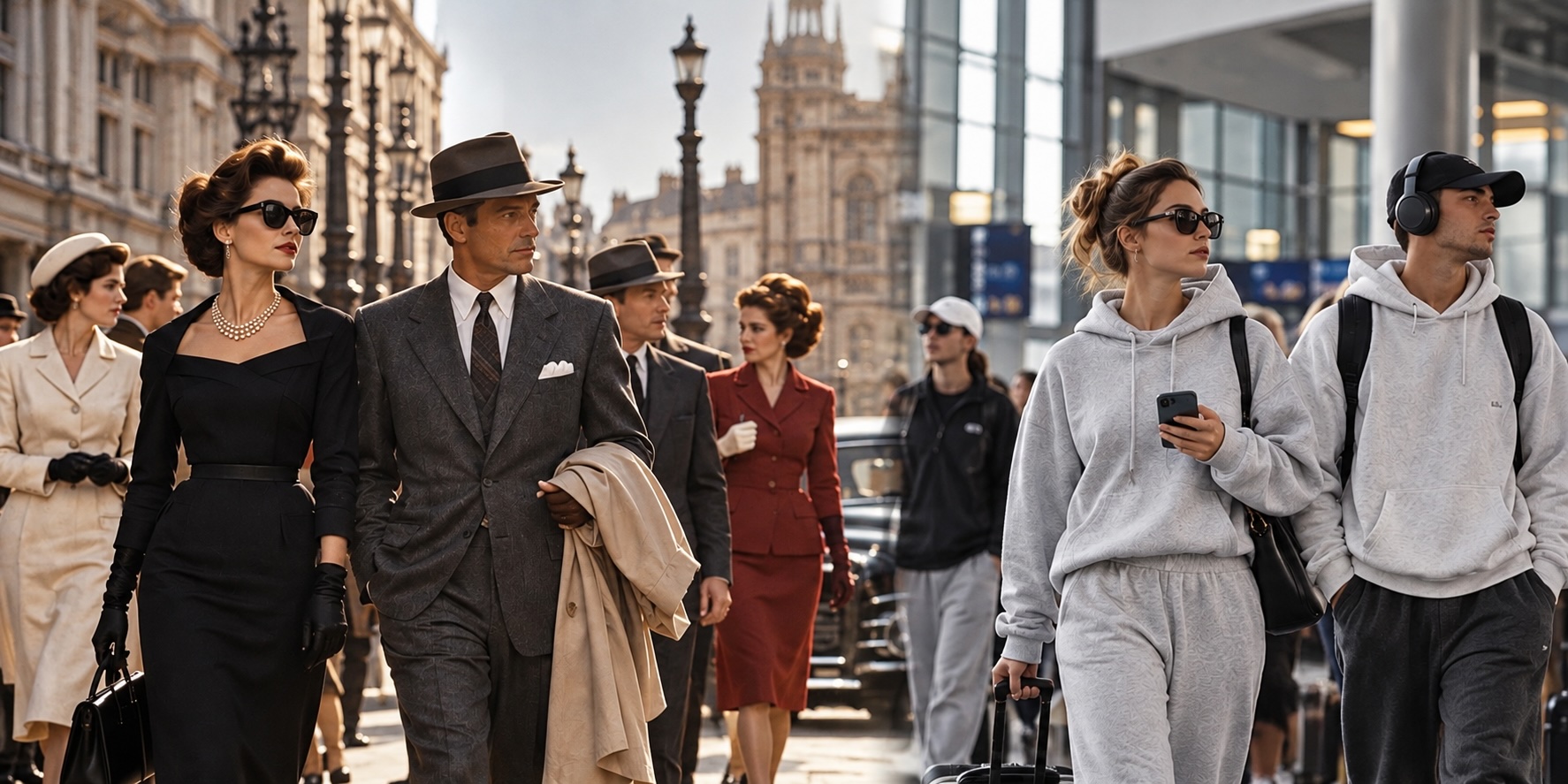
We inhabit an age in which trainers have replaced polished shoes, tracksuits have escaped the gymnasium to conquer restaurants and airports, and the distinction between dressing for a formal occasion and lounging on one’s sofa has become increasingly blurred. What was once considered inappropriate attire for a public occasion is now defended as an expression of individuality, authenticity and freedom.
Yet one cannot help wondering whether, in liberating ourselves from the supposed tyranny of dressing properly, we have surrendered something considerably more valuable than a well-cut suit or a beautifully tailored dress.
We may have lost an entire culture of elegance.
When Elegance Was Part of Everyday Life
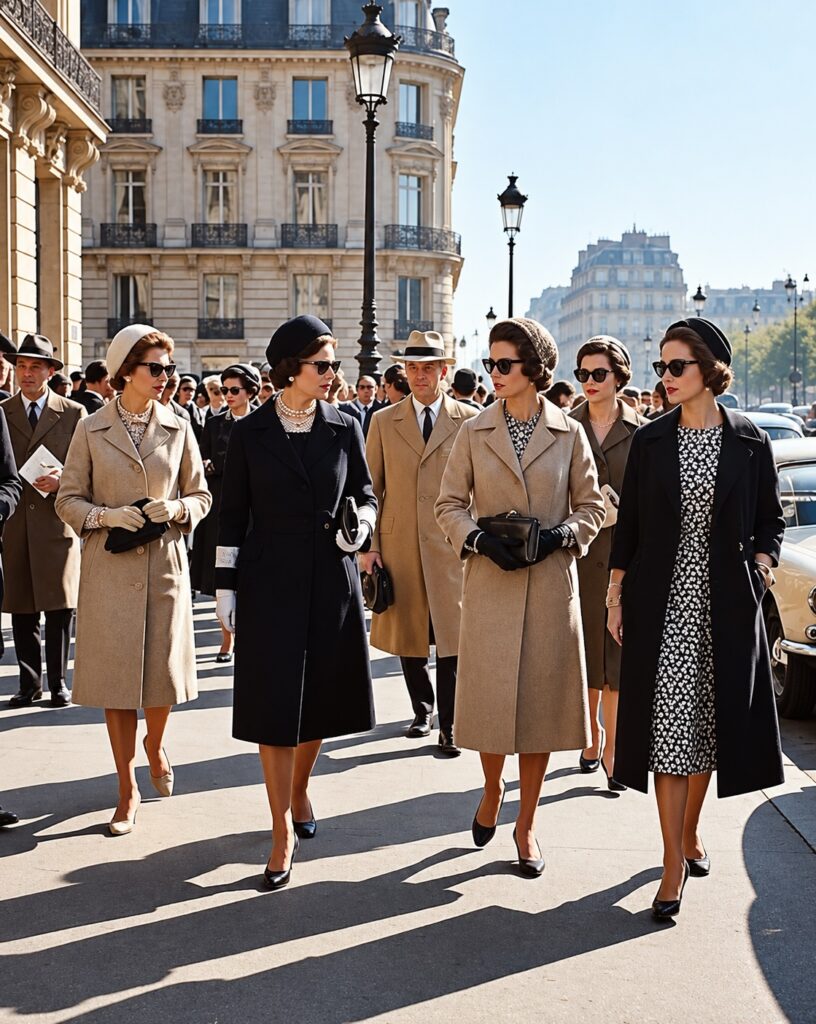
To understand the extent of this transformation, one need only look at photographs of ordinary European and American streets from the 1940s, 1950s and early 1960s. Men in hats and tailored coats, women in carefully chosen dresses, polished shoes, gloves and handbags: these were not necessarily wealthy individuals attending grand occasions. They were ordinary citizens going about their daily business.
London, Paris, Rome and New York possessed a visual dignity that was reflected not only in their architecture but also in the people who inhabited their streets.
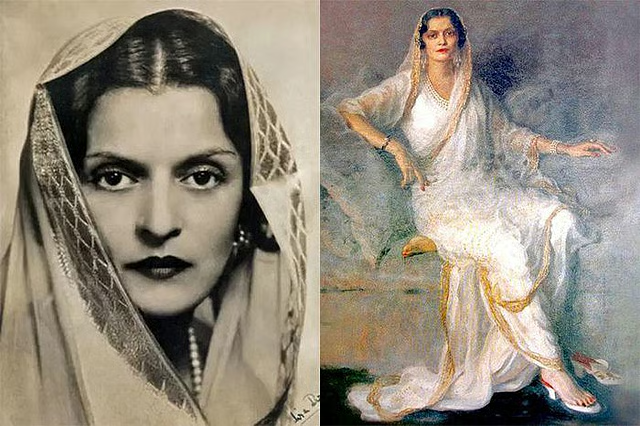
One dressed for a journey by train, for a visit to the theatre, for Sunday luncheon or even for an afternoon’s shopping. Air travel, in particular, was once regarded as an occasion worthy of a certain ceremony. Passengers boarded aircraft dressed as though embarking upon an adventure, rather than preparing for an afternoon in front of the television.
The great ocean liners, luxury hotels and celebrated restaurants maintained standards of dress that reinforced the sense that certain experiences deserved special consideration.
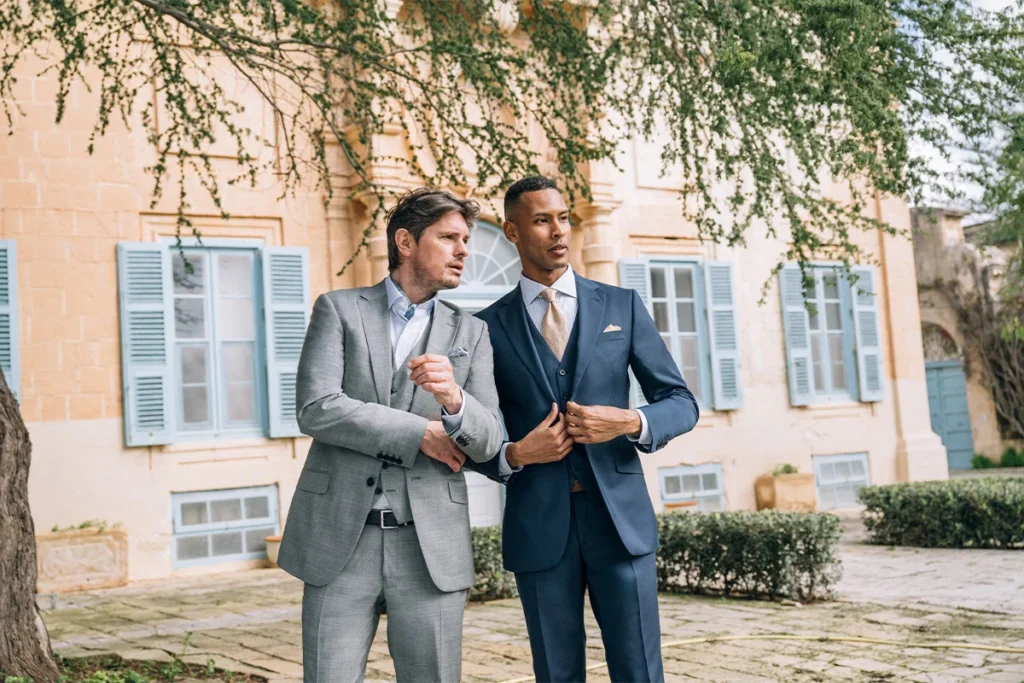
Of course, the past was not uniformly elegant. Poverty, demanding working conditions and social inequality meant that many people had neither the means nor the leisure to dress fashionably. Nevertheless, there existed a broadly understood aspiration towards neatness, presentation and appropriate attire.
The remarkable thing was that elegance could be achieved with very little money. A clean shirt, a properly pressed pair of trousers, a carefully maintained jacket or a simple dress could convey considerably more refinement than the most expensive designer clothing.
Style was something one cultivated, rather than something one purchased.
The Revolution That Became a Surrender
The cultural revolutions of the 1960s and 1970s profoundly altered attitudes towards clothing. The rejection of rigid social conventions, the emergence of youth culture and the increasing popularity of denim and informal fashion challenged traditional distinctions between generations and social classes.
Much of this change was undoubtedly positive. Women gained greater freedom in how they dressed, younger generations challenged unnecessarily restrictive conventions, and fashion became a more democratic form of self-expression.
But somewhere along the way, freedom from excessive formality evolved into an almost complete rejection of formality itself.
Casual clothing, once associated with leisure, became acceptable in virtually every environment. The business suit began to retreat from offices, ties became increasingly rare, and the traditional dress codes of restaurants, clubs and hotels were progressively relaxed.
Silicon Valley helped accelerate this transformation. The image of the billionaire entrepreneur in a T-shirt, jeans and trainers became an emblem of modern success. The suggestion was that intelligent, powerful and wealthy individuals had more important things to concern themselves with than their appearance.
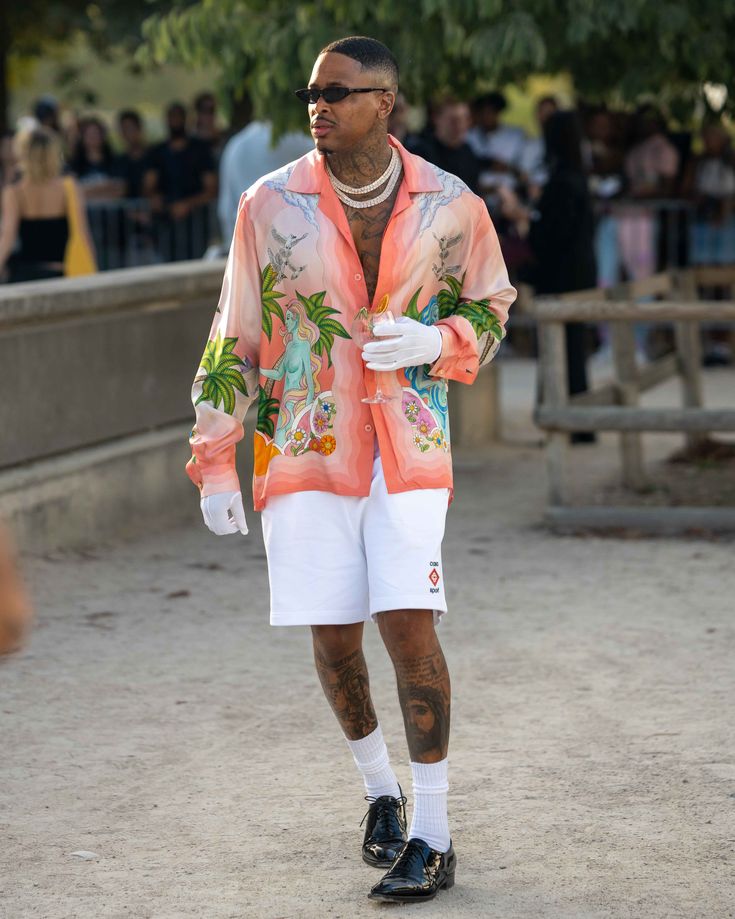
It was an attractive proposition, but it also encouraged a rather peculiar cultural assumption: that making an effort to dress well was somehow superficial, pretentious or outdated.
The extraordinary irony is that the rejection of traditional elegance did not eliminate fashion conformity. It simply replaced one set of conventions with another.
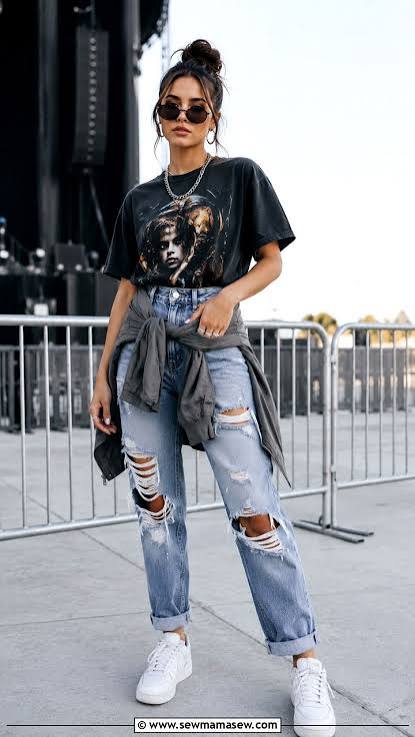
Millions of people now wear remarkably similar combinations of trainers, jeans, hooded sweatshirts and sportswear, often paying astonishing sums for the privilege of looking deliberately unremarkable.
The Triumph of Comfort Over Beauty
Comfort has become one of the defining values of contemporary society. We demand convenience from technology, instant gratification from entertainment and minimal effort from almost every aspect of daily life.
Our clothing has followed the same trajectory.
There is nothing inherently objectionable about comfortable clothes. Indeed, the finest tailoring has always sought to combine elegance with ease of movement. The problem arises when comfort becomes the only consideration, and the idea of dressing appropriately for a particular setting is dismissed altogether.
Consider the contemporary airport, where passengers dressed in pyjamas, tracksuits, oversized sweatshirts and slippers are no longer particularly unusual. Or the expensive restaurant where a beautifully dressed couple may find themselves seated beside diners wearing baseball caps and gym clothes.
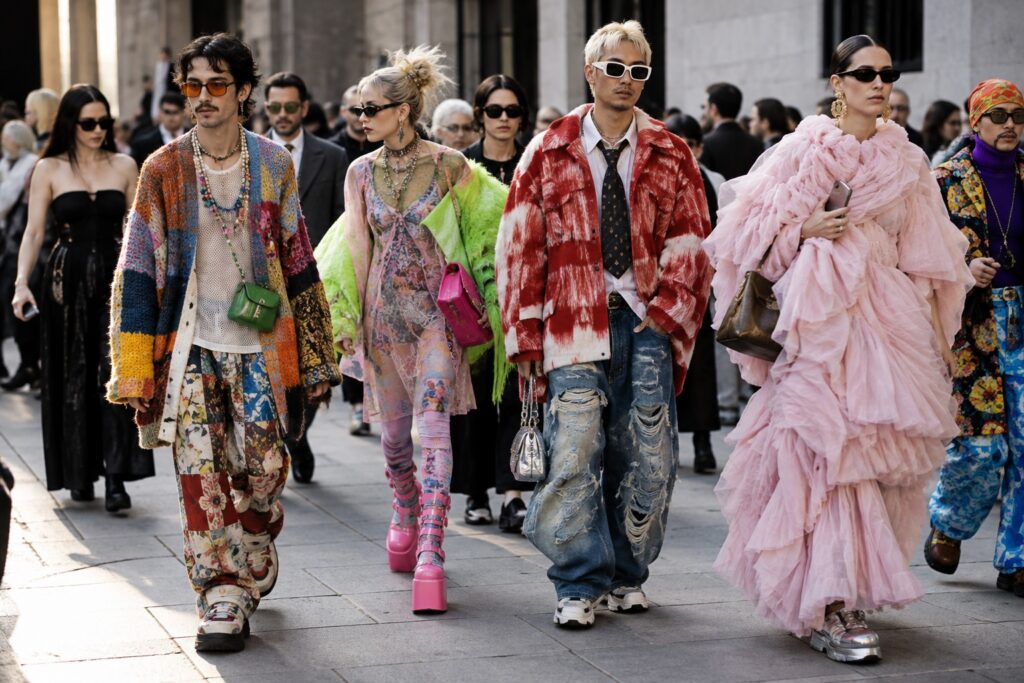
The issue is not that everyone must dress alike, nor that elegance requires a return to the restrictive conventions of another century. It is that certain occasions lose something of their atmosphere when nobody considers them worthy of an effort.
A magnificent dining room, a beautifully laid table and impeccable service create an experience. The people occupying that space contribute to its character.
Clothing, like architecture, music and manners, forms part of the aesthetic environment in which we live.
When we abandon every distinction between the ordinary and the exceptional, the exceptional gradually ceases to feel exceptional.
The Disappearance of the Gentleman and the Lady
Perhaps the most regrettable aspect of this transformation is the disappearance of the social ideals once associated with being a gentleman or a lady.
These expressions have understandably acquired complicated associations with class, privilege and outdated expectations. Yet at their best, they described qualities that transcended wealth and social position: courtesy, discretion, consideration, dignity and an ability to conduct oneself appropriately in different circumstances.
A gentleman was not simply a man wearing an expensive suit, any more than a lady was merely a woman in a beautiful dress.
Elegance was understood as an outward expression of an inward disposition.
The way one dressed was part of a broader code of behaviour that included punctuality, politeness, good conversation, respect for others and an appreciation of beauty.
Today, we frequently confuse informality with sincerity and refinement with affectation.
But there is nothing inherently artificial about making an effort for other people. Dressing appropriately for a wedding, a dinner invitation or an important meeting can be an expression of respect towards one’s hosts and fellow guests.
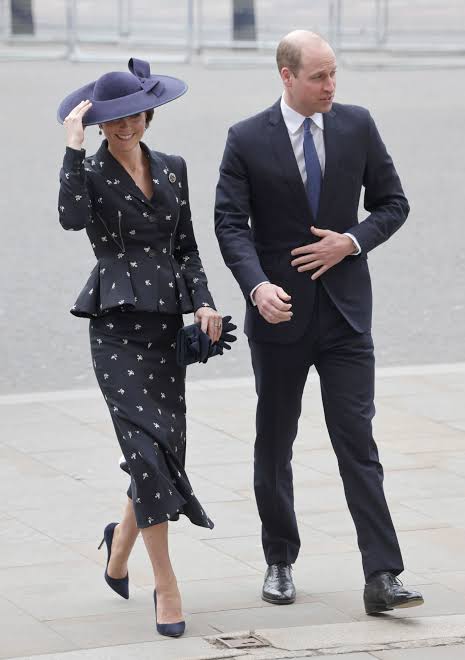
The person who takes the trouble to dress well is not necessarily attempting to impress others. Sometimes, they are simply acknowledging that the occasion matters.
When Luxury Became Expensive Casualness
One of the more fascinating contradictions of contemporary fashion is that luxury brands have enthusiastically embraced the very informality that has undermined traditional elegance.
Fashion houses once celebrated for exquisite tailoring, beautiful fabrics and meticulous craftsmanship now derive considerable attention and revenue from trainers, hoodies, oversized garments and conspicuously branded casualwear.
The price of an article of clothing has become increasingly detached from its elegance.
A sweatshirt bearing a fashionable logo may cost more than a beautifully tailored jacket. A pair of deliberately distressed trainers may command a price that would once have purchased several pairs of fine leather shoes.
Luxury, in certain corners of the market, has become less about beauty and craftsmanship than about the conspicuous display of purchasing power.
This is not to suggest that contemporary designers lack imagination or that modern fashion has produced nothing of aesthetic merit. On the contrary, some of the most talented designers working today continue to demonstrate extraordinary creativity.
But the broader commercial direction of fashion has encouraged the notion that elegance is optional, while branding is indispensable.
The result is a peculiar world in which one can spend a small fortune to appear as though one has made absolutely no effort.
The Lost Art of Dressing for Dinner
Few traditions illustrate the decline of elegance more clearly than the disappearance of dressing for dinner.
In earlier generations, dinner was frequently regarded as a social occasion, even within the home. Changing clothes before the evening meal marked the transition from the activities of the day to a more civilised and convivial part of life.
The ritual was not exclusively aristocratic. In countless middle-class households, a degree of care in one’s appearance was simply considered good manners.
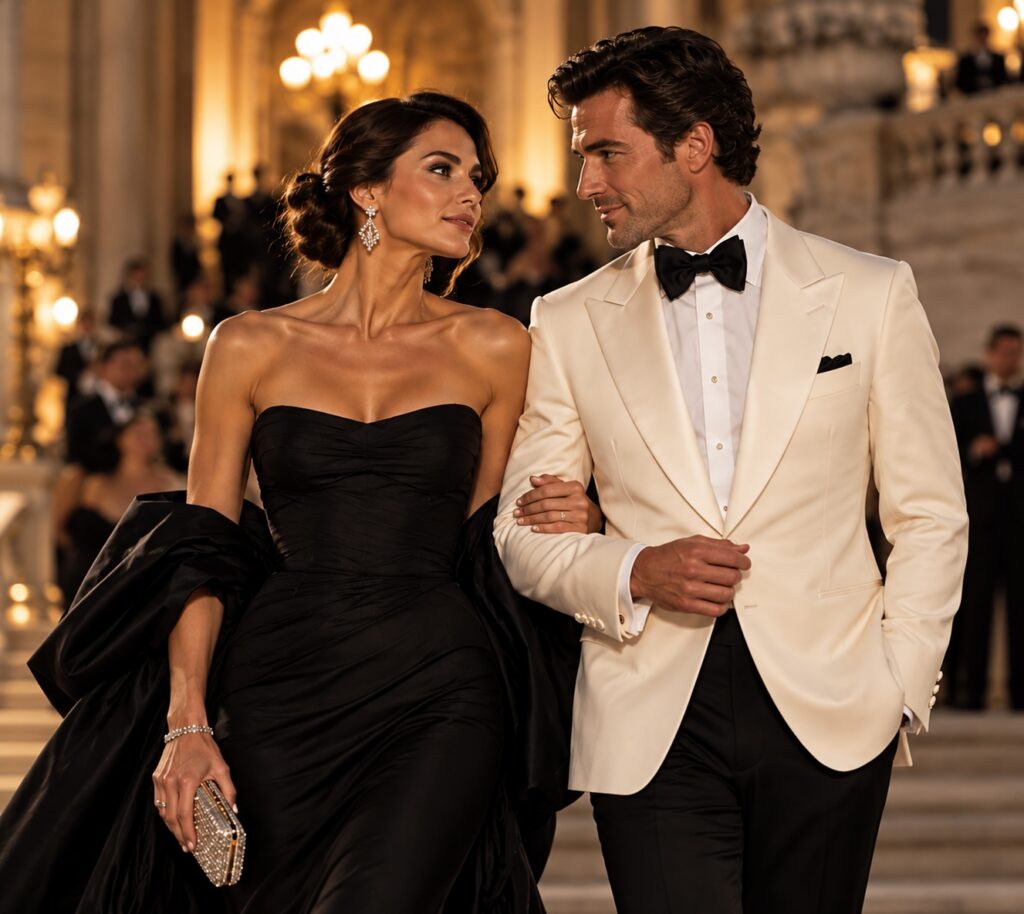
Today, the idea of changing for dinner may strike many as absurdly old-fashioned.
Yet rituals have a purpose. They distinguish moments, establish expectations and encourage us to pay attention to experiences that might otherwise become routine.
A beautifully prepared meal deserves to be enjoyed rather than consumed absent-mindedly. A dinner invitation deserves consideration. A special evening deserves to feel special.
There is something rather sad about a society that invests enormous sums in spectacular restaurants, elaborate interiors and celebrated chefs, only to regard the act of dressing appropriately as an intolerable inconvenience.
Has Social Media Made Matters Worse?
Social media has introduced another paradox.
Never before have so many people devoted so much attention to their appearance, yet this obsession has not necessarily translated into greater elegance.
Fashion has become increasingly dominated by fleeting trends, online approval and the relentless production of images. The objective is frequently not to develop a personal style that endures, but to participate in whatever aesthetic happens to be fashionable that week.
The result is a culture of imitation masquerading as individuality.
A genuinely elegant person does not need to follow every trend. Indeed, some of the most stylish individuals are those whose wardrobes change remarkably little over the years.
A beautifully cut navy blazer, a fine white shirt, well-made shoes, a simple black dress or a carefully chosen piece of jewellery can remain elegant for decades.
Fashion changes. Style endures.
The distinction, once widely understood, appears increasingly forgotten.
Elegance Is Not the Privilege of the Wealthy
It is important to emphasise that the defence of elegance should never become a defence of snobbery.
Some of the most elegantly dressed people in history possessed modest means, while some of the wealthiest individuals have displayed remarkably little taste.
True elegance depends upon proportion, cleanliness, restraint, confidence and an understanding of what suits the individual.
It does not require a wardrobe filled with expensive labels.
Indeed, there is a strong argument that an appreciation of traditional elegance offers a more sustainable alternative to the relentless consumption encouraged by fast fashion.
Purchasing fewer garments of better quality, caring for them properly, repairing them when necessary and wearing them for years is both economically sensible and environmentally responsible.
The well-maintained coat that lasts twenty years is surely a more admirable possession than a cupboard overflowing with disposable garments purchased to satisfy passing trends.
In this respect, a revival of elegance might also represent a revival of common sense.
Can We Rediscover the Pleasure of Dressing Well?
There are encouraging signs that the appeal of classic tailoring and more considered dressing has not disappeared entirely.
Interest in vintage clothing, traditional craftsmanship, bespoke tailoring and enduring wardrobe staples suggests that many people are beginning to question the culture of disposable fashion and permanent informality.
The fascination with so-called old money style, although often reduced to another social-media trend, reveals a continuing admiration for understated elegance.
There remains something immensely attractive about a beautifully tailored suit, an impeccably dressed woman, a fine pair of shoes or a person whose appearance conveys confidence without ostentation.
Perhaps the future lies not in returning rigidly to the dress codes of the past, but in recovering the understanding that clothing can enrich our lives.
There is no reason why modern society cannot embrace freedom, comfort and individuality while retaining an appreciation of beauty, occasion and good taste.
We need not dress formally every day. But surely we should preserve the pleasure of doing so when circumstances deserve it.
The Civilisation of Small Things
The decline of elegant dressing may appear insignificant when compared with the great political, economic and social challenges confronting the modern world.
Yet civilisation is not sustained solely by grand institutions, technological achievements or economic prosperity.
It also exists in the small details of everyday life: the way we speak to strangers, the care we take in receiving guests, the beauty of our surroundings, the manners we teach our children and the respect we show for occasions that bring people together.
Clothing is one of those details.
A society that ceases to value elegance does not necessarily become more democratic, more authentic or more humane. It may simply become less beautiful.
And beauty, despite the increasingly utilitarian character of modern life, is not an extravagance. It is one of the things that makes existence worth celebrating.
Perhaps it is time to rediscover the pleasure of polishing one’s shoes, putting on a beautifully tailored jacket, choosing a lovely dress or simply making an effort before stepping out into the world.
Not because society demands it, nor because we wish to advertise our social standing, but because elegance can be a form of generosity — towards ourselves, towards others and towards the world we share.
We have spent half a century persuading ourselves that dressing well is unnecessary. Perhaps the real tragedy is that we have forgotten how wonderful it once felt.


 Metaphore Magazine


 Gaspard de Montfort

 Milton Cooper
 Lavinia Ellington-Wentworth
 Avner Kessel
 Carlos Mundy