
 Carlos Mundy
From Marisa Berenson and the extraordinary legacy of Elsa Schiaparelli to the arrival of John Galliano, Marta Ortega and her husband, Carlos Torretta, are helping to transform Zara from a global high-street phenomenon into a fashion house of remarkable cultural ambition. At the heart of this evolution lies a compelling proposition: that exceptional design, artistic sophistication and the glamour traditionally associated with the great couture houses need no longer remain the exclusive privilege of the wealthy.

A New Chapter in the History of Zara
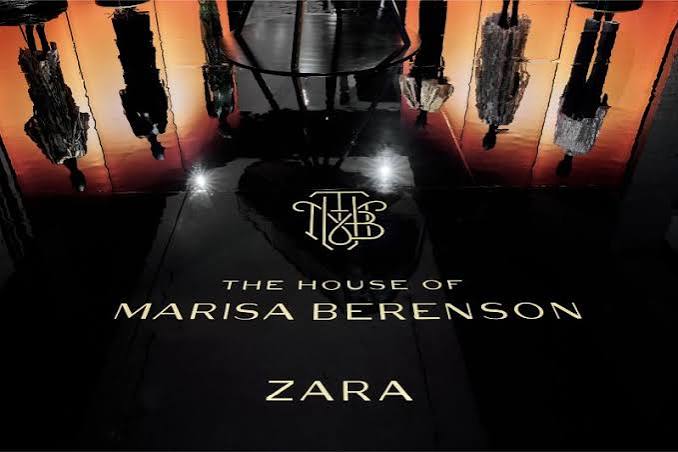
There are moments in the history of fashion when a seemingly simple collaboration reveals something far more significant than the collection itself. The arrival of The House of Marisa, the remarkable creative partnership between Zara and the legendary Marisa Berenson, is one such moment.
Launched in June 2026, the collection brings together the elegance of a woman who has inhabited the highest circles of international fashion, cinema and society for more than half a century with the extraordinary commercial and creative machinery of one of the world’s most successful fashion retailers.
Yet to regard The House of Marisa merely as another celebrity collaboration would be to misunderstand its importance. It represents a particularly revealing expression of the transformation taking place at Zara under the chairmanship of Marta Ortega Pérez, daughter of the company’s founder, Amancio Ortega, and with the involvement of her husband, Carlos Torretta Echevarría, whose role in the company’s communications and cultural positioning has become increasingly significant.
What is emerging is not simply a more expensive version of Zara, nor an attempt to imitate the traditional luxury conglomerates of Paris and Milan. It is something rather more interesting: an effort to bring the visual language, creative authority and cultural prestige of luxury fashion to an audience vastly larger than the clientele of the established couture houses.
The ambition is not to make Zara inaccessible. Quite the contrary. It is to make sophistication accessible.
And in an industry where prestige has so often depended upon exclusivity, that is a fascinating proposition.
The House of Marisa: When Friendship Becomes a Creative Vision
The origins of The House of Marisa are as personal as they are fashionable.
The collaboration grew out of the friendship between Marisa Berenson and Marta Ortega, two women belonging to different generations but united by an appreciation of beauty, craftsmanship, art and the history of fashion.
According to Berenson’s own account, the project emerged from that relationship and developed over approximately nine months, drawing upon her memories, her extraordinary life and the interiors of the homes she has inhabited.
Berenson was an inspired choice.
The granddaughter of the celebrated Italian-born couturière Elsa Schiaparelli, whose surrealist creations transformed the very meaning of fashion in the twentieth century, Marisa grew up in an environment in which artistic imagination, international society and aesthetic refinement were part of everyday life.
Her grandmother’s friendships and collaborations with Salvador Dalí, Jean Cocteau and other great artistic figures established a world in which fashion was never merely a question of clothing. It was theatre, imagination, wit and sometimes deliberate provocation.
Marisa inherited much of that spirit.
Discovered as a model in the 1960s, she became one of the defining faces of her generation, photographed by some of the greatest names in fashion photography and appearing in the pages of Vogue and other leading publications.
Her transition to cinema was equally remarkable. Her performances in Luchino Visconti’s Death in Venice, Bob Fosse’s Cabaret and Stanley Kubrick’s Barry Lyndon secured her a place in film history.
But beyond her professional achievements, Berenson became the embodiment of a particular kind of international elegance: cosmopolitan, cultivated, adventurous and entirely individual.
For Marta Ortega, whose growing influence at Zara has been accompanied by a pronounced interest in fashion photography and the cultural history of style, Berenson offered something no conventional advertising campaign could manufacture: authenticity.
The House of Marisa therefore celebrates not merely a personality but an entire aesthetic universe.
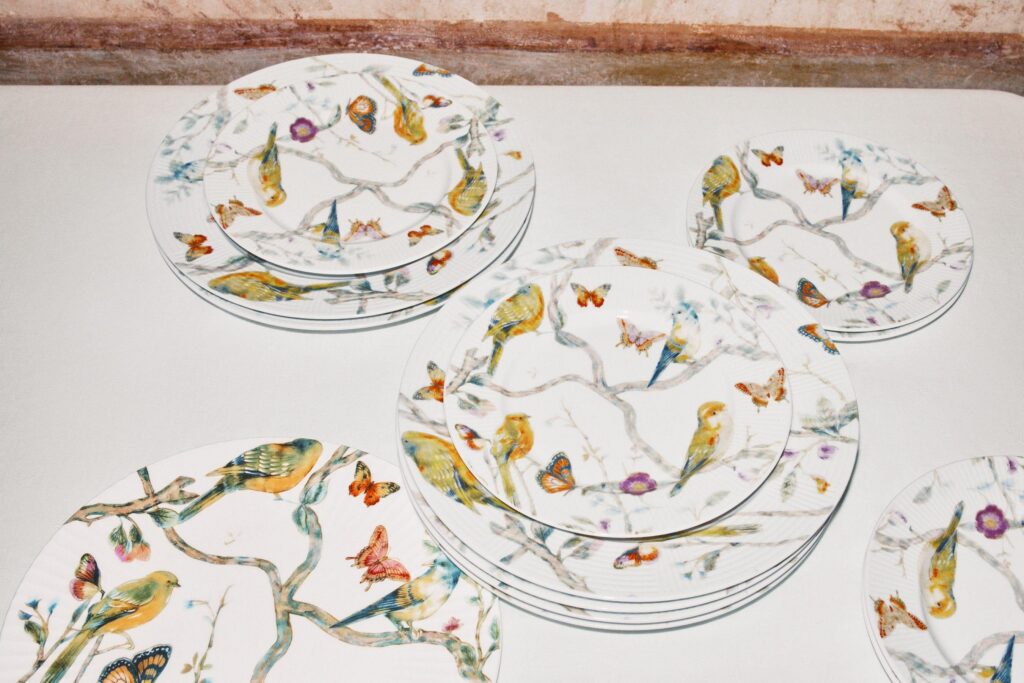
The collection encompasses women’s fashion and decorative objects for the home, drawing upon Berenson’s travels, personal archives and her residence in Marrakech. Its motifs include butterflies, serpents, insects, celestial symbols and the wonderfully eccentric visual references associated with her grandmother’s legacy.
There is an unmistakable atmosphere of seventies glamour, tempered by the warmth and richness of Mediterranean and Moroccan interiors.
Decorative tableware, embroidered linens, distinctive accessories and expressive clothing are brought together in a collection that feels less like a conventional retail offering than an invitation into Berenson’s private world.
For the first time, customers can acquire a small part of that world through Zara.
The initiative is particularly noteworthy because Berenson, at the age of 79, was undertaking her first major fashion and homeware design collaboration of this nature. It also built upon her previous appearances in Zara campaigns, including those associated with the company’s fiftieth anniversary.
Marta Ortega: The Woman Redefining the Family Empire
When Marta Ortega assumed the chairmanship of Inditex in April 2022, she inherited a business whose scale and operational achievements were already extraordinary.
Her father, Amancio Ortega, had built Zara from a single store opened in A Coruña in 1975 into the flagship of a global retail empire.
The company’s success rested upon a revolutionary understanding of the fashion business: that consumers wanted contemporary design, that trends could be identified and interpreted rapidly, and that an exceptionally efficient production and distribution network could deliver new merchandise to stores with a speed its competitors struggled to match.
Zara had democratised fashion by making desirable clothing available to millions.
Yet the landscape inherited by Marta Ortega was very different from the one in which her father had established the company.
The rise of ultra-fast-fashion competitors, the increasing importance of digital retailing, changing consumer expectations and the growing scrutiny of fashion’s environmental impact meant that speed and affordability alone could no longer guarantee distinction.
There was also an opportunity.
Zara had acquired something that many luxury brands spend decades attempting to build: global recognition, an enormous international customer base and the ability to communicate with consumers across continents almost instantaneously.
What it needed was a stronger cultural identity.
Under Marta Ortega’s chairmanship, the company has increasingly invested in collaborations with distinguished designers, photographers, artists and personalities whose reputations extend well beyond conventional high-street fashion.
The intention is not to abandon Zara’s broad customer base but to enrich its relationship with that audience.
A Zara garment can now be associated not only with contemporary trends but also with the creative authority of some of the most celebrated figures in fashion.
It is an evolution from selling fashionable products to cultivating a recognisable aesthetic and cultural universe.
Marta herself has resisted defining Zara simply as a luxury brand. In her September 2026 interview with Vogue, she emphasised the company’s commitment to making design available to a broad public. That distinction is fundamental to understanding her strategy.
Carlos Torretta: The Influence Behind the Image
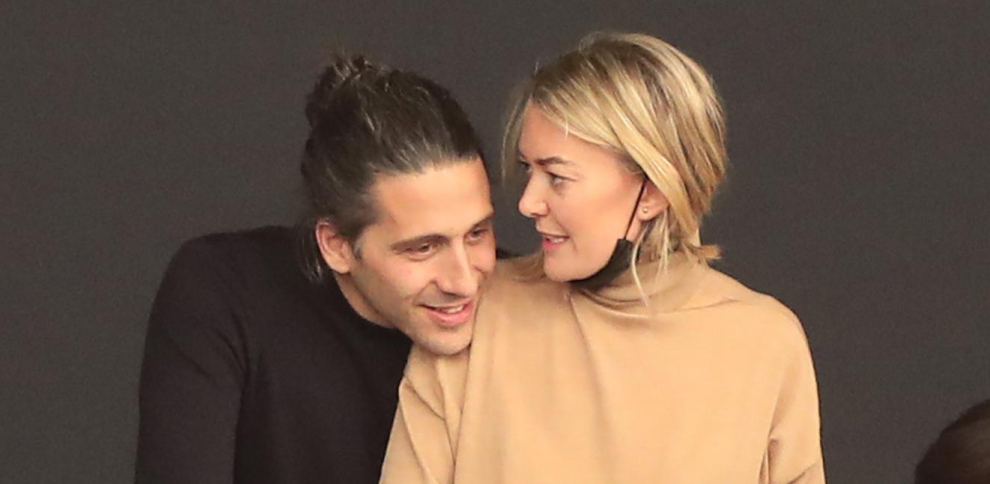
If Marta Ortega provides the strategic leadership and cultural vision, Carlos Torretta brings a complementary understanding of fashion, image and international communications.
The son of the Argentine-born Spanish fashion designer Roberto Torretta and his Spanish wife Carmen Echevarria, Carlos grew up with an intimate familiarity with the creative world.
Before returning to Spain, he spent almost a decade in New York, working in the modelling industry, including with Elite Model Management.
It was an environment that offered valuable experience of the relationships between designers, photographers, models, celebrities, fashion editors and the international media.
He met Marta Ortega in New York in 2016. They married in A Coruña in 2018, in celebrations that attracted considerable attention from the international fashion press.
Torretta subsequently joined the family business and now holds a senior communications role at Zara.
His professional background is particularly relevant to the company’s evolving identity.
Fashion is not defined exclusively by the clothes that appear on the rails. Its prestige is shaped by photography, casting, styling, presentation, editorial relationships and, above all, the ability to communicate a coherent vision.
The involvement of distinguished creative personalities has become an increasingly important part of Zara’s public image.
Torretta’s participation in discussions surrounding the company’s collaboration with Bad Bunny, for example, was described in Vogue’s recent profile of Marta Ortega. The project demonstrated how Zara’s industrial capabilities could be brought into direct conversation with contemporary entertainment and popular culture.
It would be an exaggeration to attribute every individual creative appointment or collaboration to Torretta personally. The company operates through extensive teams, and Marta Ortega remains the central figure in its cultural direction.
Nevertheless, the couple’s complementary backgrounds offer a persuasive explanation for the coherence of Zara’s emerging identity.
Marta brings an exceptional understanding of the company, its heritage and its possibilities. Carlos brings experience of the international fashion ecosystem and the power of image.
Together, they occupy an unusual position at the intersection of industrial scale, fashion creativity and contemporary culture.
John Galliano: The Appointment That Changed the Conversation


If The House of Marisa reveals the aesthetic sophistication of Zara’s new direction, the appointment of John Galliano demonstrates the seriousness of its ambitions.
Few designers of the past forty years have exercised an influence comparable to Galliano’s.
Born in Gibraltar and educated at Central Saint Martins in London, he emerged during the 1980s as one of the most imaginative talents of his generation.
His subsequent work at Givenchy, Christian Dior and Maison Margiela helped redefine fashion as a form of theatrical expression, combining historical references, technical virtuosity and extraordinary visual storytelling.
His career has also been marked by serious controversy, notably his dismissal from Dior in 2011 following antisemitic remarks. His eventual return to prominence, culminating in the widely admired 2024 Maison Margiela Artisanal presentation, became one of the industry’s most discussed stories.
When Zara announced in March 2026 that Galliano would enter into a two-year creative partnership with the company, the significance was immediately apparent.
This was not simply a distinguished designer lending his name to a limited collection.
Galliano would reinterpret existing Zara designs, deconstructing and reconstructing garments through a process described as re-authoring.
The project, known as Re Zara Authored by the Couturier John Galliano, represents an encounter between the methods of couture and the industrial capabilities of mass-market fashion.
The relationship began in 2022, when Galliano met Marta Ortega through the activities of her MOP Foundation, particularly its exhibition devoted to photographer Steven Meisel.
The two developed a friendship, and Ortega subsequently raised the possibility of collaboration. Galliano initially declined while occupied with Maison Margiela, but the conversations continued. After leaving the house in 2024, he developed the idea that would eventually become Re.
By early October 2026, the first collection had reached Zara’s customers, bringing Galliano’s unmistakable creative language to a commercial platform of unprecedented reac
The significance lies not only in the clothes themselves but in the reversal of traditional fashion hierarchies.
For generations, the great couture houses established trends that eventually filtered down to the high street. Zara is now inviting one of couture’s most celebrated practitioners to work directly within its own universe.
Galliano’s collaboration does not make Zara a couture house. Nor does it eliminate the fundamental differences between luxury craftsmanship and industrial production.
But it does demonstrate that the boundaries between those worlds are becoming increasingly fluid.
And perhaps most importantly, it gives customers who could never contemplate the price of a Galliano couture creation the opportunity to experience something of his design philosophy.
From Steven Meisel to Stefano Pilati: Building a Cultural Institution
Marta Ortega’s strategy extends well beyond individual fashion collections.
Through the Marta Ortega Pérez Foundation, known as MOP, she has helped establish A Coruña as an increasingly significant destination for exhibitions devoted to photography, fashion and visual culture.
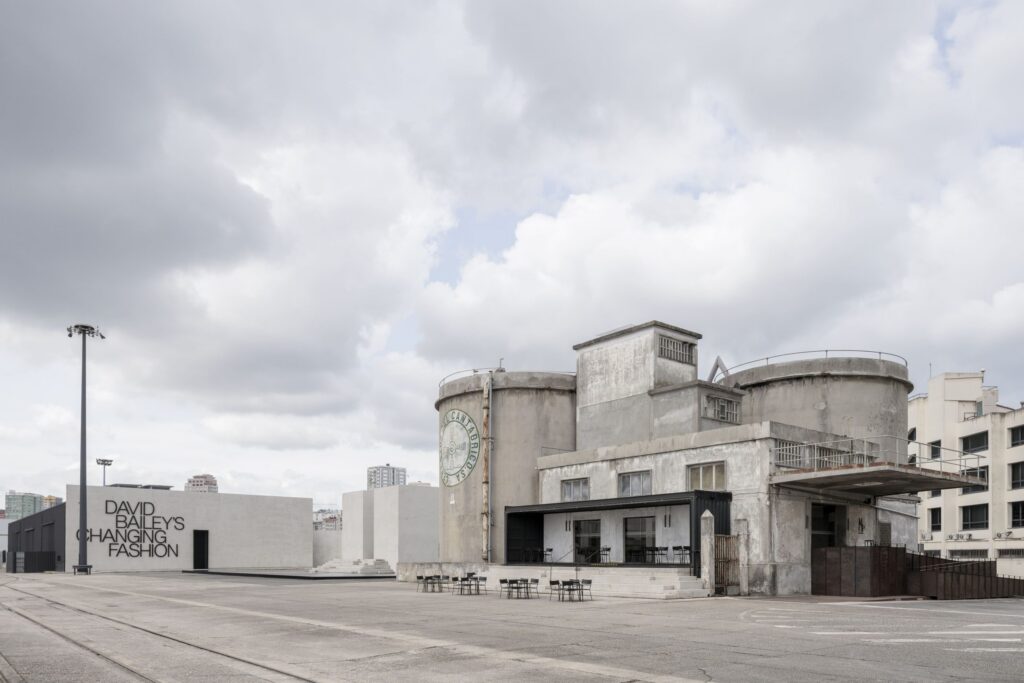
The foundation’s presentation of Steven Meisel’s work in 2022 was especially important, not least because it provided the setting in which Ortega’s relationship with Galliano began.
Subsequent exhibitions devoted to leading figures in photography have reinforced the impression that Marta’s interests are not confined to the commercial business of selling clothes.
They reflect a genuine engagement with the cultural history of fashion.
At Zara itself, collaborations with designers such as Narciso Rodriguez and Stefano Pilati have brought new dimensions to the company’s collections, while projects involving contemporary cultural figures have extended its reach into music and entertainment.
These initiatives should not be regarded as unrelated exercises in publicity.
Taken together, they suggest a deliberate repositioning of Zara within the international fashion landscape.
The brand is becoming a platform upon which established creative figures can reach audiences far beyond their customary clientele.
For the designers, the attraction is scale and visibility. For Zara, it is creative credibility and distinction.
The result is a mutually beneficial relationship that traditional luxury houses, with their emphasis on scarcity and controlled distribution, cannot necessarily reproduce.
Accessible Luxury: A Different Definition of Prestige
The expression accessible luxury has been used so frequently in recent years that it risks losing its meaning.
In Zara’s case, however, it describes an increasingly recognisable commercial and cultural direction.
Traditional luxury has generally depended upon a combination of craftsmanship, heritage, exclusivity, exceptional materials and high prices.
Zara cannot reproduce all these qualities at high-street prices, and it would be misleading to suggest otherwise.
What it can do is offer customers access to certain elements of the luxury experience: the imagination of important designers, sophisticated fashion photography, carefully conceived collections, artistic references and a more considered retail environment.
The distinction is essential.
A garment does not become haute couture simply because it has been designed by a couturier. Nor does a decorative object become a rare work of art because it draws upon the visual language of Schiaparelli.
Yet there is genuine value in allowing a much wider public to engage with those creative traditions.
In this respect, Zara’s evolution is consistent with the original philosophy of Amancio Ortega.
The founder democratised fashion through industrial innovation.
His daughter is extending that principle into the world of cultural prestige.
The first revolution was about access to fashion. The second is increasingly about access to fashion’s creative imagination.
There are, of course, challenges.
As Zara moves towards more elaborate collections, higher-profile collaborations and increasingly sophisticated presentation, it must preserve the affordability and accessibility that made the company successful.
It must also demonstrate that the elevation of its image is accompanied by meaningful progress in product quality, durability and responsible production.
An elegant campaign cannot, by itself, resolve the environmental and social questions confronting the global fashion industry.
Nevertheless, the opportunity is considerable.
Rather than attempting to compete with luxury houses solely on price or exclusivity, Zara can develop a distinctive position in which creative ambition and commercial accessibility coexist.
Why Marisa Berenson Matters So Much
In this wider context, the choice of Marisa Berenson becomes especially revealing.
At a time when much of the fashion industry is preoccupied with youth, fleeting celebrity and social-media visibility, Zara has chosen to celebrate a woman whose appeal derives from experience, individuality and an extraordinary cultural inheritance.
Berenson represents something that cannot be created through a marketing campaign.
She has lived the history that contemporary designers so frequently revisit for inspiration.
Her grandmother helped transform fashion into modern art. Her own career traversed the golden age of fashion photography, the great European and American cinema of the 1970s, and the changing world of international society.
Her homes, particularly her residence in Marrakech, express an aesthetic developed over decades rather than assembled to follow a passing trend.
By inviting her to create The House of Marisa, Zara has recognised the enduring value of a life shaped by beauty, travel and artistic curiosity.
The result is a collection with a personality.
And personality, perhaps more than any other quality, is what distinguishes memorable fashion from disposable merchandise.
It is also a particularly elegant example of intergenerational collaboration.
Marta Ortega, born into the family that transformed global fashion retailing, has invited a woman whose grandmother revolutionised twentieth-century couture to reinterpret her world for a new audience.
The symbolism is irresistible.
Two very different fashion legacies meet in a collection intended not for the privileged few, but for an international public.
The Future of Zara: A New Form of Fashion Leadership
There is something distinctly modern about what Marta Ortega is attempting to achieve.
For much of the twentieth century, the fashion world was organised around clearly defined hierarchies. Couture stood at the summit, followed by luxury ready-to-wear, designer fashion and, finally, the high street.
Those divisions have become progressively less rigid.
Consumers now move freely between luxury accessories, vintage discoveries, independent designers and affordable clothing.
They are increasingly interested in the personality behind a collection, the quality of its design and the cultural story it tells.
Zara’s new direction acknowledges this reality.
It is no longer sufficient to be everywhere. A successful global brand must also stand for something.
Through collaborations with personalities such as Marisa Berenson and John Galliano, and through Marta Ortega’s wider engagement with photography, art and fashion history, Zara is developing a more sophisticated identity without necessarily abandoning its original purpose.
Carlos Torretta’s understanding of fashion communications provides a valuable complement to that evolution, helping position the brand within an international cultural conversation.
The long-term test will be whether these exceptional collaborations become part of a lasting improvement in Zara’s everyday collections and customer experience.
A succession of celebrated names can generate attention. Building an enduring reputation requires consistency.
Yet the foundations are undeniably impressive: global distribution, remarkable logistical expertise, extensive design resources and a leadership increasingly willing to place creativity at the centre of the business.
A House Built Upon Two Generations of Vision
Perhaps the most interesting aspect of Zara’s transformation is that it does not represent a rejection of Amancio Ortega’s legacy.
It represents its evolution.
Amancio Ortega understood that fashion could be liberated from the rigid commercial structures that had previously governed its distribution.
Marta Ortega appears determined to demonstrate that the same principle can be applied to fashion’s artistic and cultural dimensions.
Her father’s great achievement was to make fashion available to millions.
Her ambition is to ensure that what those millions encounter is increasingly imaginative, sophisticated and culturally meaningful.
The House of Marisa captures that ambition with particular elegance.
In bringing Marisa Berenson’s remarkable personal universe to Zara, the company has done more than produce an attractive collection. It has created a bridge between the great traditions of European fashion and the possibilities of contemporary global retailing.
The arrival of John Galliano carries the same philosophy into another dimension, bringing the creative authority of one of the world’s great couturiers to an audience whose size would once have been unimaginable.
And behind these developments stands a new generation of leadership, represented by Marta Ortega and Carlos Torretta, whose appreciation of fashion as both an industry and a cultural force is helping to reshape the identity of the company.
Whether Zara ultimately comes to be regarded as an accessible luxury brand or as something entirely of its own making remains to be seen.
But one conclusion is already difficult to dispute: Zara is no longer content simply to follow fashion.
It wants to participate in defining its future.
And in doing so, it is proposing an attractive idea — that the pleasure of beautiful design, the excitement of creative imagination and the glamour of great fashion should belong not merely to those who can afford luxury, but to everyone who appreciates it.
Please visit The Marta Ortega Foundation website: https://themopfoundation.org/en/themopfoundation


 Carlos Mundy
 Metaphore Magazine
 Dixon Acosta

 Elga Wimmer


 Laura Mitchell
 Mayte Hidalgo
 Kamal Kumar