
 Kamal Kumar
For nearly two centuries, the Bahá’ís have preached peace, tolerance and the unity of mankind. In Iran, they have endured imprisonment, exclusion, confiscation and death. Now the wars with Israel have given Tehran a dangerous new weapon against them: the ability to portray a peaceful religious minority as an enemy within.
There is a bitter paradox at the heart of the persecution of the Bahá’ís. Few religions have placed greater emphasis upon peace, the unity of mankind, the equality of men and women, education and reconciliation between peoples. Yet few religious communities in the modern Middle East have endured persecution as persistent, systematic and calculated.
And today their position in Iran is becoming more precarious still.
The wars and confrontations between Iran and Israel have not created the persecution of the Bahá’ís. That persecution is much older. What the conflict has done, however, is provide the Iranian authorities with a particularly potent means of intensifying it.
An accusation that has haunted Iranian Bahá’ís for decades — that they are somehow agents of Israel — has acquired a far more menacing significance in wartime. Following the June 2025 Israel–Iran conflict, Amnesty International and Human Rights Watch documented a sweeping security crackdown in Iran in which Bahá’ís were among the religious and ethnic minorities specifically targeted. Human Rights Watch subsequently reported that the crackdown against the Bahá’ís included arbitrary arrests, interrogations, prison sentences and property confiscations. Between June and November 2025 alone, more than 750 acts of persecution against Bahá’ís were documented — approximately three times the number recorded during the corresponding period a year earlier. More than 200 homes and businesses were raided and at least 110 Bahá’ís were arrested or detained.
This is not merely another chapter in Iran’s long history of religious intolerance. War has transformed an already persecuted minority into an increasingly convenient internal enemy.
A Religion Founded Upon Unity
The Bahá’í Faith emerged in nineteenth-century Persia and was founded by Bahá’u’lláh, whose teachings proclaimed the essential unity of humanity and the common spiritual foundation of the world’s great religions.
Bahá’ís believe in the equality of men and women, universal education, the elimination of racial and religious prejudice, harmony between science and religion and the eventual establishment of institutions capable of securing lasting international peace.
These hardly sound like the doctrines of a revolutionary conspiracy.
Yet from its earliest years, the new faith encountered fierce opposition. Bahá’u’lláh was imprisoned and repeatedly exiled. Thousands of early followers of the Báb, whose movement preceded and prepared the way for the Bahá’í Faith, suffered violent persecution.
The faith nevertheless survived and spread far beyond Persia. Today Bahá’í communities exist throughout the world.
Iran, however, remains the country in which being a Bahá’í can determine whether one is permitted to study, work, own property in security, bury one’s dead with dignity — or remain free.
Persecution by the State
The establishment of the Islamic Republic in 1979 transformed discrimination into something approaching a system of state policy.
Unlike Christians, Jews and Zoroastrians, Bahá’ís are not recognised as a religious minority under the Iranian Constitution. The consequences extend far beyond theological disagreement.
Bahá’ís have been excluded from universities, dismissed from public employment, prevented from pursuing certain professions, subjected to arbitrary arrest and imprisonment and deprived of property. Businesses have been closed. Homes have been searched. Cemeteries have been desecrated or destroyed.
A 1991 Iranian government memorandum concerning what officials called the “Bahá’í question” laid out measures intended to restrict the advancement and development of the community. More than three decades later, many of those methods remain painfully recognisable.
The objective need not always be physical destruction. A community can also be weakened by depriving its young people of education, impoverishing its families, confiscating property, destroying economic security and making ordinary civic life progressively more difficult.
It is persecution by attrition.
Then Came the War
The confrontation between Iran and Israel has added an exceptionally dangerous dimension.
For decades, Iranian propaganda has attempted to associate the Bahá’í Faith with Zionism and espionage. The argument rests partly upon geography — and upon a profound distortion of history.
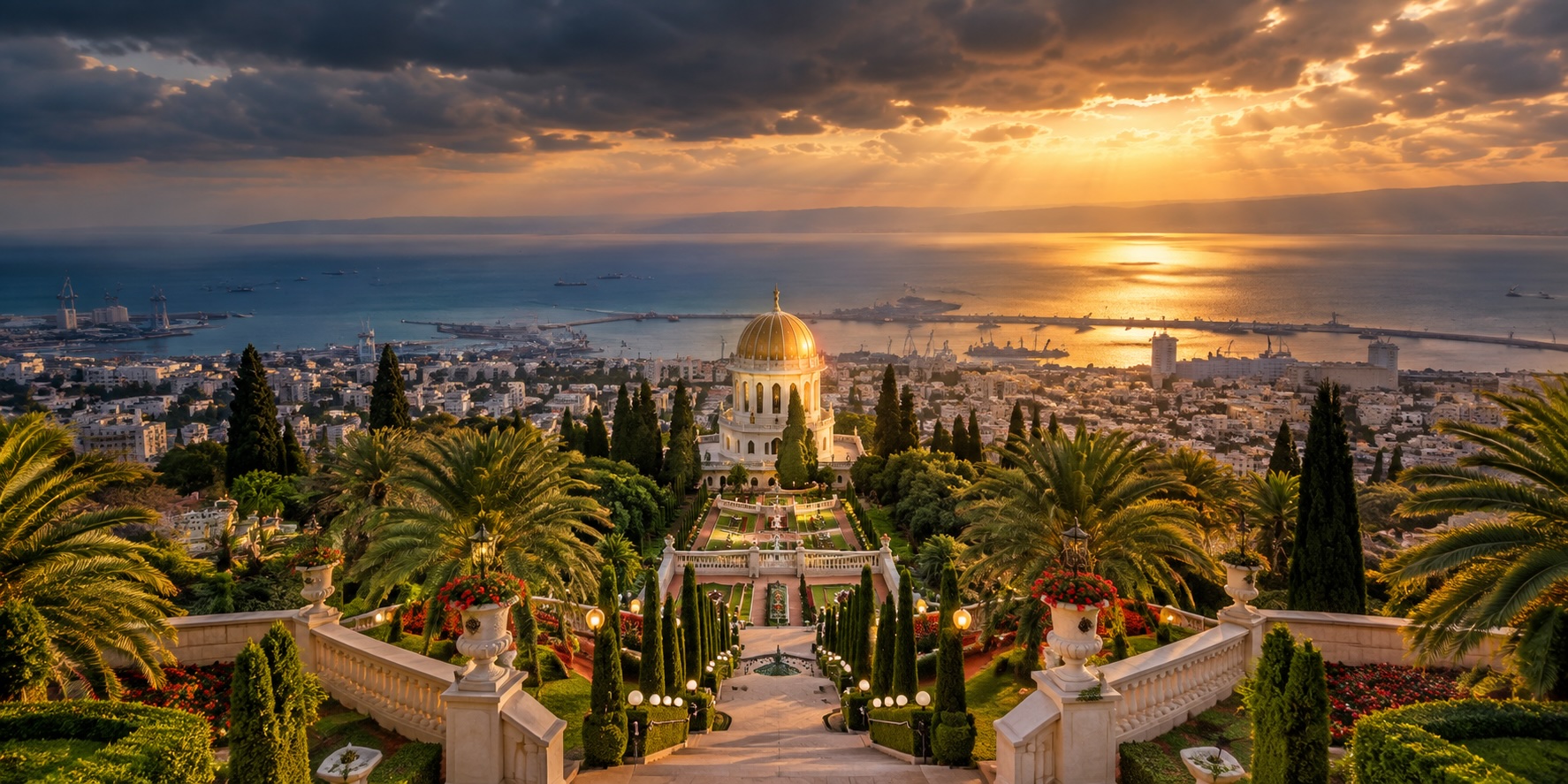
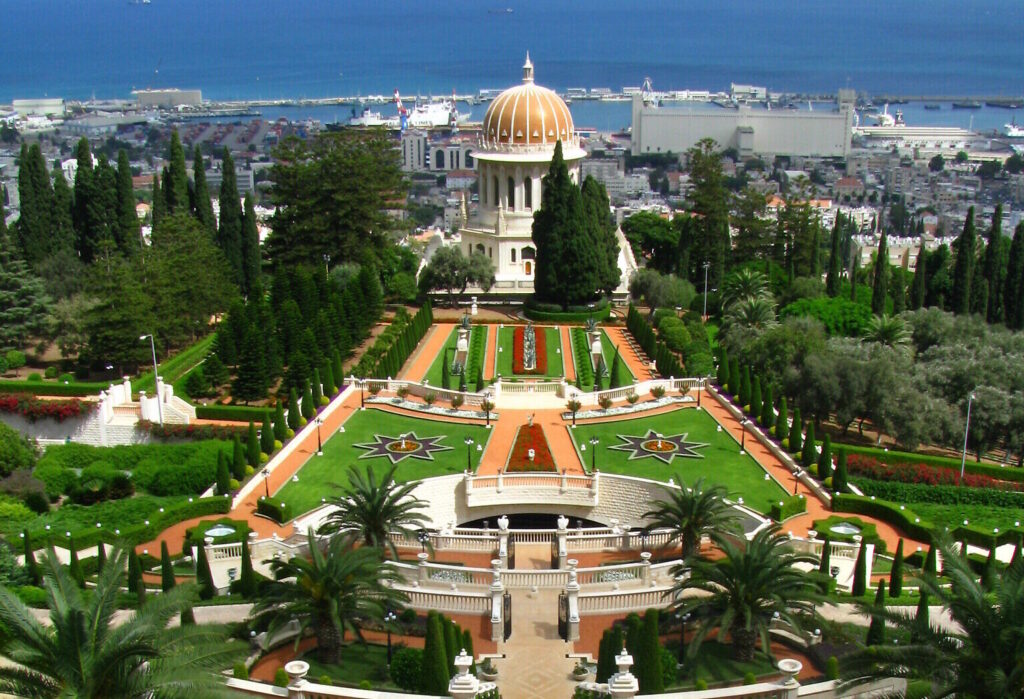
The Bahá’í World Centre is situated in Haifa and Acre, in present-day Israel. But Bahá’u’lláh did not choose Israel as the headquarters of his religion. He was banished to Acre by the Ottoman authorities in 1868, eighty years before the State of Israel came into existence.
The location of the Bahá’í holy places is therefore the consequence of nineteenth-century exile, not twentieth-century Zionism.
Nevertheless, the association has proved politically useful to the Iranian authorities.
After the June 2025 fighting, Amnesty International and Human Rights Watch reported a coordinated propaganda campaign portraying Bahá’ís as spies or collaborators with Israel. Iran’s Ministry of Intelligence publicly described the faith as a “Zionist sect”, while media associated with the Islamic Revolutionary Guard Corps accused Bahá’ís of acting as Israeli proxies and spies.
The implications of such language during wartime are frightening.
Once religious identity can be rhetorically transformed into evidence of collaboration with an enemy state, almost any ordinary activity becomes vulnerable to reinterpretation. Contact with Bahá’í institutions abroad, religious organisation, education, possession of foreign material or communication with fellow believers can be placed beneath the shadow of “national security”.
The distinction between a peaceful religious minority and an alleged fifth column begins deliberately to disappear.
United Nations experts warned in 2025 of a sharp increase in hate speech accusing minorities of treachery and reported rhetoric calling for surveillance of Bahá’ís and even their massacre. At the same time, Iran moved to expand the range of activities associated with espionage or collaboration with Israel that could attract the death penalty.
For a community already accustomed to accusations of espionage, this is an extraordinarily dangerous combination.
750 Acts of Persecution in Five Months
The figures reveal the scale of what followed.
Between June and November 2025, more than 750 persecutory acts against Bahá’ís were documented across Iran. More than 200 raids were carried out against homes and businesses, with at least 110 Bahá’ís arrested or detained. More than 100 people appeared before Revolutionary Courts, while new sentences ranging from two to ten years were imposed. At least 45 people were summoned to begin prison terms.
Property confiscation has continued alongside imprisonment.
This matters because economic persecution is one of the less dramatic but most effective weapons employed against religious minorities. A prison sentence attracts international attention. The confiscation of a family’s home, the closure of a shop, exclusion from a profession or the inability of a young person to enter university may receive far less notice.
Yet cumulatively they can make ordinary existence impossible.
And the repression did not end with the 2025 conflict. The Bahá’í International Community reported that persecution intensified further amid Iran’s subsequent internal crisis and the renewed regional conflict in 2026, with arrests, confiscations and propaganda continuing.
Fariba Kamalabadi: A Life Interrupted by Prison
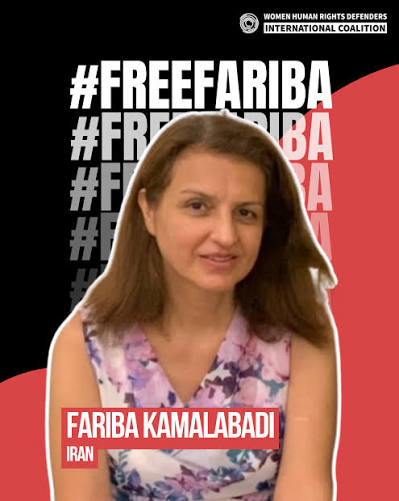
Few individual stories illustrate this better than that of Fariba Kamalabadi.
Born in 1962, Kamalabadi trained in developmental psychology and became one of the best-known members of Iran’s Bahá’í community. Because Bahá’ís were prevented from establishing normal religious institutions, she became one of seven members of the informal group known as the Yaran, or “Friends”, which attended to the basic spiritual and administrative needs of the community.
For the Iranian authorities, even this peaceful activity became grounds for prosecution.
Kamalabadi and the other members of the Yaran were arrested in 2008. They faced accusations including espionage, propaganda against the state and activities against national security.
Kamalabadi eventually spent approximately a decade in prison before being released in October 2017.
Her freedom did not last.
On 31 July 2022 she was arrested again, alongside fellow former Yaran member Mahvash Sabet and others. Following proceedings widely criticised as grossly unfair, Kamalabadi and Sabet were each sentenced to another ten years’ imprisonment. According to accounts of the proceedings, their trial lasted approximately one hour.
Then war itself entered the story.
During the June 2025 conflict, an Israeli strike hit Tehran’s Evin Prison complex. Kamalabadi was subsequently transferred to Qarchak Prison, notorious for its harsh and overcrowded conditions.
After years of international campaigning, there was finally better news.
In February 2026, Fariba Kamalabadi was released after approximately three and a half years of her second ten-year sentence. The National Academies reported that she had been granted a pardon.
Her release deserves celebration.
But it should not be mistaken for a change of policy.
One woman walked out of prison while the machinery that had put her there continued operating.
A New Generation in Danger
Indeed, some of the most disturbing cases now concern younger Bahá’ís.
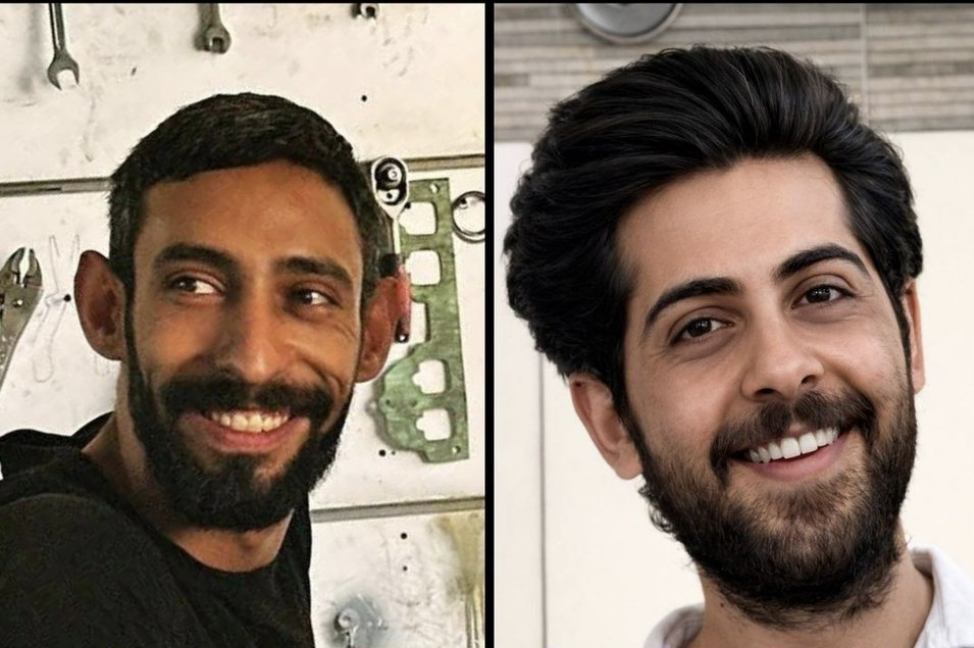
In April 2026, Amnesty International issued an urgent appeal concerning cousins Peyvand Naimi and Borna Naimi, warning that they could face the death penalty over accusations connected with the January 2026 protests.
Amnesty reported allegations that the two men had been subjected to beatings, electric shocks and mock executions in an attempt to obtain forced “confessions”, while being denied adequate access to lawyers and medical care.
United Nations experts separately raised allegations concerning arbitrary arrest, enforced disappearance, torture or other ill-treatment and forced confessions involving Bahá’í detainees, including the two cousins.
This represents an ominous development.
The persecution of the Bahá’ís is no longer merely the story of the generation that experienced the Islamic Revolution. Young Iranians born decades afterwards are inheriting the consequences of a religious identity the state refuses to accept.
Women in the Firing Line
Bahá’í women have been particularly vulnerable.
Even before the latest escalation, United Nations experts expressed concern about what they described as an alarming increase in the systematic targeting of Bahá’í women through arrests, interrogations, disappearances, raids and confiscation of property.
In January 2025, eleven Bahá’í women were detained in coordinated raids. Several were mothers of young children or carers for elderly relatives.
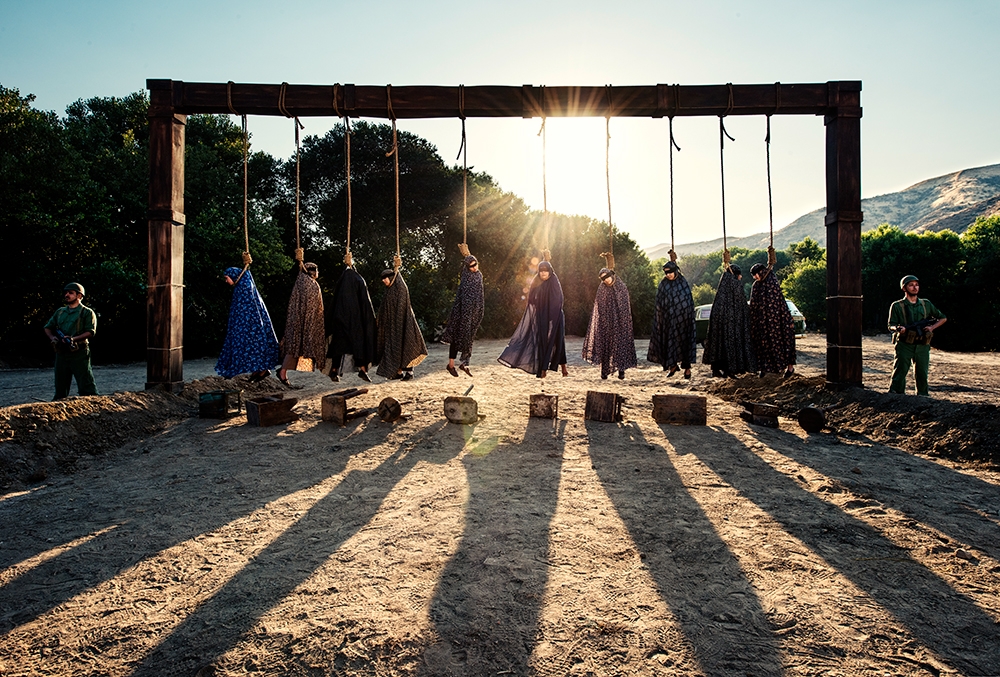
This targeting carries consequences far beyond the individual prisoner. Arresting a mother, confiscating a family’s property or depriving parents of their livelihood destabilises an entire household.
Persecution thereby spreads outwards: from prisoner to spouse, from parent to child and ultimately from one generation to the next.
The Cruellest Accusation
Perhaps nothing illustrates the injustice more clearly than the accusation that the Bahá’ís are somehow inherently loyal to Israel.
Bahá’ís are required by their religion to obey the laws of the countries in which they live and are prohibited from partisan political activity. Iranian Bahá’ís are Iranians. Their families have lived in Persia and Iran for generations.
The presence of their world centre in Israel was not the result of political allegiance. It was the consequence of persecution and exile.
Yet the very exile inflicted upon the founder of their religion has, more than a century later, been transformed into supposed evidence against his followers.
There is something particularly perverse about this.
A man is expelled from Persia and eventually imprisoned by the Ottoman Empire in Acre. Decades later a new country arises around the place of his exile. More than a century afterwards, his followers back in Iran are accused of disloyalty because their holy places happen to stand within that country’s borders.
History has been turned upside down.
Beyond Iran
Iran remains the epicentre of Bahá’í persecution, but it is not the only place where followers of the faith have encountered repression.
In Yemen, Bahá’ís have faced grave persecution under Houthi control, including detention, intimidation and incitement. In Egypt, Bahá’ís have historically encountered serious difficulties arising from the state’s refusal fully to recognise their religious identity.
The circumstances differ from country to country, but the underlying issue is the same: whether a human being’s rights depend upon belonging to a religion approved by the state.
They should not.
Freedom of religion or belief is not a favour granted by governments. It is a fundamental human right.
Article 18 of the Universal Declaration of Human Rights protects freedom of thought, conscience and religion. The same principle is protected by the International Covenant on Civil and Political Rights.
A government may disagree with a religion. Clerics may dispute its theology. Individuals may reject its teachings entirely.
None of that confers a right to imprison its adherents.
Iran Is Hurting Itself
There is another dimension that deserves greater attention.
By persecuting the Bahá’ís, Iran is not merely committing an injustice against a minority. It is impoverishing itself.
Every student excluded from university represents wasted intellectual potential. Every professional prevented from practising represents lost expertise. Every business closed destroys economic activity. Every family driven abroad represents another contribution transferred from Iran to another country.
The Bahá’í emphasis upon education makes this particularly tragic.
A nation that desperately needs educated young people, entrepreneurs, doctors, teachers, scientists and professionals has spent decades obstructing some of its own citizens from becoming precisely those things.
That is not national strength.
It is national self-harm.
War Must Not Become an Excuse for Persecution
Iran has genuine security concerns. It has fought wars, suffered attacks and confronted espionage. Like every sovereign state, it possesses the right to investigate genuine threats to its national security.
But religious identity is not evidence of espionage.
A Bahá’í is no more an Israeli agent because the Bahá’í World Centre stands in Haifa than a Roman Catholic is an agent of the Italian Republic because the Vatican stands in Rome.
That distinction becomes particularly important in wartime, when fear makes populations susceptible to accusations of treason and governments acquire extraordinary powers in the name of national survival.
History offers enough examples of what happens when minorities are transformed into convenient internal enemies.
The warning signs in Iran should therefore be taken seriously.
The World Must Pay Attention
International condemnation has certainly not been absent. The United Nations, human-rights organisations, governments and religious-freedom bodies have repeatedly documented and condemned the treatment of Iranian Bahá’ís.
But condemnation that becomes routine risks becoming background noise.
The persecution must carry diplomatic consequences. Governments dealing with Tehran should raise individual Bahá’í prisoners by name. Arbitrary convictions, confiscation orders and officials responsible for serious abuses should be documented. Where the evidential and legal thresholds are met, targeted sanctions and other accountability mechanisms should be considered.
Most importantly, the international media should resist allowing the Bahá’ís to disappear behind the enormous geopolitical story of Iran, Israel, nuclear weapons and war.
For that is precisely when minorities become easiest to forget.
A Test of Our Principles
The Bahá’ís ask for no special privilege.
They ask to educate their children, practise their professions, own their homes, bury their dead, worship according to their conscience and live as citizens of their own country.
Those are modest demands.
They are also among the foundations of civilisation.
Fariba Kamalabadi is free today, and that is something worth celebrating. But Peyvand Naimi, Borna Naimi and many others remind us that the larger struggle is far from over.
The wars surrounding Iran have made an already dangerous situation more dangerous because they have allowed an old prejudice to be dressed in the language of national security. A peaceful religious community can now be portrayed not merely as heretical, but as potentially treasonous.
That is why the plight of the Bahá’ís matters far beyond Iran.
It asks a very simple question of governments and societies everywhere: do we believe in freedom of conscience only when it is easy to defend, or also when fear, war and political expediency make defending it difficult?
For nearly two centuries, the Bahá’ís have endured imprisonment, exile, discrimination and death without abandoning their central conviction that humanity is one.
The least the rest of humanity can do is refuse to remain silent while they are persecuted for believing it.
EDITOR’S NOTE — Metaphore’s concern in publishing this article is neither theological nor geopolitical. It is the defence of a fundamental principle: no individual should be imprisoned, dispossessed or persecuted because of his or her faith. The Bahá’ís of Iran have endured such persecution for generations, and the present conflict must never be allowed to provide a pretext for intensifying it.


 Carlos Mundy

 Dixon Acosta
 Giovanni R. Ruffini Professor of History Fairfield University, USA




 Laura Mitchell
 Mayte Hidalgo