
 Carlos Mundy
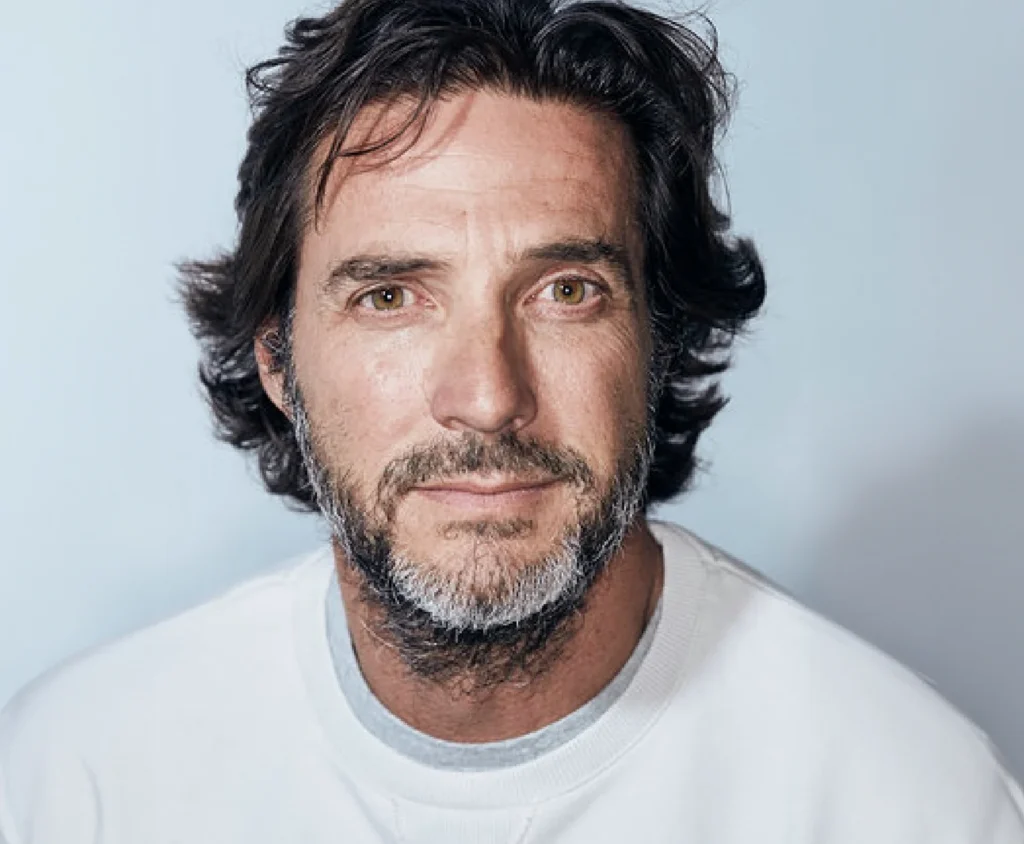
As founder and President of Ecoalf, Javier Goyeneche has demonstrated that elegance, innovation and environmental responsibility need not be competing ambitions. Through his pioneering fashion company and the extraordinary work of the Ecoalf Foundation, the Spanish entrepreneur has transformed discarded materials into desirable products, enlisted thousands of fishermen in the protection of the oceans and challenged one of the world’s most influential industries to reconsider its relationship with the planet. His vision is as simple as it is profound: there is no Planet B.
There are entrepreneurs who build successful companies, and there are those rare individuals whose ambitions extend considerably beyond the creation of a profitable business. They seek to change the assumptions upon which an entire industry operates, questioning practices that others have accepted for generations and imagining a future that may initially appear commercially improbable.
Javier Goyeneche belongs to this latter category.
At a time when the international fashion industry was becoming increasingly dependent upon rapid production, accelerated consumption and the relentless introduction of new collections, the Spanish entrepreneur began asking a rather different question. What if fashion could be desirable without being wasteful? What if the materials already discarded by society could become the foundations of a new kind of luxury? And what if a company could measure its success not simply by what it sold, but by the environmental damage it helped to prevent?
These were not merely philosophical considerations. They became the foundations of Ecoalf, the company Goyeneche established in 2009, and of the Ecoalf Foundation, which would subsequently turn his environmental convictions into a remarkable international undertaking.
Today, his work offers a compelling illustration of how entrepreneurship can become an instrument of positive change.
The significance of Ecoalf is not simply that it produces clothing from recycled materials. It is that Goyeneche has attempted to demonstrate that environmental responsibility can be integrated into design, manufacturing, technological innovation, commercial strategy and the very identity of a brand.
He has sought to make sustainability desirable rather than sacrificial, transforming what was once dismissed as waste into something sophisticated, functional and beautiful.
And perhaps most importantly, he has encouraged the fashion industry to recognise that the future of luxury must be judged by more than appearances.
The Origins of an Unusual Vision
Javier Goyeneche’s entrepreneurial instincts were evident well before the creation of Ecoalf.
Having established Fun & Basics, a Spanish fashion and accessories business, he acquired first-hand experience of the commercial realities of the industry: its supply chains, its manufacturing demands, its marketing machinery and its constant appetite for new products.
Yet experience also brought an increasingly uncomfortable awareness of the environmental consequences of conventional production.
Fashion depends upon vast quantities of raw materials, energy and water. Its global supply chains are complex, and the industry’s tendency towards overproduction has contributed to an enormous accumulation of discarded clothing and textiles.
Goyeneche came to believe that simply making conventional fashion products somewhat less damaging was an inadequate response to the scale of the problem.
A more fundamental reconsideration was required.
When he founded Ecoalf in 2009, his objective was to create high-quality fashion products from recycled materials without compromising design, durability or performance.
It was a deceptively ambitious proposition.
At that time, recycled textiles were frequently associated with inferior quality, limited technical possibilities and an aesthetic that struggled to compete with established premium brands. Consumers might applaud the environmental principle, but many were reluctant to accept compromises in appearance or comfort.
Goyeneche understood that this was precisely the obstacle that had to be overcome.
For sustainability to influence the mainstream fashion industry, environmentally preferable products would have to compete on their own merits. They needed to be attractive, technically accomplished and commercially credible.
The environmental story could not serve as an excuse for mediocre design.
It had to become the inspiration for excellence.
Turning Waste into Something Beautiful
Ecoalf’s early years were devoted to an intensive process of research and development.
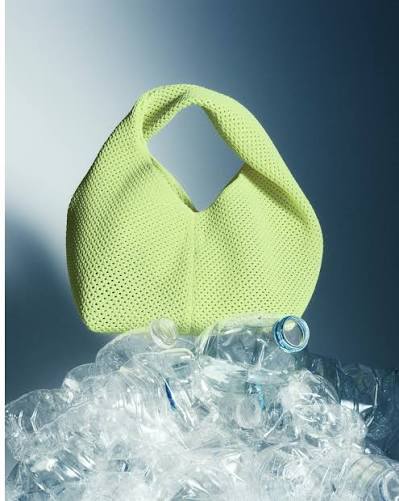
Rather than relying exclusively upon conventional textile fibres, the company began exploring how discarded plastic bottles, fishing nets, used tyres, cotton waste and other materials might be recovered, processed and transformed into fabrics suitable for contemporary clothing and accessories.
The technical challenges were considerable.
Recovering waste is one thing; converting it into a material capable of meeting demanding standards of softness, strength, colour, durability and appearance is quite another.
The company worked with specialised manufacturers and technological partners to develop fabrics that could satisfy both environmental objectives and the expectations of discerning consumers.
Its first collection appeared in 2012, accompanied by the opening of its flagship store in Madrid.
What emerged was not an eccentric experiment in ecological clothing, but a coherent fashion proposition characterised by understated elegance, practical sophistication and contemporary design.
Ecoalf’s aesthetic has generally favoured clean lines, restrained colours and versatile garments that resist the more extravagant excesses of passing fashion.
This approach is significant.
A garment designed to remain attractive and useful over several seasons has a different relationship with consumption from one conceived principally to satisfy a fleeting trend.
Goyeneche’s ambition has been to encourage customers to buy more thoughtfully, choosing products whose value lies in their quality and longevity rather than in the excitement of constant replacement.
It is a philosophy that challenges one of the industry’s most deeply entrenched habits: the assumption that fashion must continually persuade us that what we already own is obsolete.
Because There Is No Planet B
Few contemporary fashion slogans have expressed an environmental philosophy as memorably as Ecoalf’s “Because There Is No Planet B.”
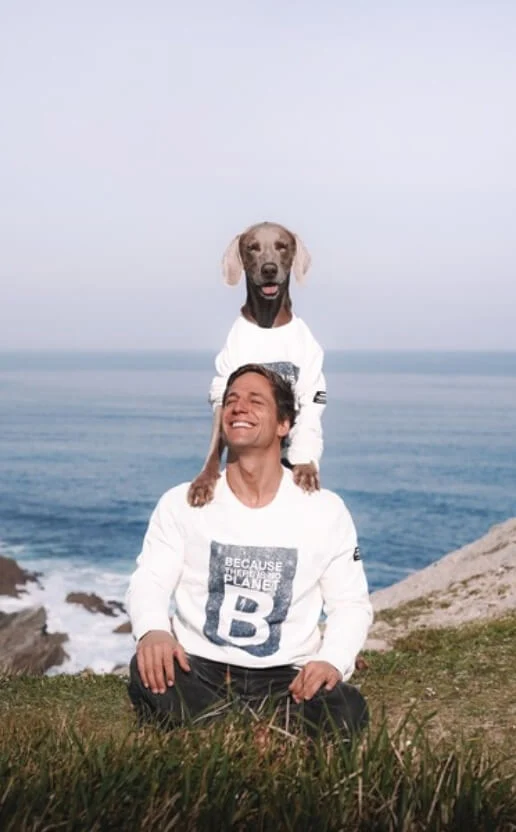
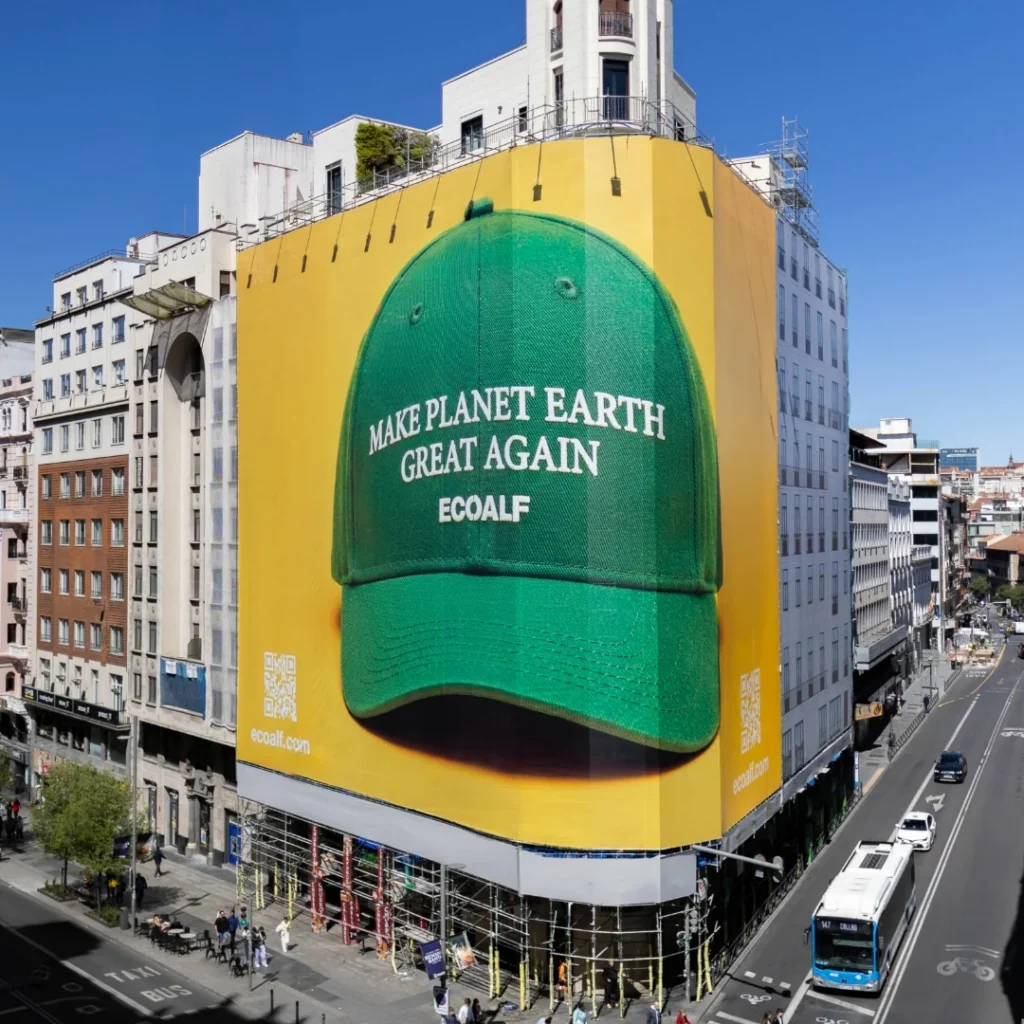
The words have become inseparable from the company’s identity, appearing on garments, accessories and campaigns across international markets.
Their appeal lies in their directness.
They do not demand specialised knowledge of climate science or environmental economics. They simply remind us that humanity has no alternative planet upon which to relocate the consequences of its behaviour.
For Goyeneche, the phrase represents more than a marketing device. It expresses the central conviction behind his business: that the resources upon which modern civilisation depends are finite, and that companies have a responsibility to use them more intelligently.
Yet what distinguishes his approach is that he has attempted to turn this conviction into practical innovation.
Environmental awareness alone does not recover a discarded fishing net, develop a new fabric or create a commercially successful garment.
Those achievements require investment, engineering, collaboration, persistence and an ability to persuade others to participate.
Ecoalf has sought to bring these elements together, demonstrating that sustainability is not a separate department within a fashion business but a principle capable of influencing its entire operation.
The Sea That Changed Everything
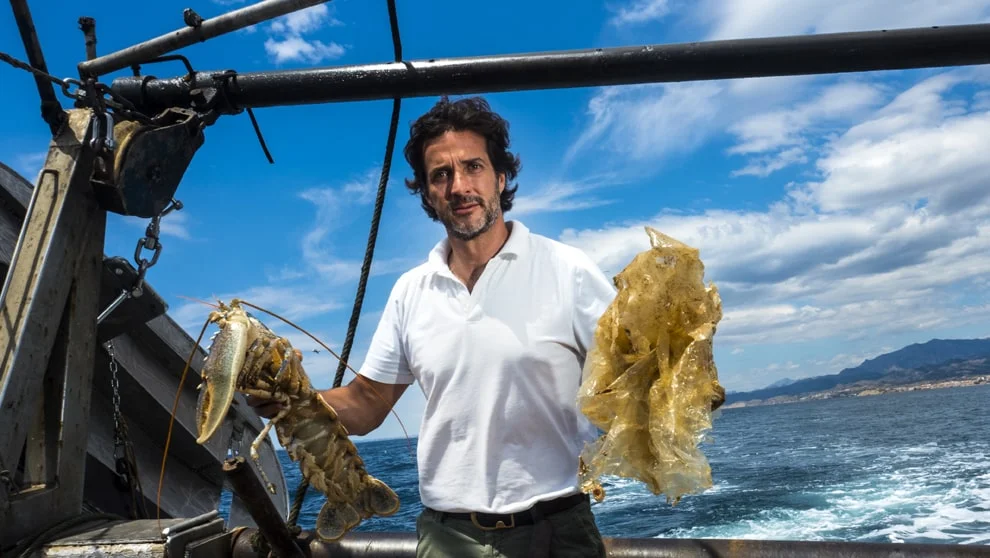
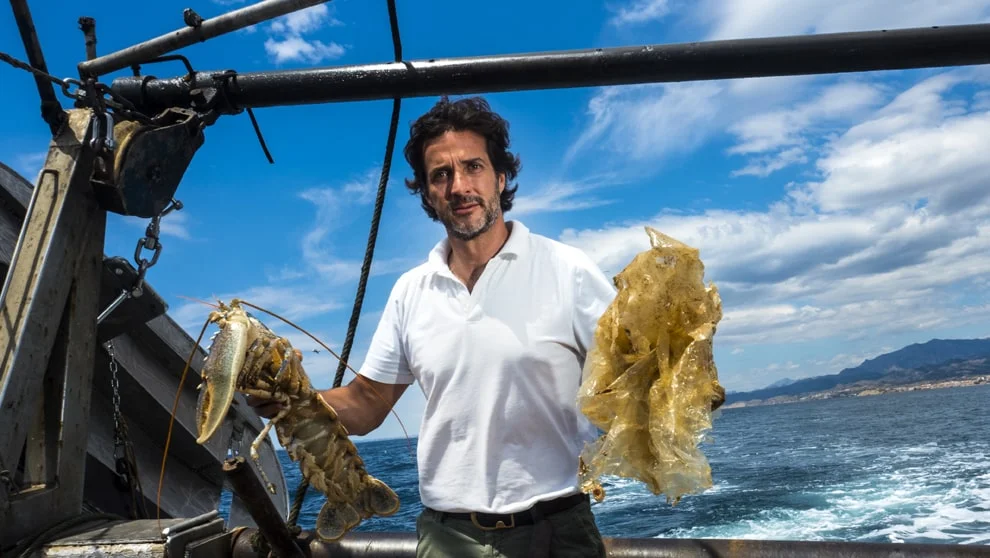
Perhaps the most remarkable chapter in Goyeneche’s story began not in a design studio or corporate boardroom, but aboard a fishing vessel.
In 2015, a fisherman invited him to witness the quantities of rubbish becoming entangled in fishing nets during ordinary working days.
The experience was profoundly revealing.
Fishing crews were inadvertently bringing discarded plastics and other debris to the surface, yet without appropriate systems for collecting and processing this waste, much of it could end up being returned to the sea.
The problem was not a lack of willingness among fishermen to help. It was the absence of a practical mechanism through which their efforts could make a lasting difference.
Goyeneche recognised an extraordinary opportunity.
Here was an existing network of people already working at sea, regularly encountering marine debris and potentially capable of contributing to its removal.
What was needed was organisation, infrastructure, cooperation and a system through which the recovered materials could be responsibly managed.
From this insight emerged one of Ecoalf’s most significant achievements.
The Ecoalf Foundation was established in 2015, with Upcycling the Oceans becoming its flagship project.
Its purpose was ambitious: to help clean the oceans, recover marine waste, promote recycling and demonstrate the value of collaboration between business, environmental organisations and fishing communities.
It was a striking example of an entrepreneur applying the practical instincts of business to a problem of considerable ecological importance.
The Ecoalf Foundation: Giving the Oceans a Future
The Ecoalf Foundation is a Spanish non-profit organisation dedicated to combating marine pollution through innovation, partnerships and circular-economy initiatives.
Chaired by Javier Goyeneche, it operates with the support of technical specialists, trustees, collaborating organisations and fishing communities.
Its work begins with a simple but highly effective principle.
When fishermen inadvertently catch marine litter in their nets, they bring it back to port rather than returning it to the water. The material is placed in designated containers, collected and transported to facilities where it can be sorted and directed towards appropriate treatment or recycling.
Some recovered plastics can be transformed into secondary raw materials, while other waste requires different forms of management.
The importance of the initiative lies not only in recovering rubbish but also in establishing an organised process that can be repeated across different ports and countries.
What began in the Spanish fishing port of Villajoyosa with just three participating fishermen has developed into a much larger international collaboration.
According to figures published by Ecoalf, Upcycling the Oceans has involved more than 4,775 fishermen, over 1,140 fishing vessels and 80 ports, and has recovered more than 2,100 tonnes of marine waste since 2015.
These figures are remarkable, although they should be understood as the Foundation’s reported cumulative project results rather than independently verified measurements of the total reduction in ocean pollution.
Nevertheless, they demonstrate the scale of the network Goyeneche and his collaborators have helped to establish.
The project has extended beyond Spain into other parts of the Mediterranean, including Greece, Italy, France and Egypt, while a related initiative was also developed in Thailand.
Each location presents different challenges, requiring cooperation with local organisations, authorities, recycling partners and fishing communities.
The model’s strength lies in its adaptability.
Rather than expecting a single organisation to solve an immense environmental problem independently, it brings together people whose existing activities can contribute to a shared purpose.
The Fishermen Who Became Guardians of the Sea
There is something particularly moving about the human dimension of Upcycling the Oceans.
For generations, fishing communities have depended upon the health of the seas for their livelihoods. Yet they are also among those who encounter the consequences of marine pollution most directly.
Plastic waste, abandoned equipment and other debris can damage fishing gear, affect marine ecosystems and complicate an already demanding profession.
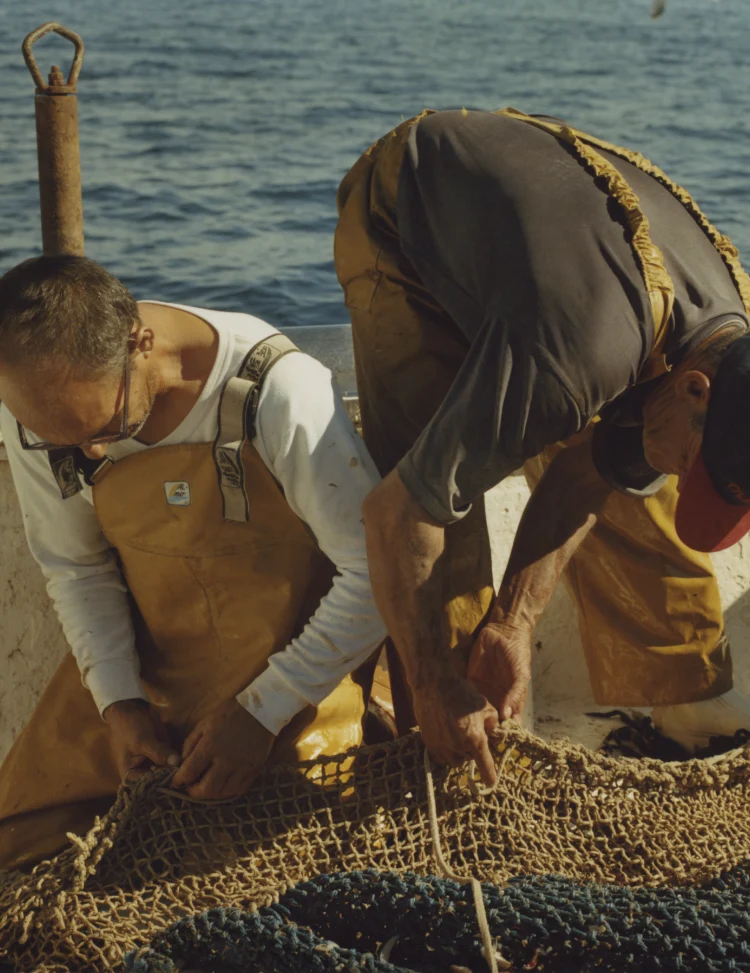
By inviting fishermen to participate voluntarily in the recovery of marine litter, the Ecoalf Foundation has helped transform an everyday nuisance into an opportunity for environmental stewardship.
These men and women are not simply passive beneficiaries of a corporate sustainability initiative. They are indispensable participants in its success.
Indeed, the Foundation itself describes the fishermen as the true heroes of the project.
That acknowledgement is important.
The most effective environmental initiatives frequently depend upon people whose work receives little public attention. Their practical knowledge, familiarity with local conditions and willingness to participate can be more valuable than the grandest publicity campaign.
Goyeneche’s achievement has been to recognise this potential and help provide the organisational framework through which it can flourish.
The resulting partnership also challenges the notion that environmental protection must necessarily be imposed upon traditional industries from outside.
Under the right circumstances, those industries can become active participants in conservation.
And that may prove to be one of the most enduring lessons of the Foundation’s work.
From the Ocean Floor to the Fashion Atelier
The relationship between Ecoalf and its Foundation becomes particularly fascinating when recovered waste is transformed into a useful new material.
Among the company’s innovations is its Ocean Yarn, developed using recycled plastic recovered through the Foundation’s marine-cleaning activities.

The process is considerably more complicated than the appealing image of a plastic bottle becoming a fashionable jacket might suggest.
Marine debris is frequently contaminated, degraded or composed of materials that cannot easily be recycled together. It must first be collected, separated, cleaned and processed. Suitable plastics can then be converted into flakes or pellets before being transformed into fibres for textile production.
Ecoalf reports that approximately 10 per cent of the waste recovered through Upcycling the Oceans is plastic, and only suitable fractions of that material can be directed towards particular recycling applications.
This distinction matters because the Foundation’s principal achievement is the recovery and responsible management of marine litter, not the suggestion that every kilogram collected becomes a garment.
Nevertheless, the transformation of selected recovered plastics into high-quality textiles offers a powerful demonstration of what circular design can accomplish.
A material that had become an environmental burden is given renewed economic and practical value.
It is a compelling idea, and one that captures the essence of Goyeneche’s philosophy.
Waste, in his view, should not automatically be regarded as the inevitable conclusion of consumption. It may also represent a resource that has been poorly managed, inadequately valued or prematurely discarded.
The challenge is to develop systems capable of recovering that value without creating further environmental problems.
A New Definition of Luxury
Perhaps the most interesting aspect of Javier Goyeneche’s work is his challenge to the traditional meaning of luxury.
For much of its history, the luxury industry has been associated with rarity, craftsmanship, exclusivity and the possession of materials considered precious.
But what constitutes true luxury in an age of environmental uncertainty?
Is it simply the ability to purchase something expensive, or should it also encompass the knowledge that a product has been designed with respect for the natural resources upon which its existence depends?
Goyeneche has increasingly argued for a more thoughtful understanding of value, one in which environmental impact becomes an essential consideration.
A beautifully designed coat made from carefully selected recycled materials need not be regarded as inferior to one produced through conventional methods. On the contrary, the technological ingenuity required to create it may become part of its distinction.
This represents an important change in perception.
Sustainability was once too often presented as a form of abstinence, suggesting that consumers should surrender beauty, comfort or pleasure in order to behave responsibly.
Ecoalf has sought to reverse that assumption.
Its garments are intended to be desirable in their own right, with their environmental credentials strengthening rather than replacing their appeal.
In this respect, Goyeneche’s contribution extends beyond the development of new materials. He has helped challenge the cultural assumptions that determine what consumers consider valuable.
When Innovation Becomes an Industrial Philosophy
The transformation of waste into fashion requires considerably more than creative enthusiasm.
It demands technological innovation, research into fibres and manufacturing processes, collaboration with suppliers and the development of systems capable of tracing materials through complicated international supply chains.
Ecoalf has invested extensively in these areas.
Its work encompasses recycled polyester, nylon, cotton and wool, alongside other approaches intended to reduce dependence upon virgin resources.
The company has also developed products designed with greater attention to their eventual recyclability.
This is an important consideration because one of fashion’s most persistent problems is that garments frequently combine numerous fibres, coatings, trims and other components that are difficult to separate once a product reaches the end of its useful life.
Designing products around fewer materials, or materials that can be more readily recovered, may help address some of these obstacles.
Yet there are no effortless solutions.
Recycled synthetic fibres can still release microplastics during use and washing. Textile recycling may require substantial energy, and many products remain difficult to recycle repeatedly at commercial scale.
The environmental performance of any garment depends upon numerous factors, including its composition, manufacturing process, transport, durability, use and eventual disposal.
What makes Ecoalf’s approach noteworthy is its continuing attempt to address these challenges through innovation rather than pretending that they do not exist.
The ambition is not merely to replace one raw material with another. It is to reconsider the design and production of fashion as an interconnected system.
An International Brand with a Global Message
From its beginnings in Madrid, Ecoalf has developed an international presence, bringing its distinctive aesthetic and environmental philosophy to markets beyond Spain.
Its expansion into Japan, including its first Tokyo store in 2019, illustrated the potential appeal of its approach to consumers in very different cultural environments.
The company’s retail spaces have also become opportunities to communicate its wider philosophy, with attention paid to the materials used in their construction and presentation.
In 2025, Ecoalf highlighted the development of a store incorporating paper and cardboard as a notable design feature, demonstrating its interest in applying unconventional material thinking beyond clothing itself.
Such initiatives reinforce the notion that sustainability cannot credibly be confined to the products displayed on the shelves.
It must also influence the environments in which those products are presented and the decisions through which the business operates.
There is, of course, an inherent tension in the growth of any fashion company that advocates reduced consumption.
Commercial expansion generally involves selling more products, while environmental responsibility requires careful consideration of the resources consumed and waste generated.
Goyeneche’s challenge is therefore a particularly demanding one: to demonstrate that business growth can be accompanied by measurable improvements in resource efficiency and environmental performance.
The distinction between relative efficiency and absolute impact is essential. A company may reduce the environmental burden of each garment while still increasing its overall footprint if production expands sufficiently.
The credibility of sustainable fashion ultimately depends upon confronting such questions with transparent data.
The Importance of Independent Accountability
Ecoalf achieved a notable distinction in 2018 when it became the first Spanish fashion company to obtain B Corp certification.
The certification recognises companies assessed against standards relating to social and environmental performance, accountability and transparency.
For Ecoalf, it represented an important acknowledgement of its effort to integrate broader responsibilities into its business model.
Certification is not, however, a declaration that a company has no environmental impact. Nor does it eliminate the need for continuing scrutiny, improvement and independent assessment.
Rather, it provides a framework through which performance can be evaluated and businesses can be held to defined expectations.
This is particularly significant in fashion, where environmental claims have too frequently been vague, difficult to substantiate or designed primarily to reassure consumers.
Goyeneche’s broader vision will ultimately be judged not by the persuasiveness of a slogan, however memorable, but by the measurable results of the company’s practices.
That is precisely why the Foundation’s operational achievements and Ecoalf’s investment in material innovation matter so much.
They provide concrete activities against which its ambitions can be assessed.
The Next Chapter: A More Responsible Fashion Industry
By 2026, Ecoalf was continuing to develop its approach to circularity and environmental measurement.
The company introduced a new initiative concerning denim, presenting its latest developments in materials and production as part of an effort to reduce the environmental impact of one of fashion’s most widely worn garments.
It also announced an Impact Profit & Loss approach intended to examine the environmental implications of its business activities in financial terms.
Such work reflects an increasingly important development in corporate sustainability: the attempt to account for environmental consequences that conventional financial statements do not fully capture.
The value of these methods will depend upon the quality of their underlying data, the assumptions used and the extent to which results can be independently examined.
Nevertheless, the direction is significant.
It suggests a growing recognition that businesses cannot adequately measure their contribution to society through revenue and profit alone.
Goyeneche has also used Ecoalf’s public platform to question some of the practices associated with fast fashion and excessive consumption.
In 2025, the company drew attention to the accumulation of discarded clothing in Ghana, linking the issue to the wider consequences of overproduction and the culture of continual purchasing.
It was a reminder that the environmental costs of fashion are not confined to the places where garments are manufactured or sold.
They may emerge thousands of miles away, in communities obliged to manage enormous quantities of unwanted textiles.
The question is no longer simply how to produce clothing more efficiently.
It is how to build an industry in which products are designed to last, resources retain their value and the consequences of consumption are not quietly transferred elsewhere.
A Foundation That Extends Beyond Fashion
One of the most admirable dimensions of Goyeneche’s work is that the Ecoalf Foundation has a purpose distinct from the commercial success of the fashion brand.
Its central mission is the protection of marine environments through the recovery of waste, international collaboration and the development of circular-economy practices.
Although the Foundation and the company share an environmental philosophy, the importance of cleaning the oceans does not depend upon whether the recovered materials can ultimately be turned into clothing.
Marine litter threatens wildlife, damages habitats and imposes costs upon coastal communities. Its removal is valuable in its own right.
The Foundation’s projects also contribute to public awareness, drawing attention to a problem that is frequently hidden beneath the surface of the water.
The sight of a beautiful beach can create an illusion of ecological health, while discarded materials remain trapped on the seabed, beyond ordinary observation.
By working with fishermen and local partners, the Foundation makes that hidden problem more visible.
It also offers an example of how philanthropy and enterprise can reinforce one another without becoming indistinguishable.
The business contributes innovation and commercial experience; the Foundation mobilises partnerships and directs its efforts towards an environmental mission.
Together, they demonstrate how an entrepreneurial idea can evolve into something with a much wider social purpose.
The Responsibility of a New Generation of Entrepreneurs
There is a broader lesson in Javier Goyeneche’s career.
For much of the modern industrial era, environmental protection and commercial success were often presented as opposing objectives.
Companies were expected to maximise growth and profitability, while governments, charities and campaigners attempted to mitigate the resulting damage.
Goyeneche belongs to a generation of entrepreneurs challenging that division.
His work suggests that businesses can participate directly in the search for environmental solutions, not merely by donating a portion of their profits to worthy causes, but by reconsidering the products they manufacture, the materials they use and the systems through which they operate.
This does not mean that entrepreneurship alone can solve the environmental challenges facing humanity.
Effective regulation, scientific research, responsible consumption, improved infrastructure and international cooperation remain indispensable.
But it does mean that companies can become powerful participants in the transition towards more responsible economic models.
Indeed, the resources, technical expertise and organisational capabilities of private enterprise may prove essential to achieving meaningful progress.
The example of Ecoalf is particularly persuasive because its environmental philosophy has been tested in the demanding realities of fashion, an industry in which appearance, price, quality and consumer desire remain powerful commercial forces.
Goyeneche has not attempted to persuade the world to abandon fashion.
He has sought to demonstrate that fashion itself can evolve.
The Legacy of Javier Goyeneche
It is still too early to determine the full historical significance of Ecoalf.
The environmental challenges confronting the fashion industry remain immense, and no individual company can claim to have resolved them.
Nevertheless, Javier Goyeneche has already made an important contribution to the way the industry thinks about materials, design and responsibility.
He recognised the possibilities of recycled textiles at a time when they were widely underestimated. He helped demonstrate that environmentally conscious fashion could be sophisticated and commercially desirable. He established a foundation capable of bringing thousands of fishermen into a coordinated effort to recover marine waste. And he has used the visibility of his brand to encourage a wider reconsideration of humanity’s relationship with natural resources.
Perhaps the most revealing aspect of his philosophy is its refusal to accept waste as an inevitable consequence of modern life.
Where others saw discarded plastic, he imagined a textile. Where others saw an unavoidable problem in fishing nets filled with rubbish, he recognised the beginnings of an international environmental partnership. Where others saw a contradiction between fashion and sustainability, he saw an opportunity to redefine the industry’s future.
Such thinking requires imagination, certainly, but also persistence and an unusual willingness to challenge established practices.
It is the combination of those qualities that makes Goyeneche a compelling figure in contemporary entrepreneurship.
His story also reminds us that some of the most important changes begin with questions that appear almost disarmingly simple.
Why should a useful material become worthless merely because it has been discarded?
Why should beautiful clothing depend upon the unnecessary consumption of virgin resources?
And why should commercial success be measured without considering the condition of the world in which that success has been achieved?
These are questions that extend far beyond fashion.
They concern the future of business, the meaning of prosperity and the responsibilities we owe to generations yet unborn.
Javier Goyeneche has devoted much of his professional life to demonstrating that the answers need not be dictated by the habits of the past.
Through Ecoalf and its Foundation, he has offered a vision of an industry in which innovation and environmental responsibility can become mutually reinforcing ambitions.
And in a world increasingly conscious of the fragility of its natural inheritance, that may be his most valuable contribution.
Because there is, indeed, no Planet B.
Ecoalf: https://ecoalf.com
Ecoalf Foundation: https://ecoalf.com/en-us/pages/fundacion-ecoalf
Upcycling the Oceans: https://ecoalf.com/en-int/pages/upcycling-the-oceans


 Carlos Mundy
 Metaphore Magazine
 Dixon Acosta

 Elga Wimmer


 Laura Mitchell
 Mayte Hidalgo
 Kamal Kumar