 Charles Markeaton-Mundy
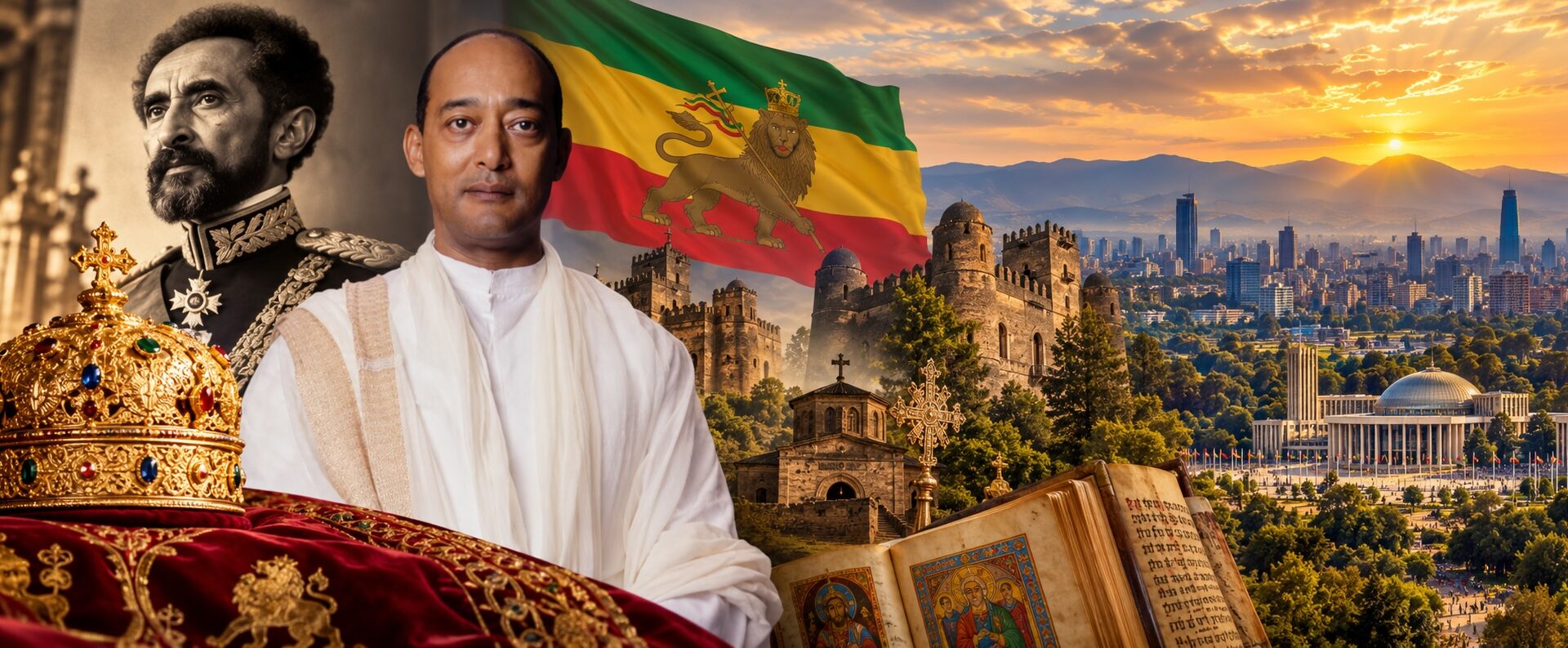
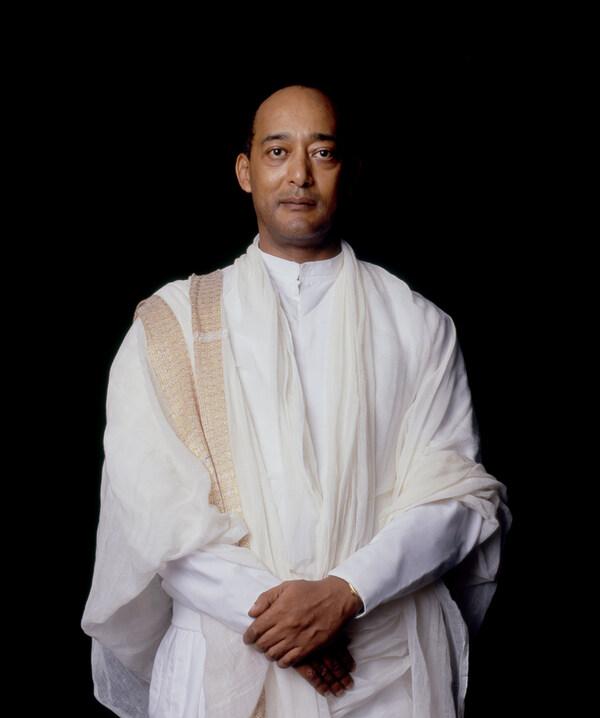
More than half a century after the overthrow of Emperor Haile Selassie, Ethiopia’s ancient imperial institution survives through the Crown Council, presided over by His Imperial Highness Prince Ermias Sahle-Selassie Haile-Selassie. In a nation confronted by ethnic divisions, political instability and renewed armed conflict, the Council’s continued existence raises an intriguing question: could the Ethiopian Crown, once the embodiment of national sovereignty, eventually find a new constitutional role as a symbol of reconciliation and unity?
There are nations whose identity is inseparable from the institutions that have accompanied them through centuries of triumph, adversity and transformation. In Ethiopia, the Crown belongs to that exceptional category.
Long before the emergence of the modern African states, Ethiopia possessed an imperial tradition whose origins were intertwined with biblical legend, Christian civilisation and the remarkable continuity of an independent African kingdom.
The Ethiopian monarchy was never merely an arrangement for the exercise of political authority. For its supporters, it represented the historical embodiment of the nation’s sovereignty, its spiritual inheritance and its extraordinary ability to preserve its identity in a world repeatedly transformed by conquest and colonial expansion.
Its abolition in 1975, following the military revolution that overthrew Emperor Haile Selassie I, brought an ancient institution to an abrupt end. Yet the Crown itself, as a dynastic and cultural institution, did not disappear.
It survived through the imperial family and, above all, through the Ethiopian Crown Council, whose existence today serves as a reminder that the history of a nation cannot simply be erased by a change of government.
My own association with the Crown Council began formally in 2007, when I had the honour of being appointed its Representative for Europe. That responsibility has given me a particular appreciation of the institution, its historical significance and the principles that continue to guide its work.
It has also afforded me the privilege of developing a profound admiration for His Imperial Highness Prince Ermias Sahle-Selassie Haile-Selassie, whose dedication to the preservation of Ethiopia’s imperial inheritance has been accompanied by an equally sincere concern for the welfare and future of his country.
What I find particularly admirable about Prince Ermias is his determination to look beyond the tragedy of his family’s dispossession and concentrate instead upon what the Crown can still contribute to Ethiopia.
His approach reflects an understanding that the true dignity of royalty does not reside exclusively in the possession of a throne, but in the responsibility to serve a people and preserve the values of a civilisation.
Today, as Ethiopia confronts serious internal divisions, the question of whether its imperial heritage might eventually contribute to national reconciliation deserves thoughtful consideration.
The Solomonic Dynasty: An Extraordinary Historical Inheritance
The Ethiopian imperial tradition is among the most fascinating in world history.
According to the Kebra Nagast, the great Ethiopian national epic compiled in its surviving form during the medieval period, the country’s Solomonic dynasty descended from the union of King Solomon of Israel and the Queen of Sheba.
Their son, Menelik I, is traditionally regarded as the founder of the dynasty, which would eventually claim an unbroken connection between biblical antiquity and the Ethiopian imperial throne.
Although this genealogy belongs to the realm of sacred and dynastic tradition rather than historically verifiable descent, its influence upon Ethiopian civilisation has been immense.
The Solomonic dynasty established in 1270 claimed continuity with the earlier Aksumite kingdom, one of the great civilisations of the ancient world and among the earliest states to adopt Christianity.
Over the centuries, Ethiopia developed a distinctive political and religious identity, profoundly influenced by the Ethiopian Orthodox Tewahedo Church and sustained through periods of conflict, territorial expansion and internal transformation.
Its sovereignty acquired particular international significance during the nineteenth century.
In 1896, Emperor Menelik II defeated the invading Italian army at the Battle of Adwa, securing a victory that reverberated throughout Africa and beyond.
Adwa became a symbol of African resistance to European colonial expansion, and Ethiopia emerged as an extraordinary exception in an era when much of the continent was being partitioned among foreign powers.
The reign of Emperor Haile Selassie I, who ascended the throne in 1930, brought the Ethiopian monarchy to unprecedented international prominence.
His resistance to Fascist Italy, his celebrated appeal to the League of Nations in 1936, his return to Addis Ababa in 1941 and his subsequent role in the movement for African unity established him as one of the defining international figures of the twentieth century.
In 1963, Addis Ababa became the birthplace of the Organisation of African Unity, the predecessor of today’s African Union.
That Ethiopia remains the diplomatic capital of Africa is, in no small measure, part of Haile Selassie’s international legacy.
His reign also witnessed the expansion of modern education, the development of state institutions and important diplomatic initiatives. It was against this complex background that the revolution of 1974 unfolded.
The Creation of the Ethiopian Crown Council
The Ethiopian Crown Council did not originate as an organisation created by exiled members of the imperial family. It formed part of the constitutional institutions of the Ethiopian Empire.
Its modern legal foundations were established during the reign of Emperor Haile Selassie, particularly through the Revised Constitution of 1955, although advisory councils to the sovereign had existed in various forms throughout Ethiopian history.
The Crown Council was composed of senior members of the imperial family and distinguished figures associated with the imperial administration.
Its principal purpose was to advise the Emperor and safeguard the continuity and dignity of the Crown within the constitutional framework of the Empire.
It occupied a particular position in a system where the sovereign remained the central source of executive authority, even as Ethiopia sought to develop more modern governmental institutions.
Among its notable presidents were Prince Kassa Hailu Darge and, subsequently, Prince Asrate Kassa, who occupied the presidency during the final years of the monarchy.
The Council was not an elected parliament, nor did it operate independently of the sovereign. Its authority derived from the imperial constitutional order and its relationship with the Emperor.
The revolution of 1974 would destroy that political framework and transform the institution’s future.
The Fall of the Monarchy and the Tragedy of the Imperial Family
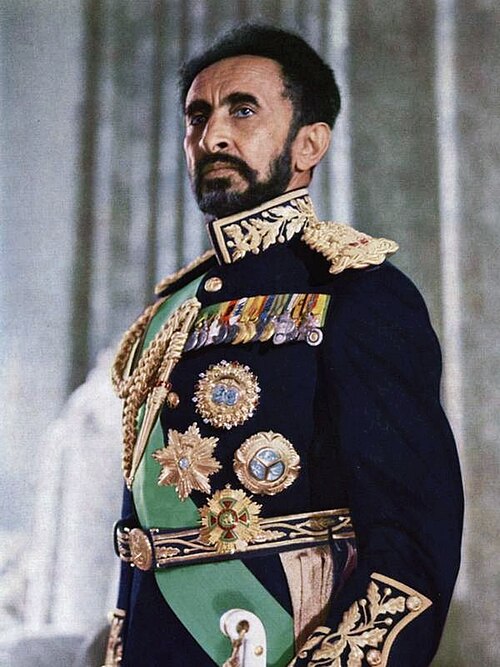
On 12 September 1974, Emperor Haile Selassie I was deposed by the Derg, a military committee that seized power amid growing political unrest.
The revolution had its roots in genuine economic, social and political grievances, including poverty, unequal land distribution, dissatisfaction within the armed forces and the government’s failures in responding to famine.
However, the revolutionary movement soon evolved into a profoundly repressive military dictatorship.
Members of the imperial family, senior officials, aristocrats and political opponents were arrested, imprisoned or executed.
Prince Asrate Kassa, President of the Crown Council, was among the senior imperial figures executed in November 1974.
The Emperor himself died in detention on 27 August 1975, in circumstances widely understood to have involved his murder.
Earlier that year, the monarchy had been formally abolished.
The Derg, subsequently dominated by Mengistu Haile Mariam, imposed a Marxist-Leninist political order upon Ethiopia.
The years that followed were marked by the Red Terror, political persecution, devastating conflicts, famine and widespread suffering.
The imperial family was scattered, with many of its members enduring imprisonment or exile.
For those who had served the Crown, the destruction of the monarchy represented not only the end of a political system but the violent rupture of an institution deeply connected to the country’s historical identity.
Yet even in exile, the imperial family maintained its dynastic continuity and its attachment to Ethiopia.
The Crown Council would eventually become the principal institutional expression of that survival.
The Reconstitution of the Crown Council in Exile
The overthrow of the Derg in 1991 opened a new chapter in Ethiopian history.
A transitional administration was established, and the country subsequently adopted the federal republican Constitution of 1995.
For the imperial family and the surviving representatives of the Crown, these developments presented an important question: how should an ancient royal institution conduct itself in a country that had become a republic?
In 1993, the Ethiopian Crown Council was reconstituted under the presidency of His Imperial Highness Prince Ermias Sahle-Selassie Haile-Selassie, a grandson of Emperor Haile Selassie I.
Initially, the Council maintained the dynastic position that the revolutionary abolition of the monarchy had lacked constitutional legitimacy.
Over time, however, its activities evolved towards a more practical and constructive mission.
A particularly important development came in July 2004, when the Council formally redirected its activities away from its former claim to governmental authority in exile and towards the preservation of Ethiopian culture, charitable initiatives and national development.
This evolution was significant.
Rather than functioning as a rival government, the Crown Council increasingly sought to act as a custodian of Ethiopia’s imperial inheritance and a contributor to the country’s cultural and humanitarian life.
Prince Ermias’s presidency was reaffirmed in 2005 by Prince Zera Yacob Amha Selassie, the dynastic heir recognised within the Ethiopian royalist tradition.
The distinction between these two roles deserves emphasis.
Prince Zera Yacob represents the imperial line of succession, while Prince Ermias presides over the Crown Council and directs its institutional activities.
Together, these positions preserve the continuity of the imperial dynasty and its associated institutions, although neither possesses governmental authority under Ethiopia’s present republican Constitution.
The Crown Council’s contemporary mission therefore rests upon a different understanding of royal responsibility: preserving history, promoting culture, encouraging reconciliation and maintaining a connection between Ethiopia’s imperial past and its future.
Prince Ermias Sahle-Selassie: The Dignity of Service
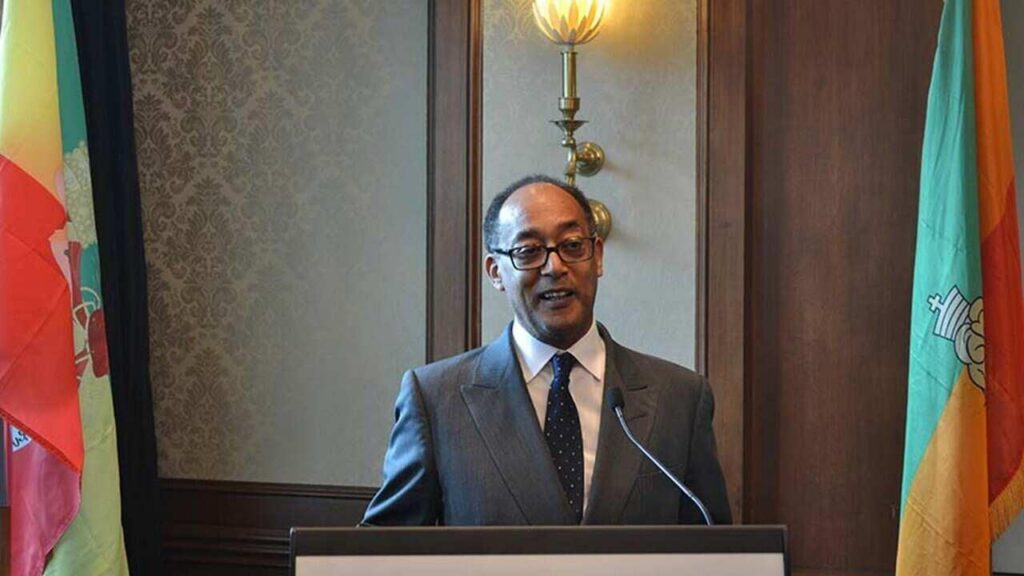
His Imperial Highness Prince Ermias Sahle-Selassie Haile-Selassie was born in Addis Ababa in 1960, the son of Prince Sahle Selassie, the youngest son of Emperor Haile Selassie I.
His childhood was spent during the final years of the imperial era, before the revolution transformed the fortunes of his family and his country.
Educated in the United States, including at the University of California, Santa Barbara, and the Fletcher School of Law and Diplomacy, Prince Ermias developed an international perspective that would later become an important element of his public work.
Since assuming the presidency of the Crown Council in 1993, he has devoted himself to preserving the historical inheritance of the Ethiopian monarchy while seeking ways in which the institution might contribute to contemporary Ethiopian society.
Having represented the Crown Council in Europe since 2007, I have had the privilege of observing his dedication to this mission.
My admiration for Prince Ermias extends far beyond his distinguished ancestry.
I admire his sense of duty, his devotion to Ethiopia and his determination to preserve the dignity of the Crown without allowing the tragedies of the past to define its future.
There is something particularly admirable about a prince who, having inherited the memory of one of Africa’s most illustrious dynasties, has chosen to devote so much of his energy to education, cultural preservation, reconciliation and the protection of his country’s historical identity.
Prince Ermias understands that the Ethiopian Crown cannot live upon the achievements of its ancestors alone.
If it is to retain its relevance, it must demonstrate that its traditions and values can make a meaningful contribution to the Ethiopia of tomorrow.
His leadership has consequently sought to reconcile fidelity to the past with an appreciation of the realities of the present.
Rather than concentrating exclusively upon the restoration of monarchical authority, he has encouraged initiatives that can benefit Ethiopians irrespective of their political allegiances.
He has also repeatedly emphasised the importance of national reconciliation, the preservation of Ethiopia’s territorial integrity and respect for the country’s diverse historical traditions.
His public statements have reflected a willingness to engage with the existing republican order, recognising that the future of Ethiopia must ultimately be determined by its people.
This is a particularly important quality in a country where political differences have too often resulted in conflict.
To my mind, the strength of Prince Ermias’s leadership lies in his understanding that royalty, at its most dignified, is an obligation rather than a privilege.
The preservation of the Crown is not an end in itself. Its enduring significance depends upon the values it represents and the service it is capable of rendering.
The Royal Ethiopian Trust: Transforming Heritage into Practical Service
One of the most significant recent developments under Prince Ermias’s leadership has been the establishment of the Royal Ethiopian Trust, formally announced on 1 October 2024.
The creation of the Trust reflects an ambition that I consider particularly important: to ensure that the Ethiopian Crown remains not merely the custodian of an extraordinary past, but an institution capable of contributing to the country’s future.
Established in the United States as a non-profit organisation, the Trust seeks to preserve Ethiopia’s imperial heritage while promoting education, entrepreneurship, cultural development and national unity.
Its work is organised around four principal objectives: expanding educational opportunities for young Ethiopians; encouraging entrepreneurship and economic development; preserving imperial artefacts and historical collections; and supporting the Ethiopian Crown as a cultural institution.
The Trust is presided over by Deacon Solomon Kibriye, working alongside a board whose members bring experience in business, philanthropy and Ethiopian cultural affairs.
Prince Ermias serves as its patron, providing the historical and institutional connection with the Crown Council.
At the time of its establishment, he expressed his aspiration to bring together Ethiopia’s past and future, preserving the country’s imperial inheritance while encouraging progress for its people.
It is a vision that I warmly admire.
For an institution deprived of its former constitutional authority, the development of educational and cultural initiatives represents a constructive way of maintaining relevance.
The Trust’s stated ambitions include scholarships for Ethiopian students, support for entrepreneurs, the creation of a permanent collection of imperial artefacts in Ethiopia and the development of international museum partnerships.
These are ambitious objectives, and their ultimate impact will depend upon the resources available and the successful implementation of individual projects.
Nevertheless, the direction is significant. It offers the Crown Council a practical means of demonstrating that the preservation of tradition and the advancement of modern society need not be contradictory.
The Recovery of Ethiopia’s Lost Imperial Treasures
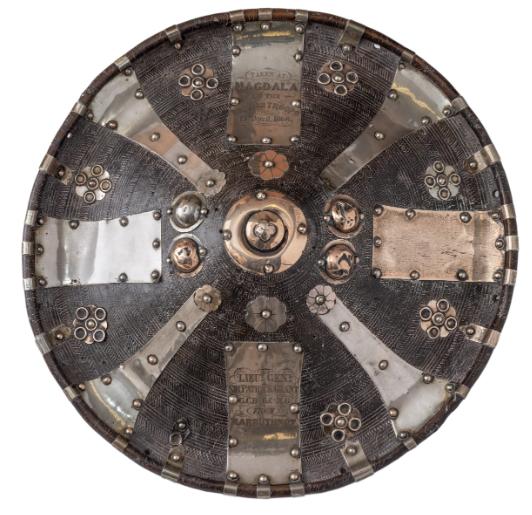

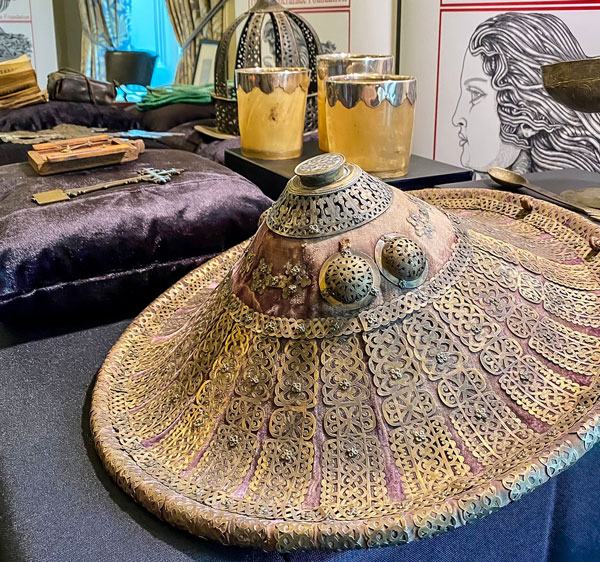
Among the Trust’s most tangible achievements have been its efforts to recover Ethiopian historical objects removed from the country during the nineteenth century.
The British expedition to Magdala in 1868, which culminated in the defeat of Emperor Tewodros II, resulted in the removal of numerous manuscripts, religious objects, ceremonial items and imperial possessions.
Many subsequently entered British museums, private collections and the international art market.
For Ethiopia, these objects represent far more than valuable antiquities. They are material witnesses to the country’s sovereignty, religious traditions and cultural identity.
In October 2024, the Royal Ethiopian Trust announced that it had successfully negotiated the repatriation of an ornamented nineteenth-century shield taken following the British campaign at Magdala.
In December 2025, the Trust announced another important development: the acquisition and planned repatriation of a gold hairpin belonging to Empress Tiruwork, the wife of Emperor Tewodros II.
The ornament, which had remained outside Ethiopia for more than 150 years, was acquired following negotiations involving Bertolami Fine Art in Rome. The Trust announced plans for its return to Ethiopia, although the completion of that transfer has not been independently established.
Such initiatives demonstrate the potential of the Crown Council and its associated organisations to undertake work of national significance without exercising political authority.
The return of Ethiopia’s cultural treasures is not exclusively a royalist cause. It is a matter of historical justice and national patrimony, capable of bringing together Ethiopians of different political persuasions.
For me, this is precisely the kind of undertaking through which the Crown can demonstrate its continuing value.
Prince Ermias’s dedication to preserving the imperial inheritance becomes particularly meaningful when that inheritance is made accessible to the Ethiopian people themselves.
Ethiopia’s Complicated Political Landscape
The question of the Crown Council’s future cannot be separated from the political circumstances confronting Ethiopia today.
Few countries possess such an extraordinary combination of ancient history, cultural diversity, religious traditions and competing political identities.
Ethiopia is home to numerous ethnic communities, including the Oromo, Amhara, Tigrayans, Somali, Afar, Sidama and many others, each possessing distinctive languages, traditions and historical experiences.
For centuries, the relationship between the central state and these different communities has been one of the country’s most complicated political questions.
The imperial governments sought to maintain a unified Ethiopian state, frequently through centralised authority. The revolutionary regime that followed the monarchy pursued its own vision of political transformation, often with devastating consequences.
After the fall of the Derg in 1991, Ethiopia adopted a system of ethnic federalism intended to recognise the rights and identities of its different nationalities.
That system remains the subject of considerable debate.
Its supporters regard federal autonomy as an essential safeguard against historical domination and centralised political control. Its critics argue that organising political institutions around ethnic identity can intensify divisions and encourage competition over territory and resources.
These disagreements reflect real and sometimes painful historical experiences.
Since Prime Minister Abiy Ahmed came to power in 2018, Ethiopia has experienced significant political changes, accompanied by serious internal conflicts.
The devastating war in Tigray between 2020 and 2022 resulted in enormous loss of life, displacement and destruction.
Although the Pretoria peace agreement of November 2022 offered hope of reconciliation, the settlement has remained fragile.
In September 2026, renewed fighting erupted in Tigray. Federal-aligned forces subsequently regained control of Mekelle, the regional capital, and on 16 October Prime Minister Abiy announced a new caretaker administration intended to restore stability and prepare for regional elections within six months.
The renewed conflict has also heightened tensions with Eritrea, raising international concern about the possibility of wider regional instability.
Meanwhile, insecurity in Amhara and Oromia continues to complicate the country’s political and humanitarian situation.
The suffering caused by these conflicts is a reminder that Ethiopia’s future depends upon finding ways to reconcile legitimate regional aspirations with the preservation of a common national framework.
It is against this background that the question of a unifying national institution becomes particularly relevant.
Could the Ethiopian Crown Become a Symbol of National Unity?
The possibility of restoring the Ethiopian monarchy is an intriguing constitutional question, although it must be approached with historical understanding and political realism.
There is currently no established constitutional process for restoration, nor reliable contemporary national polling demonstrating widespread public support for the return of the monarchy.
The Ethiopian state is a federal republic, and any fundamental change to its constitutional structure would require a legitimate political process and the freely expressed consent of its people.
Nevertheless, constitutional monarchy need not imply a return to the political system that existed before 1974.
Modern constitutional monarchies provide several examples of sovereigns who perform representative and ceremonial duties while elected governments exercise executive authority.
In Britain, Sweden, Norway and Japan, the monarchy forms part of the constitutional structure without governing in the manner of an executive sovereign.
Such arrangements illustrate how a hereditary institution can coexist with parliamentary democracy, although their effectiveness depends upon particular historical circumstances and broad public acceptance.
A hypothetical Ethiopian constitutional monarchy would therefore raise questions very different from those associated with the restoration of imperial executive power.
Could the Crown serve as a non-partisan head of state, representing the continuity of the nation while elected institutions determine public policy?
Could it provide a ceremonial focus for national identity without diminishing the constitutional rights of Ethiopia’s different regions?
Could the historical authority of the imperial dynasty be reconciled with the country’s religious and ethnic diversity?
These are legitimate questions, but they have no simple answers.
The imperial era is remembered differently by different Ethiopian communities.
For some, it represents independence, sovereignty, national dignity and an exceptional historical inheritance.
For others, it recalls political centralisation, unequal access to power, territorial conquest and grievances that contributed to the revolutionary upheavals of the twentieth century.
A restored monarchy could not simply disregard these memories.
Any constitutional settlement would have to guarantee democratic accountability, religious freedom, equality before the law and the rights of Ethiopia’s diverse communities.
It would also require a broad national consensus extending far beyond those who already support the imperial dynasty.
From my perspective as the Crown Council’s Representative for Europe, I believe that the possibility of a constitutional role for the Crown merits thoughtful discussion. My belief rests upon the potential value of an institution that might embody historical continuity without exercising partisan political power.
Yet I recognise that such a role could only acquire legitimacy through the consent of the Ethiopian people themselves.
A Crown Capable of Recognising Ethiopia’s Many Traditions
One aspect of Prince Ermias’s approach that I find especially significant is his recognition of Ethiopia’s other traditional institutions.
The country’s history is not confined to the Solomonic dynasty alone.
Across Ethiopia, regional kingdoms, sultanates and traditional authorities have preserved distinctive cultural and political inheritances.
The Afar sultanates, the historical kingdoms of the Oromo and the numerous traditional institutions of southern Ethiopia form part of a rich and varied national heritage.
These traditions have not always enjoyed harmonious relationships with the imperial centre. Indeed, their histories often reflect the complicated processes through which the modern Ethiopian state was formed.
Nevertheless, their continued cultural significance deserves recognition.
In March 2023, the Crown Council congratulated Sultan Ahmed Alimirah Hanfare upon his coronation as Sultan of the Afar, acknowledging the historical relationship between the Afar sultanate and the Ethiopian imperial dynasty.
Prince Ermias expressed appreciation for the diversity of Ethiopia’s traditional institutions and the importance of preserving their ancestral dignity.
To my mind, this recognition illustrates a particularly constructive understanding of the Crown’s potential role.
The historical prestige of the Solomonic dynasty need not depend upon diminishing the traditions of other Ethiopian peoples.
On the contrary, a broader appreciation of the country’s diverse royal and traditional institutions could encourage a more inclusive understanding of Ethiopian history.
The challenge would be to ensure that such recognition is reciprocal and accepted by the communities concerned, rather than imposed through an inherited hierarchy.
If the Crown is ever to serve as a national symbol transcending political divisions, respect for this diversity would be indispensable.
Ethiopia’s Imperial Heritage and Its International Importance
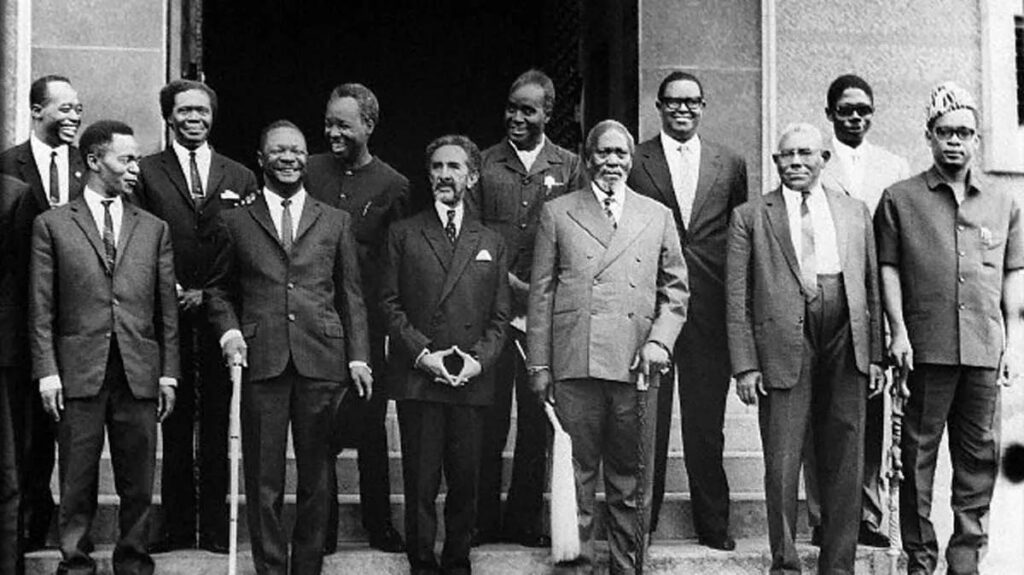
Ethiopia’s imperial inheritance possesses an international dimension of exceptional importance.
Emperor Haile Selassie was one of the most recognisable statesmen of the twentieth century.
His resistance to Italian aggression and his appeal to the League of Nations in 1936 established him as an international symbol of resistance to conquest.
Following the Second World War, he became a prominent advocate of African independence and continental cooperation.
The foundation of the Organisation of African Unity in Addis Ababa in 1963 was among the defining diplomatic achievements of his reign.
The fact that the African Union continues to maintain its headquarters in Addis Ababa demonstrates Ethiopia’s enduring importance in continental diplomacy.
For the Crown Council, this international inheritance offers opportunities for cultural diplomacy and engagement with institutions beyond Ethiopia’s borders.
Prince Ermias has maintained relationships with individuals and organisations interested in Ethiopia’s history, religious traditions, education and cultural development.
The Council’s international representatives also form part of this broader network.
My own appointment as Representative for Europe in 2007 has been a source of considerable personal pride.
It has allowed me to remain associated with an institution whose historical importance extends well beyond the boundaries of Ethiopia itself.
I have always regarded this responsibility as an honour, not simply because of the distinction of the imperial dynasty, but because of the civilisation it represents.
Ethiopia’s history is part of the shared inheritance of humanity.
Its ancient Christian traditions, its remarkable manuscripts, its architectural achievements, its religious art and its resistance to colonial domination deserve far greater international recognition.
The Crown Council can contribute to that recognition through cultural partnerships, historical research and educational initiatives.
In this field, Prince Ermias’s international outlook is particularly valuable.
He understands that Ethiopia’s historical importance provides opportunities for cooperation that transcend contemporary political disputes.
The Next Generation and the Future of the Crown Council
The future of the Ethiopian Crown Council will ultimately depend upon its ability to remain relevant to generations who have no personal memory of the monarchy.
More than fifty years have passed since Emperor Haile Selassie’s overthrow.
For many younger Ethiopians, the imperial era is a chapter of history encountered through schoolbooks, family traditions and sometimes sharply contrasting political interpretations.
The Crown Council cannot assume that historical prestige alone will guarantee continued public interest.
It must demonstrate that the values it seeks to preserve can contribute meaningfully to the concerns of contemporary Ethiopian society.
Education is therefore of particular importance.
The Royal Ethiopian Trust’s ambition to support scholarships, educational institutions and opportunities for young people offers one possible means of building a connection between the imperial inheritance and the aspirations of a new generation.
The encouragement of entrepreneurship and economic development is equally relevant.
Ethiopia possesses enormous human potential, but that potential can only be realised through peace, investment, education and effective institutions.
Cultural preservation also has a vital role to play.
The country’s imperial archives, manuscripts, works of art and historical artefacts form part of a national patrimony that should be accessible to scholars, students and the wider public.
The Crown Council’s involvement in the recovery of historical treasures provides a practical example of how such work can benefit the country without requiring political agreement upon the monarchy’s constitutional status.
There is also a broader responsibility to encourage a balanced understanding of Ethiopia’s history.
The achievements of Emperor Haile Selassie deserve recognition, but so too do the political and social grievances that contributed to his downfall.
The imperial period should be studied with neither uncritical nostalgia nor ideological hostility.
An institution confident in the significance of its own history should be capable of acknowledging its complexities.
In commemorating the fiftieth anniversary of Emperor Haile Selassie’s death in 2025, the Royal Ethiopian Trust published a reflection recognising both the Emperor’s extraordinary achievements and the controversies and tragedies of his reign.
Such an approach is important.
Historical reconciliation begins with the willingness to understand the past in its entirety.
The Possibility of Restoration: A Constitutional Question for the Future
The question of whether Ethiopia might one day restore its monarchy cannot be answered simply by invoking the grandeur of its imperial history.
There are several conceivable paths for the future of the Crown Council.
It may continue primarily as a cultural and philanthropic institution, preserving the imperial heritage while supporting education, historical research and humanitarian initiatives.
It might eventually acquire some form of formal cultural or ceremonial recognition within Ethiopia’s existing republican framework, should the country’s institutions and people consider such a development appropriate.
Alternatively, a future constitutional debate could consider the possibility of a non-executive monarchy, with the sovereign serving as a ceremonial head of state and elected institutions retaining political authority.
None of these developments is inevitable.
Nor is there sufficient evidence to predict that a restoration of the monarchy will occur.
Nevertheless, the continued existence of the Crown Council preserves an institutional and historical reference point that could form part of any future discussion about Ethiopia’s constitutional identity.
The question would not simply be whether the country should return to its past.
It would be whether elements of that past could be incorporated into a political framework designed to meet the needs of a modern, diverse and democratic society.
For such a project to have meaning, it would have to emerge from national dialogue rather than dynastic aspiration alone.
It would require the participation of Ethiopia’s many communities and a willingness to confront historical grievances.
Above all, it would have to be directed towards reconciliation rather than the restoration of privilege.
Prince Ermias: Preserving the Crown Without Living in the Past
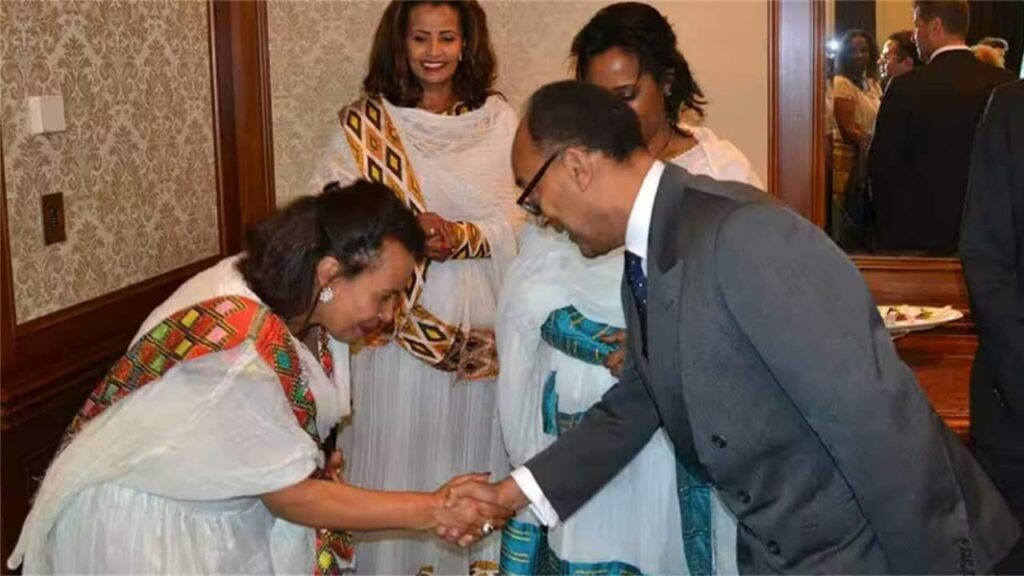
Having been associated with the Ethiopian Crown Council for nearly two decades, I have come to appreciate the particular responsibility carried by Prince Ermias.
He inherited neither a functioning royal court nor the apparatus of government.
Instead, he inherited the duty of preserving an institution whose constitutional authority had been extinguished by revolution, but whose historical and cultural identity remained alive.
It is a responsibility requiring patience, judgement and an understanding of the distinction between the preservation of legitimacy and the pursuit of political power.
Prince Ermias has sought to maintain that distinction while ensuring that the Crown Council remains an active institution.
The establishment of the Royal Ethiopian Trust, the recovery of historical artefacts, the encouragement of educational initiatives and the recognition of Ethiopia’s diverse traditional institutions all reflect this broader conception of royal service.
These activities do not resolve Ethiopia’s political divisions, nor could any single cultural institution reasonably be expected to do so.
What they can provide is a contribution to the preservation of national memory and the development of relationships that extend beyond immediate political interests.
I have always admired Prince Ermias’s capacity to approach these responsibilities with dignity.
His commitment to Ethiopia is not dependent upon the possession of a throne.
Indeed, I believe that his work demonstrates how the responsibilities associated with royalty can survive the disappearance of the political institutions through which they were once exercised.
In an age when public life is so frequently dominated by the pursuit of immediate political advantage, the preservation of a historical inheritance for future generations represents a different kind of undertaking.
It is one that I consider worthy of respect.
The Crown and Ethiopia’s Search for Common Ground
Ethiopia stands at a difficult moment in its modern history.
Its extraordinary cultural inheritance coexists with serious political disagreements, regional tensions and the continuing human consequences of armed conflict.
The country’s future will depend upon its ability to establish institutions that protect the rights of its diverse communities while sustaining a sense of shared national belonging.
The Crown Council cannot provide a substitute for political dialogue, constitutional government or the difficult work of reconciliation.
Nor can the historical prestige of the imperial dynasty alone resolve disputes rooted in competing experiences of state formation, political exclusion and regional autonomy.
Yet the Council’s continued existence raises an important question about the role of historical institutions in national life.
Can a country draw upon its inherited symbols and traditions without reproducing the inequalities of earlier political systems?
Can the memory of an ancient monarchy contribute to a more inclusive understanding of national identity?
And might a Crown that no longer exercises political authority nevertheless serve, in some future constitutional arrangement, as a symbol of continuity recognised across different communities?
These are questions that deserve consideration without prejudice or romantic illusion.
For my part, having had the honour of representing the Ethiopian Crown Council in Europe since 2007, I remain deeply attached to the institution and to the remarkable civilisation whose historical continuity it embodies.
My admiration for Prince Ermias is both personal and institutional.
I respect his devotion to Ethiopia, his commitment to preserving its imperial heritage and his determination that the Crown should remain associated with dignity, cultural continuity and constructive service.
I do not believe that Ethiopia’s future can be found simply by attempting to recreate its past. History rarely offers such straightforward solutions.
Yet I also believe that a nation confronted by profound divisions should not lightly disregard the cultural and historical institutions that form part of its collective inheritance.
Whether Ethiopia will ever choose to restore its monarchy is a decision that belongs to the Ethiopian people.
The possibility of a constitutional Crown, standing apart from the daily competition of party politics and serving as a symbol of national reconciliation, is nevertheless an idea worthy of serious discussion.
For such an institution to succeed, it would need to earn the confidence of Ethiopians across ethnic, regional and religious boundaries, including those whose historical memories of imperial government differ profoundly from those of the monarchy’s supporters.
That would be no small undertaking.
But the future of the Crown Council need not depend exclusively upon the restoration of the throne.
Through education, cultural preservation, philanthropy and international cooperation, it can continue to demonstrate that an ancient institution may retain a meaningful purpose in a modern world.
Under the distinguished leadership of Prince Ermias Sahle-Selassie Haile-Selassie, that endeavour continues.
More than half a century after the fall of Emperor Haile Selassie, the Ethiopian Crown remains part of the country’s historical consciousness.
Its political future is uncertain, but its cultural inheritance endures.
And perhaps the most important lesson to be drawn from its survival is that a throne may be taken away by revolution, but the responsibility to serve one’s country need not end with its disappearance.
Official institutional sources: Ethiopian Crown Council and Royal Ethiopian Trust. Political developments are current to 17 October 2026. The author’s appointment and personal assessments are presented as first-person testimony.


 Carlos Mundy
 Giovanni R. Ruffini Professor of History Fairfield University, USA


 Elga Wimmer

 Ludovico di Valdieri
 Charles Markeaton-Mundy
 Clive Uckfield