 Carlos Mundy
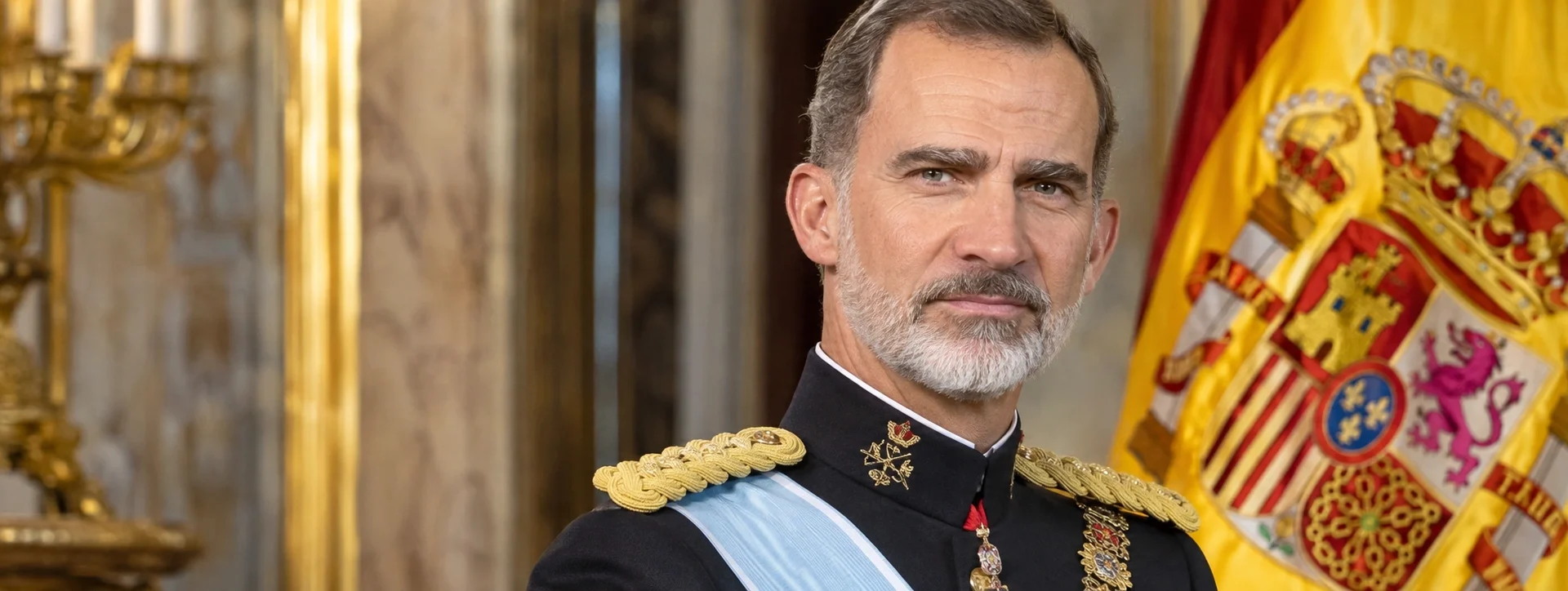
In an age when political authority is increasingly confused with political spectacle, King Felipe VI of Spain has pursued a markedly different course. His reign has been defined not by grand gestures or ideological confrontation, but by an understanding of constitutional duty, personal dignity and the quiet authority of an institution that must endure beyond the governments of the day.
The history of monarchy is filled with sovereigns who sought to impose their will upon events. Far fewer have understood that the preservation of a crown may depend upon knowing precisely when not to intervene. King Felipe VI belongs increasingly to this latter tradition.
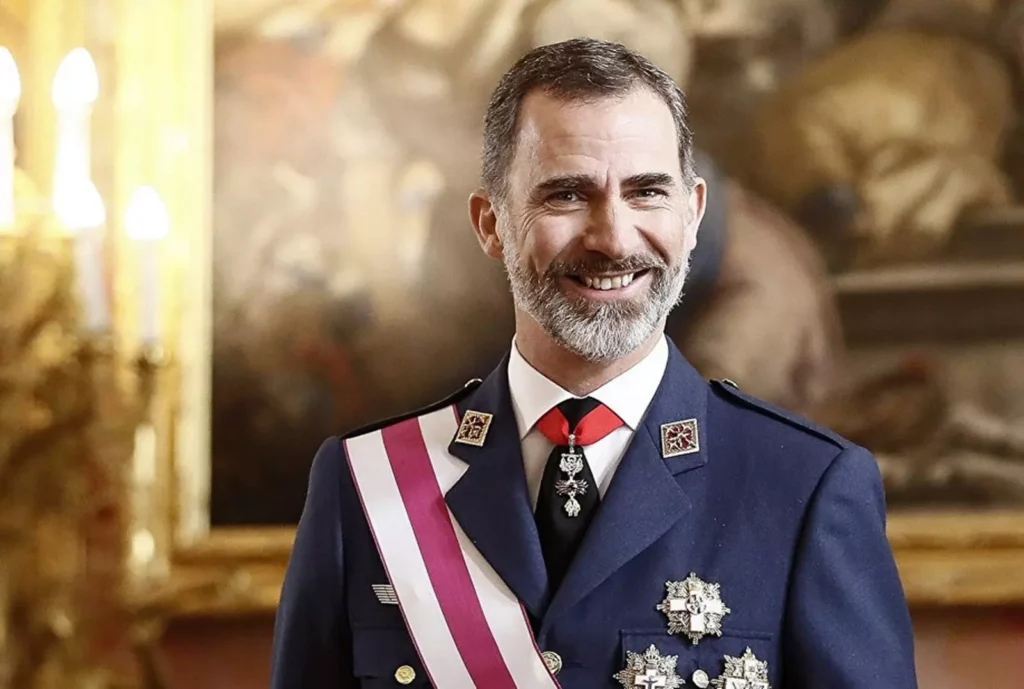
Twelve years after his accession to the Spanish throne, Felipe VI has emerged as one of Europe’s most conscientious constitutional monarchs, navigating a country repeatedly shaken by political fragmentation, regional separatism, institutional controversy and growing ideological polarisation.
His task has been particularly demanding. Unlike his predecessors in earlier centuries, he possesses neither executive authority nor the freedom to engage in political disputes. Yet he is expected to embody national continuity, defend the constitutional order and represent a nation whose citizens frequently disagree about the very nature of their collective identity.
It is an extraordinarily delicate position, requiring patience, restraint and an understanding that the authority of a modern monarch rests not upon the exercise of power, but upon the credibility of the institution he represents.
Born on 30 January 1968, Felipe Juan Pablo Alfonso de Todos los Santos de Borbón y de Grecia came into the world during the final years of General Francisco Franco’s dictatorship, when the future of the Spanish monarchy remained uncertain.
His father, King Juan Carlos I, would subsequently play a decisive role in Spain’s transition to parliamentary democracy, particularly during the attempted military coup of February 1981. The restoration of democratic institutions became inseparable from the modern history of the House of Bourbon.
For the young Prince of Asturias, the lesson was unmistakable: the survival of the monarchy depended upon its identification with constitutional government rather than personal political authority.
His education reflected the responsibilities awaiting him. Following his military training in Spain, he studied law at the Autonomous University of Madrid and subsequently obtained a master’s degree in international relations at Georgetown University in Washington, where he developed a broader understanding of diplomacy and international affairs.
Tall, reserved and intellectually disciplined, Felipe gradually acquired a reputation for seriousness that distinguished him from the more spontaneous public personality of his father.
As Prince of Asturias, he represented Spain abroad, cultivated relations with its autonomous communities and became increasingly familiar with the constitutional complexities of a country whose remarkable cultural diversity has sometimes been accompanied by profound political divisions.
When Juan Carlos I abdicated in June 2014, the monarchy was experiencing one of the most difficult moments in its modern history. Felipe inherited not simply a crown, but the responsibility of restoring its moral authority.
His proclamation before the Cortes Generales on 19 June 2014 was deliberately restrained. There was no elaborate coronation, no extravagant display of royal splendour. Instead, the new sovereign presented himself as the representative of a renewed monarchy, conscious of its responsibilities and determined to regain the confidence of Spanish society.
The challenge was considerable.
Spain was still recovering from the consequences of the financial crisis of 2008. Unemployment remained high, confidence in political institutions had deteriorated and the traditional dominance of the Socialist Party and the centre-right Partido Popular was being challenged by emerging political movements.
At the same time, Catalan separatism was gathering momentum, threatening the constitutional settlement upon which modern democratic Spain had been constructed.
The new King would soon discover that the greatest test of his reign lay not in the ceremonial duties of monarchy, but in the defence of the constitutional framework that defined his position.
The Catalan independence crisis of October 2017 became a defining moment.
Following the referendum organised by the Catalan regional government in defiance of Spain’s Constitutional Court, the country confronted its most serious territorial crisis in decades.
On 3 October, Felipe VI addressed the nation in an exceptional televised speech. His words were unusually forceful, condemning the actions of the Catalan authorities and reaffirming the legitimacy of Spain’s democratic institutions and constitutional order.
For supporters of Spanish unity, the address demonstrated the King’s determination to fulfil his constitutional responsibilities. For many Catalan separatists, however, it reinforced their perception that the monarchy was aligned against their political aspirations.
The controversy illustrated the almost impossible expectations placed upon a constitutional sovereign during a national crisis.
The King was required to defend the constitutional framework without becoming a participant in the political struggle itself.
His intervention did not resolve the Catalan question, nor could it. That responsibility belonged to elected governments, Parliament and the judiciary.
The subsequent years brought further complications, including negotiations between the central government and Catalan political representatives, controversial pardons and the amnesty legislation adopted in 2024 in connection with the independence movement.
These developments generated intense political and legal debate, demonstrating that the territorial question remained unresolved even as the immediate confrontation of 2017 receded.
Throughout these controversies, Felipe VI continued to operate within the boundaries established by the Constitution. Whatever his personal convictions, his public responsibilities required him to respect the decisions of Spain’s democratic institutions.
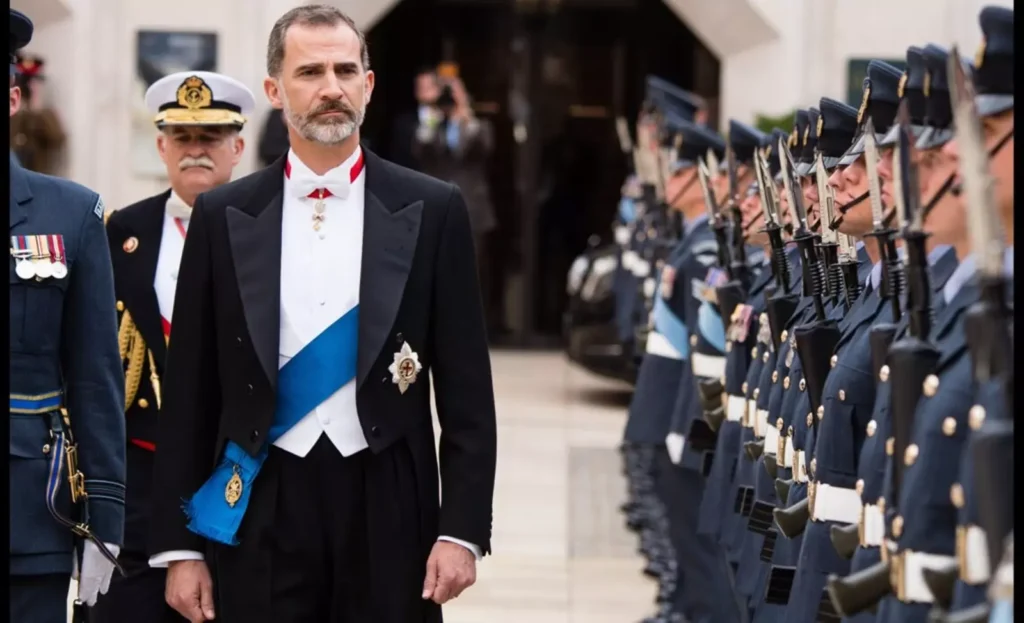
Such restraint has occasionally been interpreted as passivity. Yet the constitutional monarch who attempts to substitute his judgement for that of elected representatives risks undermining the very legitimacy he is sworn to protect.
The distinction is fundamental.
A sovereign may possess considerable moral authority without possessing the constitutional right to exercise political power.
Spain’s increasingly fragmented parliamentary landscape has made this distinction more important than ever.
The inconclusive general elections of 2015 and 2016, followed by further political deadlock in 2019 and the complicated parliamentary negotiations after the 2023 election, repeatedly placed the King at the centre of the constitutional process of government formation.
His role was not to determine which political programme should prevail, but to conduct the consultations prescribed by the Constitution and propose candidates for the presidency of the government through the established parliamentary procedure.
The emergence of Podemos and Sumar, alongside the continuing influence of regional nationalist parties, transformed Spain’s political landscape and complicated the formation of stable governments.
Coalition negotiations, parliamentary alliances and disputes over the legitimacy of political agreements became recurring features of national life.
In this atmosphere, the King’s refusal to enter partisan confrontation has remained one of the defining characteristics of his reign.
It has not always satisfied those who expect the sovereign to speak more forcefully against political developments they regard as damaging to Spain. Nevertheless, Felipe has consistently maintained that the Crown must remain an institution serving the constitutional order rather than any particular ideological constituency.
This position is especially significant in a country where the monarchy itself remains the subject of political disagreement.
Republican sentiment persists, particularly among certain left-wing and regional nationalist movements, while a majority monarchist support encompasses a wide range of political traditions.
For Felipe VI, the challenge is therefore not merely to preserve the affection of those already committed to monarchy, but to demonstrate its usefulness to a society whose political loyalties are increasingly divided.
Central to this effort has been his determination to improve the transparency and accountability of the Royal Household.
One of his earliest significant decisions was the withdrawal of the title of Duchess of Palma de Mallorca from his sister, Infanta Cristina, in 2015, amid the controversy surrounding the financial activities of her husband, Iñaki Urdangarin.
The gesture was an unmistakable indication that family considerations would not take precedence over the reputation of the Crown.
Further measures followed.
In 2022, additional reforms concerning the transparency, administration and financial oversight of the Royal Household reinforced this process of institutional modernisation.
These measures illustrate Felipe’s understanding that hereditary institutions in contemporary democratic societies must continually justify the confidence placed in them.
The King has sought to establish a monarchy that respects its historical inheritance whilst recognising the expectations of modern citizenship.
Queen Letizia has played an important part in this transformation.
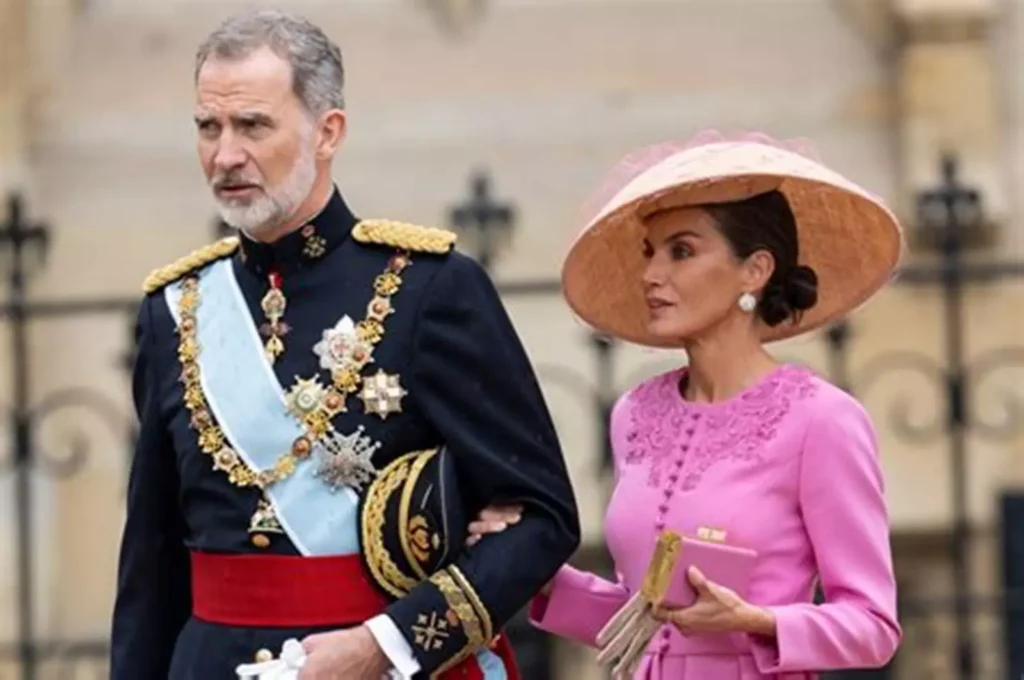
A former journalist with a professional career independent of royal life, she has brought a distinctive perspective to the Spanish Court, concentrating much of her public activity upon education, public health, culture and social questions.
Together, the King and Queen have cultivated a style of monarchy that combines traditional ceremony with a more direct engagement with contemporary Spanish society.
Their international activities have similarly reinforced the Crown’s diplomatic importance.
Felipe VI possesses an unusually broad familiarity with international affairs, strengthened by his education, linguistic abilities and decades of experience representing Spain abroad.
His role in maintaining relations with Latin America, European partners and the wider international community remains an important element of Spanish diplomacy.
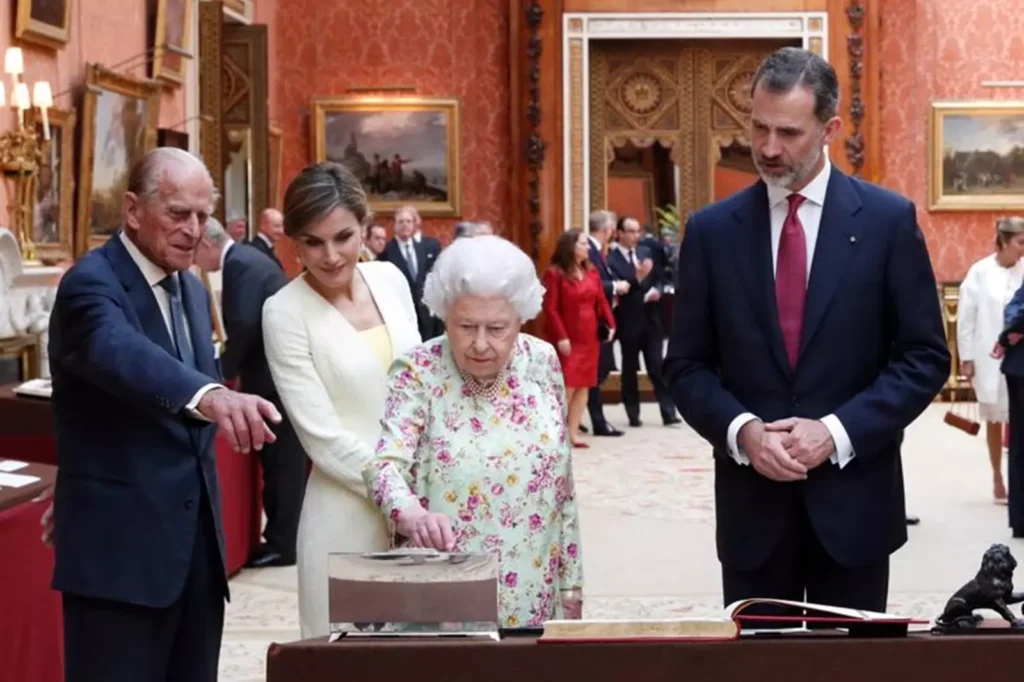
The state visit to the United Kingdom in 2017, when the King and Queen were received by Queen Elizabeth II and Prince Philip, symbolised the enduring relationship between two of Europe’s historic monarchies.
More recently, the diplomatic programme of 2026 included the state visit of French President Emmanuel Macron to Spain in September and the Spanish sovereigns’ state visit to Finland in October. Such occasions illustrate the Crown’s continuing function as a representative of national continuity beyond changes of government. Casa Real+1
Yet perhaps the most revealing demonstration of Felipe VI’s character occurred not within the splendour of a royal palace, nor during an international state visit, but in the mud-covered streets of Valencia.
On 29 October 2024, catastrophic flooding devastated communities across the Valencian region, claiming hundreds of lives and leaving thousands of families confronting the destruction of their homes, businesses and livelihoods.
The disaster, caused by an exceptionally destructive episode of torrential rainfall associated with a DANA weather system, exposed serious questions concerning emergency preparedness, public warnings and the response of the responsible authorities.
When the King and Queen visited Paiporta on 3 November, accompanied by Prime Minister Pedro Sánchez and regional president Carlos Mazón, they encountered scenes of extraordinary anger.
Residents, traumatised by the catastrophe and furious at what they perceived as failures of public administration, shouted insults and threw mud towards the official delegation.
For a few moments, the carefully maintained distance between the monarchy and the raw emotions of a suffering population disappeared.
Felipe VI, his face and clothing marked by mud, continued to engage with residents despite the hostility surrounding him.
Queen Letizia, visibly moved, also spoke with victims and listened to their accounts of suffering.
Pedro Sánchez was evacuated from the immediate confrontation amid security concerns, while the King and Queen remained and continued their exchanges with residents.
The contrast was striking.
What mattered most was the symbolism of the royal couple’s decision to remain.
Here was a sovereign without executive authority, unable to direct emergency operations or promise immediate administrative remedies, nevertheless demonstrating a willingness to confront the anger of those who felt abandoned.
The episode revealed an important dimension of constitutional monarchy: its capacity to provide a human presence at moments when confidence in political institutions has been profoundly shaken.
Felipe did not attempt to silence the protesters or evade their grievances. He listened.
The photographs of the King standing amongst devastated residents, his composure intact despite the hostility directed towards him, became some of the most memorable images of his reign.
They conveyed something that no carefully prepared royal speech could have achieved.
Authority, in that moment, was expressed through endurance rather than command.
The royal couple subsequently returned to affected communities, including Chiva and Utiel, and continued their engagement with the recovery effort. By March 2025, Felipe had made seven visits to Valencia since the disaster, underlining that his concern had not ended with the initial publicity surrounding the catastrophe. AP News+1
For many observers, Paiporta represented a moment when the monarchy’s public value became unusually tangible.
It was not a demonstration of political power, but of personal responsibility.
The episode also offered a reminder that the relationship between a sovereign and his people cannot be sustained by ceremony alone.
It requires presence, empathy and, occasionally, considerable courage.
The extraordinary reception accorded to King Felipe VI and Queen Letizia during their visit to Ceuta on 13 October 2026 offered another revealing illustration of the relationship between the Spanish Crown and the people it represents. Thousands gathered to welcome the sovereigns with spontaneous applause and expressions of affection, whilst Ángel Víctor Torres, the Minister for Territorial Policy representing the Government in the absence of Prime Minister Pedro Sánchez, was greeted with whistles and boos. Beyond the contrasting receptions lay a more profound significance. In a city where questions of sovereignty, national identity and territorial integrity possess particular sensitivity, Felipe VI reaffirmed that Spain’s sovereignty and territorial integrity were not negotiable, promising its inhabitants that they would not be left alone or defenceless. The warmth of the public reception demonstrated the emotional importance that the monarchy continues to hold for many Spaniards, particularly in territories where the presence of the sovereign carries a meaning extending well beyond ceremonial protocol.
Only weeks later, tragedy once again placed the King and Queen at the centre of national grief. On 28 October 2026, a catastrophic railway collision near Urda, in the province of Toledo, claimed 69 lives and left numerous passengers injured. Felipe VI and Letizia visited survivors receiving treatment in hospital and subsequently attended the solemn funeral celebrated in Toledo Cathedral on 10 November, where they offered their condolences to the bereaved families. Prime Minister Pedro Sánchez was conspicuously absent from the ceremony, as he had been from the religious funerals following other recent national tragedies. His Government explained that he did not attend religious services, although several ministers represented the executive. His absence nevertheless provoked criticism, particularly amongst those who considered that the magnitude of the tragedy demanded the personal presence of the head of government, irrespective of religious considerations. Once again, the King and Queen chose to stand alongside their grieving compatriots. The significance of their presence transcended the solemnity of the occasion: it reflected a conception of monarchy in which the sovereign’s responsibility does not end with constitutional formalities, but extends to sharing, in person, the suffering of the nation. At such moments, the Crown’s greatest strength lies not in the powers it exercises, but in the solidarity it embodies.
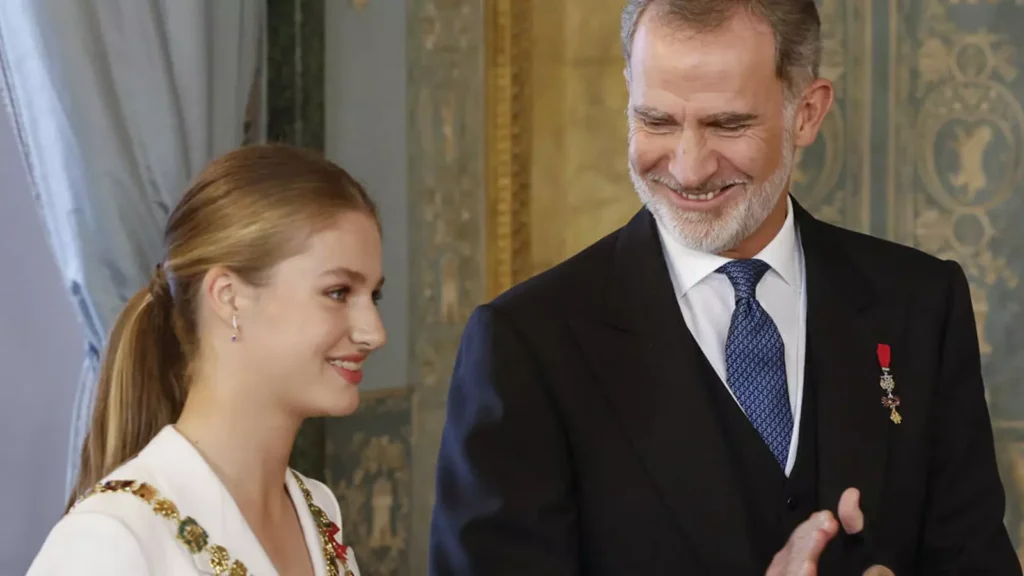
As Felipe VI enters the next stage of his reign, another important development is gradually reshaping the Spanish monarchy: the emergence of his elder daughter, Leonor, Princess of Asturias, as the representative of its future.
Born in 2005, the Princess has been prepared for her constitutional responsibilities through an education combining academic study, international experience and military training.
Her oath of allegiance to the Constitution before the Cortes Generales on her eighteenth birthday, 31 October 2023, marked a particularly significant moment in the history of the restored monarchy.
It was both a personal commitment and a public affirmation of dynastic continuity.
Her subsequent military education across Spain’s armed services has reflected the importance attached to her future constitutional position as supreme commander of the Armed Forces upon accession to the throne.
In June 2026, the Princess completed the Air and Space Force stage of that training at the General Air Academy in San Javier. She subsequently began university studies at Universidad Carlos III in September, extending her preparation beyond the military sphere. Casa Real+1
Her increasingly prominent participation in official engagements, including the 2026 Princess of Asturias Awards in Oviedo, has provided the Spanish public with an opportunity to become familiar with the woman who may one day become Queen Leonor I. casareal.es+1
For Felipe VI, the preparation of his successor is not simply a matter of dynastic obligation.
It is inseparable from his wider project of ensuring that the monarchy enters the coming decades as an institution capable of maintaining its constitutional purpose and public relevance.
The presence of the Princess of Asturias alongside her parents, and the increasingly visible role of her younger sister, Infanta Sofía, offer an image of generational continuity that is particularly important in a period of institutional uncertainty.
The political tensions that have characterised Felipe’s reign remain part of the national landscape. Questions surrounding regional identity, parliamentary stability, institutional trust and the relationship between monarchy and contemporary democratic values will continue to shape Spain’s political future.
The Crown’s legitimacy, within the constitutional framework, must be reinforced through conduct, transparency and an unwavering commitment to the public interest.
The King appears acutely conscious of these responsibilities.
His reign has not been without controversy, nor has every intervention commanded unanimous approval. The speech of October 2017 remains contested in Catalonia, while the persistent attacks upon the monarchy from the extreme left, however frequently unjustified, politically motivated or disproportionate, remain part of the democratic debate that the King himself is constitutionally bound to respect.
Nevertheless, the King’s consistency has become one of his principal strengths.
He has resisted the temptation to become a political protagonist, even when confronted with circumstances that might have encouraged a less disciplined sovereign to intervene more directly.
This is not the absence of leadership, but a particular understanding of its nature.
In a constitutional monarchy, leadership frequently consists of maintaining the integrity of institutions whose authority must outlast the ambitions and disputes of individual political actors.
Felipe VI has sought to personify that continuity.
His responsibilities are particularly demanding because the Spanish monarchy carries the weight of a complicated twentieth-century history. Its restoration is inseparable from the transition to democracy, yet its future depends upon its ability to demonstrate that it belongs to contemporary Spain rather than merely to its past.
The King has therefore had to reconcile historical inheritance with democratic legitimacy, dynastic tradition with public accountability, and national unity with the realities of a pluralistic society.
Few European sovereigns have confronted such a combination of challenges during the first twelve years of their reign.
Yet Felipe has generally approached them with an uncommon degree of discipline.
The monarchy he represents is neither an instrument of government nor a substitute for democratic politics. It is, rather, an institution intended to provide continuity where governments are necessarily temporary, and a symbol of common citizenship where political allegiances are inevitably diverse.
Its effectiveness depends upon the sovereign’s ability to remain sufficiently detached from partisan conflict to retain the confidence of citizens who disagree profoundly with one another.
This is perhaps the most difficult art of constitutional kingship.
A monarch who seeks popularity through political intervention may gain immediate applause from one section of society whilst forfeiting the trust of another. A monarch who remains faithful to his constitutional obligations may, conversely, be accused of excessive caution even as he protects the long-term credibility of the institution.
Felipe VI has consistently chosen the latter course.
His conduct during the Valencia disaster demonstrated, however, that constitutional restraint need not imply personal detachment.
A King may be politically neutral without being indifferent to the suffering of his people.
Indeed, the capacity to stand amongst citizens at moments of grief, uncertainty and anger may constitute one of the most valuable functions of a modern monarchy.
Spain’s political future remains uncertain, as does the precise place the monarchy will occupy within the evolving expectations of future generations.
But Felipe VI has already established a distinctive interpretation of sovereign duty.
He has demonstrated that dignity need not depend upon grandeur, that authority need not be expressed through confrontation, and that the strength of a Crown may reside precisely in its refusal to become another participant in the political struggles of the day.
At a time when political leaders frequently mistake volume for conviction and spectacle for authority, the Spanish sovereign offers a different example.
His greatest achievement may ultimately be neither a speech nor a reform, neither a diplomatic success nor a moment of public acclaim.
It may be the preservation of an institution whose purpose is to remind Spaniards that, beyond the divisions of politics, there remains a shared constitutional history and a common national inheritance.
For King Felipe VI, prudence has not been the refuge of indecision. It has been the discipline of kingship.
And in an increasingly turbulent Europe, that discipline may prove his most enduring legacy.
To see more articles related to this topic, follow this link.


 Carlos Mundy

 Giovanni R. Ruffini Professor of History Fairfield University, USA



 Lavinia Ellington-Wentworth

 Laura Mitchell
 Avner Kessel