
 Charles Markeaton-Mundy
How an American collector transformed a private passion for Tibetan sacred art into a remarkable cultural and spiritual legacy.
There are places in which silence seems to possess a language of its own. Amid the flickering glow of butter lamps, the serene countenances of gilded Buddhas and the intricate symbolism of centuries-old Tibetan paintings, the clamour of the outside world recedes. What remains is an atmosphere of extraordinary stillness, a reminder that peace is not merely the absence of conflict but a discipline of the human spirit.
Such is the world that Alice S. Kandell sought to preserve.
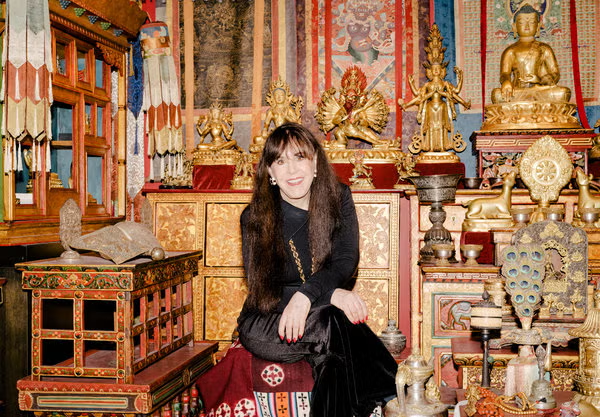
An American photographer, author, child psychologist and devoted collector of Tibetan Buddhist art, Kandell has spent decades bringing together sacred objects whose significance extends far beyond their aesthetic beauty. Her achievement has been to preserve not simply a collection of remarkable works, but something altogether more elusive: the spiritual environment in which those works acquire their fullest meaning.
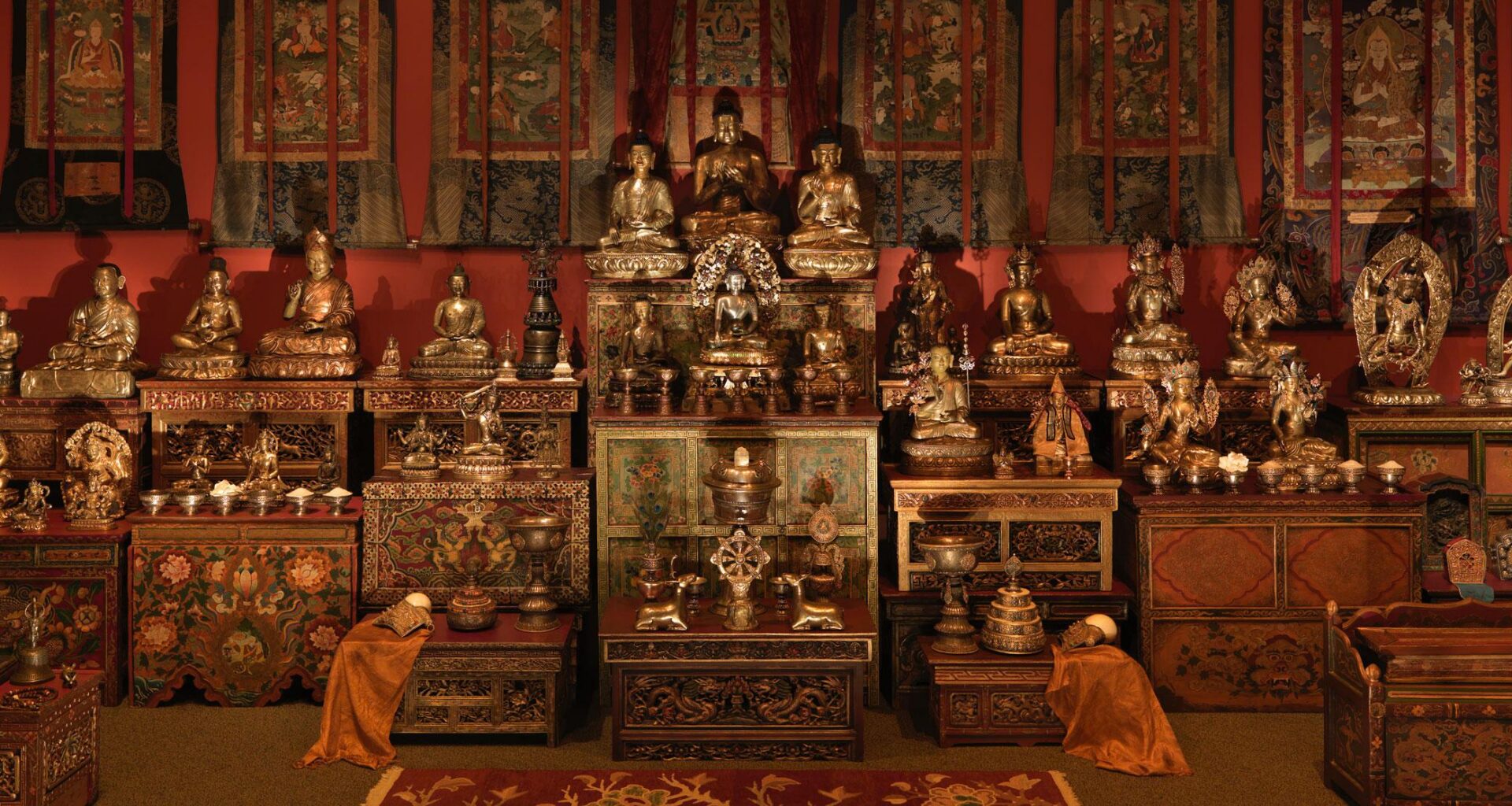
Today, two magnificent shrine rooms assembled from her collection have found permanent homes in major American museums: the Smithsonian’s National Museum of Asian Art in Washington, DC, and the Minneapolis Institute of Art. Each contains more than 200 sacred objects, arranged to evoke the intimate, devotional atmosphere of a traditional Tibetan Buddhist sanctuary.
The origins of Kandell’s remarkable undertaking lie in a Himalayan kingdom whose disappearance from the political map became inseparable from her own life.
In 1965, she travelled to Sikkim to attend the coronation of its ruler, Chogyal Palden Thondup Namgyal, and his American-born consort, Hope Cooke, a close friend from Sarah Lawrence College. The occasion was more than a royal celebration. It introduced Kandell to a civilisation whose religious traditions, artistic inheritance and relationship with the natural world would profoundly influence her.
At the invitation of the Chogyal, she began photographing the people of Sikkim: farmers cultivating precipitous mountain slopes, artisans practising inherited crafts, monks conducting ancient ceremonies, children in village schools and members of the royal household.
Her camera travelled far beyond the palace at Gangtok. She ventured into remote communities, documenting a society whose distinctive character was already threatened by political upheaval. Sikkim would cease to exist as a separate kingdom in 1975, when it became part of India.
The resulting photographic archive, comprising approximately 15,000 images, is an extraordinary record of Himalayan life during a period of historic transformation.
Kandell eventually donated the collection to the United States Library of Congress, where hundreds of photographs are available to the public. Her decision to make them accessible reflects a conviction that has guided much of her work: cultural memory should not remain the exclusive possession of those fortunate enough to acquire or witness it.


Her fascination with Tibetan Buddhism developed alongside these encounters. The sculptures, ritual implements, devotional paintings and ceremonial furnishings she discovered were not merely decorative artefacts. They belonged to a sophisticated spiritual tradition in which art serves as an instrument of meditation, philosophical understanding and religious practice.
For Kandell, the distinction mattered enormously.
A bronze Buddha displayed in isolation beneath the clinical lighting of a conventional museum may be admired for its craftsmanship, historical significance and rarity. Yet something essential can be lost when an object created for spiritual devotion is separated from the world of belief that gave it meaning.
The traditional Tibetan shrine is an environment of relationships. Sculptures, thangkas, offerings, textiles, ritual instruments and sacred images are arranged according to religious principles. Their proximity is intentional; their symbolism interconnected. The shrine is not simply a collection of beautiful things, but a place in which religious experience unfolds.
Kandell’s response was to recreate such an environment within her own New York home.
Over many years, she assembled gilt-bronze figures, paintings, ritual vessels, silk hangings, carpets and elaborately decorated furniture, creating a sanctuary that combined the sensibilities of a discerning collector with profound respect for the devotional traditions from which the objects emerged.
In her Upper East Side apartment, the shrine became a private refuge, its gilded figures illuminated by the gentle glow of lamps and its walls adorned with images of peaceful and wrathful deities. It was a world removed from the hurried rhythms of Manhattan, yet its significance was never intended to remain confined to one residence.
Her generosity ultimately transformed these private sanctuaries into public cultural treasures.
The Smithsonian Institution received a major gift of sacred objects from Kandell, leading to the creation of the Tibetan Buddhist Shrine Room at the National Museum of Asian Art. The installation, subsequently expanded, presents more than 200 objects dating from the thirteenth to the early twentieth century.
Rather than arranging them in conventional museum cases, curators have sought to preserve the atmosphere of a Tibetan devotional space. Sculptures stand amid painted furnishings, textiles hang around them, and recorded monastic chanting introduces an auditory dimension. The result is immersive, contemplative and strikingly different from the detached presentation often associated with museum collections.
A second shrine room was unveiled at the Minneapolis Institute of Art in September 2024, containing more than 200 historical devotional objects from Kandell’s collection. Here, too, the intention was to communicate something beyond artistic accomplishment: the spiritual purpose of the objects themselves.
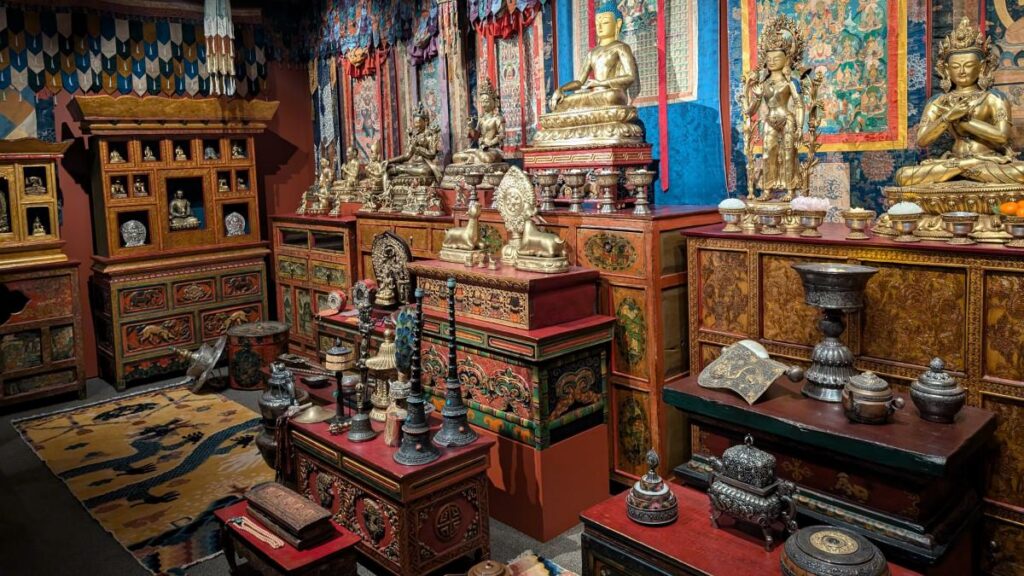
The Minneapolis installation recreates the intimate atmosphere of a traditional household shrine, offering visitors an opportunity to contemplate the relationship between Buddhist art, religious practice and inner tranquillity.
There is considerable cultural importance in this achievement.
The twentieth century witnessed immense disruption across Tibet and the Himalayan world. Political conflict, displacement and the destruction or dispersal of religious institutions endangered artistic traditions that had developed over many centuries.
The preservation of Tibetan sacred art consequently involves more than the conservation of physical objects. It raises questions about historical memory, religious continuity and the responsibilities of collectors and museums towards the communities whose heritage they hold.
Kandell’s shrine rooms offer one thoughtful response. They seek to preserve not only individual masterpieces but also their visual and spiritual relationships, inviting audiences unfamiliar with Tibetan Buddhism to encounter an integrated religious tradition.
Such an approach does not eliminate the complex questions surrounding the movement of sacred objects into Western collections. Nor can a museum entirely reproduce the religious life of a monastery or private devotional space. Nevertheless, Kandell’s insistence upon presenting these works in context represents a meaningful departure from the tendency to regard sacred art primarily as an aesthetic commodity.
Her contribution also extends into scholarship and publishing.
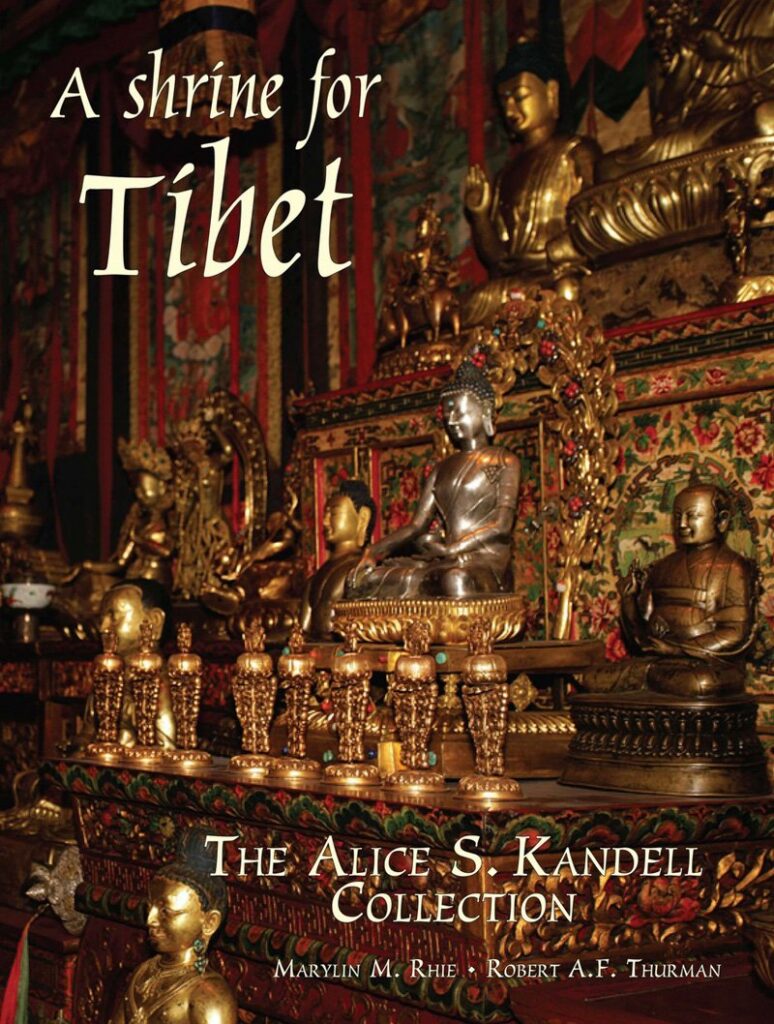
The 2018 volume Assembly of the Exalted: The Tibetan Shrine Room from the Alice S. Kandell Collection, by Donald S. Lopez Jr and Rebecca Bloom, examines the religious functions and historical significance of selected works from her collection. The publication demonstrates how the objects participate in a complex philosophical and devotional tradition, rather than existing solely as examples of exceptional craftsmanship.
Kandell herself has pursued a life of unusual intellectual breadth. Alongside her photographic and collecting activities, she developed a professional career as a child psychologist, a discipline concerned with the emotional development and inner lives of human beings.
It is tempting to see a connection between that vocation and her interest in the contemplative traditions of Tibetan Buddhism. Both, in different ways, address the human mind and its capacity for suffering, understanding and transformation. Although the precise relationship between her professional and spiritual interests should not be presumed, their coexistence lends her life’s work a distinctive coherence.
Her humanitarian and cultural contributions have also received recognition. She has been honoured through the Royal Order of Isabella the Catholic, and her work preserving Tibetan Buddhist sacred spaces has attracted renewed international attention, including a reported nomination for the Nobel Peace Prize. A nomination, of course, is not equivalent to an award or an endorsement by the Nobel Committee.
What makes her legacy especially compelling is the manner in which it challenges conventional notions of philanthropy.
Many collectors donate works of art to museums. Kandell has done something more ambitious: she has sought to preserve an atmosphere, a tradition of contemplation and a sense of the sacred.
The distinction is profound.
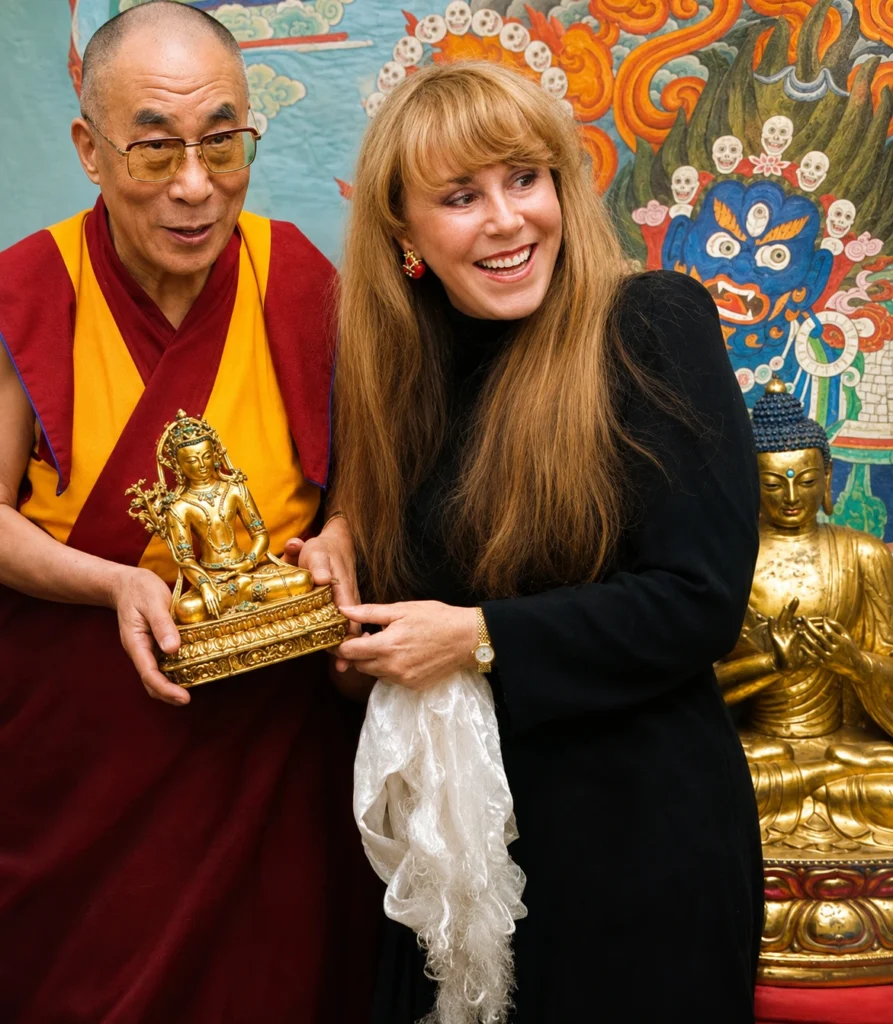
An individual sculpture may survive for centuries while the world that produced it disappears. A painting may be meticulously conserved even as the rituals and beliefs that once surrounded it fade from public understanding. By presenting sacred objects together, Kandell has attempted to safeguard something of their original spiritual coherence.
Her shrine rooms cannot resolve the political conflicts that have marked Tibetan history, nor can they restore a vanished Himalayan kingdom. Their contribution to peace is of another order.
They invite visitors to enter a space in which attention replaces distraction, contemplation tempers agitation and unfamiliar religious traditions become occasions for curiosity rather than division.
In an age when public life is increasingly defined by confrontation, such places possess a quiet but unmistakable relevance.
Perhaps the most remarkable aspect of Alice Kandell’s achievement is that it began not with a grand institutional programme but with the curiosity of a young American woman travelling to a remote Himalayan kingdom to witness the coronation of a friend.
From that encounter emerged an extraordinary photographic archive, a lifelong commitment to Tibetan culture and two sanctuaries that will continue to introduce generations of visitors to the beauty and philosophical depth of Himalayan Buddhism.
The kingdom she first encountered has disappeared from the map. Its spiritual and artistic inheritance, however, continues to speak through the treasures she has preserved.
And in the subdued light of her Tibetan shrine rooms, where gilded figures emerge from the shadows and the distant sound of monastic chanting seems to suspend time itself, Alice Kandell has left a particularly eloquent reminder that peace begins with the cultivation of understanding.


 Carlos Mundy

 Dixon Acosta

 Elga Wimmer

 Metaphore Magazine


 Pablo H. Aznar
 Ludovico di Valdieri

 Gaspard de Montfort

 Lucrecia Aldao

 Nabil Haddadin