
 Ludovico di Valdieri
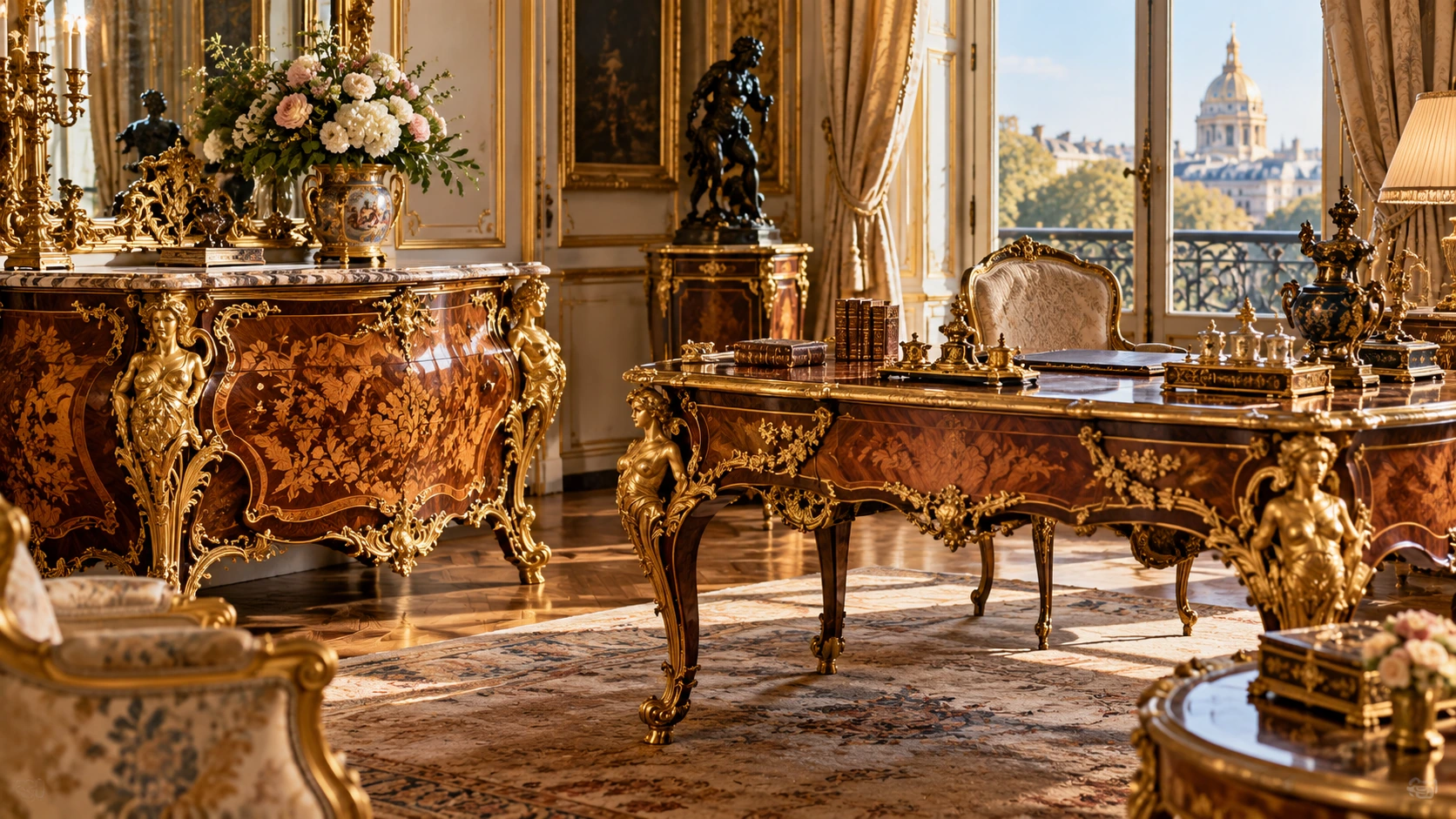
From a modest German workshop to the splendour of Parisian high society, François Linke transformed the decorative arts of the Belle Époque, creating furniture of such extraordinary beauty and technical perfection that his finest pieces remain amongst the most coveted masterpieces of European cabinetmaking.
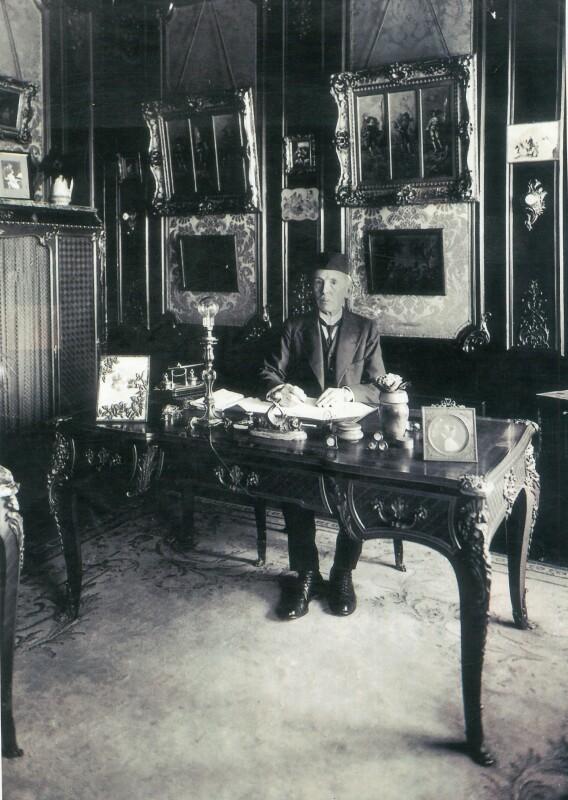
Paris at the turn of the twentieth century was a city intoxicated by its own magnificence. The boulevards glittered beneath electric lights, the grand hôtels particuliers entertained an international aristocracy, and the fortunes accumulated in banking, industry and commerce were being transformed into palaces of private luxury. It was an age when wealth demanded not merely comfort but beauty, when the furnishing of a drawing room could become an artistic statement, and when the decorative arts enjoyed a prestige scarcely imaginable today.
In this extraordinary setting, one cabinetmaker emerged as the supreme interpreter of French elegance: François Linke.
His name would become synonymous with furniture of almost unbelievable refinement, where gilded bronze appeared to flow like molten gold across precious woods, where the graceful silhouettes of eighteenth-century France acquired a new vitality, and where the distinction between furniture, sculpture and jewellery all but disappeared.
Yet François Linke was not born into the privileged world he would eventually furnish. His story began far from Paris, in the German-speaking lands of Central Europe, and his ascent was achieved through an uncommon combination of ambition, discipline, technical genius and artistic imagination.
From Bohemia to the Capital of Elegance
François Linke was born in 1855 in Pankraz, a small village in Bohemia, then part of the Austrian Empire and today within the Czech Republic. His beginnings were modest, and nothing in his early circumstances suggested that he would one day furnish the residences of kings, financiers and some of the wealthiest families in the world.
He trained as a cabinetmaker under a master craftsman named Neumann, acquiring the exacting skills of a profession in which patience and precision were indispensable. The young Linke subsequently travelled through Central Europe, absorbing the traditions of cabinetmaking that had flourished in the great imperial cities.
In 1875, aged twenty, he arrived in Paris.
The French capital possessed a furniture-making tradition without equal. During the eighteenth century, craftsmen such as Jean-Henri Riesener and Jean-François Oeben had elevated cabinetmaking to an art worthy of royal patronage. Their masterpieces, created for Versailles and the great aristocratic residences, combined extraordinary marquetry, elaborate bronze mounts and architectural sophistication.
By the nineteenth century, this legacy had become a powerful source of inspiration. The imperial court of Napoleon III and, subsequently, the prosperous bourgeoisie of the Third Republic had developed an almost insatiable appetite for furniture recalling the splendours of the ancien régime.
Linke recognised the opportunity. Rather than simply reproducing the past, he would eventually reinterpret it with an imagination entirely his own.
By 1881, he had established workshops in the Faubourg Saint-Antoine, the traditional heart of Parisian furniture production, where generations of craftsmen had worked in the shadow of the Bastille. His early business supplied furniture to established houses, including Jansen and Krieger, while he gradually developed the clientele and technical resources necessary to produce furniture under his own name.
The Marriage of Rococo and Art Nouveau


What distinguishes Linke from so many of his contemporaries is that he did not remain content with imitation.
The furniture of Louis XV, with its curved forms, asymmetrical ornamentation and exuberant decoration, provided his principal inspiration. Yet Linke understood that the closing years of the nineteenth century belonged to a different artistic sensibility.
Art Nouveau was transforming European taste. Nature, movement and organic forms were replacing the rigid conventions of academic design. In architecture, jewellery, glass and furniture, artists were exploring a new decorative vocabulary that celebrated fluidity and imagination.
Linke’s great achievement was to reconcile these apparently different worlds.
A commode by Linke might possess the familiar bombé silhouette of an eighteenth-century French masterpiece, yet its bronze mounts could unfold into elaborate arrangements of foliage, flowers, shells and female figures whose movement seemed almost alive.
The surfaces were enriched with intricate marquetry executed in exotic and carefully selected woods. Kingwood, tulipwood, satinwood and other precious veneers were arranged with extraordinary precision, producing subtle contrasts of colour and grain. Marble tops, beautifully shaped and polished, completed the compositions.
But it was the gilt-bronze ornamentation, known as bronzes dorés or ormolu, that gave Linke’s furniture its unmistakable personality.
These were not merely decorative attachments. They were sculptures in miniature, conceived as integral parts of the furniture’s architecture.
The brilliance of this approach owed much to Linke’s collaboration with the sculptor Léon Messagé, whose extraordinary talent brought a new theatricality to French decorative art.
Messagé’s designs combined the sensuality of Rococo sculpture with the restless energy of Art Nouveau. His female figures, elaborate scrolls and naturalistic ornamentation endowed Linke’s creations with an almost animated quality.
Together, the two men developed a decorative language that was at once historical and startlingly original. Their collaboration remains one of the most remarkable partnerships in the history of European furniture.
The Triumph of the Paris Exposition of 1900
If there was one event that transformed François Linke from a respected cabinetmaker into an international celebrity, it was the Exposition Universelle held in Paris in 1900.
The exhibition was conceived as a celebration of civilisation, industry, art and technological progress. Millions of visitors descended upon Paris to admire the achievements of the modern world, from electric illumination to the latest developments in engineering and architecture.
For Linke, the occasion represented an extraordinary opportunity, but also an immense financial gamble.
He invested heavily in the creation of an exceptional collection of furniture intended to demonstrate the full extent of his artistic and technical capabilities. These were not ordinary commercial pieces designed for a conventional showroom. They were spectacular works conceived to astonish an international audience.
Amongst them were elaborate desks, cabinets, commodes and monumental library furniture, richly decorated with bronze sculpture and exquisite marquetry.
His celebrated Grand Bureau received a gold medal, and the exhibition established his reputation amongst the foremost furniture makers of Europe.
The response was remarkable. Critics praised the originality of his designs and the extraordinary quality of their execution. His furniture was recognised not merely as a revival of eighteenth-century styles but as a genuinely creative contribution to contemporary decorative art.
The success brought Linke into contact with an international clientele that included the kings of Sweden and Belgium, the American heiress Anna Gould and the French President Émile Loubet.
The gamble had succeeded. François Linke had become a name associated with the highest expressions of luxury and artistic craftsmanship.
Furniture for Kings, Millionaires and the International Aristocracy


The decades surrounding the First World War witnessed an extraordinary concentration of private wealth. Industrialists, bankers, shipping magnates and newly established dynasties were building residences of almost palatial magnificence.
The international elite looked to Paris for the finest expressions of taste, and Linke was ideally positioned to satisfy their ambitions.
His clientele extended across Europe, the Americas and the Middle East. The furnishing of a great residence could involve entire suites of coordinated furniture, from magnificent drawing-room cabinets and dining-room ensembles to bedrooms of exceptional refinement.
His establishment in the Faubourg Saint-Antoine remained the centre of production, while his presence on the Place Vendôme placed his creations before the wealthiest and most fashionable visitors to Paris.
One of his most extraordinary royal commissions came from Fuad I of Egypt, who engaged Linke to furnish a palace in Alexandria.
The scale of the commission was exceptional. It involved the creation of luxurious interiors intended to reflect the splendour and international standing of the Egyptian monarchy.
Amongst the pieces associated with the Egyptian royal collections were elaborate desks, cabinets and furniture incorporating some of Linke’s most celebrated designs.
The commission demonstrated how completely his reputation had transcended national boundaries. Although his artistic language was unmistakably French, his furniture had become an international symbol of dynastic magnificence.
It also represented a fascinating cultural phenomenon: the great royal and aristocratic houses of the twentieth century continued to commission furniture inspired by the French monarchy of the eighteenth century, even as the political world that had created those original masterpieces had largely disappeared.
The Extraordinary Craftsmanship Behind the Beauty
To appreciate François Linke properly, one must look beyond the dazzling effect of gilded bronze and polished marquetry.
His furniture was the product of a highly sophisticated workshop organisation in which numerous specialised craftsmen contributed to the creation of a single object.
Cabinetmakers constructed the underlying wooden structures. Veneer cutters and marquetry specialists created intricate decorative surfaces. Sculptors and bronze workers produced the elaborate mounts, while gilders, polishers and locksmiths attended to the finishing details.
Every component had to conform to demanding standards.
The fitting of drawers, the precision of joints, the balance of proportions and the integration of bronze ornamentation required extraordinary technical control.
One of the most fascinating aspects of Linke’s business was his meticulous documentation. His workshop records, drawings and numbered designs have allowed later historians and specialists to reconstruct the development of individual pieces.
These index numbers are particularly important today, enabling collectors and scholars to identify specific models and compare surviving examples with the original workshop documentation.
His celebrated Commode Coquille: Coquetterie et Modestie, identified as index number 559, is a particularly revealing example.
Conceived with Léon Messagé, the design incorporates remarkable female busts and elaborate sculptural ornamentation. Its originality lies not simply in the richness of its decoration but in the way the sculptural elements form part of the entire composition.
It is furniture conceived with the imagination of a sculptor and executed with the discipline of a master cabinetmaker.
The model became one of Linke’s most recognisable achievements, and variations were produced for important clients.
The Disappearance of a World
The First World War brought profound changes to European society. The collapse of empires, the weakening of aristocratic fortunes and the emergence of new social and artistic values transformed the market for luxurious furniture.
The world in which Linke had achieved his greatest success was gradually disappearing.
Modernism increasingly favoured simplicity, functionalism and the elimination of elaborate ornamentation. The exuberant decorative vocabulary of the Belle Époque began to appear unfashionable to a generation fascinated by steel, glass and geometric forms.
Nevertheless, Linke continued to work for wealthy international patrons, particularly those who remained devoted to the grandeur of French decorative tradition.
His production gradually diminished during the 1930s, and the extraordinary workshops that had once embodied the ambitions of the Belle Époque entered their final chapter.
François Linke died in Paris in 1946, aged ninety-one.
He had lived through the reign of Napoleon III, the establishment of the French Third Republic, two world wars and the transformation of European society.
Few craftsmen have witnessed such profound changes in the world around them.
And perhaps none represented so completely the final flowering of the great tradition of French royal cabinetmaking.
François Linke and the International Art Market


Today, furniture bearing the signature of François Linke occupies a distinguished position in the international market for decorative arts.
His finest creations are sought after by collectors who appreciate not only their extraordinary craftsmanship but also their historical significance.
The most desirable pieces are generally those associated with his great exhibition designs, particularly works incorporating the sculptural bronze mounts created by Léon Messagé.
Provenance, condition, originality and documented workshop history play an essential role in determining their desirability.
A relatively restrained cabinet or table may command a very different price from a monumental exhibition piece, even when both bear Linke’s signature.
The market is also highly sensitive to the survival of original bronze mounts, veneers, marble tops and structural components. Heavy restoration or alterations can substantially affect value.
For collectors, the existence of Linke’s workshop records offers a particularly valuable means of identifying models and establishing historical context.
Major auction houses, including Sotheby’s and Christie’s, have handled important examples of his furniture, whilst specialist galleries continue to present his work to an international audience.
His market has experienced changes in fashion, as has the market for much nineteenth-century decorative art. Yet exceptional examples retain a special appeal because they represent something that can scarcely be recreated under modern commercial conditions: an extraordinary concentration of artistic imagination, specialist labour and uncompromising craftsmanship.
A Linke masterpiece is not simply an expensive antique. It is the surviving expression of an entire civilisation’s understanding of luxury.
The Last Expression of French Magnificence
There is something profoundly moving about the work of François Linke.
His furniture belongs to a world in which the creation of beauty could justify years of patient labour, where the smallest bronze ornament might receive the attention of a sculptor, and where a cabinetmaker could aspire to the artistic standing of a painter or architect.
He was, in many respects, the spiritual heir to the great craftsmen who had furnished Versailles under Louis XV and Louis XVI.
Yet his achievement was not simply to preserve their traditions.
He gave them a final moment of extraordinary brilliance.
By combining the elegance of the ancien régime with the imagination of Art Nouveau, Linke created a style that could only have emerged in Paris at the height of the Belle Époque.
His furniture embodies the confidence, wealth and cultivated extravagance of a society that believed beauty to be an essential expression of civilisation.
There is a certain irony in the fact that a young craftsman born in a modest Bohemian village should have become one of the last great interpreters of French royal magnificence.
Perhaps it was precisely his distance from that vanished aristocratic world that allowed him to recreate it with such freedom and imagination.
François Linke did not merely manufacture furniture. He gave physical form to the dreams of an age.
And more than a century after his greatest triumphs, his masterpieces continue to remind us that luxury, at its finest, is not a question of ostentation, but of artistry carried to the point of perfection.
Historical references: Sotheby’s, François Linke: Master Craftsman of the Belle Epoque (2024); Christie’s catalogue records of the Commode Coquille; BADA and specialist furniture archives. An important scholarly reference is Christopher Payne’s François Linke, 1855–1946: The Belle Epoque of French Furniture (2003).


 Elga Wimmer


 Pablo H. Aznar

 Clifford Thurlow

 Antoinette Martin

 Romy Querol

 Gaspard de Montfort
 Charles Markeaton-Mundy
 Lucrecia Aldao

 Nabil Haddadin