
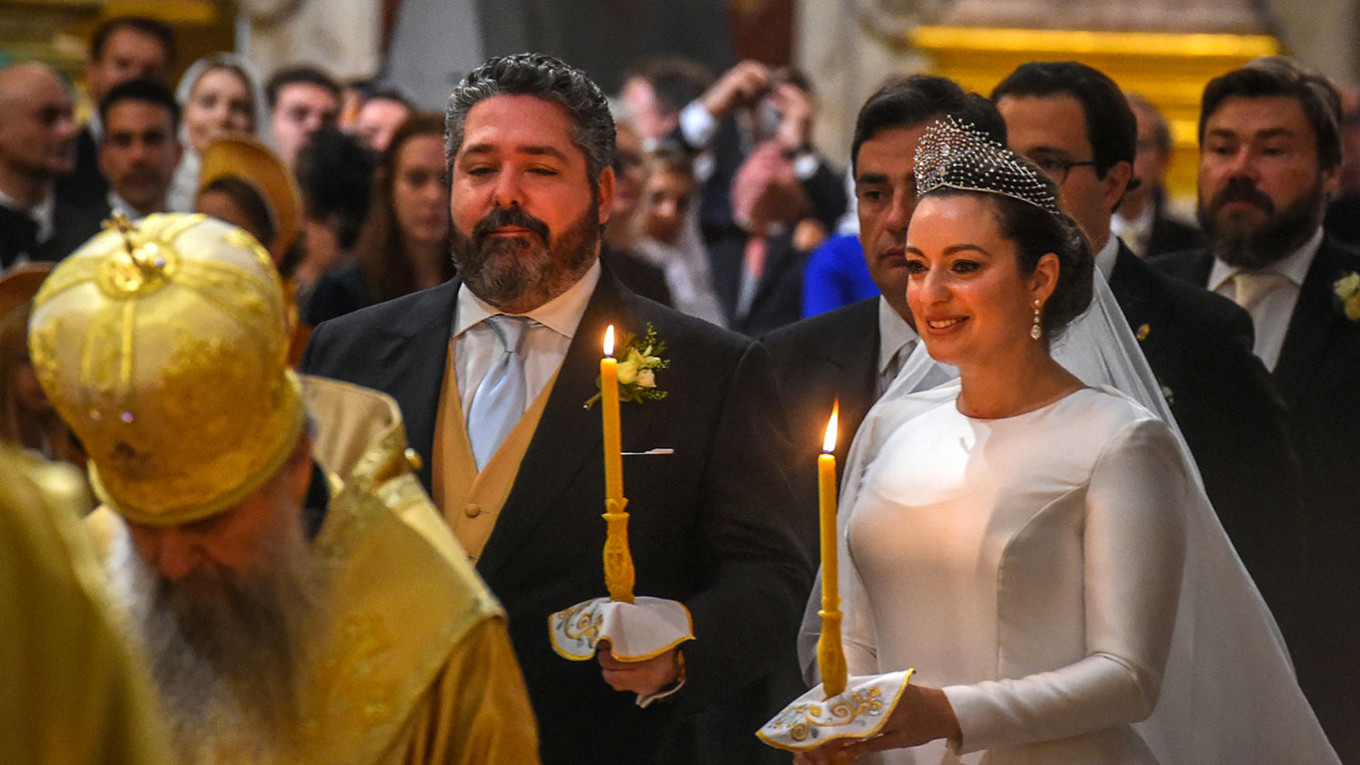
 Carlos Mundy
More than a century after revolution drove the Romanovs from Russia, Grand Duke George Mikhailovich and Princess Victoria Romanovna have done something their ancestors could scarcely have imagined: they have brought the younger generation of the Imperial House home. Married on Russian soil in the first great Romanov wedding there since the Revolution, increasingly connected to the country and now parents of two young children, they represent a remarkable new chapter in a dynasty that history once appeared to have extinguished.
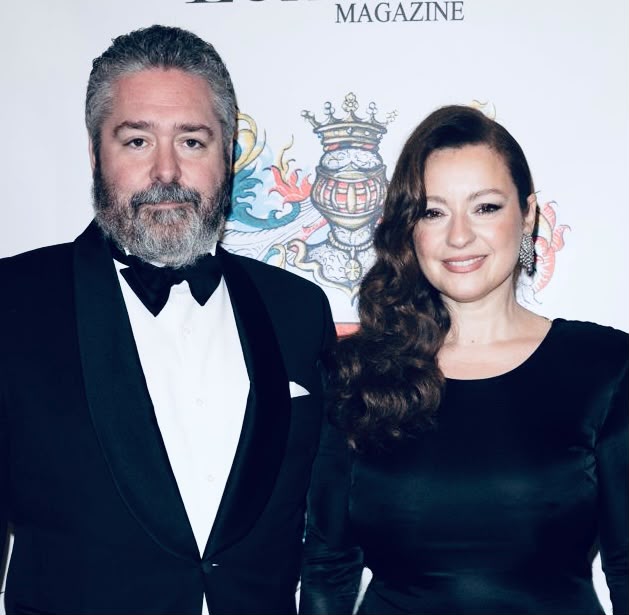
My own connection with the Russian Imperial Family is a rather curious one, marked more by coincidence than close acquaintance. I had the pleasure of being among the guests invited to the baptism of Grand Duke George Mikhailovich, although, rather amusingly, I have never actually had the honour of meeting him. It was an occasion of considerable dynastic significance, for the infant Grand Duke represented the next generation in the line of succession to the Russian Imperial Crown. The ceremony brought together a distinguished gathering of European royalty, including King Juan Carlos and Queen Sophia of Spain, Tsar Simeon II and Queen Margarita of the Bulgarians, and members of several other European royal houses including the Hohenzollerns, the Liechtensteins and the Braganzas. It was one of those rare occasions when the splendour and traditions of Europe’s former reigning dynasties seemed, if only for a moment, to belong as much to the present as to the past.
His mother, Grand Duchess Maria Vladimirovna, and I also attended Runnymede College in Madrid, albeit in different classes. Over the years, however, I have had the pleasure of meeting the Grand Duchess on several occasions, and I have always admired her unwavering devotion to Russia and her profound sense of duty towards the Imperial Crown. Her dedication to preserving the traditions, dignity and historical legacy of the Romanov dynasty is something I find particularly admirable. These personal encounters and connections, however modest, have naturally given me a special interest in the family and its place in Russian history.
History has a peculiar habit of refusing to end where politicians decree that it should.
In 1917, the Russian monarchy fell. Members of the Romanov family fled into exile, and the new Soviet state attempted not merely to abolish the monarchy but to erase much of the world that had surrounded it.
Palaces became museums. Churches were closed or destroyed. Imperial insignia disappeared from public life. The double-headed eagle was replaced. The Romanovs themselves became ghosts of another Russia.
And yet, more than a century later, the dynasty is once again present on Russian soil.
Not as a government.
Not as a rival political authority.
Not as a court seeking to recreate the vanished splendours of 1917.
But as a family increasingly attempting to reconnect a living dynasty with the country from which it was exiled.
At the centre of this new chapter are Grand Duke George Mikhailovich and his wife, Princess Victoria Romanovna.
Their significance lies precisely in the fact that they are young enough to represent something other than memory.
For decades, the Romanov story inevitably looked backwards — towards Nicholas II, the Revolution, Ekaterinburg and exile.
George and Victoria increasingly allow it to look forwards.
The Heir Comes Home
Grand Duke George Mikhailovich was born in Madrid in 1981, the only son of Grand Duchess Maria Vladimirovna and Prince Franz Wilhelm of Prussia.
Through his mother, he belongs to the Vladimirovichi branch of the Romanov dynasty. Grand Duchess Maria Vladimirovna, succeeded her father, Grand Duke Vladimir Kirillovich, upon his death in 1992, assuming the position of Head of the Russian Imperial House in accordance with the interpretation of the dynastic succession laws of the former Russian Empire. Her position enjoys recognition within European royal circles.
George is her heir.
The claim is not universally accepted among Romanov descendants, and that disagreement should not be concealed. Other branches of the extended Romanov family have challenged Maria Vladimirovna’s interpretation of the dynastic laws.
But the dispute itself demonstrates something remarkable.
More than a century after the monarchy disappeared, the laws governing the succession to the Russian throne are still being debated.
The dynasty survived the state that created those laws.
George’s position has therefore always carried an unusual responsibility. He was born outside Russia because exile had shaped the lives of generations before him. Yet unlike his great-grandparents, grandparents and, for much of her life, his mother, George has had the opportunity to establish an increasingly substantial relationship with Russia itself.
That relationship matters.
A dynasty cannot indefinitely exist entirely in memory.
It must either reconnect with its country or eventually become merely genealogical.
George has chosen reconnection.
Victoria Romanovna: Choosing Russia
The woman who became his wife has played an important part in that process.
Born Rebecca Virginia Bettarini in Rome in 1982, the daughter of Italian diplomat Roberto Bettarini, she had known George for many years before their friendship developed into a partnership.
Her path into the Romanov world was not merely matrimonial.
She embraced the Russian Orthodox faith in 2020, receiving the name Victoria Romanovna. She had already been living in Moscow since 2019, directing charitable and other activities associated with the Imperial House while studying Russian language and culture.
This is important.
Victoria was not simply marrying a man carrying an historic name.
She was entering a tradition.
Her conversion to Orthodoxy, life in Russia and participation in the charitable work associated with the Imperial House gave the marriage a significance beyond the social world of European royalty.
For George, it meant that the future of his branch of the Romanov family could increasingly be rooted not solely in exile, but in Russia.
And in 2021 that transformation became spectacularly visible.
The Wedding That History Was Never Supposed to See
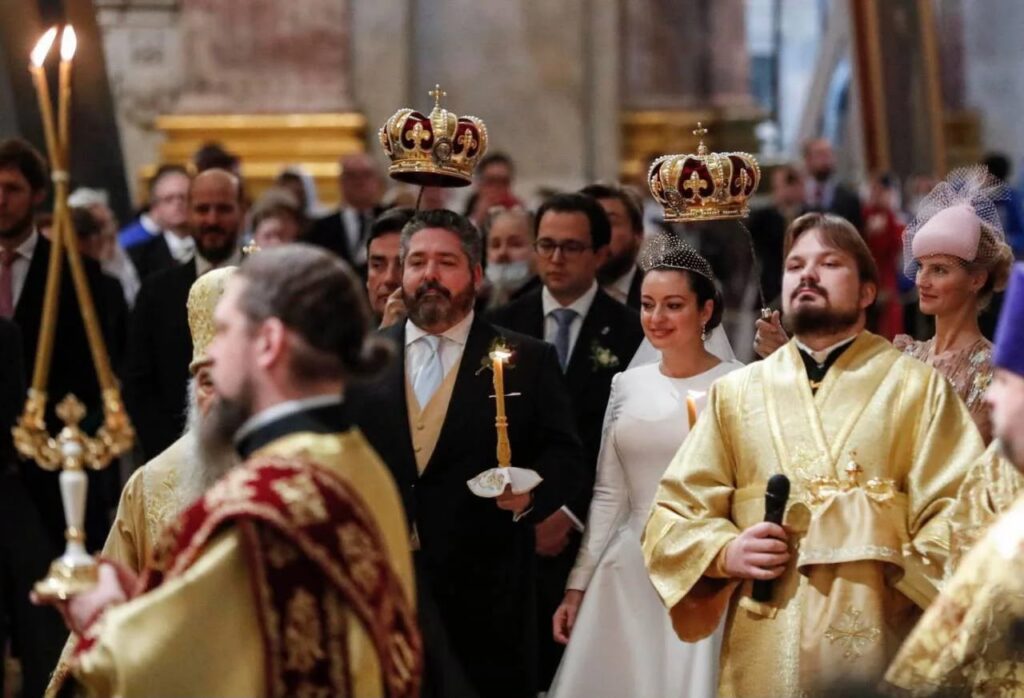
On 24 September 2021, George Mikhailovich Romanov and Rebecca Virginia Bettarini legally registered their marriage in Moscow.
A week later came the extraordinary moment.
On 1 October, beneath the immense golden dome of St Isaac’s Cathedral in St Petersburg, Grand Duke George and Victoria Romanovna were married according to the rites of the Russian Orthodox Church.
It was the first wedding of a member of the Russian Imperial House of such public dynastic significance on Russian soil in more than a century.
The symbolism was impossible to miss.
Here was a Romanov heir being married in one of Imperial Russia’s greatest cathedrals, in the city built by Peter the Great, surrounded by the architecture and history of the dynasty that had ruled Russia for three centuries.
The ceremony took place with the blessing of Patriarch Kirill of Moscow and All Russia and was officiated by Metropolitan Barsanuphius of St Petersburg and Ladoga.
Members of European royal and aristocratic families attended.
The Russian Imperial House recorded that the organisation of the celebrations received assistance from the Presidential Administration, the Foreign Ministry, Ministry of Culture and other Russian institutions.
Afterwards, George and Victoria travelled to the Peter and Paul Cathedral.
There, among the tombs of the Romanovs, they paid their respects to their ancestors.
Past and future met in a single day.
For a family expelled by revolution, the meaning was profound.
George himself described the wedding as marking the final end of his family’s forced exile.
More importantly, he expressed the hope that his children would be born and raised in Russia, attend a Russian school and speak Russian as their native language.
That statement may prove more historically significant than all the splendour of the wedding itself.
For the first time in generations, the Romanov story was being deliberately turned towards the future.
Alexander and Kira: A Dynasty Continues
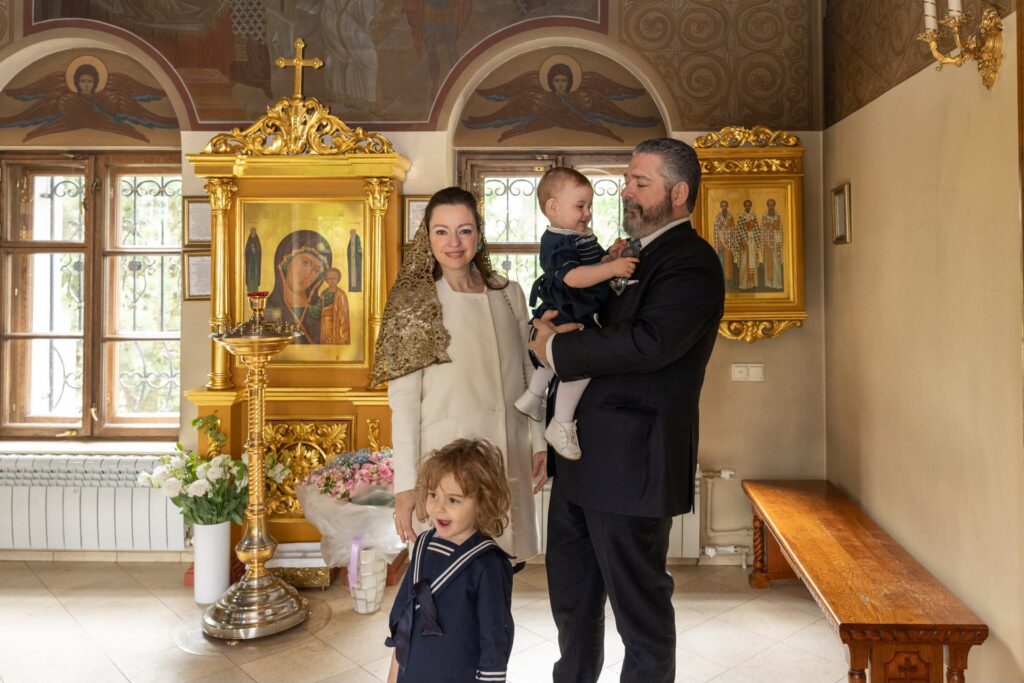
That future now has two young faces.
On 21 October 2022, George and Victoria welcomed their first child, Prince Alexander Georgievich.
Then, on 2 June 2025, came a daughter, Princess Kira Georgievna.
Her name carries its own dynastic resonance, recalling a name deeply embedded within the twentieth-century history of the family.
Their birth means that the immediate family line now extends into another generation.
One should, however, be precise about what this means in strictly dynastic terms. Under the laws and traditions maintained by Grand Duchess Maria Vladimirovna and the Russian Imperial House, Grand Duke George remains his mother’s heir. As his marriage to Princess Victoria Romanovna was not considered equal according to the historic requirements of the Imperial House, their children presently bear princely rather than Grand Ducal titles, leaving their position within the traditional order of succession subject to dynastic interpretation. This need not, however, be regarded as an insurmountable question.
Those who recognise Grand Duchess Maria as the de jure Empress and legitimate Head of the Imperial House would argue that, as custodian of the dynasty and its laws, she possesses the authority to address and adapt those provisions to the realities of the twenty-first century. Such evolution would hardly be without precedent.
Virtually every surviving European royal house has, in one form or another, revised historic dynastic conventions governing marriage, titles and succession in order to accommodate profound changes in society. The Romanov tradition need not remain frozen in the conditions of Imperial Russia. Indeed, if the dynasty is to possess genuine continuity rather than merely preserve an historical memory, the eventual clarification and modernisation of these rules may prove both logical and necessary.
But in the broader and perhaps more important sense, continuity has unquestionably been secured.
The family has a new generation.
That matters enormously to an historic house.
For decades, the Russian Imperial succession appeared extraordinarily narrow: Grand Duchess Maria and her only child George.
Today there are children.
And children transform the psychology of a dynasty.
They move its vocabulary from inheritance to continuity.
From Exile to Presence
There is another reason George and Victoria matter.
They are visible in Russia.
Victoria’s residence in Moscow from 2019 onwards represented something quite different from the occasional ceremonial visit of an exiled dynasty. George, too, has increasingly developed his life and activities around Russia and the institutions connected with the Imperial House.
This presence changes perceptions.
For Russians born decades after the Soviet Union disappeared, the Romanovs need no longer be encountered solely in history books, museum vitrines or photographs of Nicholas II.
There are living Romanovs participating in contemporary Russian life.
There is a young family.
There are baptisms, charitable engagements, church services, cultural projects and public appearances.
There are children growing up with an immediate relationship to Russia.
This does not imply that Russia is becoming monarchist, nor should romantic enthusiasm be confused with measurable public support for restoration.
But it does mean something subtler.
The Imperial House has ceased to appear entirely foreign to contemporary Russian life.
The Romanovs have come home.
Service Rather Than Politics
Perhaps wisely, the Imperial House has generally presented its contemporary role in terms of service rather than partisan politics.
Charity has always been central to its conception of that role.
George and Victoria have been involved with philanthropic projects, while Victoria has played an active role through the Imperial Foundation. Their public activities have included support for cultural, educational and humanitarian initiatives.
In 2024, George and Victoria accompanied Grand Duchess Maria during an audience with the Grand Master of the Sovereign Order of Malta in Rome, where discussions specifically addressed strengthening cooperation in charity and philanthropy.
This emphasis is significant.
A non-reigning dynasty possesses no ministries, no government budget and no constitutional authority.
Its relevance therefore has to be earned differently.
Heritage.
Culture.
Faith.
Charity.
Historical memory.
Service.
These are precisely the areas in which an Imperial House can contribute without pretending to exercise political powers it no longer possesses.
There is considerable wisdom in that approach.
Grand Duchess Maria and the Russian State
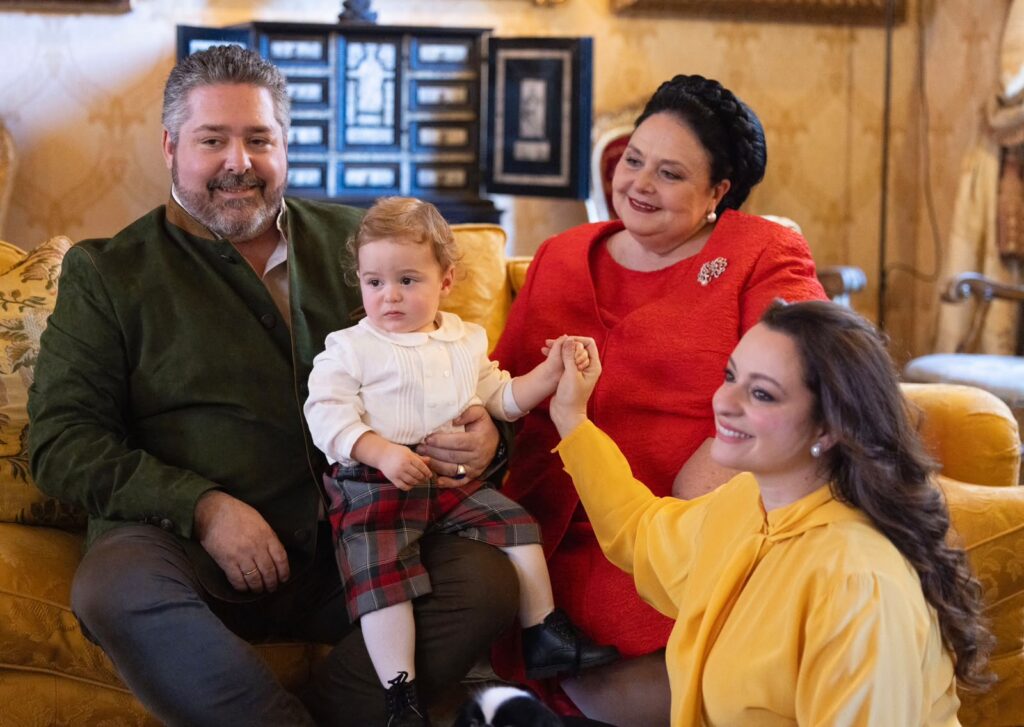
Behind George stands the formidable figure of his mother.
Grand Duchess Maria Vladimirovna has spent decades maintaining that the Imperial House did not cease to exist merely because the monarchy ceased to be Russia’s form of government.
That distinction is fundamental to understanding her position.
She does not claim to be the ruler of the Russian Federation.
Nor does she advocate imposing a restoration of the monarchy upon an unwilling population. She has explicitly stated that any restoration could only occur through the free and legally expressed will of the Russian people.
What she claims instead is hereditary headship of the historic Imperial House.
This distinction is frequently misunderstood.
The Russian Federation is a republic. Vladimir Putin has not restored the monarchy and, contrary to occasional exaggerated claims, there is no evidence of a formal presidential act recognising Maria as a reigning sovereign or formally adjudicating the competing Romanov succession claims in her favour.
Yet neither has post-Soviet Russia treated her simply as an irrelevant private citizen.
Her relationship with Russian institutions has been substantial.
She has been received by senior officials, visited the Supreme Court, participated in major historical commemorations and worked with governmental, cultural and religious institutions.
Her 2024 visit to Moscow and St Petersburg included engagements with charitable organisations, museums, religious institutions and historical projects.
The relationship is better described as institutional recognition of the Imperial House as an important historical and cultural body. This distinction actually strengthens rather than weakens the Grand Duchess’ position.
It allows the Imperial House to exist within modern republican Russia without requiring either institution to deny what the other is.
The Patriarch and the Imperial House
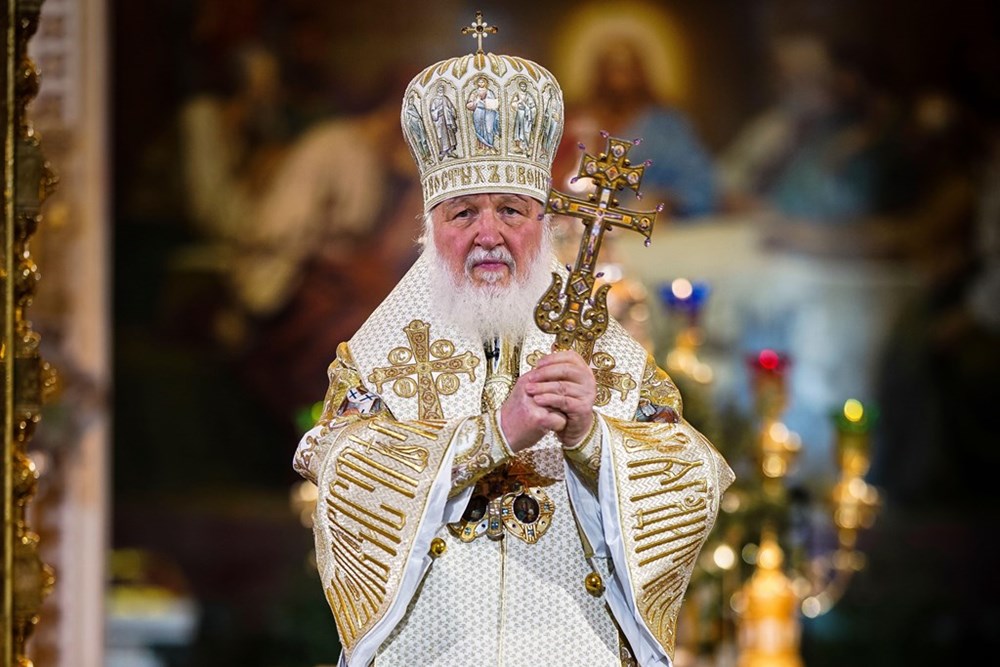
The relationship with the Russian Orthodox Church is more explicit still.
Patriarch Kirill has had longstanding contact with Grand Duchess Maria and the Imperial House.
The Church’s involvement in George and Victoria’s wedding was particularly significant. The Patriarch personally congratulated the couple before their marriage, gave his blessing for Metropolitan Barsanuphius to officiate and has continued to maintain relations with the family.
Grand Duchess Maria’s visits to Russia frequently include services, pilgrimages and meetings involving senior Orthodox clergy.
This is hardly surprising.
The Romanov dynasty and Russian Orthodoxy were intertwined for centuries. The Imperial House therefore occupies an unusual position in contemporary Russia. It possesses no constitutional power. But it carries historical memory. And historical memory can exercise a form of authority entirely different from political power.
The Question of Legitimacy
This brings us inevitably to the question that has followed Maria Vladimirovna throughout her life: Is her claim justified?
It is a question I have examined at length in my own book, Grand Duchess Maria Vladimirovna and Her Justified Claim to the Imperial Throne of Russia.
The argument cannot sensibly be reduced to sentiment.
It rests upon interpretation of the Pauline Laws governing succession to the Russian throne, the status of marriages within the dynasty, the extinction or exclusion of competing dynastic lines and the position inherited by Maria through her father, Grand Duke Vladimir Kirillovich, and her grandfather, Grand Duke Kirill Vladimirovich.
Opponents of Maria’s claim advance their own genealogical and legal arguments, and the controversy has generated an enormous literature.
But my own examination of the dynastic evidence led me to the unequivocal conclusion expressed in the title of the book: Maria Vladimirovna possesses the justified claim to the headship and dynastic inheritance of the Russian Imperial House.
The distinction between that proposition and advocating an immediate restoration of monarchy is essential.
One is a question of dynastic legitimacy.
The other is a question about Russia’s constitutional future, which only Russians themselves could ultimately determine.
Maria herself has repeatedly recognised that distinction.
A Dynasty Without a Throne
There is something fascinating about an Imperial House continuing to exist when there is no empire to govern and no throne upon which to sit.
What is a dynasty without sovereignty?
The answer for all Heads of dethroned Royal Houses is clear. They are custodians. Custodians of history, memory, ceremony, charitable traditions and a particular conception of national continuity.
That role may seem symbolic.
Symbols, however, should never be underestimated.
Countries live by them.
Flags are symbols.
Anthems are symbols.
Crowns are symbols.
Cathedrals are symbols.
Even republics surround themselves with ceremony precisely because human beings understand political communities through stories, rituals and inherited memory as much as through constitutions.
Russia is no exception.
Indeed, few countries possess a historical consciousness as powerful as Russia’s.
The Return of History
The Soviet experiment attempted a radical rupture with the Imperial past.
Yet modern Russia has recovered enormous portions of that history.
The double-headed eagle once again forms the state coat of arms.
The tricolour flies once more.
Orthodox churches have been rebuilt.
The Romanovs are discussed, exhibited and studied in ways impossible during much of the Soviet period.
And in 2021, a Romanov heir walked into St Isaac’s Cathedral to marry.
The revolution succeeded in abolishing the monarchy.
It did not succeed in abolishing history.
George and Victoria’s Opportunity

This is why the position of George and Victoria is potentially so interesting.
Their challenge is not to recreate Imperial Russia.
That Russia belongs to history.
Their opportunity is to demonstrate that a dynasty can carry history into a modern society without becoming imprisoned by it.
George represents inheritance.
Victoria represents adaptation.
Their children represent continuity.
And their increasingly Russian family life gives substance to what might otherwise remain merely ceremonial titles.
Their effectiveness will ultimately depend not upon how magnificently they can evoke the past, but upon how useful they can make their inherited position in the present.
Charitable work matters.
Cultural preservation matters.
Historical education matters.
Dialogue between Russia and the wider European world matters.
And simple physical presence matters.
If Russians see George and Victoria living among them, speaking their language, worshipping in their churches, supporting their charities and raising their children with a knowledge of Russian history and culture, the Imperial House inevitably acquires a different character from one encountered only in exile.
Familiarity can accomplish what proclamations cannot.
The Children Who Changed the Story
And perhaps this is where Alexander and Kira become more important than anyone yet realises.
They have inherited no throne.
They have been born into a republic.
Their world is unimaginably different from that of Nicholas II.
Yet they are also descendants of a family that helped shape Russia for more than three centuries.
Their childhood represents something previous generations of exiled Romanovs desperately longed for: a possibility of belonging naturally to Russia rather than remembering it from abroad.
Their great-great-grandparents belonged to a generation driven from their homeland.
Their grandmother was born in Madrid.
Their father was born in Madrid.
Their mother was born in Rome.
But their family’s centre of gravity has moved eastwards again.
Towards Russia.
That is a remarkable historical circle.
The Romanovs After the Romanovs
No serious observer can know whether monarchy will ever again play a constitutional role in Russia, and pretending otherwise would turn history into fantasy.
That is not the interesting question today.
The interesting question is whether the Russian Imperial House can establish a permanent place within Russian national life without possessing political power.
Grand Duchess Maria has spent decades constructing the foundations for precisely such a role.
George and Victoria now have the opportunity to carry it into another generation.
Their wedding in St Petersburg was a powerful symbol of reconciliation between dynasty and homeland.
Their work in Russia gives that symbol substance.
And the births of Alexander and Kira ensure that the story does not end with George.
The Romanovs have survived revolution.
They have survived execution.
They have survived exile.
They have survived the Soviet Union.
More than a century after the dynasty was swept from power, its descendants once again worship in Russian cathedrals, participate in Russian charitable life and bring up a new generation connected to the country their ancestors once ruled.
History has not restored their throne.
But Russia has, in an important sense, restored something else: their homeland.
For more information:


 Carlos Mundy

 Giovanni R. Ruffini Professor of History Fairfield University, USA


 Charles Markeaton-Mundy
 Gaspard de Montfort

 Milton Cooper