

 Milton Cooper
For more than three years, Pakistan’s former Prime Minister has remained behind bars while his family, political colleagues and supporters have faced an expanding campaign of detention and restriction. Whatever one’s politics, the treatment of Imran Khan has ceased to be merely a Pakistani political dispute. It has become a question of justice, human rights and the credibility of democracy itself.
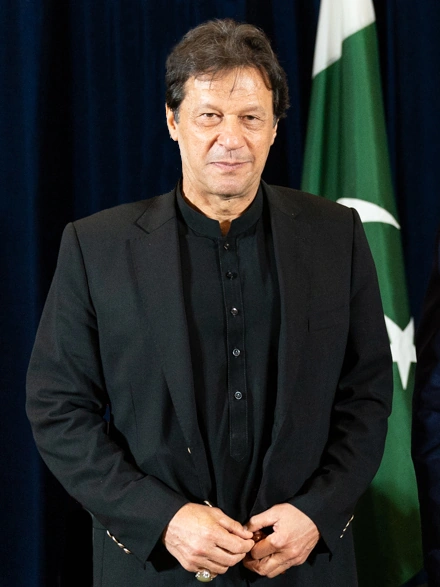
There comes a point when the imprisonment of a political leader ceases to be simply a matter for lawyers and courts and becomes a test of the country that imprisons him.
Pakistan has reached that point with Imran Khan.
The former Prime Minister, international cricketing legend and founder of Pakistan Tehreek-e-Insaf has now spent more than three years in detention. He has faced an extraordinary succession of criminal proceedings since his removal from office in April 2022. Several convictions have subsequently been suspended or overturned; others remain under appeal, while he continues to serve lengthy sentences arising from corruption and state-gift cases.
Khan denies wrongdoing.
His opponents insist that nobody, not even a former prime minister, is above the law.
That principle is unquestionably correct.
But there is an equally important principle: nobody should be beneath the protection of the law either.
And when legal proceedings against a political opponent multiply alongside restrictions upon his party, arrests of his supporters, limitations upon his access to lawyers and relatives, and now the detention of members of his own family, legitimate questions about prosecution become unavoidable questions about persecution.
This is no longer merely Imran Khan’s claim.
International human-rights organisations have reached conclusions of extraordinary seriousness. Amnesty International has said that its analysis concluded Khan’s imprisonment was unlawful and politically motivated. In 2024, the United Nations Working Group on Arbitrary Detention concluded that his detention was arbitrary and contrary to international human-rights law.
Those conclusions cannot simply be brushed aside as the complaints of political supporters.
They demand an answer.
Three Years Behind Bars

Imran Khan was removed as Prime Minister through a parliamentary vote of no confidence in April 2022. He was first arrested in May 2023 and has remained continuously detained since August of that year.
The sheer proliferation of cases against him has been remarkable.
He has faced proceedings concerning corruption, official secrets, state gifts and his marriage, among numerous other accusations. Some of the most dramatic convictions have subsequently failed to survive judicial scrutiny. His conviction concerning state secrets was overturned, as was the conviction relating to the legality of his marriage. Other sentences have been suspended.
He nevertheless remains imprisoned.
In January 2025, Khan was sentenced to fourteen years in the Al-Qadir Trust corruption case. His wife, Bushra Bibi Khan, was sentenced alongside him. In December 2025, both received additional sentences of seventeen years in a case involving state gifts.
The Pakistani authorities maintain that Khan is a convicted prisoner subjected to legitimate judicial proceedings, not a political prisoner, and they reject accusations that he has been deliberately mistreated in custody.
That position deserves to be recorded.
But so too does the evidence challenging it.
Amnesty International stated in August 2026 that Khan had been denied a fair trial, subjected to prolonged solitary confinement and faced restrictions upon medical treatment and family visits. It reported that he had gone for more than eight months without seeing his family and that both Khan and Bushra Bibi had been denied regular access to legal counsel since December 2025.
Pakistan’s government strongly disputes these allegations. It has said Khan has received extensive medical attention and hundreds of visits during his incarceration and denies that he is being held in solitary confinement.
But this dispute itself illustrates why transparency is so essential.
If Khan is being treated entirely in accordance with Pakistani and international law, there should be nothing to fear from independent scrutiny, unrestricted access to his legal representatives, appropriate medical supervision and regular contact with his family.
Justice must not merely be administered.
It must be seen to be administered.
When the Family Becomes the Target
Recent events have made the situation still more disturbing.
In September 2026, ahead of demonstrations demanding Khan’s release, his sister Aleema Khan was placed under administrative detention for thirty days.
Then his other sisters, Noreen Niazi and Dr Uzma Khan, were detained.
Other members of the extended family were also taken into custody, some briefly, including nieces and nephews.
The arrests extended beyond the Khan family. PTI politicians, activists and workers were also detained ahead of planned protests.
Amnesty International’s response was unequivocal. It described the targeting of Khan’s family and PTI activists as a “flagrant violation” of their rights to liberty, freedom of expression, association and peaceful assembly.
This is the point at which Pakistan’s political crisis crosses another dangerous line.
A man’s relatives cannot become proxies through which political pressure is exerted upon him.
A sister does not inherit her brother’s alleged crimes.
A nephew does not become guilty by blood.
Political association is not a criminal offence.
And peaceful opposition to a government is not sedition merely because that opposition is inconvenient.
The detention of relatives and political activists before demonstrations have even taken place creates an alarming impression: that the purpose is not simply to respond to unlawful conduct, but to prevent dissent before it can be expressed.
That is incompatible with the principles of a confident democracy.
This Is Bigger Than Imran Khan

It would be a mistake to make this argument dependent upon believing Imran Khan to be perfect.
He is not.
Nor need one admire every aspect of his premiership, endorse every political decision he has taken or accept every allegation he and his supporters have made about the forces responsible for his downfall.
That is precisely the point.
Human rights exist to protect people irrespective of whether we admire them.
The rule of law is meaningful only when it applies to one’s opponents as rigorously as it applies to one’s friends.
If Khan committed criminal offences, the evidence against him should be tested in proceedings possessing unimpeachable standards of independence, transparency and due process.
If those standards cannot be satisfied, he should not be imprisoned.
The issue therefore extends far beyond the fate of one former prime minister.
It concerns what kind of Pakistan will emerge from this confrontation.
A state may imprison a politician.
It cannot indefinitely imprison the political aspirations of millions of citizens.
The Ballot Box Cannot Be Replaced by the Prison Cell
Whatever one’s opinion of Imran Khan, his political importance cannot credibly be wished away.
PTI remained an enormous political force even after Khan was imprisoned and despite formidable restrictions surrounding the party during the 2024 general election.
That fact should matter.
In a functioning democracy, popular political movements are defeated at elections, not eliminated administratively.
Governments have every right to prosecute violence. Those who attack people, burn buildings or commit genuine criminal offences should face lawful prosecution based upon individual responsibility and credible evidence.
But peaceful protest is different.
Political organisation is different.
Criticism is different.
Opposition is different.
A democracy capable of distinguishing between those things demonstrates strength.
One incapable of doing so demonstrates fear.
Pakistan Deserves Better
Pakistan is not some insignificant state whose democratic deterioration can be regarded with indifference.
It is a country of more than 240 million people, a nuclear power and one of the most strategically important nations in Asia. It possesses an extraordinary civilisation, an energetic population, a vast diaspora and immense unrealised economic potential.
It also possesses a turbulent political history in which civilian authority and other centres of power have repeatedly collided.
The continued imprisonment of one of the country’s most recognisable political figures therefore carries consequences far beyond Khan himself.
Every additional month of political confrontation deepens division.
Every questionable detention damages confidence in institutions.
Every restriction imposed upon legitimate opposition encourages Pakistanis to believe that political outcomes are determined somewhere other than the ballot box.
That is profoundly dangerous.
Institutions derive authority not merely from the power they possess but from the legitimacy with which that power is exercised.
The judiciary must be trusted.
Elections must be trusted.
The police must be trusted.
The state itself must be trusted.
Without that trust, democracy becomes an empty constitutional architecture.
Where Is the International Community?
There is another uncomfortable question.
Where is the sustained international outrage?
Western governments regularly speak of democracy, human rights and the international rules-based order. Those principles cannot be geographically selective.
The British Government has raised Khan’s treatment with Pakistan. In September 2026, the Foreign, Commonwealth and Development Office reiterated that Pakistani authorities must respect fair trial guarantees, due process, humane detention and access to appropriate medical treatment.
That is welcome.
It is not enough.
Governments that regard Pakistan as an important strategic partner should make clear that partnership does not require silence when fundamental democratic principles are at stake.
The United Nations, Britain, the European Union, the United States and other democratic governments should insist upon transparent legal proceedings, proper medical care, unrestricted access to lawyers and family, freedom for peaceful political activity and the release of people detained merely for exercising fundamental rights.
This should not be understood as interference in Pakistan’s sovereignty.
Human rights do not cease to be universal when their defence becomes diplomatically inconvenient.
Release Imran Khan
There is ultimately a simple way out of this spiral.
Pakistan must return politics to politics.
The state should release those members of Khan’s family and PTI who are detained solely for peaceful political activity or family association.
The right of Pakistanis to assemble peacefully must be protected.
The harassment of political opponents must end.
And Imran Khan should be released.
Where legitimate criminal allegations remain, they can be adjudicated through transparent judicial processes conforming fully to international standards, without using imprisonment as an instrument of political exclusion.
Releasing Khan does not require declaring him innocent of every allegation ever levelled against him.
It means recognising that the extraordinary circumstances surrounding his prosecution and continued detention have created a profound crisis of democratic legitimacy.
Let him speak.
Let his opponents speak.
Let every legitimate political party organise.
And then let the Pakistani people decide.
That is democracy.
You Cannot Imprison an Idea
There is an irony in attempting to extinguish a political leader through imprisonment.
Prison sometimes diminishes politicians.
But sometimes it transforms them.
Nelson Mandela emerged after twenty-seven years in prison with greater moral authority than the regime that had incarcerated him. Václav Havel went from prison to the presidency of Czechoslovakia. Political history is filled with governments that discovered too late that a prison cell can become more powerful than a podium.
Imran Khan’s circumstances are his own and comparisons should never be pushed too far.
But one principle remains universal.
If millions of people believe that their political voice is being suppressed, imprisoning the person through whom they express that voice will not necessarily extinguish their convictions.
It may strengthen them.
Pakistan now faces a choice.
It can continue down a road of imprisonment, political confrontation, family detentions and ever-deeper polarisation.
Or it can demonstrate confidence in its own people and institutions.
Release Imran Khan.
Release those detained merely for peaceful political association.
Restore full political freedoms.
Guarantee genuine due process.
And allow Pakistan’s future to be decided where the future of every democracy ultimately belongs:
not behind the walls of a prison, but in the hands of its people.


 Carlos Mundy

 Giovanni R. Ruffini Professor of History Fairfield University, USA


 Charles Markeaton-Mundy

 Gaspard de Montfort

 Milton Cooper
