
 Nabil Haddadin
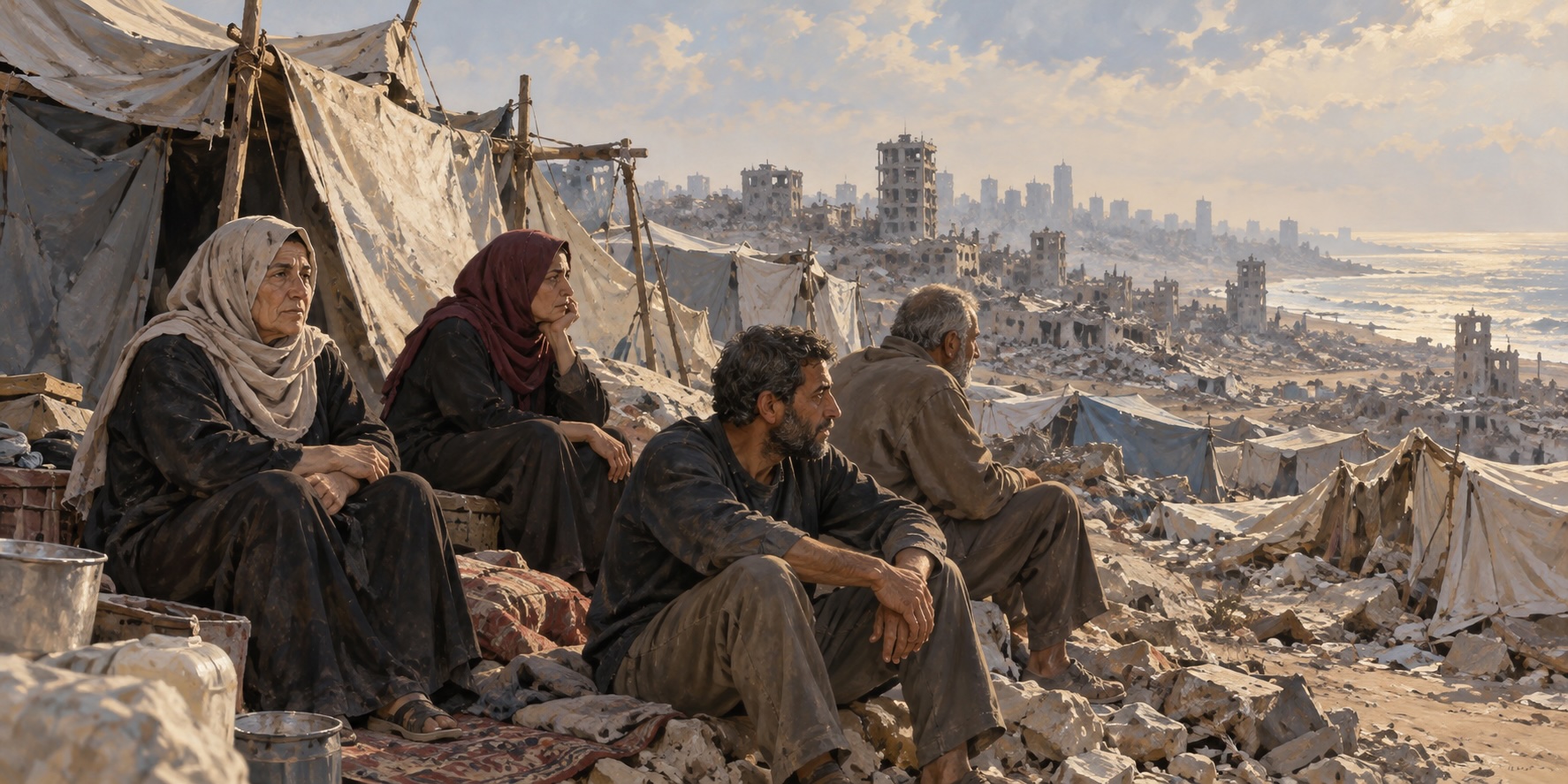
The ruins of Gaza tell a story of immense human suffering. They also demand an honest examination of the organisation that has ruled the territory for nearly two decades. Hamas claims to speak for Palestinians but it represents the interests of the criminal government in Teheram. Yet it has subordinated their political future to armed struggle, divided their institutions and exposed civilians to repeated catastrophe.
Hamas is a terrorist organisation, proscribed in its entirety by the United Kingdom. On 7 October 2023, Hamas and other armed groups attacked Israeli civilians and took hostages. A United Nations commission found that they committed war crimes, including murder and the deliberate targeting of civilians. No appeal to the Palestinian cause can excuse those acts.
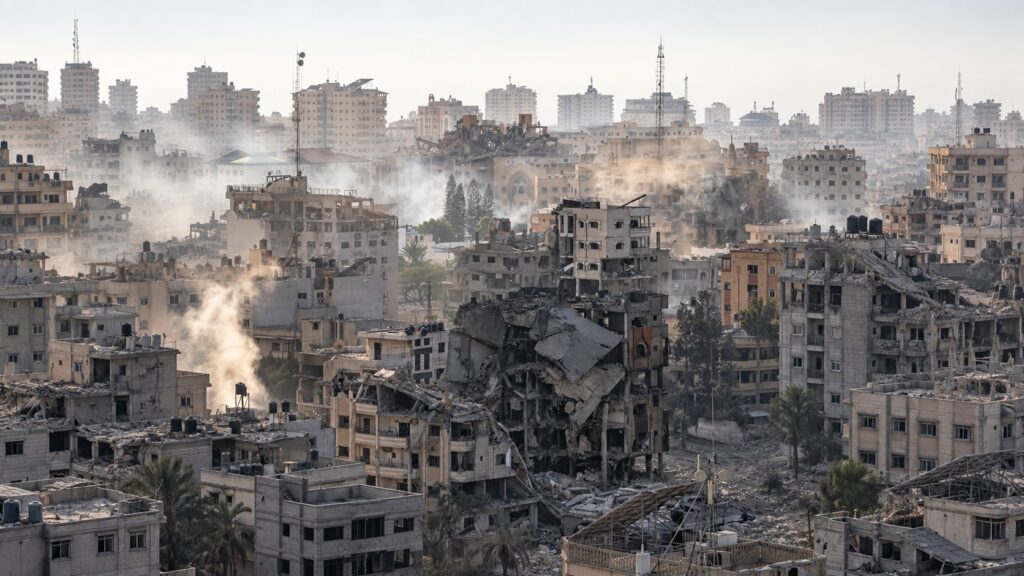
The assault also had consequences Hamas’s leaders could foresee: another war in Gaza, where civilians have few places to escape. Israel’s military campaign has caused vast destruction, for which Israeli authorities must answer. Hamas, meanwhile, must answer for the attacks that began this phase of the war and for the way it has governed Gaza. Responsibility for one does not erase responsibility for the other.
To understand how Palestinians reached this point, one must look back beyond October 2023. Hamas won the 2006 Palestinian legislative election amid widespread frustration with Fatah and the Palestinian Authority. That result gave it an electoral mandate to participate in government. It did not give it a mandate to settle a struggle for power by force. In 2007, after violent clashes with Fatah, Hamas seized control of Gaza. The Palestinian Authority was left governing parts of the West Bank, while Gaza fell under a separate armed authority. The split fractured Palestinian politics and has persisted through years of failed reconciliation efforts.
This is how Hamas has hijacked the Palestinian political question. It has made the possession of weapons a source of political authority. It has been able to decide when Gaza goes to war without giving its people a meaningful chance to replace those making the decision. The last Palestinian presidential election was held in 2005; the last legislative election was in 2006. Palestinians deserve political representation renewed at the ballot box, not leadership perpetuated by institutional paralysis and armed control.
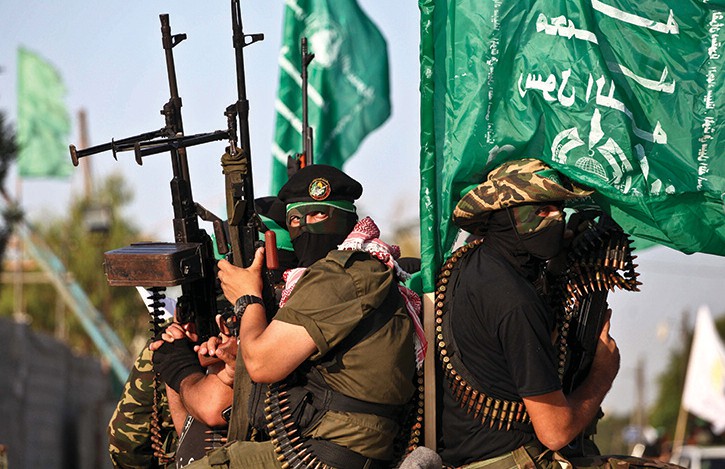
The Palestinian Authority has lost control of Gaza, but Hamas is not the sole explanation for the Authority’s weakness. It has its own failures of legitimacy and governance. It also faces severe financial constraints: the World Bank reported a deep fiscal crisis after Israel suspended transfers of tax revenues collected on the Authority’s behalf in 2025. A credible alternative to Hamas will require the Palestinian Authority to reform, provide services and earn public trust, as well as regain the ability to govern Gaza.
Hamas’s foreign support further complicates its claim to act in Palestinians’ interests. The United States Treasury has documented transfers of money from Iran’s Islamic Revolutionary Guard Corps’ Quds Force to Hamas, alongside Iranian provision of weapons and training. Hamas has its own aims; it is not necessary to claim that Tehran dictates every decision to recognise the danger. A Palestinian movement dependent in part on an external power’s military support can become entangled in that power’s regional strategy. The needs of a family in Gaza are not the strategic needs of the IRGC.
The consequences for children are especially intolerable. The United Nations verified the recruitment of two 17-year-old boys by Hamas’s al-Qassam Brigades in Gaza in 2020. It also expressed concern about military activities offered to children as young as 14 at camps run by Hamas and another armed group, though it did not verify recruitment arising from those camps. A circulating image of an apparently young armed person cannot establish his age or prove a new admission by Hamas. The verified cases already justify a firm demand: children must be kept out of armed organisations.
Humanitarian aid must likewise be beyond the reach of armed intimidation. In July 2026, a senior UN official condemned an incident in which armed personnel affiliated with Gaza’s de facto authorities entered a food distribution point in Jabalia and forced workers to stop. Allegations that Hamas takes aid and sells it warrant rigorous investigation. That documented incident establishes interference with distribution; it does not establish that Hamas systematically sells humanitarian aid. To expose theft, investigators must trace particular shipments and identify who took them and who profited.
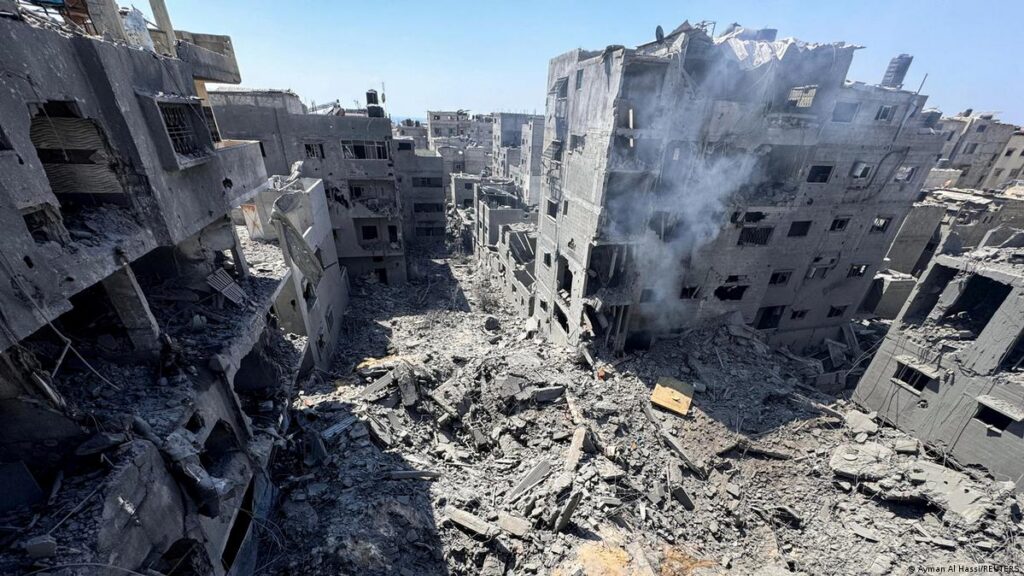
Hamas has helped make violence a recurring instrument of Palestinian politics, both through attacks on Israelis and through its armed rivalry with Fatah. Yet blaming Israel alone for Gaza’s tragedy is too simplistic, just as blaming Hamas alone would be. Hamas chose the attacks of 7 October and has ruled Gaza without a renewed electoral mandate. Israel chose how to conduct its military campaign. Each must answer for its own decisions and for the civilians harmed by them.
Netanyahu’s government deserves searching criticism. Many Israelis accuse him of prolonging the war to preserve his coalition and political position. That is an allegation about his motives, not an established finding. He is already on trial on corruption charges, which he denies; peace would not be the event that first exposed him to prosecution. His government has also relied on far-right ministers whose conduct cannot be waved away: the United Kingdom sanctioned Itamar Ben-Gvir and Bezalel Smotrich for inciting violence against Palestinians in the West Bank. They are religious nationalists; it would be inaccurate to attribute their positions to Orthodox Jews as a whole.
There remains a fundamental political difference. Israel is a parliamentary democracy in which governments can be challenged in court, opposed in public and removed through elections, however fiercely those institutions are contested. Gaza’s people have had no comparable means of removing Hamas from power since it seized control in 2007. Recognising that difference does not excuse an Israeli government’s actions. It makes the demand for accountability on both sides more precise.
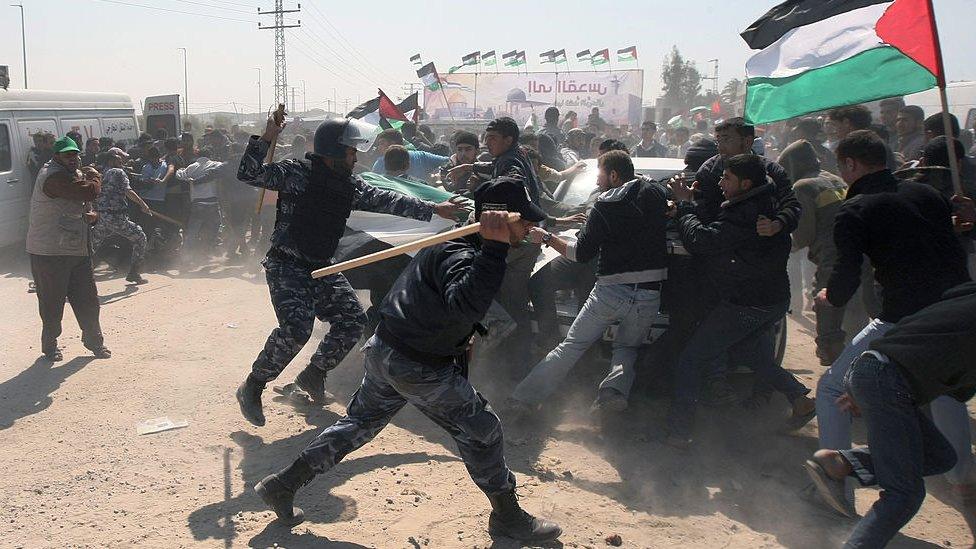
Hamas’ armed hold on Gaza must end. So must the incitement and violence of extremists within Israeli politics. Palestinians need a government answerable to them rather than to gunmen or foreign patrons; Israelis need leaders who place security and peace above political survival. Neither people can build a future while those who benefit from confrontation are permitted to define it.
https://stratcomcoe.org/cuploads/pfiles/hamas_human_shields.pdf


 Carlos Mundy
 Giovanni R. Ruffini Professor of History Fairfield University, USA


 Metaphore Magazine


 Laura Mitchell
 Mayte Hidalgo