
 Charles Markeaton-Mundy
Why Entrepreneurs, Companies and Capital Are Leaving High-Tax Europe for the United Arab Emirates
For generations, Europe was the natural home of international capital, enterprise and accumulated wealth. London, Paris, Frankfurt, Milan, Amsterdam and Geneva represented not merely prosperity, but stability, sophistication and commercial opportunity. Entrepreneurs established their businesses there, international investors acquired property there, and wealthy families regarded the great European capitals as the natural centres from which to manage their affairs.
That assumption can no longer be taken for granted.
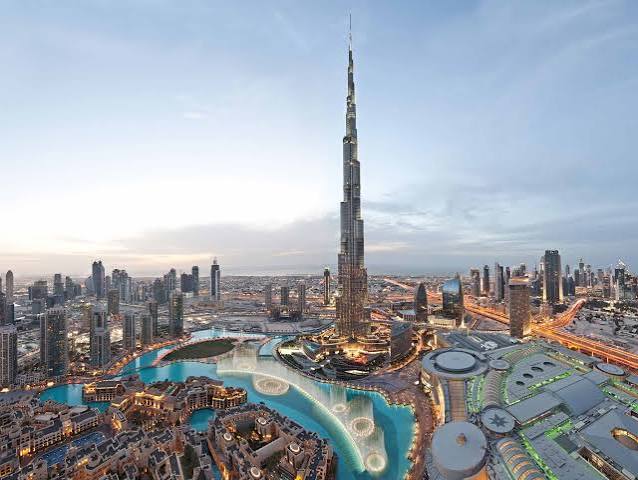
Over the past decade, and with increasing momentum in recent years, a striking migration of entrepreneurs, investors, companies and internationally mobile families has begun to take place. Although there are several beneficiaries, one destination has emerged with particular prominence: the United Arab Emirates and, above all, Dubai.
It would be tempting to attribute this phenomenon simply to Dubai’s climate, its extraordinary architecture, its celebrated hotels and restaurants or the conspicuously comfortable lifestyle enjoyed by those who can afford it. Equally, its detractors sometimes dismiss the movement as little more than wealthy individuals searching for somewhere to avoid high taxation. Both explanations miss the more significant point.
What is taking place is an international competition for capital, talent and enterprise, and the UAE has understood rather better than many European governments that successful individuals and businesses are increasingly mobile. Tax them heavily enough, regulate them sufficiently, subject them to ever greater administrative interference and make the accumulation and preservation of wealth progressively more difficult, and eventually a proportion of them will begin to look elsewhere.
The Emirates has constructed an almost diametrically opposite proposition. Its message to international entrepreneurs is essentially that they are welcome to establish their companies, invest their capital, employ people, purchase property and build their lives within a jurisdiction that wishes them to prosper.
The results are increasingly difficult to ignore.
According to figures announced by the Government of Dubai, drawing upon UNCTAD’s World Investment Report, the UAE attracted US$48.3 billion — approximately AED177.3 billion — in foreign direct investment in 2025, representing its fourth consecutive record year. The country ranked ninth globally for inward foreign direct investment and second in the world for announced greenfield investment projects, with 1,562 such projects recorded.
Dubai itself had already ranked as the world’s leading destination for greenfield foreign direct investment projects for four consecutive years by 2024. In that year alone, the emirate attracted an estimated AED52.3 billion in FDI capital, an increase of 33.2 per cent over the previous year, together with a record 1,117 greenfield projects.
These figures matter because international capital is rarely sentimental. It goes where investors believe it will be secure, productive and welcome.
The same phenomenon can be observed among wealthy individuals. Henley & Partners estimated that the UAE would experience a net inflow of approximately 9,800 migrating millionaires during 2025, representing some US$63 billion in investable wealth. Among the attractions identified were tax efficiency, pro-business policies, a comparatively accommodating regulatory environment, lifestyle, professional opportunities and Dubai’s increasingly sophisticated financial infrastructure.
This is not an accident of geography or fashion. It is the consequence of deliberate policy.
The increasingly expensive price of European success
Europe remains one of the world’s great economic and cultural regions. It possesses exceptional universities, sophisticated financial institutions, highly developed infrastructure, skilled workforces and enormous consumer markets. London remains one of the world’s principal financial centres, while Paris, Frankfurt, Milan, Madrid, Amsterdam and Geneva continue to exercise considerable international influence.
Yet prosperity in much of Europe now comes at an increasingly substantial price.
Depending upon the country concerned, successful entrepreneurs and investors may encounter personal income taxation, social contributions, corporation tax, taxes upon dividends and capital gains, property taxation, inheritance or succession duties and, in certain jurisdictions, taxes connected with accumulated wealth itself. The precise burden differs considerably from one European country to another, and any serious comparison must recognise those differences. Nevertheless, the cumulative effect can be formidable.
Taxation, however, represents only part of the difficulty.
European businesses must increasingly navigate an intricate and expanding architecture of employment legislation, financial reporting, data regulation, environmental obligations, corporate governance, licensing requirements and compliance procedures. Many of these regulations pursue entirely legitimate social or economic objectives, yet the cumulative burden imposed upon business should not be underestimated.
Every additional report must be prepared by somebody; every regulatory requirement must be understood, administered and documented; every compliance department represents money that cannot be invested elsewhere in the enterprise. For a large multinational corporation these costs may be absorbed comparatively easily. For the entrepreneur, the family company or the rapidly expanding medium-sized business, they can become an increasingly significant distraction from the activity upon which prosperity ultimately depends: creating, selling, investing and employing.
Dubai has approached the question from another direction. Rather than asking primarily how economic activity should be controlled, it has spent decades considering how capital and enterprise might be attracted.
That difference in philosophy goes a considerable way towards explaining the city’s remarkable ascent.
IFZA and the architecture of the new Dubai
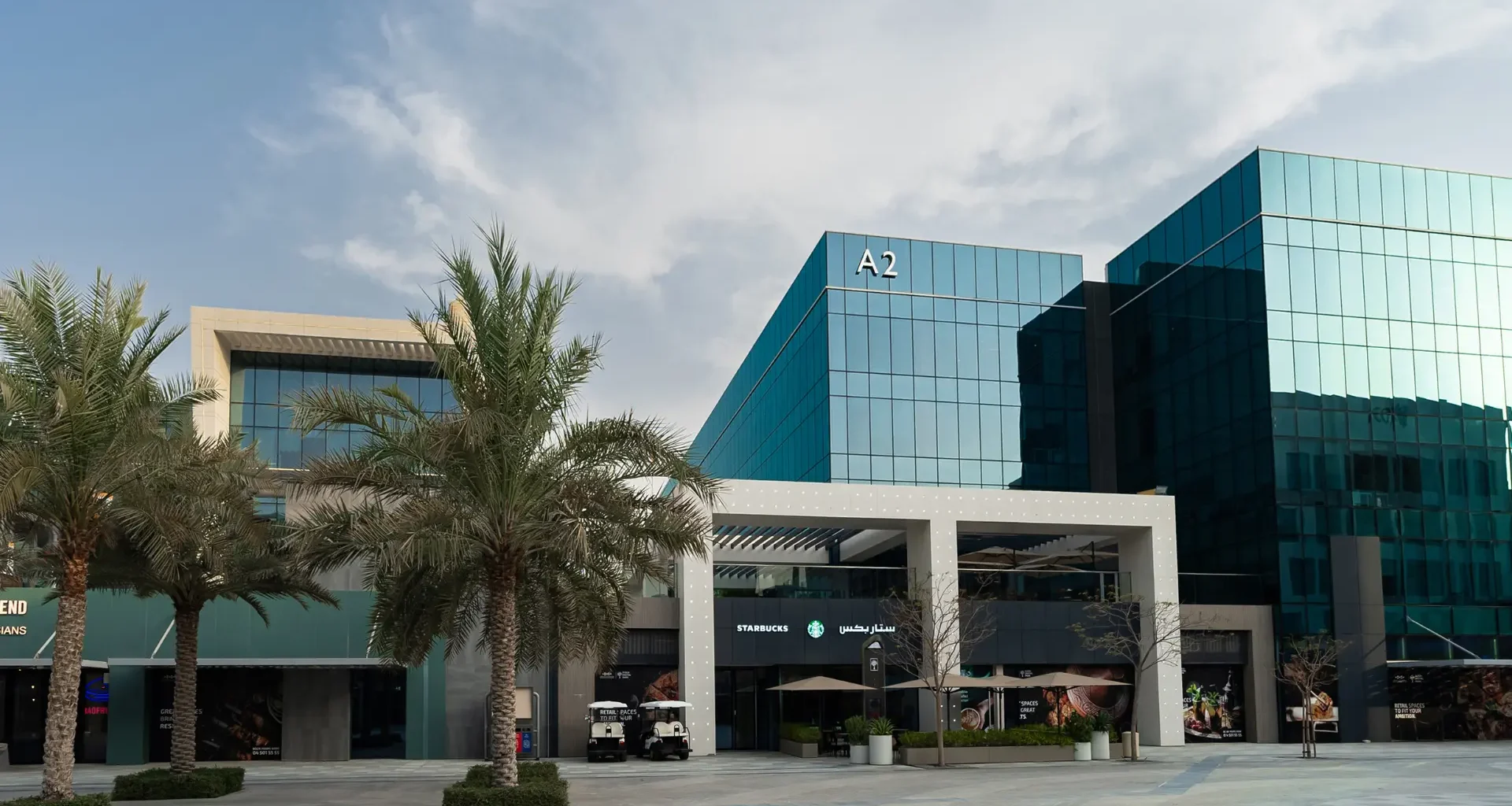
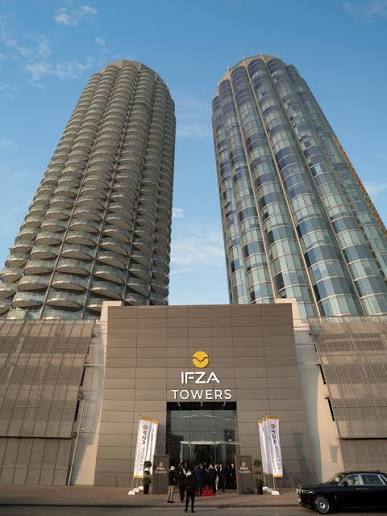
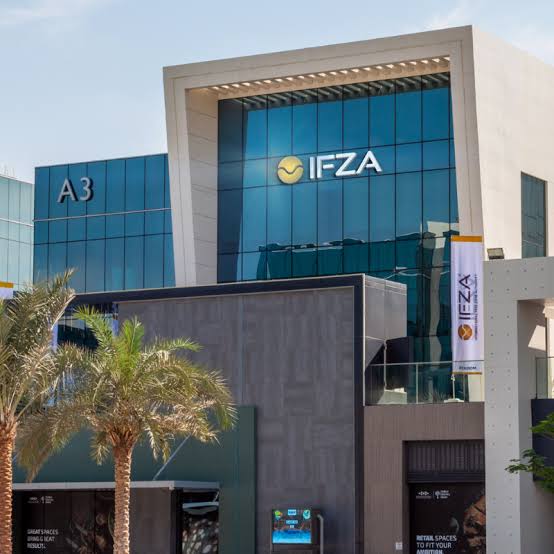
One of the organisations operating within this new economic landscape is the International Free Zone Authority, better known as IFZA, which has become an increasingly visible route through which international entrepreneurs can establish businesses in Dubai.
It is important to define IFZA correctly. It should not simply be described as an offshore company registry in the traditional sense. A company established through IFZA is a UAE free-zone company operating within the country’s regulated commercial framework. This distinction is important, not least because the UAE has spent considerable effort moving beyond the old-fashioned image of the opaque offshore jurisdiction towards that of a substantive international business centre.
The attraction of the IFZA model is readily understood. IFZA offers 100 per cent foreign ownership, together with the ability to repatriate capital and profits. It permits a range of eligible commercial activities to be combined within an appropriate licensing structure and has developed its incorporation procedures around the requirements of international entrepreneurs who may not initially be physically present in Dubai.
For somebody accustomed to the increasingly complicated relationship between enterprise and government in parts of Europe, there is something distinctly refreshing about this approach. The entrepreneur is not required to surrender ownership merely because he is foreign, nor is the success of the business treated as something from which the state must necessarily extract the maximum possible return.
Instead, the underlying bargain is rather more pragmatic: establish your business, bring capital into the economy, conduct legitimate commercial activity, comply with the law and participate in the growth of the country.
That proposition has proved remarkably attractive.
Taxation: the difference that cannot be ignored
No discussion of the UAE’s appeal can sensibly avoid taxation, because the difference between the Emirates and many European jurisdictions remains considerable. It must nevertheless be explained accurately, since the frequently repeated assertion that every Dubai company pays no tax is no longer correct.
The UAE introduced a federal corporate-tax regime under which taxable income up to AED375,000 is generally subject to a zero rate, while taxable income above that threshold is ordinarily subject to a 9 per cent rate.
Even this standard rate remains conspicuously competitive internationally, but the free-zone regime can be more attractive still. A Qualifying Free Zone Person may benefit from a zero per cent corporate-tax rate on Qualifying Income, provided that the statutory conditions are properly satisfied. Income falling outside those provisions may be subject to the ordinary corporate-tax regime.
An IFZA licence should therefore never be presented as a magical passport to universal tax exemption. The nature of the company’s activities, its income, customers, economic substance and compliance with the applicable legislation all matter. Professional tax advice is indispensable when a European entrepreneur is contemplating a genuine relocation.
Yet once those qualifications have been made, the fundamental comparison remains striking. The UAE’s ordinary 9 per cent corporate-tax rate is itself highly competitive, while qualifying free-zone activities may enjoy substantially more favourable treatment.
For the individual, the contrast can be more dramatic still. The UAE does not impose the sort of general personal income tax familiar to residents of Britain and continental Europe. For a successful entrepreneur accustomed to surrendering a substantial proportion of annual earnings through income taxation and associated charges, the difference can transform the economics of both working and investing.
This is sometimes portrayed rather crudely as the rich seeking to escape their responsibilities. There is another way of looking at it. Capital retained by an entrepreneur does not necessarily disappear into conspicuous consumption. It may finance another company, provide seed capital for a new venture, acquire productive assets, employ additional staff or simply remain invested and continue to compound.
That last consideration becomes particularly important over time. The difference between retaining and reinvesting capital and repeatedly surrendering a substantial proportion of it to taxation may appear manageable in a single year; compounded over ten, twenty or thirty years, however, the consequences for accumulated wealth can become enormous.
This is one of the great attractions of Dubai that is sometimes overlooked. It is not merely what an entrepreneur may earn there that matters, but what he may legitimately retain, reinvest and compound.
The value of ownership and control
The possibility of 100 per cent foreign ownership is another important element of the UAE proposition and one that IFZA places prominently within its offering.
For international investors, control matters. They wish to know that the company they establish belongs to them, that their capital remains under their control and that profits can be repatriated legitimately when required. Above all, they want confidence that the rules under which they invested will remain intelligible and that their presence is regarded as economically desirable.
This may appear obvious, yet international investment decisions are often determined by precisely such considerations. Capital is inherently cautious. It dislikes arbitrary restrictions, political uncertainty and environments in which successful businesses risk becoming convenient targets whenever governments require additional revenue.
Dubai’s economic development has depended upon convincing international capital that it is welcome. The extraordinary expansion of the city suggests that the message has been received.
Bureaucracy is a form of taxation too
Tax is not always measured in pounds, euros or dirhams. There is also a tax upon time.
A company director who spends hours satisfying administrative requirements is not spending those hours developing the business. A company that must employ additional staff merely to navigate regulatory obligations bears a genuine economic cost, even if the government never sends it an invoice.
This is another area in which Dubai has sought to distinguish itself.
IFZA has developed a heavily digitised system in which the overwhelming majority of company-establishment procedures can be conducted remotely. Physical attendance may still be required for matters such as medical examinations and Emirates ID biometrics where residence procedures are involved, but the commercial incorporation process itself has been designed around speed and accessibility.
This matters far more than it may initially appear.
An international entrepreneur in London, Madrid, Paris or Geneva contemplating a new venture does not necessarily wish to spend months navigating a foreign bureaucracy before discovering whether the business is viable. He wants to establish the appropriate structure, open the necessary channels, begin trading and devote his attention to his clients.
In this respect, administrative efficiency becomes an economic advantage in its own right.
The UAE wants the entrepreneur as well as his company
Perhaps one of the most intelligent elements of the UAE’s strategy has been its recognition that attracting a company becomes considerably easier if the person who owns that company can also be persuaded to establish a life in the country.
The development of longer-term residence options, including the Golden Visa programme, has therefore become an important part of the Emirates’ international proposition. Depending upon the qualifying category, eligible applicants may obtain renewable residence for five or ten years without the traditional requirement for an individual sponsor, while provisions also exist for qualifying family members.
The psychological significance of this should not be underestimated. There is an enormous difference between regarding oneself as a temporary expatriate and believing that one can establish a genuine long-term base from which to conduct one’s affairs.
The UAE is therefore no longer merely asking international investors to register companies or deposit capital. Increasingly, it is inviting them to establish their businesses, acquire homes, educate their children, bring their families and regard the country as a long-term centre of their personal and commercial lives.
That is a far more ambitious strategy than conventional tax competition.
A geographical advantage Europe cannot replicate
Dubai also possesses an advantage that no fiscal policy can manufacture: geography.
Situated between Europe, Asia and Africa, the emirate occupies an extraordinarily advantageous position for international commerce. IFZA notes that approximately 66 per cent of the world’s population can be reached from Dubai within an eight-hour flight.
For the modern international entrepreneur, this is enormously significant. Relocating to Dubai does not mean abandoning Europe; rather, it means positioning oneself between Europe and several of the world’s fastest-growing economic regions.
London, Paris, Frankfurt and Geneva remain accessible, while India, Southeast Asia and the rapidly expanding economies of the Gulf are brought considerably closer. Africa, a continent whose demographic and economic importance will increase markedly during the coming decades, lies immediately to the west.
Dubai has reinforced this geographical advantage with aviation, ports, telecommunications, financial services and logistics infrastructure of exceptional scale.
This is precisely what separates the modern UAE from the traditional concept of the tax haven. Dubai is not a remote island offering little beyond low taxation and corporate registration. It is a substantial international metropolis with global airlines, major ports, financial institutions, technology companies, property markets, international schools, hospitals, hotels and an increasingly sophisticated professional-services sector.
The difference is fundamental.
Lifestyle has become part of economic policy
Governments and economists occasionally make the mistake of imagining that individuals relocate according to spreadsheets. They do not. Companies may compare tax rates, but families compare lives.
The successful businessman considering Dubai will naturally examine the financial consequences, but his family will also want to know where they will live, where their children will be educated, whether they will feel secure, what standard of healthcare is available, how easily they can travel and whether the city can provide the cultural, social and recreational life to which they are accustomed.
Dubai has spent decades constructing an extraordinarily effective answer to those questions.
It has become one of the world’s most international cities. English is widely used in business and everyday professional life, private education is extensive, healthcare is modern, residential options range from apartments in the centre to substantial villas in private communities, and Dubai International Airport connects the city directly with much of the world.
There is therefore an important distinction between what initially attracts people to the Emirates and what persuades them to remain. Taxation may provide the first reason to investigate Dubai, but security, convenience, infrastructure, climate, international connectivity and lifestyle can turn what began as a commercial calculation into a permanent change of direction.
Europe should pay attention
The most interesting question may therefore no longer be why entrepreneurs are moving to Dubai, but why European governments should imagine that they will not.
The nature of wealth creation has changed profoundly. A nineteenth-century industrialist could hardly relocate his steelworks whenever the fiscal environment became unattractive. A twenty-first-century technology entrepreneur, consultant, investor, fund manager, digital-business owner or family office has considerably greater freedom.
A software company does not necessarily require a factory in Birmingham. An international consultant does not necessarily need an office in Paris. An internet entrepreneur may conduct business from almost anywhere, while an investment company or family office can compare jurisdictions before deciding where its capital should be based.
This changes the relationship between governments and successful taxpayers in a way that has not yet been fully appreciated.
Countries are increasingly competing with one another for precisely the people who generate businesses, investment and taxable economic activity. Tax rates, regulation, infrastructure, security, residency rights and quality of life have therefore become components of an international competitive offering.
The entrepreneur, in effect, has become a customer of jurisdictions.
Like any sophisticated customer, he compares what is available.
He compares taxation and regulation, the cost of employing people, the security of his capital, the ease with which companies can be established, the quality of infrastructure, the availability of international schools and healthcare, the possibility of obtaining long-term residence and, perhaps most importantly, the attitude adopted towards him by the government of the country in which he is considering making his home.
For much of the twentieth century, European governments could reasonably assume that their most successful entrepreneurs would remain largely where they were, irrespective of the fiscal burden imposed upon them. Globalisation, digital technology and modern communications have weakened that assumption considerably.
Capital has become mobile; increasingly, so have the people who own it.
IFZA is part of something considerably larger
This is why IFZA is more interesting than the simple mechanics of company formation might suggest.
Viewed narrowly, it is part of Dubai’s infrastructure for establishing and licensing businesses. Viewed in the broader context of the UAE’s economic development, however, it forms part of an extraordinarily ambitious attempt to reposition the Emirates as one of the principal international centres for capital, entrepreneurship and private wealth.
Its attraction lies not simply in obtaining a commercial licence. It lies in gaining access to a much larger ecosystem: Dubai’s business environment, the UAE’s competitive tax regime, potential residence options, sophisticated banking and professional services, global transport connections and a government policy that has consciously sought to attract international investment.
The statistics suggest that this policy is succeeding. The UAE attracted US$48.3 billion of foreign direct investment in 2025. Dubai has repeatedly occupied the leading global position for greenfield FDI projects, while the country has simultaneously become one of the world’s most significant destinations for migrating private wealth.
Those are not the characteristics of a peripheral offshore centre. They are increasingly the characteristics of an emerging global capital hub.
There was a time when the suggestion that a European entrepreneur might move himself, his family and his business to Dubai would have seemed exotic. Today, among internationally mobile businesspeople, the question is increasingly less “Why would I move to Dubai?” than “Why should I not at least consider it?”
If one’s customers are international, one’s capital can cross borders, one’s employees can work remotely and one’s business is not irrevocably tied to a particular European location, the jurisdiction in which one chooses to live and operate becomes an economic decision like any other.
Once that happens, governments themselves are obliged to compete.
This is where the UAE has been particularly astute. It recognised earlier than many mature Western economies that entrepreneurs, investors and wealthy families are not immovable resources from which ever greater revenues can automatically be extracted. They have choices, and in an interconnected world those choices are multiplying.
Companies can move. Capital can move. Talent can move. Families can move, and the wealth that accompanies them can move as well.
Europe unquestionably retains formidable advantages and predictions of its economic demise are greatly exaggerated. Its cultural, financial and institutional strengths remain immense. Nevertheless, it would be unwise for European governments to ignore the message contained in Dubai’s rise.
A global competition for capital, talent, entrepreneurs and private wealth is under way, and the UAE has made no secret of its determination to secure a substantial share of all four.
Perhaps the most important difference is ultimately one of attitude. While a number of European governments continue to debate how accumulated wealth should be taxed, controlled or redistributed, Dubai has concentrated much of its energy upon asking how new wealth might be attracted, created and retained within its economy.
For the successful entrepreneur deciding where to build the next twenty years of his business and his life, the contrast is becoming increasingly difficult to overlook.
For more information visit: https://ifza.com/en/
Contact for company setup assistance and optimum service: Mrs Alaa Eltayeb aeltayeb@ifza.com


 Metaphore Magazine



 Carlos Mundy

 Laura Mitchell
 Mayte Hidalgo