
 Carlos Mundy
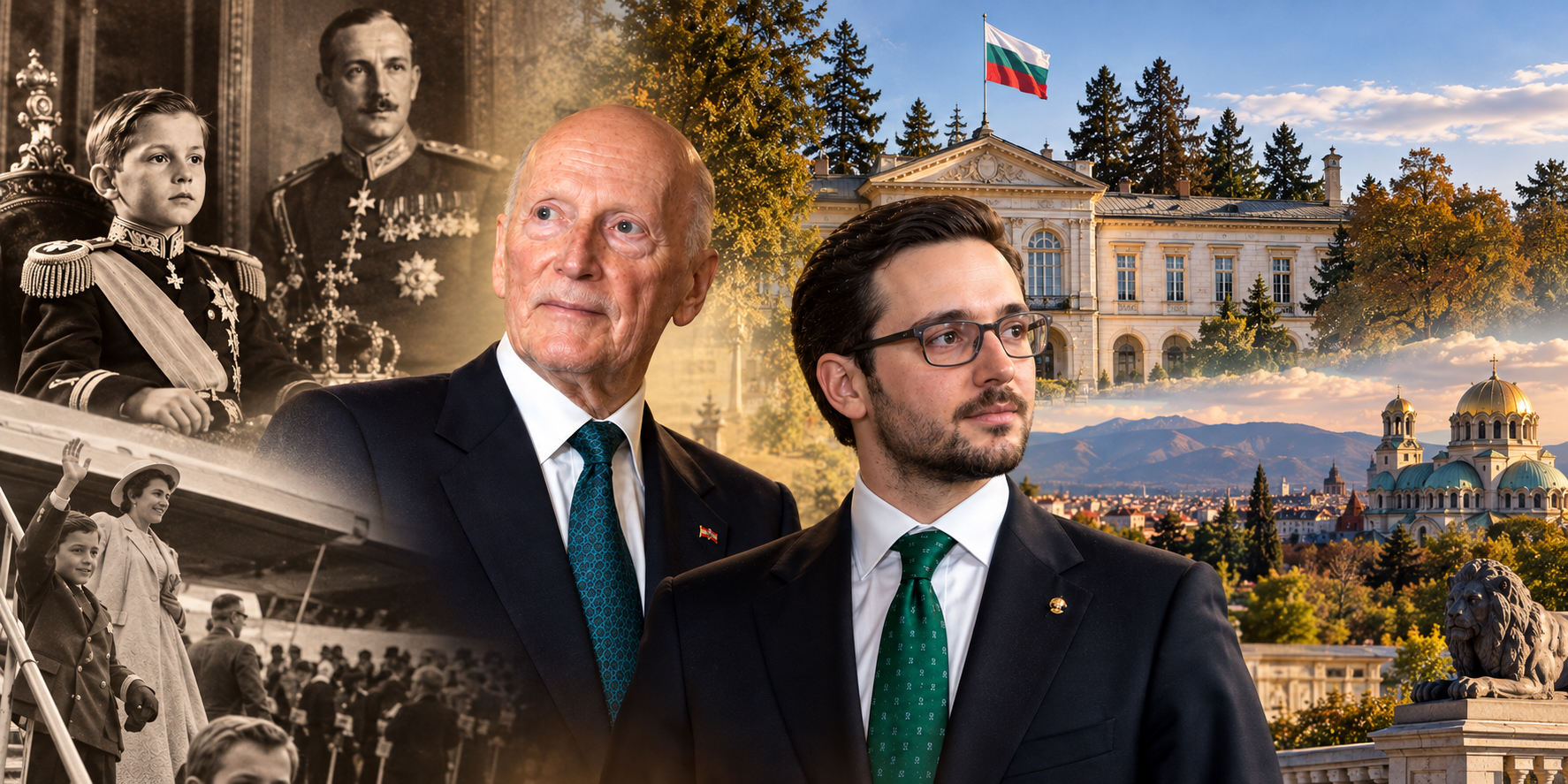
He became King of Bulgaria at six, was driven from his country at nine and spent half a century in exile. Then Simeon II accomplished something almost without precedent in modern European history: he returned home, entered democratic politics and became Prime Minister of the republic that had replaced his throne. Now, as Bulgaria looks towards another generation, his grandson Prince Boris of Tarnovo carries forward a dynasty that communism once believed it had consigned to history.
There are royal lives shaped by ceremony, privilege and continuity.
And then there is the life of King Simeon II of Bulgaria.
His is a story that seems almost too extraordinary to be true.
He was born an heir to a throne.
He became King while still a small boy.
His country was engulfed by the consequences of war.
The men appointed to govern in his name were executed.
His monarchy was abolished under communist domination.
He was sent into exile before his tenth birthday.
For half a century, he lived outside the country whose crown he had inherited.
Then the communist system itself collapsed.
The boy King, by then approaching sixty, came home.
And several years later, in one of the most remarkable reversals in modern European political history, the people of the republic elected the former King to govern them as their Prime Minister.
One can search the history of twentieth-century Europe and find few journeys quite like it.
Born to Be King
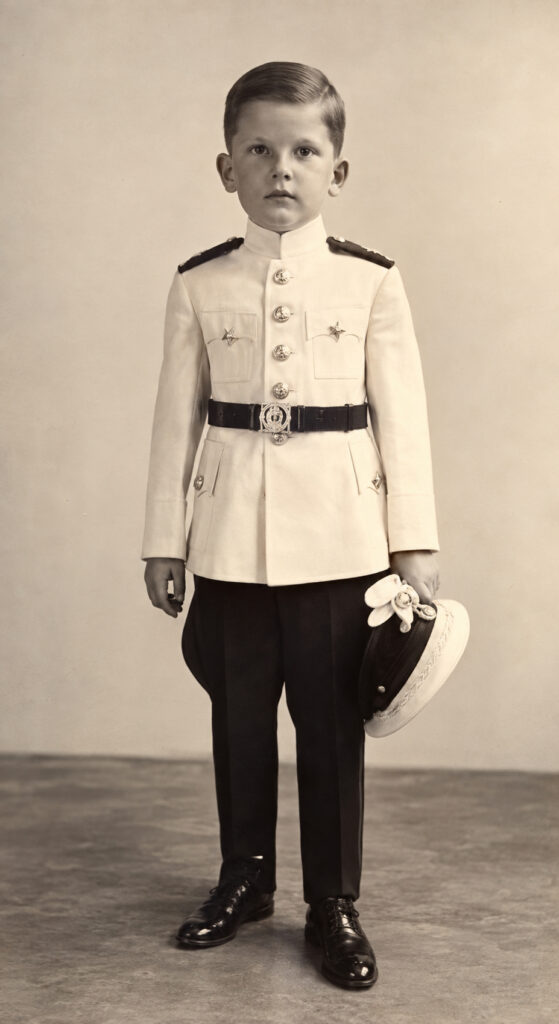
Simeon Borisov Saxe-Coburg-Gotha was born in Sofia on 16 June 1937, the son of King Boris III and Queen Ioanna of Bulgaria.
His birth was a national event.
Church bells rang throughout Bulgaria and cannon salutes announced the arrival of the heir. He received the traditional title Prince of Tarnovo, borne by the heir to the Bulgarian throne.
His childhood should have been one of careful preparation for a distant destiny.
History had other ideas.
Europe was moving towards catastrophe.
By the time Simeon was two, the Second World War had begun.
By the time he was six, his father was dead.
King Boris III died suddenly on 28 August 1943, aged only forty-nine.
The little boy became Simeon II, Tsar of the Bulgarians.
He was six years old.
Under the Tarnovo Constitution, a Regency Council was established to exercise royal authority during the King’s minority. Bulgaria’s official news agency records that Simeon was proclaimed King immediately following his father’s death, in accordance with Article 34 of the Constitution.
Imagine the scene.
A six-year-old child had lost his father.
And at precisely the same moment, he had inherited a kingdom caught in the most destructive war mankind had ever known.
The crown had arrived far too soon.
The World Collapses
What followed was brutal.
In September 1944, Soviet forces entered Bulgaria and the Fatherland Front seized power. Communist influence rapidly became dominant.
The old order was dismantled.
The original regents—including Simeon’s uncle, Prince Kyril of Preslav—were arrested, tried before the so-called People’s Court and executed in February 1945.
The child King remained.
But the world around him was disappearing.
On 8 September 1946, a scam referendum was held on abolishing the monarchy and establishing a republic. The officially reported result was overwhelming: more than 90 per cent in favour of a republic.
The circumstances surrounding that referendum remain part of the historical debate. It took place after the communist seizure of power and during a period in which political pluralism and opposition were being progressively destroyed. Bulgarian historians and legal scholars have also debated its constitutional validity under the Tarnovo Constitution.
What is beyond dispute is what happened next.
The monarchy disappeared.
And on 16 September 1946, nine-year-old Simeon, his mother Queen Ioanna and his sister Princess Maria-Louisa left Bulgaria.
The King had never abdicated.
He simply went into exile.
A King Without a Kingdom
There is something peculiarly cruel about exile when it begins in childhood.
Adults carry memories with them.
Children carry fragments.
Simeon’s family first went to Egypt, where his grandfather King Victor Emmanuel III of Italy was also living in exile. Later they settled in Spain.
Madrid became home.
But Bulgaria remained something else.
It was identity.
Simeon grew up knowing that he was a King who could not enter his kingdom.
He was educated at the Lycée Français in Madrid and later attended the Valley Forge Military Academy and College in the United States. In 1962 he married the Spanish aristocrat Margarita Gómez-Acebo y Cejuela.
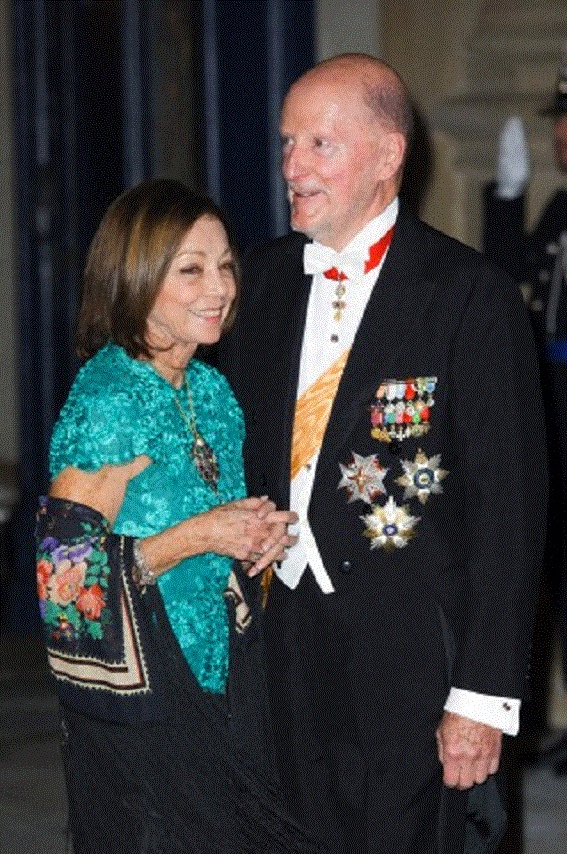
Together they had five children: Kardam, Kyril, Kubrat, Konstantin and Kalina.
Life continued.
Bulgaria, meanwhile, remained behind the Iron Curtain.
Decades passed.
Kings died.
Governments changed.
Children became adults.
The little boy expelled in 1946 became a businessman, husband, father and eventually grandfather.
But he never formally renounced the crown.
And he never forgot Bulgaria.
Then Communism Disappeared
History again intervened.
The communist regimes of Eastern Europe began collapsing in 1989.
The Berlin Wall fell.
One dictatorship after another disappeared.
Bulgaria changed too.
The political system responsible for Simeon’s exile was gone.
And suddenly a question that had seemed impossible for nearly half a century became conceivable:
Could the King go home?
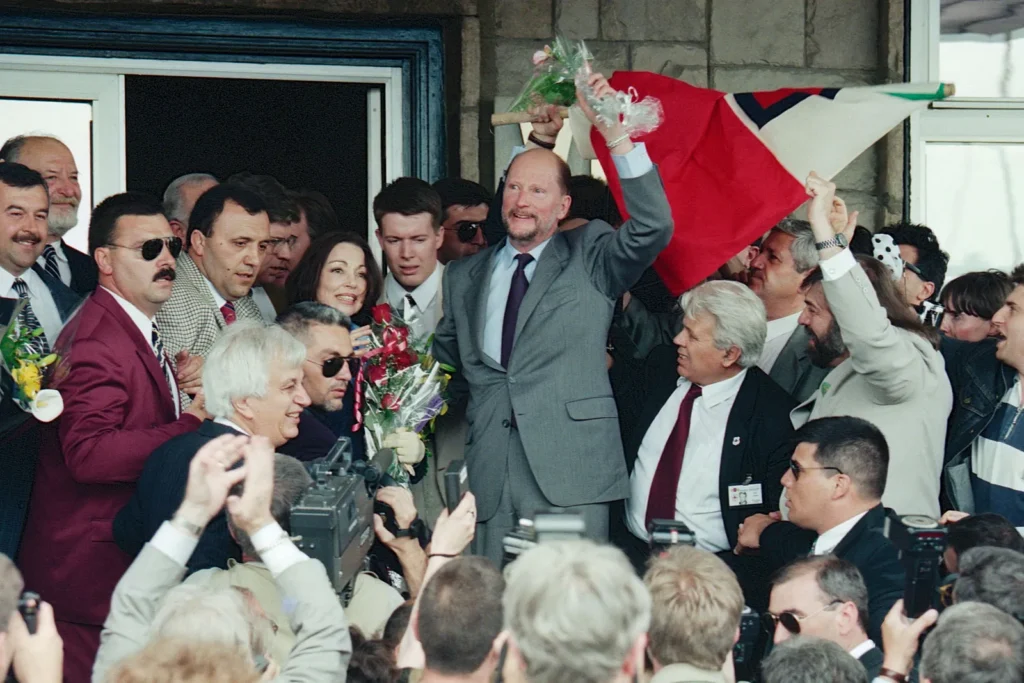
In 1996, fifty years after leaving Bulgaria as a child, Simeon returned for his first visit.
The symbolism was extraordinary.
The nine-year-old who had departed an occupied, increasingly communist Bulgaria returned as a fifty-eight-year-old man to a democratic country trying to rediscover its place in Europe.
The Bulgarian Telegraph Agency records that his first return lasted from 25 May to 16 June 1996.
For Simeon, this was not simply tourism.
It was homecoming.
And five years later, he returned again—this time permanently.
What happened next transformed an already remarkable biography into something unique.
The King Enters an Election
In April 2001, Simeon announced that he was entering Bulgarian politics.
He established the National Movement Simeon II.
The former King did not attempt a coup.
He did not demand that parliament hand back his throne.
He did not arrive with an army.
He submitted himself to the electorate of the republic.
Think for a moment about how extraordinary that was.
A man who believed himself never to have abdicated his crown accepted the rules of the democratic political system that now governed his country and asked Bulgarians for their votes.
They gave them to him.
His movement won approximately 43 per cent of the vote and 120 of the 240 seats in the National Assembly.
On 24 July 2001, Simeon Saxe-Coburg-Gotha, Tsar of the Bulgarians, became Prime Minister of the Republic of Bulgaria.
The boy who had been expelled by a communist regime returned half a century later because Bulgarians had voted to place him at the head of their government.
There is a certain poetic symmetry to it.
But there was also a lesson.
Simeon had returned not through revenge, but through democracy.
King and Prime Minister
His decision inevitably created a fascinating constitutional paradox.
What was he now?
To the Bulgarian Republic, he was Simeon Saxe-Coburg-Gotha, Prime Minister.
To monarchists and the Royal House, he remained His Majesty Simeon II, Tsar of the Bulgarians.
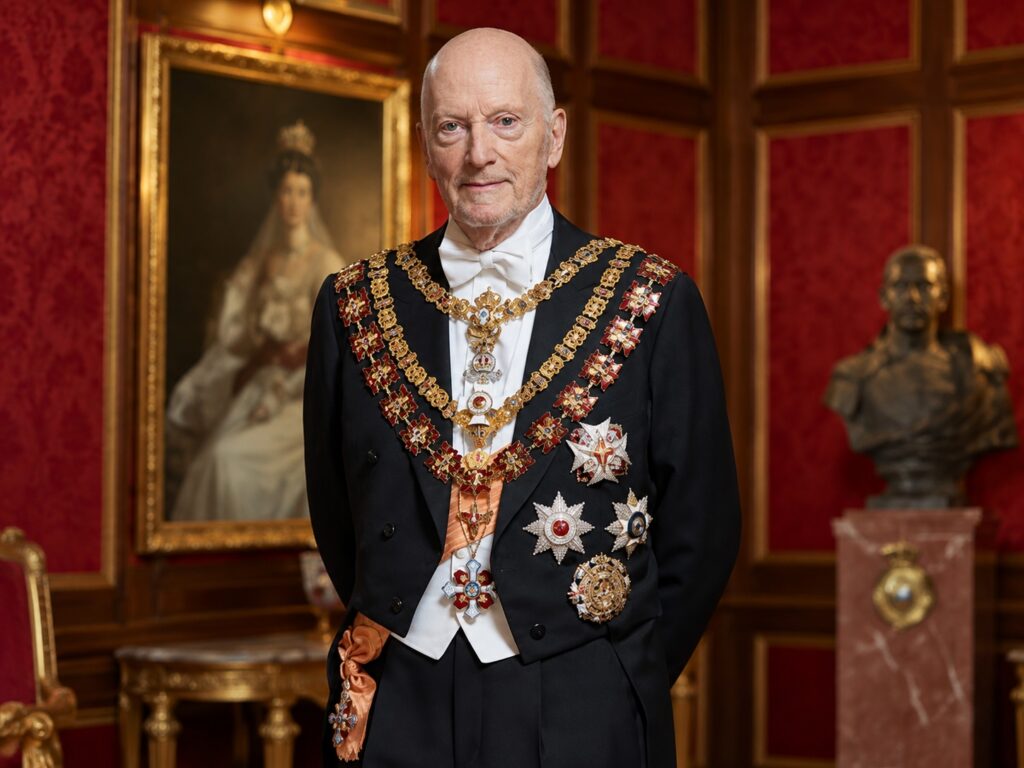
And Simeon himself navigated that contradiction with considerable pragmatism.
He did not use the premiership as an immediate vehicle for monarchical restoration.
Instead, his government concentrated upon Bulgaria’s economic development, Western integration, institutional reform and entry into the European structures from which decades of communism had separated the country.
His premiership was not without controversy. Expectations in 2001 had been extraordinarily high, and not all of them could possibly be fulfilled. Economic hardship remained, and his government faced the ordinary criticisms, disappointments and compromises that accompany democratic government.
But several strategic developments were important.
Perhaps the most visible was Bulgaria’s integration into NATO.
Bringing Bulgaria West
When Simeon became Prime Minister, Bulgaria was still seeking membership of the Atlantic Alliance.
In October 2001, he travelled to NATO headquarters and discussed Bulgaria’s candidacy with Secretary General Lord Robertson and the North Atlantic Council.
Two years later, Bulgaria had moved from applicant to invited country.
And in 2004, during Simeon’s premiership, Bulgaria became a full member of NATO.
The symbolism was extraordinary.
The child King who had been forced into exile as Bulgaria disappeared behind the Iron Curtain was now Prime Minister as his country formally entered the principal Western defence alliance.
European Union membership followed in 2007, after Simeon’s premiership had ended, but the accession process advanced significantly during his government and European integration was one of its central priorities.
Again, history seemed to be completing a circle.
Simeon had spent his exile in Western Europe.
He returned to help anchor Bulgaria within it.
The Rarity of His Story
There have been monarchs who lost their thrones.
There have been monarchs who returned from exile.
There have been royal families restored after dictatorship.
But Simeon’s political journey remains almost singular.
He was not restored as King.
He was elected as Prime Minister.
The distinction is fascinating.
The republic did not return his crown.
But its citizens gave him something that could never simply be inherited: their votes.
For four years, the former King governed under a republican constitution.
It was perhaps the ultimate demonstration of his pragmatism.
He had survived long enough to understand that service to a country need not depend upon the title through which that service is rendered.
The six-year-old King had inherited authority.
The sixty-four-year-old politician had to earn it at the ballot box.
A Life That Spans Several Bulgarias
To understand Simeon properly, one must appreciate just how much history one life can contain.
He was born in a kingdom.
He became its King during a world war.
He lived through Soviet occupation.
He watched communists dismantle his monarchy.
He was exiled.
He lived through Franco’s Spain and the Cold War.
He watched the Soviet Union disappear.
He returned to democratic Bulgaria.
He founded a political movement.
He won an election.
He became Prime Minister.
His country entered NATO while he led its government.
And today, at eighty-nine, Simeon II remains a living connection between modern Bulgaria and a kingdom that disappeared eighty years ago.
Few Europeans alive today can embody such an extraordinary span of history.
The Tragedy of Prince Kardam
At this point, the story becomes a personal one for me.
I had the privilege of being a friend of Kardam, Prince of Tarnovo, and of his wife, Princess Miriam. Through the years I have also had the honour of meeting King Simeon and Queen Margarita on several occasions. It is one thing to write about a royal dynasty through the distant language of history, titles and succession; it is quite another when some of the people within that history are individuals one has known personally. For that reason, what happened to Kardam has always seemed to me particularly cruel.
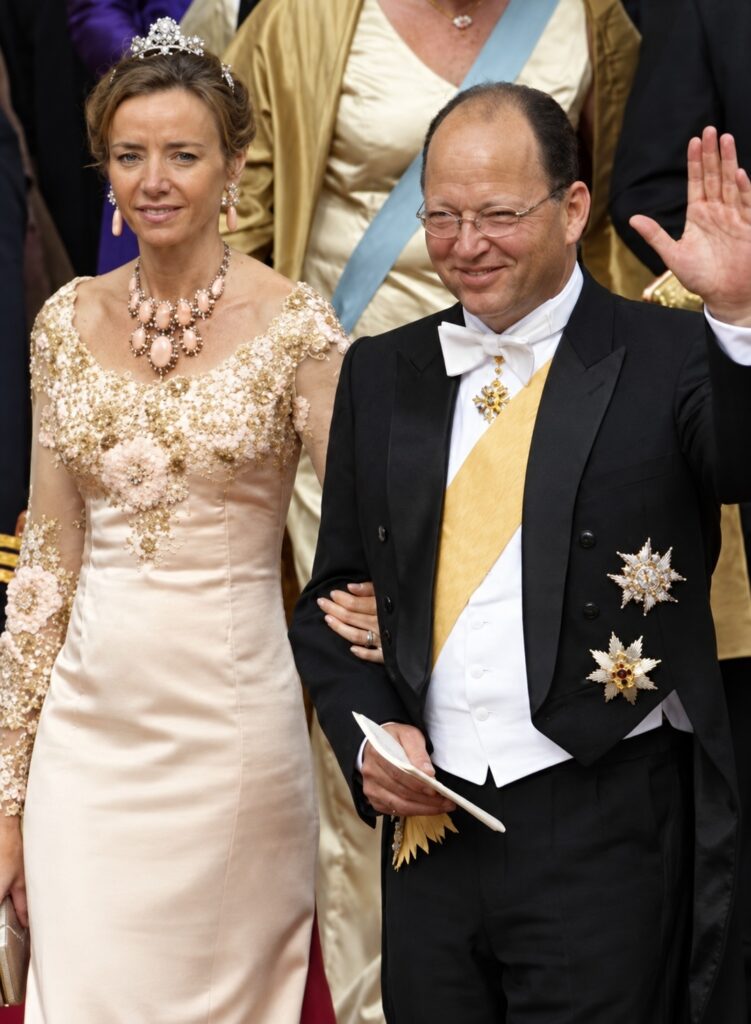
Kardam was His Majesty’s eldest son and heir, the man who, in the natural course of events, would one day have carried the family’s dynastic inheritance into the next generation. But writing those words feels strangely inadequate to me, because I knew Kardam as a friend, and the prince was only one part of the man I remember.
What remains with me is his extraordinary humanity. Kardam was warm, generous and instinctively empathetic, with none of the distance one might have expected from someone born into such an historic family. There was an ease about him, a kindness and a genuine interest in other people that could never have been manufactured. He made you feel comfortable in his company because he himself had no need to impress. The title belonged to history; the warmth belonged entirely to him.
I remember him above all as a devoted husband to Miriam, a loving father and a dear friend. He was one of those rare people whose goodness revealed itself naturally, without display or self-consciousness, and he was deeply loved by those fortunate enough to know him. His terrible accident, and the long years that followed before his death, were therefore not simply a tragedy for the Bulgarian Royal Family or the loss of its heir. For those of us who knew and loved him, it was the loss of a quite exceptional human being.
Whenever I think of Kardam today, I do not think first of the Prince of Tarnovo, the succession or the history he represented. I think of my friend. And perhaps that is the most meaningful tribute one can pay to a man born with so many titles: that what one remembers most was simply Kardam himself.
Then, in August 2008, everything changed.
Kardam was involved in a devastating motor accident in Spain. He suffered catastrophic brain injuries from which he never truly recovered. After years in a coma, he died in 2015 at the age of only fifty-two.
For King Simeon and Queen Margarita, it was the loss every parent dreads. For Princess Miriam and their sons, Boris and Beltrán, it was the destruction of the centre of their family. And for those of us fortunate enough to have known Kardam, his death gave this remarkable royal story a profoundly human sadness that no account of dynastic history can adequately convey.
For the Royal House, it also meant that the responsibility which should have passed naturally through Kardam would eventually fall upon his eldest son.
His name is Boris.
Boris of Tarnovo
Prince Boris of Tarnovo, born in Madrid on 12 October 1997, is King Simeon’s grandson and the elder son of the late Prince Kardam and Princess Miriam.
Within the dynastic tradition of the Bulgarian Royal House, the title Prince of Tarnovo carries particular meaning.
It is the title historically associated with the heir.
Simeon himself bore it before becoming King.
Kardam bore it after him.
Today it is borne by Boris.
There is inevitably an added poignancy in seeing Boris assume the place within the family that history had expected his father to occupy. He represents not simply dynastic continuity, but the continuation of Kardam’s own line.
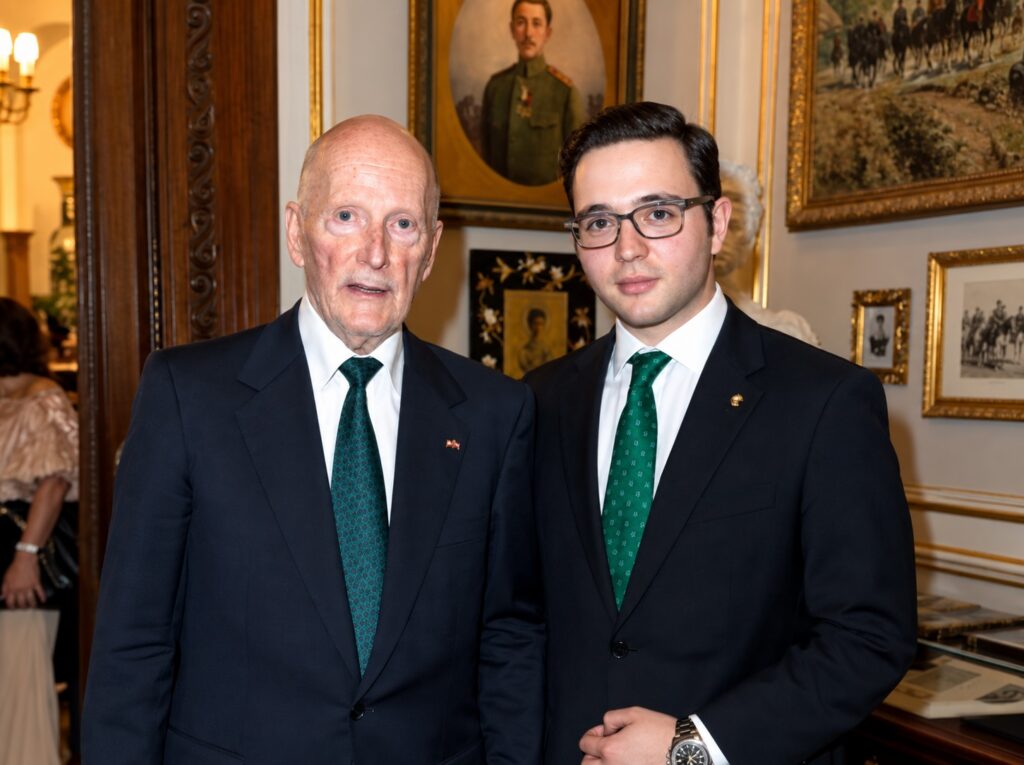
He is therefore the young man upon whom much of the future dynastic continuity of the House of Saxe-Coburg and Gotha-Koháry rests.
Strict constitutional language is important here. Bulgaria is a republic, and the Bulgarian state does not recognise an official Crown Prince. Boris is therefore more accurately described as Prince of Tarnovo and dynastic heir within the former Royal House, rather than Crown Prince in the constitutional sense.
But history has a habit of making titles less important than people.
And Boris is becoming increasingly interesting in his own right.
A Very Different Kind of Prince
There would be little purpose in Boris attempting to imitate his grandfather.
He belongs to another century.
Born in Spain, educated internationally and artistically inclined, Boris represents a generation of European royalty for whom inherited identity must coexist with an entirely contemporary life.
He is known particularly for his artistic interests and sculpture.
But something else appears increasingly important.
Bulgaria.
Recent appearances and interviews suggest a young man becoming more visibly engaged with the country whose historic dynastic inheritance he carries.
In a 2026 interview, Boris spoke about Bulgaria not as an abstract ancestral homeland but as a country with which he is developing a personal relationship.
That may prove more important than grand declarations about restoration.
Dynasties survive because successive generations make inherited history their own.
Boris cannot remember the Bulgarian monarchy.
His father could not remember it either.
Even Simeon himself was only nine when it disappeared.
And yet the connection has survived.
What Future for the Bulgarian Crown?
This inevitably raises the question:
Could Bulgaria ever become a monarchy again?
No responsible observer can answer that question with certainty, and Bulgaria’s present constitutional order is republican.
Nor should the future of the monarchy be confused with nostalgia.
A restoration could possess democratic legitimacy only if Bulgarians themselves chose it through lawful constitutional means.
That is ultimately their decision.
But there is another question that can be answered.
Does the Bulgarian Royal House still exist as a living historical institution?
Clearly it does.
Simeon is alive.
The family continues.
The dynastic line continues through Boris.
The Royal Palace of Vrana remains closely associated with the family and its history.
And the extraordinary fact that Simeon himself once returned to become Prime Minister ensures that the Bulgarian monarchy cannot simply be placed in the same category as a dynasty that disappeared irretrievably into the nineteenth century.
Its last King has participated directly in twenty-first-century Bulgarian public life.
That changes everything.
The Advantage of Boris
Boris also possesses something his grandfather could never have had at the same age: time.
At twenty-eight, he does not need to make extravagant declarations about crowns or constitutions.
Quite the opposite.
His strongest possible role at present is cultural, charitable, historical and national.
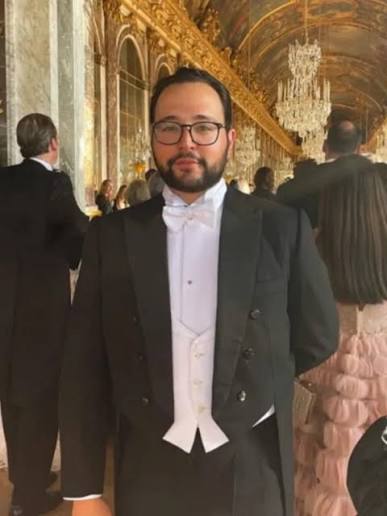
To learn Bulgaria deeply.
To speak its language.
To understand its people.
To spend meaningful time there.
To support its heritage.
To become involved in causes that matter to younger Bulgarians.
To make the name he inherited relevant through service rather than entitlement.
If he does that, the institution his family represents can retain meaning irrespective of Bulgaria’s constitutional form.
That is how modern non-reigning royal houses remain relevant.
Not by pretending history never happened.
By demonstrating that history can still contribute something to the present.
A Crown Is More Than a Throne
Simeon’s life perhaps teaches precisely that lesson.
Communism took his throne.
It could not take his identity.
Exile took him from Bulgaria.
It could not make him cease to be Bulgarian.
The republic replaced his monarchy.
And yet the republic eventually elected him Prime Minister.
History rarely provides such elegant ironies.
When Simeon left Bulgaria in September 1946, he was nine years old.
Those who forced him into exile could reasonably have believed they had brought the Bulgarian monarchy to its definitive conclusion.
The royal family would live abroad.
The boy would grow old.
The dynasty would become a historical curiosity.
Communism would build the future.
Instead, communism disappeared first.
And Simeon came home.
The King and His Grandson
There is something rather moving about the relationship between Simeon’s story and that of Boris.
One began life inside a palace in Sofia and was forced abroad.
The other began life abroad and now has the opportunity to rediscover Bulgaria.
Simeon’s journey was from homeland to exile and eventually home again.
Boris’s may be from inherited memory towards belonging.
They stand at opposite ends of the same extraordinary family story.
One is the last reigning King of Bulgaria.
The other represents its dynastic future.
Between them lie war, communism, exile, democracy, NATO membership, European integration and eighty years of Bulgarian history.
Whether Bulgaria ever chooses to restore its monarchy is a question for another generation.
Perhaps even for generations yet unborn.
But the more immediate future of the Crown does not require a throne.
It requires continuity.
It requires memory.
It requires service.
And above all, it requires somebody willing to carry the inheritance forward.
Prince Boris now has that opportunity.
The King Who Returned
Perhaps this is why Simeon II’s story ultimately transcends the debate between monarchy and republic.
His greatest victory was not that he recovered a crown.
He did not.
It was that he recovered his country.
He returned without an army and without vengeance.
He submitted himself to democratic elections.
And the country that had once sent a nine-year-old King into exile entrusted the sixty-four-year-old man with its government.
There are lives in which history seems almost to write the narrative itself.
Simeon II has lived one of them.
Born a prince.
King at six.
Exile at nine.
A stranger to his homeland for half a century.
Then homecoming.
Election.
Prime Minister.
European statesman.
Grandfather.
And now, in the autumn of an extraordinary life, witness to the emergence of the young Prince of Tarnovo who carries the name of Simeon’s own father, King Boris III.
The throne may have disappeared.
The dynasty did not.
And perhaps the most remarkable image with which to leave the story is therefore not a crown or a palace, but two men separated by sixty years.
An old King who has lived almost every conceivable reversal of fortune.
And a young prince standing at the beginning of his own journey.
Simeon came home.
Boris now has the opportunity to carry that homecoming into the future.


 Carlos Mundy
 Giovanni R. Ruffini Professor of History Fairfield University, USA




 Laura Mitchell
 Mayte Hidalgo