
 Basil St. Clair Fairfax
Britain is once again approaching one of those moments in its political history when the old assumptions no longer seem adequate to the problems facing the country.
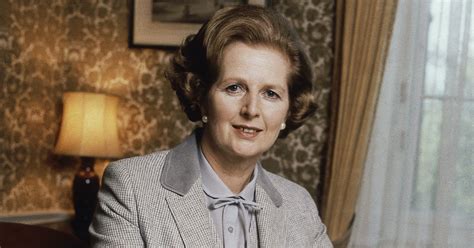
There was a time, in the late 1970s, when Britain appeared trapped in a cycle of economic decline, industrial unrest, excessive taxation, rising public expenditure and diminishing confidence in the country’s future. Then came Margaret Thatcher.
Thatcher did not merely become Prime Minister. She changed the political argument. She challenged the assumption that an ever-expanding state was the natural answer to Britain’s problems and replaced it with a very different philosophy: individual responsibility, enterprise, private ownership, lower taxation, stronger national sovereignty and a belief that government should create the conditions for prosperity rather than attempt to control every aspect of economic life.
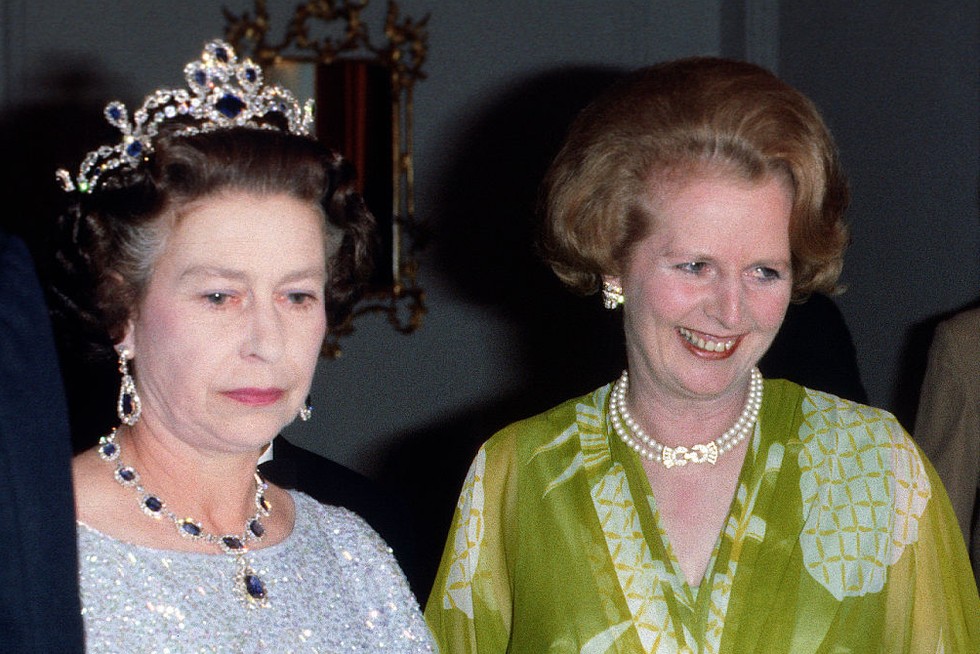
Today, Britain is once again searching for a political force capable of breaking with the prevailing consensus.
The question is not whether Margaret Thatcher herself can return. She cannot. Nor should Britain seek a carbon copy of a politician who governed more than three decades ago. The question is whether there are politicians today who possess enough of her conviction, courage and clarity of purpose to confront the country’s problems with comparable determination.
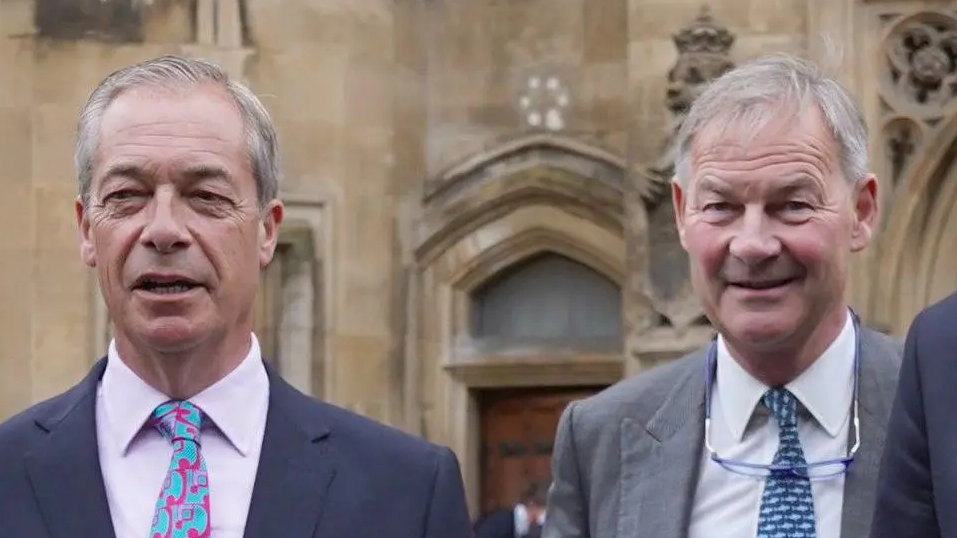
Could Nigel Farage and Rupert Lowe be those politicians?
The answer, in my view, is yes — but only if they understand that neither of them can do it alone.
The economic and political circumstances are obviously different from those of 1979. Yet some of the underlying anxieties are remarkably familiar.
Britain faces weak economic growth, a heavy tax burden, high public expenditure, mounting pressure on public services, a welfare system under strain, an increasingly frustrated electorate and a profound crisis of confidence in the political establishment.
The country has also become deeply divided over questions of immigration, national identity, sovereignty, the role of the state and Britain’s relationship with Europe.
The political response from successive governments has too often been incremental rather than transformational.
That is precisely where the Thatcher comparison becomes relevant.
Thatcher understood that a country in decline cannot simply administer its decline more efficiently. It requires a change in direction.
Her great political achievement was not merely a series of individual economic reforms. It was the creation of a coherent alternative to the prevailing political philosophy.
That is what Britain lacks today.
One of the great ironies of contemporary British politics is that the Conservative Party still carries the institutional inheritance of Thatcherism, yet it has struggled to reproduce the political confidence that made Thatcherism possible.
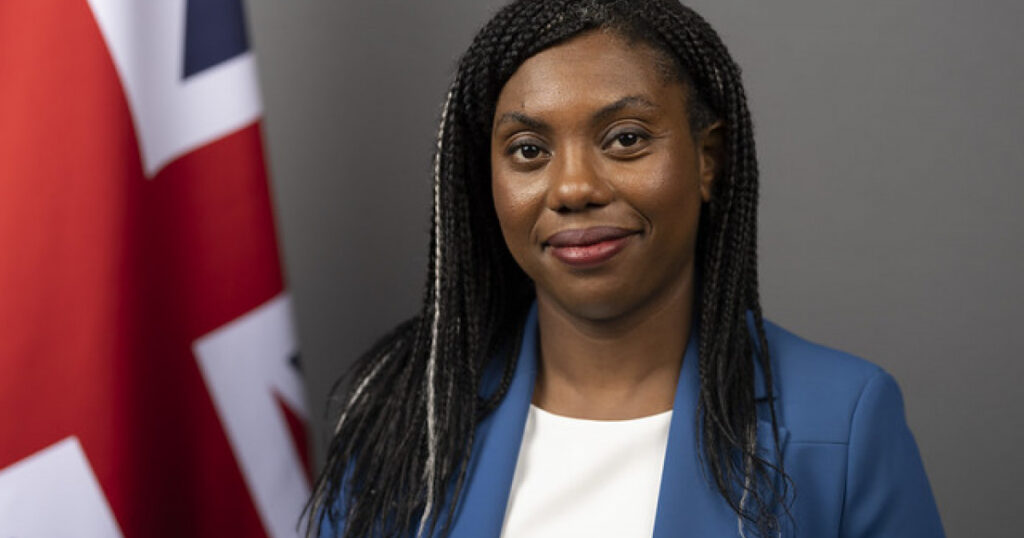
The Conservative Party is currently led by Kemi Badenoch, a politician who has spoken strongly about taxation, economic growth, personal responsibility and the need to rebuild the party after its electoral collapse.
But Badenoch is not Thatcher — and the Conservatives are no longer the political force they were under Thatcher.
This matters.
The Conservative Party cannot simply assume that its historic position on the centre-right entitles it to lead the opposition to the present government. British politics has changed dramatically. Reform has broken the old political monopoly of the Conservatives on the right, while Rupert Lowe has gone further by establishing Restore Britain as a separate political force.
The result is potentially disastrous for the right — unless the divisions can be overcome.
Because the greatest danger is not that Farage, Lowe and the Conservatives disagree.
It is that they agree on enough things to defeat one another.
Nigel Farage possesses something that very few British politicians have ever possessed: an extraordinary ability to identify an issue that millions of people feel instinctively but that the political establishment would rather avoid.
His campaign for Brexit demonstrated that capacity spectacularly.
Whatever one’s view of Brexit, Farage changed British politics because he understood that a large section of the population felt that its concerns about immigration, sovereignty, political accountability and Britain’s relationship with Europe were simply not being heard.
Today, Reform UK has become a significant political force. It has eight MPs and has made substantial gains in local government. Farage remains its leader.
But Farage’s greatest strength is also his greatest limitation.
He is exceptionally effective at breaking the political consensus.
The harder question is whether he can build the political coalition necessary to govern Britain.
That requires something different from insurgency. It requires discipline, organisation, economic credibility, competent administration and the ability to bring together people who do not necessarily agree on everything.
This is where Rupert Lowe enters the picture.
Rupert Lowe: the missing piece?
Lowe represents a very different political proposition.
Where Farage is the great political communicator and insurgent, Lowe has positioned himself as a businessman and political reformer willing to challenge both Westminster and the structures of his own former party.
His political movement, Restore Britain, is now a registered national party, while Lowe remains the MP for Great Yarmouth.
There is an obvious risk in this division. Every vote that goes to Restore Britain rather than Reform is potentially a vote that does not contribute to a broader parliamentary majority.
Yet there is also an opportunity.
Farage and Lowe have already demonstrated that they can disagree — sometimes spectacularly. But in August 2026, Lowe extended an olive branch towards Farage, and Farage subsequently indicated that he was open to discussions about working together.
That possibility should be taken seriously.
Because Britain does not need another permanent opposition movement.
It needs a government capable of changing direction.
Neither Farage nor Lowe is Margaret Thatcher.
Nor should either attempt to be.
Thatcher belonged to a particular generation and confronted a particular historical crisis. Her political methods, economic policies and social philosophy cannot simply be transplanted into Britain in 2026.
But the essential question is not whether either man resembles Thatcher personally.
It is whether they possess some of the qualities that made her effective.
Conviction.
Political courage.
Clarity.
A willingness to challenge established interests.
A belief that government should not continually expand at the expense of individual freedom.
A belief that economic growth must come before the redistribution of wealth.
And, perhaps most importantly, the willingness to tell voters things they may not necessarily want to hear.
In that sense, both men have something to offer.
Farage has demonstrated an ability to mobilise voters and challenge the political establishment.
Lowe has demonstrated a willingness to challenge orthodoxies and argue for a more radical restructuring of Britain’s political and economic model.
Individually, however, neither is sufficient.
Together, they could become considerably more formidable.
This is where the future of Britain’s political right may be decided.
Farage and Lowe do not need to become friends.
They do not need to agree on every policy.
They do not even need to belong to the same political party.
But they need to recognise the mathematics of British politics.
If Reform, Restore Britain and the Conservatives fight one another everywhere, they risk handing victory to the very political establishment they are trying to replace.
The same lesson applies to the Conservatives.
The Conservative Party must recognise that the political landscape has changed. Reform is not simply a temporary protest movement that can be ignored until the next election. It has become a permanent part of the political landscape.
Equally, Reform and Restore Britain must recognise that winning votes is not the same as winning the country.
Britain requires a broad coalition capable of combining Reform’s electoral energy, Lowe’s reformist instincts and the Conservatives’ parliamentary experience and institutional infrastructure.
If no single party wins a majority at the next general election, the answer should not automatically be another election.
The answer could be a coalition government of the centre-right.
That would require compromise. It would require discipline. And it would require the participants to put the national interest ahead of personal rivalries.
But it could also provide something Britain has lacked for years: a government with a sufficiently broad mandate to undertake serious structural reform.
The alternative: more of the same
The danger facing Britain is not simply one particular government.
It is political inertia.
The present Labour government under Prime Minister Andy Burnham is pursuing a markedly more interventionist programme, including plans for a National Care Service, greater public control over parts of the utilities sector and a closer relationship with the European Union.
Supporters will argue that this represents a necessary correction to decades of market-oriented economics.
Critics will argue that it represents precisely the opposite: an expansion of the state at the moment when Britain can least afford it.
That argument will ultimately be settled not by rhetoric but by results.
If taxes remain high, growth remains weak, public debt continues to rise and public services continue to deteriorate, voters will eventually demand something different.
And when that moment arrives, the political right must be ready.
A modern Thatcherite government could not simply repeat the policies of the 1980s.
It would need to confront entirely new challenges: artificial intelligence, technological disruption, energy security, global competition, ageing populations, illegal immigration, housing shortages, Britain’s defence requirements and the extraordinary growth of government debt.
But the underlying principles could remain remarkably relevant.
Britain needs an economy in which entrepreneurs want to invest and companies want to employ.
It needs a tax system that rewards work rather than discourages it.
It needs a welfare system that protects those genuinely unable to support themselves while restoring the principle that work should always pay.
It needs serious reform of the public sector, not simply ever-increasing expenditure.
It needs an education system that prepares young people for the economy of the future rather than merely expanding bureaucracy.
It needs dramatically faster infrastructure development.
It needs secure and affordable energy.
It needs controlled immigration and an immigration system that commands public confidence.
And it needs a government prepared to defend British sovereignty while building strong alliances with its friends and partners.
Above all, it needs a political leadership willing to say that prosperity cannot be created by government spending alone.
Thatcher’s greatest legacy
Thatcher’s most important legacy was perhaps not privatisation, deregulation or trade-union reform.
It was the restoration of political possibility.
She persuaded millions of Britons that decline was not inevitable.
That is the psychological battle Britain must fight again.
A nation that believes its best days are behind it will behave like a declining nation.
A nation that believes it can once again become prosperous, innovative, secure and influential will begin to act differently.
That is why the Thatcher question still matters.
Britain does not need another Margaret Thatcher.
It needs leaders who possess the courage to do what Thatcher did: identify the country’s fundamental problems, explain them honestly, propose radical solutions and then remain committed to those solutions when the inevitable opposition arrives.
The irony is that the people who may have the opportunity to carry that political torch are not sitting comfortably within the traditional Conservative establishment.
Nigel Farage has built a political movement capable of reaching millions of voters.
Rupert Lowe has created a new political vehicle and has positioned himself as an independent force on the British right.
The Conservatives still possess parliamentary experience, a national organisation and a historic political base.
Separately, these forces may remain divided.
Together, they could become something much greater.
The question, therefore, is no longer simply:
Who is Britain’s next Margaret Thatcher?
The more important question is:
Can Farage and Lowe become the political partnership capable of doing what Thatcher did — changing the direction of Britain?
I believe they can.
But only if they understand one fundamental truth.
Britain cannot afford another civil war on the right.
Farage must be prepared to work with Lowe.
Lowe must be prepared to work with Farage.
And both must be prepared to work with the Conservatives if that is what is required to form a government capable of governing.
If none of them wins an outright majority, a coalition should not be regarded as a failure. It could be the very mechanism through which Britain’s political right finally unites around a common programme.
The choice facing Britain may therefore be much larger than one election or one party.
It may be a choice between continued political fragmentation and a new governing alliance determined to reverse national decline.
Margaret Thatcher once demonstrated that Britain could change direction.
The question now is whether Farage and Lowe — with the Conservatives alongside them — have the courage, discipline and political imagination to do it again.
They can.
But first, they must stop fighting each other and start fighting for the country.


 Carlos Mundy
 Giovanni R. Ruffini Professor of History Fairfield University, USA


 Metaphore Magazine


 Laura Mitchell
 Mayte Hidalgo