
 Charles Markeaton-Mundy
From the distinguished world of international business to the creative splendour of cinema, Hani Farsi has fashioned a remarkable life in which entrepreneurial vision, cultural refinement and philanthropy exist in uncommon harmony. A businessman with the soul of an artist, he represents a generation of Arab entrepreneurs whose ambitions extend far beyond the accumulation of wealth.

There are businessmen who build fortunes, others who establish empires, and a rather smaller number who understand that the true measure of success lies not simply in what one possesses, but in what one creates, encourages and ultimately leaves behind. Hani Farsi belongs to this latter category. His is a world in which commerce meets culture, where financial enterprise becomes an instrument of artistic expression, and where personal accomplishment carries with it a deeply felt responsibility towards others.
Born in Jeddah, educated in the United States and established professionally in London, Farsi is a man whose life has unfolded across cultures and continents. His interests are as extensive as they are sophisticated, embracing hospitality, property, international investment, theatre, cinema and philanthropy. Yet what makes his story particularly compelling is the intellectual and emotional thread connecting these apparently disparate pursuits: an enduring belief that business, when guided by imagination and conscience, can contribute something of lasting value to civilisation.
There is something distinctly cosmopolitan about Hani Farsi, but his cosmopolitanism has never required him to abandon his origins. On the contrary, his Saudi and Egyptian heritage, the intellectual influence of his father and his early exposure to architecture, art and public service have provided the foundations upon which his international career has been built.
His achievements offer a persuasive reminder that the most interesting entrepreneurs are frequently those whose curiosity extends well beyond the boundaries of their chosen profession.
The Influence of an Exceptional Father
To understand Hani Farsi, one must begin in Jeddah, the ancient port city on the Red Sea whose history has long been shaped by commerce, pilgrimage and the meeting of different cultures.
His father, Dr Mohamed Said Farsi, was one of the most influential figures in the city’s modern development. An architect, urban planner and Mayor of Jeddah between 1972 and 1986, he helped transform the city during a period of extraordinary economic expansion, bringing an ambitious artistic sensibility to urban development.
Dr Farsi believed that a modern city should be more than a collection of roads, commercial buildings and residential neighbourhoods. It should possess beauty, identity and a sense of cultural purpose. Under his stewardship, Jeddah became celebrated for its remarkable collection of public sculptures, including works associated with internationally renowned artists.
For the young Hani, this was an unusual and immensely enriching environment in which to grow up. Art was not an occasional diversion, nor was architecture merely a technical discipline. Both formed part of the everyday conversation of family life.
In an interview with The Rake, Farsi recalled how discussions with his father ranged from the urban transformation of Paris under Baron Haussmann to the differences between Ottoman and Mamluk architecture, and the artistic genius of Henry Moore.
It is difficult to imagine a more stimulating intellectual inheritance for a young man who would eventually combine business with a passionate commitment to the creative arts.
Perhaps even more important was his father’s understanding of generosity. Dr Farsi was known within his family for quietly supporting the education and welfare of others, without seeking public recognition. This example of discreet philanthropy left a lasting impression upon his son, who would eventually establish a charitable foundation bearing his father’s name.
Such an upbringing helps explain an essential aspect of Hani Farsi’s character. For him, culture and generosity are not embellishments added to commercial success once it has been achieved. They are part of the very purpose of success itself.
An Education Beyond Borders
At the age of fifteen, Hani Farsi left Saudi Arabia to continue his education at South Kent School in Connecticut, an experience that introduced him to a very different social and intellectual environment.
He subsequently attended the American University in Washington, DC, where he obtained bachelor’s and master’s degrees in international studies. His education in the American capital exposed him to the world of diplomacy, international affairs and the complex relationships between societies, governments and cultures.
Of particular significance was his early experience working with Amnesty International in Washington. This brought him into contact with questions of human rights and social responsibility, subjects that would later find expression in his philanthropic activities and his choice of cinematic projects.
In 1993, he moved to London, initially to oversee and develop his family’s investment interests. The British capital, with its unique combination of international finance, historic institutions, cultural vitality and extraordinary diversity, offered an ideal environment for a young entrepreneur whose ambitions could never have been confined to a single industry.
London would become the setting for the next important chapter of his life.
London, Hospitality and the Creation of a Business Vision
The hospitality industry provided one of Hani Farsi’s earliest opportunities to demonstrate his entrepreneurial instincts.
During the 1990s, he developed interests in some of London’s most fashionable and influential establishments, including Cecconi’s and the internationally celebrated Soho House network of private members’ clubs.
These were not simply commercial ventures. They belonged to a particular conception of hospitality in which atmosphere, architecture, gastronomy, discretion and the quality of human interaction were essential ingredients of success.
The finest restaurants and private clubs have always offered something more elusive than food, drink or comfortable surroundings. They create a sense of belonging, bringing together individuals from different professions and backgrounds in environments that encourage conversation, friendship and the exchange of ideas.
Farsi understood the attraction of such places, particularly in a city where business, fashion, politics, the arts and international society have long existed in close proximity.
His involvement in hospitality also demonstrated an appreciation of the importance of presentation and experience, qualities that would later prove equally valuable in the worlds of cinema and cultural investment.
In 2007, he established the Corniche Group, an investment enterprise whose activities extended across a range of sectors, including property, hospitality, technology, media, film and other commercial interests.
The diversity of these activities reflects an entrepreneurial philosophy that is not restricted to conventional investment categories. Farsi has repeatedly shown an inclination to become involved in ventures where commercial opportunity is accompanied by creative or intellectual interest.
For many businessmen, diversification is primarily a means of managing financial risk. In Farsi’s case, it also appears to be an expression of curiosity, an unwillingness to regard business as an end in itself rather than as a means of participating in the wider world.
The Theatre: Where Business Meets Imagination
Long before his name became associated with international cinema, Hani Farsi had developed a profound affection for the theatre.
His involvement with London’s celebrated Donmar Warehouse, where he served on the Board of Trustees during the period of Sam Mendes’s artistic leadership, placed him at the heart of one of the most exciting chapters in contemporary British theatrical history.
The Donmar, an intimate theatre in Covent Garden, became internationally admired for the ambition and quality of its productions. Under Mendes, it attracted extraordinary acting talent and demonstrated that artistic excellence need not depend upon the scale of a theatre or the extravagance of its resources.
Among the productions associated with this period was The Blue Room, starring Nicole Kidman, which became one of the most talked-about theatrical events of its time.
Farsi’s contribution went beyond attending performances or lending his name to a fashionable cultural institution. He became a significant benefactor, helping to support the theatre at a time when private patronage was of considerable importance to its continued development.
There is something particularly admirable about this form of patronage. The theatre, perhaps more than almost any other artistic discipline, depends upon the willingness of individuals to invest in talent whose commercial success cannot be guaranteed.
Supporting the performing arts requires a degree of faith in human creativity. It also demands an understanding that cultural achievement cannot always be measured in financial terms.
For Hani Farsi, the experience of the Donmar was to become a natural bridge towards another, even more ambitious creative undertaking: the world of cinema.
Film production is a notoriously unpredictable business. Fortunes may be spent upon projects that never find an audience, whilst comparatively modest productions can achieve international acclaim and become part of the cultural history of their time.
It is a world in which financial judgement must coexist with artistic instinct, and where a producer’s most important quality may be the ability to recognise the value of a story before anybody else believes it deserves to be told.
Hani Farsi’s entry into cinema was distinguished by his interest in precisely such stories.
Rather than concentrating exclusively upon mainstream commercial entertainment, he became associated with independent films addressing identity, history, displacement, cultural conflict and the complex realities of contemporary life.
Through Corniche Pictures and his wider involvement in film financing and distribution, he helped bring to the screen works that might otherwise have struggled to obtain the necessary support.
One of the most important early examples was The Time That Remains, directed by the Palestinian filmmaker Elia Suleiman.
The film, which premiered in competition at the Cannes Film Festival in 2009, offers a deeply personal and frequently poignant exploration of Palestinian history through the experiences of a family living in Nazareth.
When the production encountered serious financial difficulties shortly before filming, Farsi intervened with substantial backing. His support helped ensure that a work of considerable artistic and historical importance could reach the screen.
The film subsequently received the Jury Grand Prize at the Asia Pacific Screen Awards.
What makes this episode particularly revealing is not simply the financial commitment involved, but the nature of the project itself. The Time That Remains is not an obvious example of formulaic commercial cinema. It is a subtle, personal work whose value lies in its ability to illuminate human experience through humour, memory and historical reflection.
To support such a film is to demonstrate a belief in cinema as something more than entertainment.
That conviction would become a defining characteristic of Farsi’s work as a producer.
Stories That Cross Cultures
Among the most distinguished filmmakers with whom Hani Farsi has collaborated is Mira Nair, whose internationally acclaimed career has been marked by a fascination with cultural identity and the relationships between East and West.
Their collaboration on The Reluctant Fundamentalist, adapted from the novel by Mohsin Hamid, brought to the screen a compelling examination of identity, ambition and prejudice in the years following the attacks of 11 September 2001.
The film follows a young Pakistani man whose successful career in American finance is disrupted by the political and emotional consequences of those events. Its central questions concern belonging, loyalty, cultural misunderstanding and the ease with which individual lives can become entangled in the larger conflicts of their time.
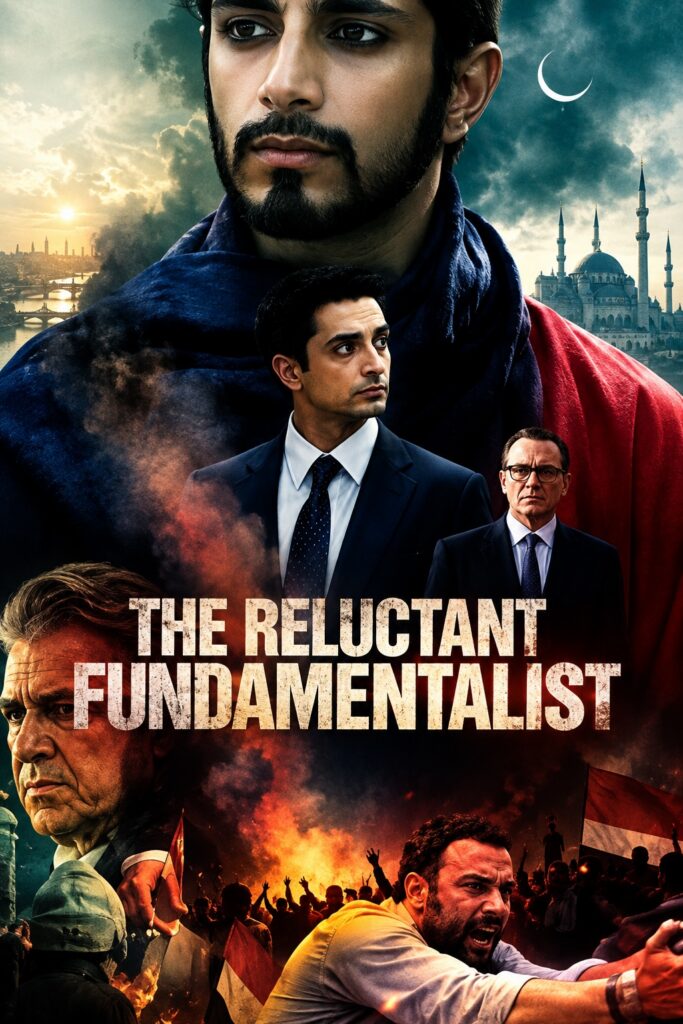
Farsi’s Corniche Pictures helped finance the film’s development, supporting the adaptation of a novel whose themes were both politically sensitive and artistically ambitious.
His association with The Patience Stone, directed by the Afghan-born novelist and filmmaker Atiq Rahimi, further demonstrated his interest in stories that give a voice to individuals whose experiences are too frequently overlooked.
Based upon Rahimi’s acclaimed novel, the film explores the life of a woman living amid conflict and repression, using an intimate personal narrative to address wider questions of freedom, dignity and the position of women within society.
Such productions reveal a consistent sensibility. Farsi has been drawn towards cinema that encourages audiences to consider unfamiliar perspectives and confront the complexities of the human condition.
He has also been associated with 20,000 Days on Earth, the imaginative documentary portrait of musician Nick Cave, demonstrating that his artistic interests extend beyond conventional dramatic storytelling.
There is a particular elegance in the idea of a businessman using his resources to enable other people to express their imagination, especially when the resulting work challenges assumptions and crosses cultural boundaries.
In this respect, Farsi belongs to a tradition of enlightened patronage that has existed throughout the history of the arts, from the great Renaissance families to the benefactors who helped sustain the theatre, opera and cinema of the modern age.
Le Pacte and the International Language of Cinema
An important dimension of Hani Farsi’s film career has been his investment in Le Pacte, the distinguished French film distribution and international sales company established by Jean Labadie.
Through Corniche, Farsi acquired a significant interest in the company in 2008, supporting an enterprise that would become associated with some of the most celebrated works of contemporary international cinema.
Le Pacte’s activities have included the distribution of internationally acclaimed films such as I, Daniel Blake, directed by Ken Loach, and Shoplifters, directed by Hirokazu Kore-eda, both recipients of the Palme d’Or at Cannes.
Its catalogue has also included Les Misérables, the powerful French drama directed by Ladj Ly, which attracted considerable international recognition.
It is important to distinguish Farsi’s involvement as an investor in Le Pacte from direct production credits on individual films distributed by the company. Nevertheless, his association with an enterprise of such artistic distinction reflects the seriousness of his commitment to international cinema.
The film industry is often dominated by the enormous commercial machinery of Hollywood. Independent producers and distributors therefore play an essential role in preserving cinematic diversity, ensuring that films from different countries, languages and cultural traditions can reach audiences beyond their places of origin.
Through his work in this field, Farsi has contributed to an international cinematic environment in which artistic quality and originality remain worthy of serious investment.
If cinema reveals Hani Farsi’s artistic imagination, philanthropy perhaps offers the clearest expression of his personal values.
The Mohamed S. Farsi Foundation, established in honour of his father, represents the continuation of a family tradition in which prosperity carries with it an obligation to contribute to the welfare and advancement of others.
Yet Farsi’s approach to philanthropy is particularly interesting because it seeks not merely to relieve immediate difficulties, but to create opportunities capable of changing the direction of individual lives.
One of the most distinguished examples is his initiative to support aspiring Arab women filmmakers through a partnership with the University of California, Los Angeles.
In 2015, the Mohamed S. Farsi Foundation and UCLA’s School of Theater, Film and Television established the Hani Farsi Graduate Scholarship Fund, providing three comprehensive, four-year scholarships for Arab women pursuing postgraduate studies in film directing.
The inaugural recipients, Farah Shaer, Amani Alsaied and Hanadi Elyan, were given an exceptional opportunity to develop their talents at one of America’s most respected film schools.
The significance of this initiative extends well beyond the financial value of the scholarships. In an industry where access to professional training, established networks and production opportunities has historically been uneven, particularly for women from certain regions, such support can transform the prospects of an entire generation of storytellers.
Farsi’s ambition was to enable Arab women to tell their own stories, in their own voices, without having their experiences interpreted exclusively through the perspectives of others.
In an interview published by Marie Claire, he expressed his wish to give women from his part of the world greater opportunities to communicate their experiences through cinema, encouraging films that would examine both what should change within society and what deserves to be preserved.
It is an admirable philosophy, particularly in an age when cultural misunderstandings are so often reinforced by superficial representations of unfamiliar societies.
Cinema has the extraordinary capacity to cross boundaries that politics and diplomacy frequently struggle to overcome. A compelling film can introduce an audience to lives, traditions and experiences they might otherwise never encounter.
By supporting the education of young filmmakers, Farsi has invested not merely in individual careers, but in the possibility of a more nuanced and humane understanding between cultures.
There is also something deeply moving about the continuity between father and son. Dr Mohamed Farsi helped bring art into the public spaces of Jeddah, believing that beauty should enrich the lives of ordinary citizens. Hani Farsi has extended that philosophy into the world of cinema, supporting artistic expression that can reach audiences across the globe.
The medium has changed, but the underlying conviction remains remarkably similar.
From Jeddah to the International Screen
The emergence of Saudi Arabia as an increasingly important centre for film production has given additional significance to Hani Farsi’s longstanding commitment to the industry.
For much of his career, he operated internationally at a time when the Saudi film sector possessed relatively limited domestic infrastructure. His work therefore preceded the more recent expansion of the Kingdom’s cinematic ambitions.
As Saudi Arabia has invested in film festivals, production facilities, professional training and international partnerships, the experience of producers who understand both the region and the wider international market has become increasingly valuable.
Farsi’s involvement in My Driver and I, the feature directed by Saudi filmmaker Ahd Kamel, offers an example of this cultural connection.

Set in Jeddah during the 1980s and 1990s, the film explores the friendship between a young Saudi girl and her Sudanese driver, finding humanity and emotional richness in a relationship that transcends differences of background, generation and social position.
Corniche Media joined the project as a production partner, with Farsi and Nils Åstrand named as executive producers.
The project is especially fitting given Farsi’s own upbringing in Jeddah. It demonstrates the possibilities of combining international production experience with stories rooted in the social and cultural history of Saudi Arabia.
More recently, Corniche Media has also been associated with Palestine 36, directed by Annemarie Jacir, which examines the period of the Arab Revolt against British rule in Palestine during the 1930s. The production further illustrates the company’s continuing interest in historically significant narratives from the Middle East.

For a producer whose professional life has been devoted in considerable measure to bridging cultures, these developments offer an especially meaningful continuation of his earlier work.
The Rare Luxury of Intellectual Independence
Perhaps one of the most attractive aspects of Hani Farsi’s career is the degree of independence with which he has pursued his interests.
His activities have never followed the predictable trajectory of an entrepreneur concerned solely with expanding a commercial portfolio. Instead, they suggest a man willing to explore different disciplines because he finds them intellectually stimulating and personally rewarding.
This is a form of freedom that wealth can make possible, but which wealth alone cannot guarantee.
There are many successful individuals who possess the resources to support the arts, yet relatively few who develop the knowledge, patience and commitment required to participate meaningfully in their creation.
Farsi’s years of involvement with the Donmar Warehouse, his collaborations with internationally respected filmmakers and his investment in film distribution suggest a sustained engagement rather than a passing enthusiasm.
In a 2020 interview with Monaco Life, he reflected upon the difference between theatre and cinema, observing that film possesses a particularly democratic quality because of its ability to reach audiences across geographical and social boundaries. He also spoke of his ambition to create work capable of moving and inspiring others in the way that the films he admired had inspired him.
There is a refreshing humility in such an ambition. It recognises that artistic accomplishment cannot simply be purchased, however substantial the financial resources available. Great cinema emerges from the elusive combination of talent, imagination, collaboration and the willingness to take risks.
The producer’s task is to create the conditions in which those qualities can flourish.
Farsi’s career illustrates how rewarding that task can be when undertaken with seriousness and conviction.
A Gentleman of Two Worlds
There is a particular kind of international figure whose identity is not diminished by belonging to more than one culture, but enriched by it.
Hani Farsi embodies that quality.
His childhood in Saudi Arabia, his Egyptian family connections, his American education and his long association with Britain have given him an unusually broad cultural perspective. His professional relationships extend across Europe, the Middle East and the United States, whilst his artistic interests reflect a curiosity about societies and experiences far removed from his own.
It would be easy to regard such a life primarily through the familiar language of international business and high society. Yet that would overlook the more interesting dimension of his achievements.
Farsi’s career has repeatedly brought him into contact with creative individuals whose work challenges established assumptions, explores difficult questions and seeks to enlarge our understanding of the world.
His willingness to support such work suggests a conception of success in which personal refinement is inseparable from intellectual openness.
The word gentleman has sometimes been reduced to a matter of social position, appearance or impeccable manners. At its best, however, it describes something more substantial: consideration for others, generosity of spirit, respect for culture and the ability to exercise influence without making a spectacle of one’s importance.
Those are qualities worth celebrating, particularly in a contemporary world where prominence is too often mistaken for achievement and publicity for significance.
The Legacy of a Modern Patron
It is tempting to measure Hani Farsi’s accomplishments through the businesses he has established, the films he has helped produce or the cultural institutions with which he has been associated. All are considerable achievements in their own right.
Yet his most enduring contribution may prove to be something less easily quantified.
A young woman who receives the education necessary to become a filmmaker may go on to create works that influence thousands of people. An independent director whose project receives financial backing may bring an important story to an international audience. A theatre supported during a difficult period may continue to nurture actors, writers and directors whose achievements enrich the cultural life of an entire nation.
These are the often invisible consequences of enlightened patronage.
They extend beyond balance sheets, box-office receipts and the conventional measurements of commercial success.
There is also a pleasing symmetry in the relationship between Hani Farsi and his father’s legacy. Dr Mohamed Said Farsi helped shape the physical and artistic character of a great Arabian city. His son has pursued a different but complementary ambition, helping to create and sustain works of art capable of travelling far beyond the place of their origin.
One worked with the architecture and public spaces of a city; the other has embraced the theatre and the moving image. Both have demonstrated an understanding that beauty, imagination and cultural expression contribute to the quality of human existence.
In an era frequently characterised by impatience, commercial calculation and the relentless pursuit of visibility, Hani Farsi’s story offers a rather more elegant interpretation of what it means to be successful.
He has shown that an entrepreneur need not choose between financial accomplishment and artistic sensitivity, that a businessman can be a serious patron of culture, and that philanthropy can be an expression not of obligation, but of genuine conviction.
Ultimately, the distinction of Hani Farsi lies not simply in the remarkable variety of his interests, but in the values that appear to unite them.
For while fortunes may be accumulated and businesses may rise and fall, the opportunities one creates for others, the beauty one helps bring into the world and the generosity with which one lives are the achievements most likely to endure.
And perhaps that is the finest legacy any man can hope to leave.
Please visit website for the Mohamed S.Farsi Foundatio:


 Carlos Mundy
 Dixon Acosta
 Elga Wimmer
 Metaphore Magazine
 Pablo H. Aznar
 Clifford Thurlow
 Charles Markeaton-Mundy