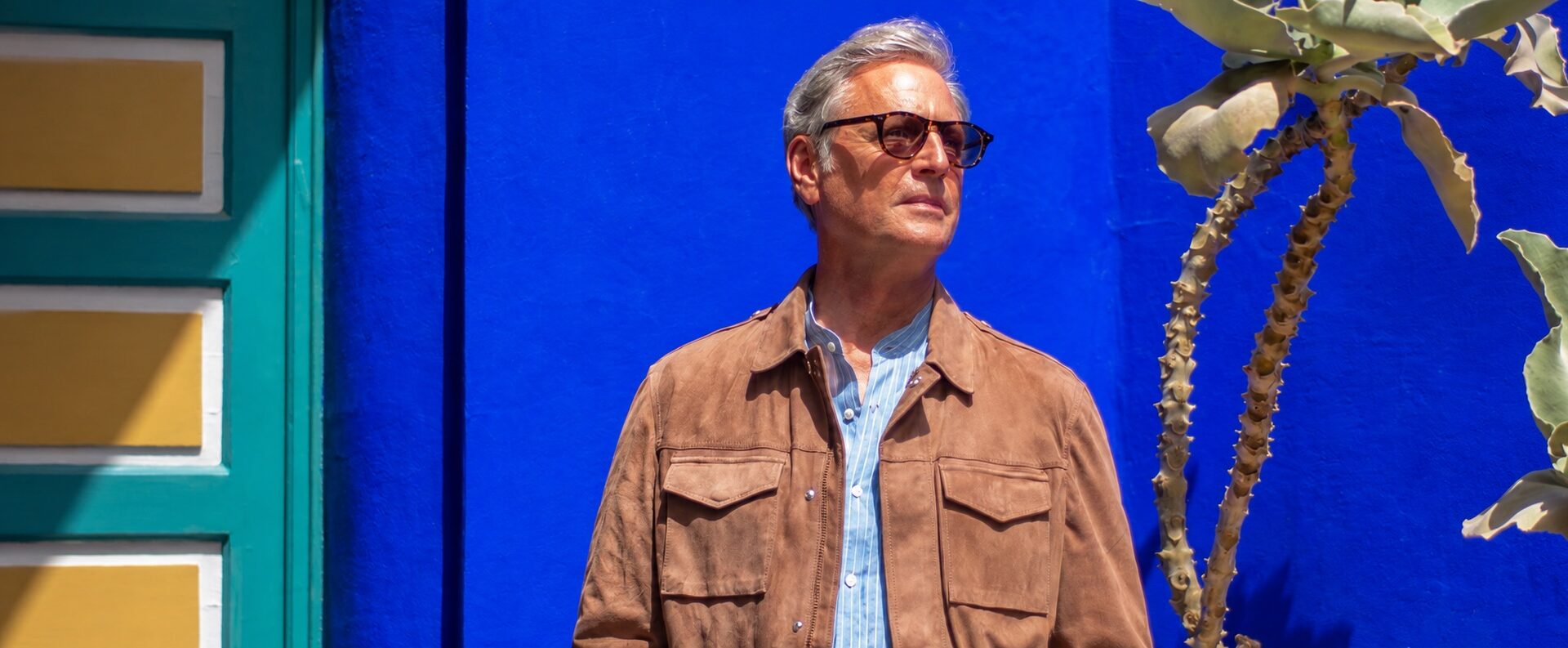
 Charles Markeaton-Mundy
From the celebrated gardens of the international aristocracy to the extraordinary world of Yves Saint Laurent and Pierre Bergé, Madison Cox has devoted his life to creating places of enduring beauty. An exceptional landscape designer, cultural custodian and philanthropist, he has become one of the most influential figures in the preservation of an artistic heritage that extends far beyond the gardens for which he first became famous.
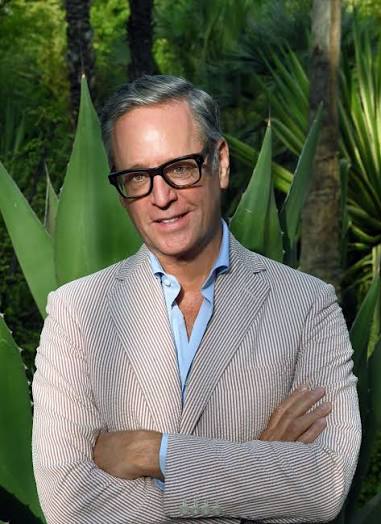
There are individuals whose influence is measured by the buildings they erect, the fortunes they accumulate or the institutions they command. Others leave their mark more discreetly, through an instinctive understanding of beauty, a respect for history and the ability to preserve what previous generations have created while giving it renewed meaning.
Madison Cox belongs unmistakably to the latter category.
One of the world’s most distinguished landscape designers, Cox has spent more than four decades creating gardens of extraordinary refinement across Europe, the Americas, North Africa and beyond. His work has brought him into the homes of some of the most cultivated and influential figures of our time, yet his reputation rests upon something rather more substantial than the illustrious names associated with his commissions.
He possesses that increasingly uncommon quality of understanding that true elegance need never announce itself.
His gardens are not merely arrangements of trees, flowers, water and architectural features. They are carefully considered environments in which nature, history, architecture and the personality of their owners enter into a harmonious conversation. Some possess the grandeur of classical landscapes; others offer the intimacy of a private sanctuary. All reveal an appreciation of proportion, atmosphere and the subtle relationship between a place and those who inhabit it.
Yet it is perhaps in Morocco, where his professional life became inseparable from the remarkable cultural world of Yves Saint Laurent and Pierre Bergé, that Madison Cox’s contribution has acquired its greatest historical significance.
Today, as president of the Fondation Pierre Bergé–Yves Saint Laurent in Paris and the Fondation Jardin Majorelle in Marrakech, he occupies a position of considerable cultural responsibility, safeguarding an artistic inheritance that encompasses haute couture, architecture, gardens, archives, museums and the preservation of Morocco’s rich artistic traditions.
From California to the Great Gardens of the World
Born in Bellingham, Washington, in 1958 and raised in the San Francisco Bay Area, Madison Cox developed an early appreciation of art, architecture and the natural world. His upbringing in California exposed him to a landscape of remarkable geographical diversity, but it was his subsequent education and travels in Europe that helped shape his distinctive aesthetic sensibility.
As a young student at Parsons School of Design, he spent time in Paris, immersing himself in the artistic and cultural traditions of a continent whose gardens had long served as expressions of civilisation, refinement and intellectual ambition.
Europe offered an extraordinary education. From the formal geometry of French classical gardens to the romantic informality of English landscapes, the continent demonstrated that gardening could be elevated into an art form possessing the same expressive possibilities as architecture or painting.
Cox also admired the work of the distinguished English landscape designer Russell Page, whose gardens were celebrated for their serenity, simplicity and exceptional understanding of space. Their encounters, although brief, left an impression upon him. Page’s ability to create environments that appeared entirely natural while being carefully composed offered a particularly valuable example.
As Cox’s career developed, he resisted the temptation to establish an instantly recognisable visual formula.
Unlike designers whose work can be identified by a recurring collection of ornamental devices, he has consistently approached each commission as an individual undertaking.
The architecture, surrounding landscape, climate, history and character of the owner must all be understood before the design can begin.
It is an approach that requires patience and a willingness to listen, qualities that have become central to his professional philosophy.
For Cox, a successful garden should never exist merely as a monument to its designer. It must belong to its setting and, above all, to the people for whom it has been created.
Gardens for an Extraordinary International Circle


Over the years, Madison Cox has been entrusted with some of the most exceptional private gardens in the world.
Among his celebrated clients have been Marella Agnelli, the wife of the legendary Italian industrialist Gianni Agnelli; the American philanthropist and arts patron Anne Bass; businessman and former New York mayor Michael Bloomberg; and the hotelier Ian Schrager.
These commissions have taken him from the elegant estates of Connecticut to the extraordinary residences of Marrakech, as well as to important public and commercial projects.
For Anne Bass, Cox worked on the landscape of her extensive Connecticut estate, a property encompassing approximately 1,000 acres. For Marella Agnelli, herself a woman of exceptional taste and a knowledgeable gardener, he worked at Ain Kassimou in Marrakech, creating a landscape in dialogue with the character of the house and its Moroccan surroundings.
His work for Ian Schrager extended into hospitality, including projects associated with the Delano in Miami, the Mondrian in Los Angeles and the Gramercy Park Hotel in New York.
Another notable commission was the garden of the Aga Khan Centre in London, where the landscape forms part of an architectural and cultural environment inspired by the traditions of Islamic gardens.
What distinguishes Cox’s work is his ability to adapt his imagination to radically different circumstances.
A grand American country estate requires a different vocabulary from a secluded Moroccan courtyard. The restrained elegance of a European garden cannot simply be transplanted into the climatic realities of North Africa.
Rather than imposing a universal style, he searches for the essential character of each location.
The result is a body of work that reflects both extraordinary versatility and an underlying consistency of taste.
His achievements have received considerable professional recognition. In 1997, he became the first American to design a garden at London’s Chelsea Flower Show, where he was awarded a Silver-Gilt Medal. He was subsequently recognised by Architectural Digest as a member of its AD100 Hall of Fame, an acknowledgement of his lasting influence upon international design.
Yves Saint Laurent, Pierre Bergé and the Discovery of Morocco
Few relationships have shaped Madison Cox’s life more profoundly than his association with Yves Saint Laurent and Pierre Bergé.
The story began in 1979, when Cox, then a young student in Paris, was invited to spend a long weekend in Marrakech as their guest.
Morocco was already an essential part of the lives of the celebrated French couturier and his formidable business partner.
Saint Laurent and Bergé had first visited Marrakech in 1966 and immediately fallen under its spell. The city’s colours, light, architecture, gardens and traditions provided Saint Laurent with an extraordinary source of inspiration, transforming his understanding of colour and influencing the development of his collections.
For Cox, that first visit opened the door to a world in which European artistic sophistication encountered the rich cultural inheritance of North Africa.
It also introduced him to a place that would eventually become central to his own life.
The relationship with Saint Laurent and Bergé developed over the following decades, founded upon shared interests in art, architecture, gardens and the preservation of beauty.
By the late 1990s, Cox had established a successful international landscape practice when Bergé invited him to return to Marrakech to consider the future of the Jardin Majorelle.
It was an invitation that would transform his professional responsibilities and ultimately lead him towards the custodianship of one of the most remarkable cultural legacies of the twentieth century.
Jardin Majorelle: Preserving a Living Masterpiece


Few gardens anywhere in the world possess the instantly recognisable identity of the Jardin Majorelle.
Its intense cobalt-blue architecture, lush tropical vegetation, extraordinary cactus collections, fountains and shaded pathways have made it one of Morocco’s most celebrated cultural destinations.
Yet its history began long before Yves Saint Laurent and Pierre Bergé acquired it.
The garden was created by the French painter Jacques Majorelle, who purchased land outside Marrakech in 1923 and gradually transformed it into an extraordinary botanical and artistic environment.
Majorelle’s passion for plants led him to assemble specimens from across the world, while his experiments with colour culminated in the brilliant blue that would eventually bear his name.
Opened to the public in 1947, the garden subsequently deteriorated following Majorelle’s death in 1962.
In 1980, Saint Laurent and Bergé acquired the property, rescuing it from the threat of redevelopment and beginning the process of restoring its former splendour.
When Madison Cox assumed responsibility for its landscape development in the 1990s, the challenges were substantial.
Marrakech was changing rapidly. Urban expansion threatened the tranquillity of what had once been a relatively secluded garden, while increasing visitor numbers placed additional pressure upon its fragile environment.
Cox responded with an understanding that preservation does not necessarily mean leaving everything untouched.
He introduced new plantings, reconsidered the garden’s relationship with its increasingly urban surroundings and used water features to restore an atmosphere of calm.
Perhaps most significantly, he recognised that a garden situated in a region facing growing pressure upon its water resources could not continue to be maintained according to assumptions inherited from an earlier age.
Lawns requiring substantial irrigation were eventually replaced with gravel, while additional drought-tolerant plants were introduced.
These changes were not merely practical. They reflected a broader philosophy of environmental responsibility and the conviction that historic gardens must evolve if they are to survive.
Under his stewardship, the Jardin Majorelle has remained a living work of art rather than becoming a static historical exhibit.
Its botanical collections continue to be studied, maintained and developed, while the garden itself has acquired an increasingly important educational role.
Cox has emphasised the need to communicate the fragility of the natural world, particularly in a country where climate change, urbanisation and the availability of water present growing challenges.
In this respect, his contribution extends beyond horticulture.
He has helped demonstrate that the preservation of historic beauty and responsible environmental management are not opposing ambitions, but complementary obligations.
The Custodian of an Extraordinary Cultural Inheritance
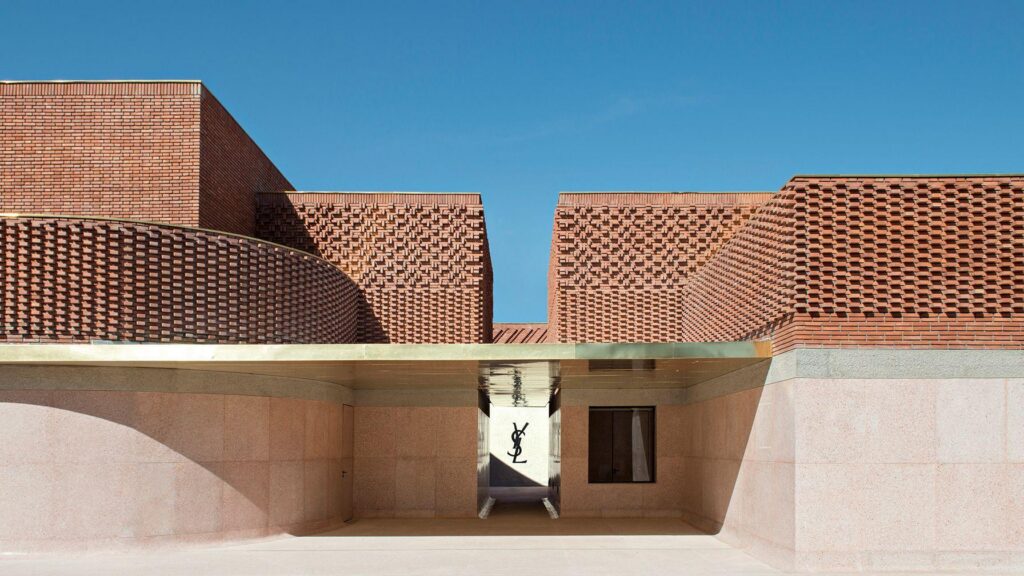
The death of Yves Saint Laurent in 2008 marked the end of an extraordinary creative career. The passing of Pierre Bergé in September 2017 brought to a close another remarkable chapter in the history of French fashion, cultural patronage and philanthropy.
For Madison Cox, the loss was deeply personal.
He and Bergé had married in March 2017, just months before Bergé’s death. Their relationship had united two men with a profound appreciation of art, gardens, architecture and the importance of protecting cultural heritage.
Following Bergé’s death, Cox assumed the presidency of the Fondation Pierre Bergé–Yves Saint Laurent, becoming responsible for safeguarding a legacy of international importance.
The responsibility was considerable.
Saint Laurent and Bergé had accumulated an extraordinary archive of fashion drawings, garments, textiles, photographs, correspondence and historical material. Their collections were not simply records of a successful fashion house, but documents of a remarkable period in twentieth-century artistic and social history.
The opening of museums dedicated to Saint Laurent in Paris and Marrakech in 2017 represented the culmination of years of planning and investment.
Cox inherited the responsibility of ensuring that these institutions would continue to develop, remaining faithful to their founders’ intentions while engaging new generations.
His philosophy has been to regard the foundation as something more than a shrine to haute couture. Saint Laurent and Bergé inhabited a world of painting, theatre, literature, music, politics and philanthropy, and their legacy cannot be understood through fashion alone.
Under Cox’s presidency, the institutions have continued to explore these broader cultural relationships through exhibitions, research, conservation and educational programmes.
The Paris foundation’s continuing work to protect Saint Laurent’s artistic rights and archives reflects the seriousness of that responsibility.
Morocco: A Commitment Beyond Beauty
Madison Cox’s attachment to Morocco extends considerably beyond his professional involvement with the Jardin Majorelle.
Over the decades, the country has become an essential part of his personal and cultural identity.
His homes and professional activities in Marrakech and Tangier have brought him into sustained contact with Moroccan architecture, craftsmanship, horticulture and artistic traditions.
Yet what distinguishes his contribution is his recognition that preserving Morocco’s cultural heritage requires more than celebrating the European artists and collectors who were inspired by it.
The country possesses an extraordinarily rich artistic inheritance of its own, including the traditions of its Amazigh communities, whose textiles, jewellery, ceramics and decorative arts represent centuries of creativity.
The Musée Pierre Bergé des Arts Berbères, housed within Jacques Majorelle’s former studio, has played an important role in presenting this heritage to an international audience.
Cox has supported the development of the museum and its mission to preserve, study and communicate these traditions.
His wider institutional work reflects an understanding that cultural preservation must involve the communities whose histories and identities are being represented.
In a February 2026 interview, Cox reiterated the foundation’s ambition to protect Moroccan heritage, describing the importance of its museums and exhibitions in sustaining the country’s cultural identity.
It is a particularly meaningful undertaking at a time when Morocco is experiencing rapid economic development, urban expansion and increasing international attention.
The challenge is not to resist modernity, but to ensure that modernity does not come at the expense of the country’s distinctive character.
Encouraging the Next Generation
One of the most encouraging aspects of Cox’s recent work has been his commitment to younger generations of Moroccan architects and designers.
In 2025, the Fondation Jardin Majorelle introduced a new exhibition pavilion designed by the young Moroccan architect Hiba Bensalek, creating an opportunity for visitors to explore the garden’s history and botanical collections.
The project represented more than an architectural addition. It demonstrated the foundation’s willingness to encourage contemporary Moroccan creativity within one of the country’s most historically significant cultural settings.
That commitment continued in 2026 with the Fondation Jardin Majorelle Prize, an initiative designed to provide opportunities for emerging Moroccan architects.
The second edition attracted 34 submissions from architecture schools across the country. Cox chaired the jury, which awarded the prize to Salsabil El Ouazzani for her proposal Nouala, the Moving Shelter.
The competition brought together established architects, cultural specialists and younger practitioners, creating an important dialogue between Morocco’s architectural inheritance and its contemporary creative ambitions.
Such initiatives are particularly valuable because cultural institutions must do more than preserve the achievements of the past. They must also create opportunities for future generations to develop their own talents.
In March 2026, the Musée Yves Saint Laurent Marrakech and the Musée Pierre Bergé des Arts Berbères received the Musée du Maroc designation from Morocco’s National Museums Foundation, recognising their standards of conservation, management and public engagement.
For Cox and his colleagues, the recognition marked an important achievement in their continuing efforts to establish these institutions as centres of cultural excellence.
The Philanthropic Dimension
Cox’s commitment to education and cultural exchange has also extended beyond his responsibilities in Marrakech and Paris.
He has been involved with the American schools in Tangier and Marrakech, the American Legation in Tangier and initiatives supporting vulnerable children in India.
His work with the Aangan Trust in Mumbai reflects a broader interest in education and opportunities for disadvantaged young people. He has also supported cultural institutions dedicated to strengthening historical ties between Europe, Morocco and the United States.
Although these activities are less publicly celebrated than his gardens, they reveal another dimension of his philosophy.
Gardens, museums and schools may appear to serve different purposes, yet each can contribute to the enrichment of human life. They provide environments in which knowledge can be shared, imagination encouraged and a sense of belonging cultivated.
For Cox, the preservation of beauty and the promotion of education are complementary expressions of cultural responsibility.
An Author and a Man of Ideas
Alongside his achievements as a designer and cultural administrator, Madison Cox has made a valuable contribution to the literature of gardens.
His books include Private Gardens of Paris, published in 1989; Gardens of the World, published in 1991; Artists’ Gardens, written with photographer Erica Lennard and published in 1993; and Majorelle: A Moroccan Oasis, published in 1999.
These works reflect his fascination with the relationship between gardens and the people who create them.
He has also lectured at institutions including the Smithsonian in Washington and the Art Institute of Chicago, sharing his knowledge of landscape design, horticulture and garden history with audiences on both sides of the Atlantic.
What emerges from his writing and public conversations is a particularly thoughtful understanding of gardens as living expressions of civilisation.
A garden can reveal the tastes of its creator, the history of a place and the changing relationship between humanity and nature. Unlike a painting or a sculpture, however, it can never remain entirely unchanged.
Plants grow, mature and die. Light alters with the seasons. Climatic conditions evolve. The gardener must continually reconsider the balance between preservation and renewal.
This understanding has informed Cox’s work throughout his career, and it is perhaps the quality that best explains his success in safeguarding the Jardin Majorelle.
A Legacy That Continues to Grow
Madison Cox’s legacy is already remarkable, yet it would be premature to regard it as a completed chapter.
His career continues to evolve, moving between the intimate world of private garden design and the broader responsibilities of cultural preservation, education and philanthropy.
In a July 2026 interview devoted to landscape architecture in Morocco, he emphasised the importance of green spaces in the development of modern cities, highlighting their value not only for human wellbeing but also for biodiversity and environmental balance.
It is a philosophy that seems particularly relevant to the challenges of our age.
As cities expand and the natural environment comes under increasing pressure, gardens have acquired a significance that extends beyond their traditional association with leisure and aesthetic pleasure.
They offer refuge, contribute to ecological resilience and remind us of the importance of maintaining a relationship with the natural world.
Cox has understood these principles throughout his professional life, long before sustainability became a fashionable expression in architectural discourse.
His achievements also raise an interesting question about the nature of cultural inheritance.
The most successful custodians of great artistic legacies are not necessarily those who seek to preserve every detail exactly as they inherited it. They are those who understand the spirit of what has been entrusted to them and possess the judgement to determine how it should evolve.
In this respect, Madison Cox has proved a particularly thoughtful successor to the world created by Yves Saint Laurent and Pierre Bergé.
He has preserved the essential character of their extraordinary achievements while helping their institutions develop new relationships with Moroccan culture, contemporary architecture, environmental education and younger generations.
The result is a legacy that remains alive.
The Enduring Art of Beauty
There is something deeply civilised about a man who has devoted so much of his life to creating and preserving beautiful places.
In an age increasingly dominated by immediacy, commercial ambition and the relentless pursuit of novelty, Madison Cox represents a different understanding of achievement.
His work requires patience, sensitivity, scholarship and the ability to appreciate what already exists before deciding what might be improved.
The gardens he has created will continue to mature long after their original conception. The museums and cultural institutions under his stewardship will introduce future generations to the extraordinary creative world of Yves Saint Laurent and Pierre Bergé. His support for Moroccan architecture and heritage will help ensure that the country’s artistic traditions remain sources of inspiration rather than merely subjects of historical curiosity.
Perhaps his greatest achievement, however, is the manner in which he has brought these seemingly different worlds together.
Through landscape design, cultural stewardship and philanthropy, he has demonstrated that beauty need not be superficial, that tradition need not be static and that the preservation of the past can become an act of generosity towards the future.
Madison Cox has spent a lifetime creating gardens, but his most enduring contribution may ultimately be something greater: the cultivation of a cultural legacy in which art, nature, history and humanity continue to flourish together.
And that, surely, is a legacy worthy of admiration.
Jardin Majorelle website:
The YSL Pierre Berge Foundation https://museeyslparis.com/en/foundation
Madison Cox & Associates https://madisoncox.com/index.html


 Carlos Mundy
 Dixon Acosta
 Elga Wimmer
 Metaphore Magazine

 Pablo H. Aznar
 Charles Markeaton-Mundy