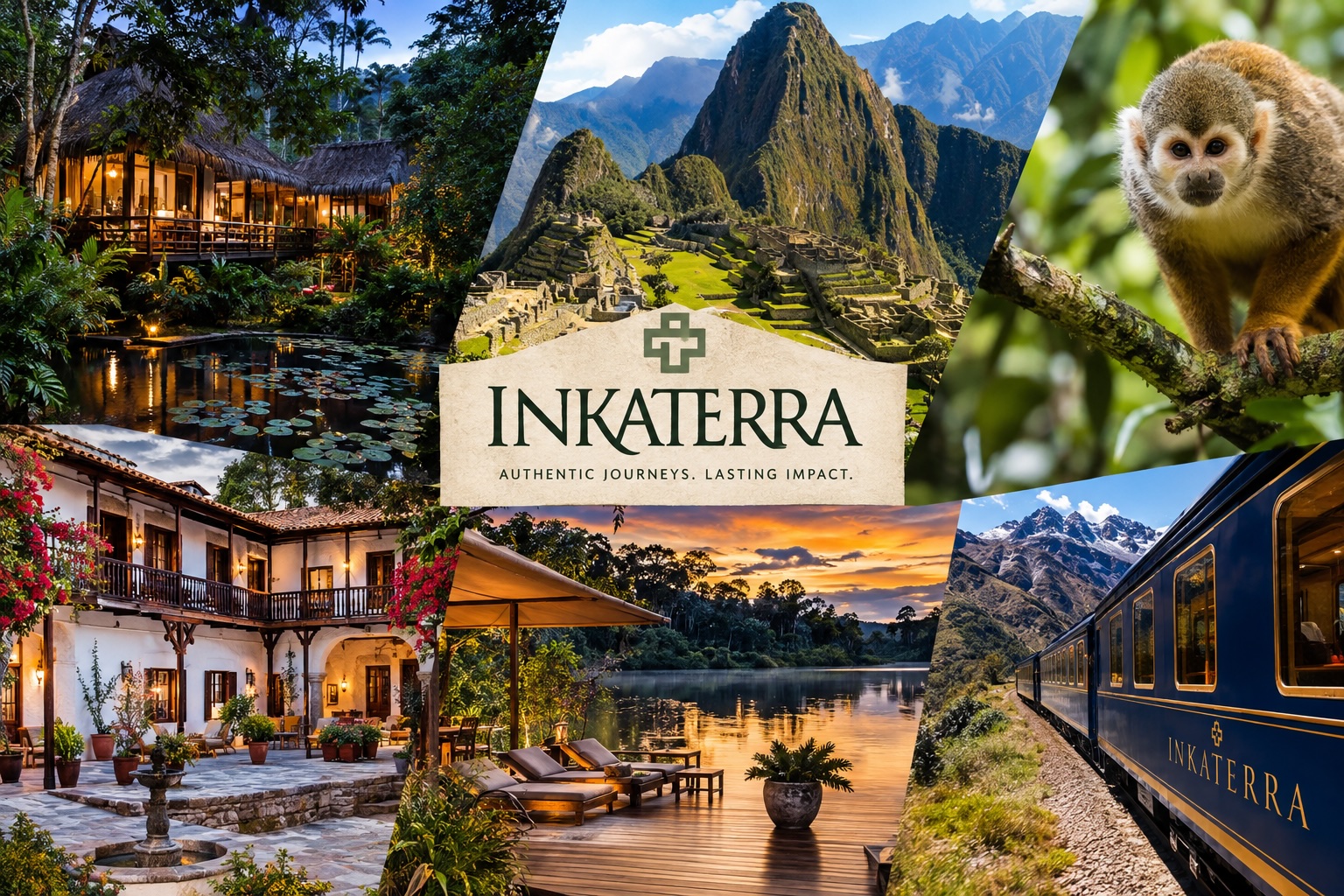
 Carlos Mundy
From the remote wilderness of the Amazon to the mystical cloud forests of Machu Picchu, the founder of Inkaterra has spent more than half a century demonstrating that exceptional hospitality, scientific discovery and the preservation of nature can flourish together. His extraordinary journey has established one of Latin America’s most distinctive hotel collections and given Peru a pioneering position in the world of sustainable luxury travel.
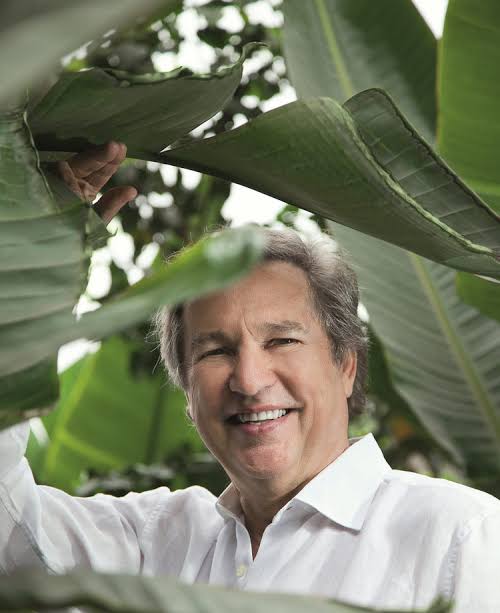
I had travelled to Peru on assignment for a Spanish magazine, combining a travel feature with a fashion shoot, and we had been invited to visit several of the Inkaterra properties. It was an opportunity to discover a country of extraordinary beauty and cultural richness, while experiencing first-hand the distinctive philosophy that Joe had brought to the hospitality industry. What particularly impressed me was the manner in which he had succeeded in combining refinement and comfort with a profound respect for Peru’s natural heritage.
Some years later, I returned to Lima accompanied by HSH Princess Sylvia von und zu Liechtenstein. Once again, Joe and Denise extended their characteristic generosity and hospitality, organising a delightful dinner in our honour and inviting us to visit their properties in the Amazonian jungle, La Casona in Cuzco and Machu Picchu Pueblo in Aguas Calientes. Their kindness and attention made the occasion especially memorable, reinforcing the impression I had formed during our first encounter of a couple whose genuine warmth and personal charm were every bit as remarkable as their professional achievements.
Looking back upon those encounters, I am struck by how faithfully Joe has remained committed to the principles that inspired him from the very beginning. What I witnessed more than a quarter of a century ago was not simply the creation of an exceptional collection of hotels, but the expression of a deeply held conviction that Peru’s extraordinary natural and cultural inheritance deserved to be celebrated, protected and shared with the world. Denise, with her innate elegance, artistic sensibility and gracious hospitality, was an essential part of that vision, and together they gave Inkaterra a character that went far beyond the conventions of the hotel industry.
There are hoteliers who build magnificent hotels, entrepreneurs who create successful businesses, and conservationists who dedicate their lives to protecting the natural world. Very few individuals manage to unite all three pursuits into a single, coherent vision. José ‘Joe’ Koechlin von Stein, the founder of Inkaterra, belongs to that exceptional category.
Long before sustainability became a fashionable expression in the international hospitality industry, Koechlin had recognised something that many of his contemporaries had overlooked: that the extraordinary natural and cultural riches of Peru represented not merely an inheritance to be admired, but a responsibility to be preserved and an opportunity to create an entirely new form of tourism.
His ambition was never simply to accommodate visitors in beautiful surroundings. It was to introduce them to the soul of Peru, to encourage a deeper appreciation of its astonishing biodiversity, and to demonstrate that tourism, properly conceived, could become an instrument of conservation rather than a threat to the very landscapes upon which it depended.
The result was Inkaterra, established in 1975 and today recognised internationally as one of the pioneers of ecotourism and environmentally conscious luxury hospitality.
In 2025, the company celebrated its fiftieth anniversary, marking half a century during which a modest venture in the Amazonian wilderness evolved into an internationally respected collection of hotels situated among some of Peru’s most remarkable landscapes. Its influence extends far beyond hospitality, encompassing scientific research, ecological restoration, cultural preservation and the economic development of local communities.
An Extraordinary Beginning: From Cinema to the Amazon
The origins of Inkaterra are almost as remarkable as the landscapes in which its hotels are situated. Koechlin’s early adventures were closely associated with the world of cinema, particularly his collaboration with the celebrated German director Werner Herzog.
In 1972, he co-produced Herzog’s Aguirre, the Wrath of God, a film whose haunting portrayal of the Amazonian wilderness became a landmark of international cinema. He would subsequently participate in the production of Fitzcarraldo, another of Herzog’s extraordinary cinematic achievements, as well as Les Blank’s documentary Burden of Dreams.
These productions were much more than artistic ventures. They brought Koechlin into intimate contact with the extraordinary geography, communities and ecosystems of the Peruvian rainforest, reinforcing his conviction that the country possessed an unparalleled natural heritage deserving international recognition.
What emerged was a revolutionary idea for its time: to create accommodation in the heart of the Amazon that would allow visitors to experience the rainforest without destroying the environment they had travelled so far to discover.
In 1975, he established Cusco Amazónico, the lodge that would eventually become Inkaterra Reserva Amazónica, on the banks of the Madre de Dios River.
The beginnings were decidedly adventurous. The first cabins were constructed with rudimentary tools and local materials, their design drawing inspiration from the architecture of the indigenous Ese’Eja people. Modern conveniences were scarce, and the first visitors encountered an experience far removed from conventional luxury travel.
Yet the essential philosophy was already present: an intimate relationship between the visitor and the natural environment, accompanied by respect for the people and traditions of the region.
What began as a relatively modest undertaking would eventually become a benchmark for an entirely new approach to hospitality.
The Inkaterra Philosophy: Luxury Without Compromise


One of Koechlin’s most significant achievements has been to challenge the conventional understanding of luxury.
For much of the twentieth century, luxury hotels were judged principally by their grandeur, opulence, service and material comforts. The finest establishments competed to offer increasingly elaborate facilities, often imposing themselves upon their surroundings rather than becoming part of them.
Inkaterra proposed something fundamentally different.
Here, luxury would be measured not simply by the quality of accommodation, although that would remain essential, but by the rarity and authenticity of the experience itself. The opportunity to awaken to the sounds of an untouched rainforest, to observe extraordinary wildlife in its natural habitat, or to wander through gardens containing hundreds of species of native orchids became as important as fine linens, exceptional cuisine and attentive service.
The hotels were conceived to complement their surroundings rather than dominate them. Architecture inspired by regional traditions, indigenous materials, carefully considered landscaping and an emphasis upon cultural authenticity created establishments possessing an unmistakably Peruvian identity.
There is an understated elegance to this philosophy, a recognition that genuine sophistication need not announce itself through ostentation.
Indeed, perhaps the greatest luxury that Inkaterra offers is something increasingly difficult to find in the modern world: a profound sense of place.
Koechlin understood that international travellers of discernment were no longer necessarily seeking another grand hotel that might just as easily have been situated in Paris, London or New York. They wanted to experience something unique, something that could only exist in Peru.
And that is precisely what he set out to provide.
Over the decades, Inkaterra has developed a portfolio that reflects the extraordinary geographical and cultural diversity of Peru. Each property possesses its own personality, yet all share the same commitment to authenticity, environmental responsibility and a particularly refined interpretation of hospitality.
Inkaterra Machu Picchu Pueblo Hotel: A Sanctuary in the Cloud Forest
Few destinations in the world possess the mystical appeal of Machu Picchu. Yet beyond the celebrated Inca citadel lies another extraordinary treasure: the lush cloud forest of the eastern Andes.
Inkaterra Machu Picchu Pueblo Hotel is nestled within this verdant landscape, where winding stone pathways lead through tropical gardens, streams and a remarkable concentration of native flora and fauna.
Rather than constructing an imposing hotel building, Inkaterra created an intimate collection of accommodation surrounded by nature, allowing visitors to experience the atmosphere of the cloud forest while enjoying the comforts expected of an internationally distinguished establishment.
The property is particularly celebrated for its orchid conservation programme. According to Inkaterra, its grounds contain one of the world’s most important collections of native orchids, with more than 370 species recorded, including species previously unknown to science.
The hotel is also home to an Andean bear conservation initiative devoted to the spectacled bear, the only bear species native to South America.
For guests, this combination of natural beauty, scientific discovery and exceptional hospitality creates an experience that extends far beyond a conventional visit to Machu Picchu.
Inkaterra Reserva Amazónica: The Original Dream
Situated beside the Madre de Dios River, Inkaterra Reserva Amazónica remains perhaps the purest expression of Koechlin’s original vision.
Here, the Amazon is not simply a backdrop. It is the central protagonist.
The lodge’s traditional-style cabañas, constructed to harmonise with their surroundings, offer visitors an extraordinary opportunity to immerse themselves in one of the most biologically diverse regions on Earth.
Guided excursions reveal the astonishing complexity of the rainforest, from its towering canopy to the delicate ecosystems of its rivers and forest floor. Birdwatching, botanical exploration and encounters with the region’s remarkable wildlife form part of an experience that combines adventure with comfort.
It is difficult to imagine a more persuasive demonstration of Koechlin’s belief that nature, when properly protected and intelligently presented, can provide the foundation for a successful and enduring hospitality enterprise.
Inkaterra La Casona: The Aristocratic Elegance of Cusco
If the Amazon represents Inkaterra’s adventurous spirit, La Casona embodies its appreciation of history, architecture and cultural refinement.
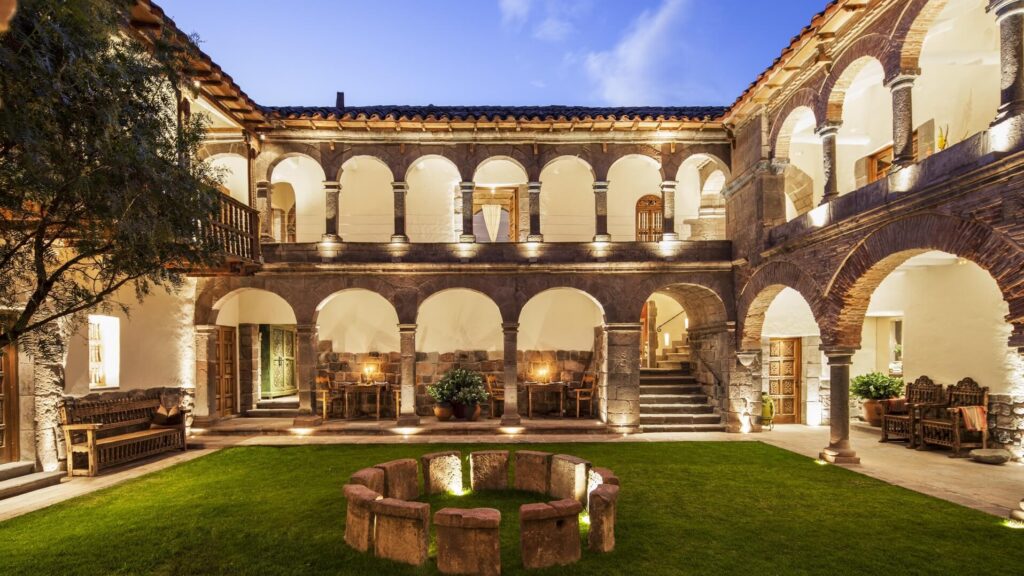
Located in the historic heart of Cusco, the former capital of the Inca Empire, this intimate hotel occupies a beautifully restored colonial residence whose architecture reflects the complex cultural inheritance of the Andes.
Its elegant courtyards, traditional stonework, antique furnishings and carefully curated interiors create an atmosphere of quiet distinction.
La Casona demonstrates that conservation need not be confined to forests and wildlife. The preservation of architectural heritage, traditional craftsmanship and historic buildings is equally important to the identity of a nation.
It also reveals another dimension of Koechlin’s achievement: his ability to interpret luxury in ways that are entirely appropriate to each destination, without sacrificing the coherence of the Inkaterra philosophy.
Inkaterra Hacienda Urubamba: The Romance of the Sacred Valley
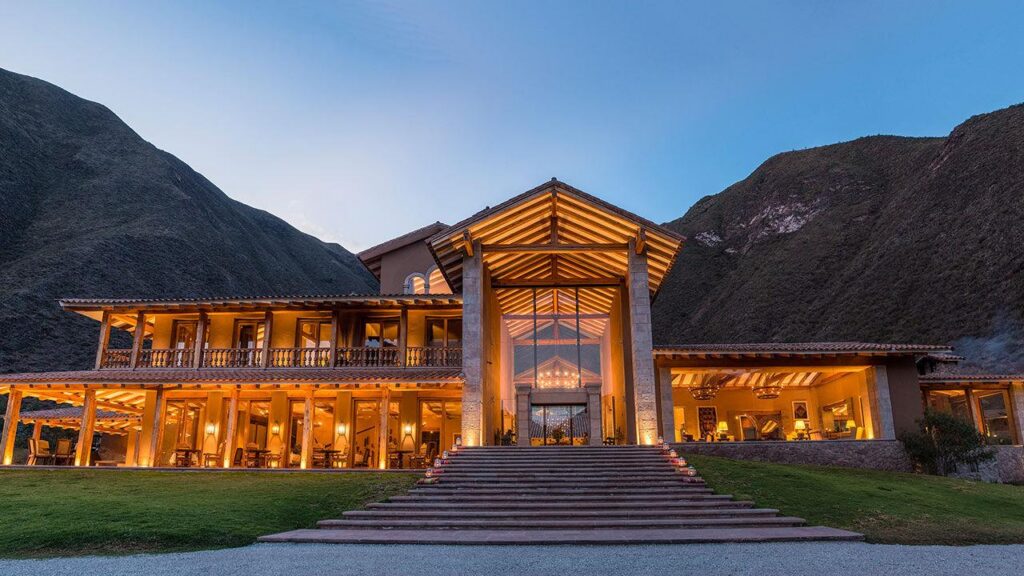
Set amid the majestic scenery of the Sacred Valley of the Incas, Hacienda Urubamba captures the romance and serenity of rural Andean life.
Its architecture draws inspiration from the traditional haciendas of the region, while the surrounding agricultural landscape provides a direct connection with Peru’s ancient farming traditions.
The experience celebrates the extraordinary agricultural heritage of the Andes, where generations of indigenous communities developed sophisticated methods of cultivation adapted to the challenging mountain environment.
For visitors, the appeal lies in the combination of breathtaking scenery, understated comfort, regional gastronomy and the opportunity to discover a landscape that remains intimately connected with the civilisation of the Incas.
The property is an expression of the idea that the future of luxury travel may lie as much in reconnecting with traditional ways of life as in embracing modern innovation.
Beyond the Flagship Hotels

Located in the Madre de Dios region, this rainforest property combines comfortable accommodation with immersive experiences in the Amazon, extending Inkaterra’s commitment to nature-based tourism.

A more contemporary interpretation of the group’s hospitality philosophy, situated in Machu Picchu Pueblo and designed for travellers seeking a lively, accessible base from which to discover the region.
The group’s ambitions also extend to Peru’s northern Pacific coastline through Inkaterra Cabo Blanco, broadening its conservation interests to include marine and coastal ecosystems.
Scientific Research: The Foundation of an Extraordinary Enterprise
Perhaps the most impressive aspect of Inkaterra is not the beauty of its hotels, nor even the international recognition they have received, but the scientific work that underpins the entire enterprise.
Since 1978, Koechlin has supported extensive inventories of flora and fauna in the regions surrounding Inkaterra’s properties. These investigations have contributed to a deeper understanding of Peru’s biodiversity and provided information of considerable importance to conservation efforts.
The results are remarkable.
Inkaterra’s published research achievements include the documentation of hundreds of bird species, the identification of 362 ant species in research associated with the distinguished biologist E. O. Wilson, and the study of hundreds of native orchids, including species new to science.
Such work is not an ornamental addition to the company’s environmental credentials. It represents a serious commitment to scientific knowledge and the protection of ecosystems.
In 2001, Koechlin established the non-profit Inkaterra Asociación, providing an institutional framework through which research, conservation and educational initiatives could be developed.
This relationship between hospitality and scientific enquiry distinguishes Inkaterra from many establishments that have adopted environmental policies primarily in response to changing consumer expectations.
For Koechlin, the natural environment is not merely an asset to be marketed. It is a living inheritance that must be understood before it can be responsibly protected.
His approach has attracted the attention of scientists, conservation organisations and international institutions, demonstrating how a private hospitality enterprise can make a meaningful contribution to the advancement of environmental knowledge.
Conservation as an Economic Opportunity
One of the most persuasive arguments in favour of Koechlin’s model is that conservation and economic prosperity need not be opposing forces.
Throughout much of the developing world, environmental protection has too often been presented as a choice between preserving nature and generating economic opportunities for local populations.
Inkaterra has sought to demonstrate that the two objectives can reinforce one another.
By developing hospitality enterprises that depend upon the continued health of surrounding ecosystems, the company creates an economic incentive to protect those environments.
A standing rainforest, rich in wildlife and capable of attracting international visitors, can generate lasting employment and commercial activity without requiring the destruction of its natural resources.
The benefits extend to local guides, artisans, agricultural producers, transport providers and the many other individuals whose livelihoods are connected with tourism.
Training and employment also provide opportunities for younger generations to remain within their communities, reducing some of the economic pressures that encourage migration to major urban centres.
This does not mean that tourism alone can resolve the immense challenges facing the Amazon or the wider Peruvian environment. Deforestation, illegal mining, infrastructure development and climate change remain formidable threats.
Nevertheless, Koechlin has offered a compelling example of how private enterprise can contribute to conservation through commercially viable activity.
His achievement lies in having recognised that environmental responsibility need not be regarded as an obstacle to profitability, but can instead become an essential element of long-term commercial success.
A Pioneer of Climate-Conscious Hospitality
The international hospitality industry has undergone a profound transformation in its approach to environmental responsibility.
What was once considered a specialised concern has become central to the strategies of many of the world’s leading hotel groups. Energy efficiency, waste reduction, responsible sourcing and carbon management now occupy an increasingly prominent position in corporate planning.
Inkaterra was addressing many of these questions decades before they entered the mainstream.
The company describes itself as carbon neutral and has received recognition associated with its climate-positive approach to hospitality. Its environmental philosophy extends beyond operational measures to encompass ecosystem conservation, biodiversity research and the protection of natural habitats.
These distinctions are significant, although the wider debate over carbon accounting and environmental claims makes continued transparency and independent scrutiny important throughout the hospitality industry.
What cannot reasonably be disputed is the pioneering nature of Koechlin’s commitment. At a time when few hoteliers were considering the relationship between tourism and biodiversity, he was already placing conservation at the centre of his business model.
Today, Inkaterra welcomes more than 200,000 travellers annually, according to the company’s published figures, illustrating the considerable scale achieved by an enterprise that began with a handful of cabins in the rainforest.
An International Reputation Built Upon Conviction
Over the years, Koechlin’s achievements have earned him recognition within the international tourism and conservation communities.
His distinctions include the PURE Award for Contribution to Experiential Travel, the Hotel Opportunities Latin America Lifetime Achievement Award, and recognition at the South American Hotel Investment Conference.
He has also been associated with Conservation International and has played an influential role in Peru’s tourism sector, serving as president of the National Chamber of Tourism of Peru for the 2024–2026 term.
Such recognition reflects the extent to which his ideas have influenced an industry that increasingly recognises the commercial and cultural importance of authenticity and environmental responsibility.
Yet his legacy cannot be adequately measured through awards or professional appointments.
It is visible in the forests protected, the scientific knowledge generated, the local employment created and the thousands of travellers who have returned home with a deeper appreciation of Peru’s extraordinary natural heritage.
In an age when the word visionary is frequently applied with little justification, Koechlin’s half-century of achievement gives it genuine substance.
The Human and Artistic Spirit Behind Inkaterra
No account of Inkaterra would be complete without acknowledging the contribution of Denise Guislain Koechlin, whose artistic sensibility helped shape the distinctive aesthetic character of the hotel collection.
Her influence is reflected in an approach to architecture and interiors that favours harmony, cultural authenticity and a deep appreciation of traditional craftsmanship.
In March 2026, Inkaterra paid tribute to her memory, recognising the enduring importance of her creative vision to the identity of the company.
This artistic dimension is essential to understanding why Inkaterra possesses a character that distinguishes it from conventional international hotel groups.
The properties are not simply designed to satisfy a predetermined corporate formula. They seek to express the atmosphere, history and natural identity of their respective locations.
In this respect, the Inkaterra philosophy resembles the work of a discerning collector or patron of the arts: each property contributes something individual to a wider composition, while remaining faithful to a common aesthetic and intellectual purpose.
Peru’s Extraordinary Potential as a Luxury Destination
Peru occupies a remarkable position in the geography of international travel.
Few countries can offer such an extraordinary combination of ancient civilisations, architectural treasures, dramatic landscapes, exceptional biodiversity and distinguished culinary traditions.
From the imperial grandeur of Cusco to the mysteries of Machu Picchu, from the Amazonian rainforest to the spectacular scenery of the Andes and the Pacific coastline, Peru possesses the ingredients of one of the world’s most compelling luxury destinations.
For many years, however, the country’s international image was dominated by a relatively narrow selection of archaeological attractions.
Koechlin understood that Peru had a far broader story to tell.
Its natural heritage could be as captivating as its monuments. Its living traditions could be as fascinating as its ancient history. Its biodiversity could attract travellers whose interests extended well beyond conventional sightseeing.
Inkaterra has helped articulate this richer vision of the country, demonstrating that Peru can compete internationally not by imitating the established luxury destinations of Europe or North America, but by celebrating the qualities that make it unique.
This is perhaps one of Koechlin’s greatest contributions to his country.
He has shown that Peru’s extraordinary identity is not an obstacle to the development of sophisticated international tourism. It is precisely the foundation upon which that tourism should be built.
The Future of Inkaterra: A Legacy Beyond Hospitality
As Inkaterra moves beyond its fiftieth anniversary, the significance of Koechlin’s work becomes increasingly apparent.
The international travel industry faces a fundamental challenge: how to accommodate growing numbers of visitors while protecting the cultural and natural environments that make travel worthwhile.
Too many celebrated destinations have already experienced the consequences of excessive development, environmental degradation and the gradual disappearance of local character.
Koechlin’s response has been to advocate a different relationship between tourism and the places it inhabits.
In this model, the hotel is not an isolated commercial establishment, but part of a wider ecological, cultural and social system. Its success depends not only upon the satisfaction of its guests, but upon the continued wellbeing of the surrounding environment and communities.
The philosophy is ambitious, and its implementation inevitably requires constant adaptation, investment and scientific scrutiny.
Yet it offers an important alternative to a form of tourism that too often measures success solely through visitor numbers, occupancy rates and immediate financial returns.
The future of luxury hospitality may increasingly depend upon the ability to create experiences that are both exceptional and responsible. If so, Inkaterra will have been anticipating that future for more than half a century.
A Remarkable Peruvian Legacy
There is something particularly admirable about individuals who pursue a conviction long before the rest of the world recognises its importance.
When Joe Koechlin established his first lodge in the Amazon in 1975, sustainable tourism was scarcely a recognised industry. The notion that a luxury hospitality enterprise might finance scientific research, contribute to biodiversity conservation and support the preservation of indigenous cultures was far removed from conventional commercial thinking.
Yet he persevered.
Five decades later, the principles upon which Inkaterra was founded have become central to the international conversation about the future of travel.
What began as an adventurous experiment in one of the most remote corners of Peru has evolved into a distinguished hospitality collection, an important platform for scientific research and a compelling example of environmentally conscious entrepreneurship.
Above all, Koechlin has demonstrated that true luxury need not be measured by excess. It can be found in authenticity, beauty, knowledge, tranquillity and the privilege of experiencing the natural world without diminishing it for future generations.
His achievement is not simply that he created Inkaterra, or that he helped establish Peru as a destination for sophisticated nature-based tourism.
It is that he understood, earlier than most, that the greatest treasures of a country are not always those that can be built, bought or sold. Sometimes they are the forests that have stood for centuries, the extraordinary creatures that inhabit them, the traditions passed from one generation to another, and the landscapes whose beauty no architect could ever hope to surpass.
Joe Koechlin has devoted his life to ensuring that these treasures remain not merely a memory of Peru’s past, but a living and flourishing part of its future. Yet the extraordinary story of Inkaterra would be incomplete without recognising the invaluable contribution of his beloved wife, Denise Guislain Koechlin, whose artistic vision, exquisite taste and profound appreciation of beauty helped give the hotel collection its distinctive soul.
Denise was far more than the gracious companion of an exceptional entrepreneur. She was a creative force in her own right, bringing to Inkaterra an aesthetic sensibility that transformed its properties into places of extraordinary character and refinement. Her appreciation of architecture, traditional craftsmanship, art and the subtle relationship between interiors and their natural surroundings helped establish an identity that no conventional hotel designer could easily reproduce. Where Joe brought entrepreneurial vision, determination and an unwavering commitment to conservation, Denise contributed the elegance, warmth and artistic intuition that made Inkaterra not merely somewhere to stay, but somewhere to feel genuinely at home. Her influence was not simply decorative; it was fundamental to the atmosphere and personality of the establishments they created together.
Having had the privilege of knowing Joe and Denise for more than a quarter of a century, I retain particularly affectionate memories of their gracious hospitality, both during my first visit to Peru in 2000 and on subsequent occasions. Denise possessed that increasingly rare quality of making hospitality appear entirely effortless, combining natural elegance with genuine warmth and an instinctive ability to make her guests feel welcome. Those who had the pleasure of entering their home will understand that the spirit of Inkaterra was, in many respects, an extension of the generosity, refinement and cultivated taste that characterised their own lives.
It would therefore be a mistake to regard Denise’s contribution merely as an accompaniment to her husband’s achievements. She helped define the very identity of Inkaterra, leaving an artistic and human legacy that will continue to be felt in its architecture, its interiors, its gardens and, perhaps most importantly, in the philosophy of hospitality that distinguishes it from so many other luxury establishments. Although she is no longer with us, her presence endures in the beauty she helped create and in the countless details that bear witness to her sensibility.
Joe and Denise Koechlin created something truly exceptional together: an enterprise in which commercial success has never been divorced from cultural responsibility, environmental stewardship or the pursuit of beauty. Their respective talents complemented one another, giving Peru not simply an internationally admired collection of hotels, but a lasting expression of what can be achieved when vision, artistic sensitivity and a genuine love of one’s country are brought together.
And that, ultimately, is a legacy far greater than any hotel empire.


 Metaphore Magazine
 Carlos Mundy


 Jim Dunn
 Charles Markeaton-Mundy